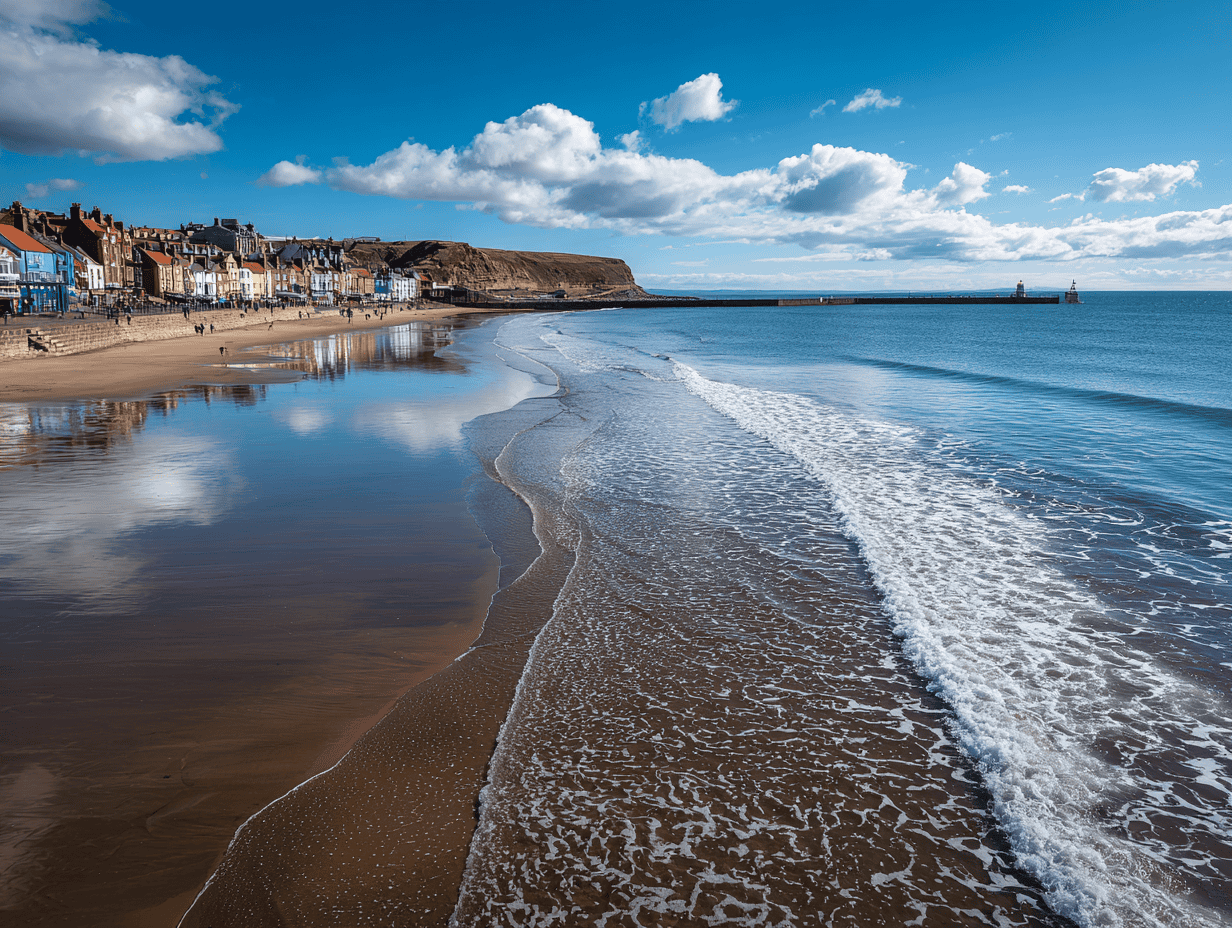
Britain’s First Seaside Resort
Scarborough North Bay can be worth hunting for sea glass, especially around the rocky northern end near the Sea Life Centre and Scalby Mills. White, green and brown are the most common finds, with blue, aqua, amber, cobalt, black and occasional rarer colours also reported. It’s a fair rather than prolific beach, but the rock pools and pebble bands make it a good beginner-friendly hunt when conditions line up.
- Rating: Fair Beach
- Terrain: Easy
- Level: Beginner
- Dog friendly: Seasonal- dogs banned 1 May to 30 September on main sections of both North Bay and South Bay; dogs permitted all year on the northern end of North Bay near the Sea Life Centre
- Location: Scarborough, North Yorkshire
- Sat Nav: YO12 7TN (North Bay car park) · YO11 1PH (South Bay / Harbour)
- Common colours: White, green, brown
- Rare colours: Cobalt Blue, Black, Lavender, Red, Grey
Scarborough Today
Here’s your quick glance Shoresense Score. Scroll down for your 7-day forecast
Scarborough North Bay sea glass conditions
Scarborough North Bay
North Yorkshire
43/100 — Limited, best window 10:41–13:41.
Best window is 10:41–13:41 with calm sea and little recent wave energy to move glass, so the chance of fresh finds is limited today. Sea is likely calm and picked-over — go early.
Limited — better days ahead here
Ranked #45 in the UK ShoreSense leaderboard today.
| Tide | Time | Height |
|---|---|---|
| High water | 05:43 | 6.1 m |
| Low water | 12:11 | 0.9 m |
| High water | 18:08 | 5.6 m |
Best For:
- Historic sea glass
- Harbour finds
- Rock pool searching
- Beginners
- Storm hunting
- Sea pottery
- Coastal walks
- Family beachcombing
A classic British seaside resort with sea glass to find
Let’s start with honesty. Scarborough is a Fair Beach. You will find glass here, but Scarborough’s two sweeping bays are predominantly sandy and busy; the conditions that produce exceptional sea glass hunting are not this town’s strongest card. Come expecting Seaham, and you will leave frustrated.
Come expecting an enjoyable morning on a beautiful stretch of Yorkshire coastline, with a decent chance of picking up a few well-tumbled pieces, and Scarborough delivers completely.
Scarborough was the nation’s first seaside resort, attracting the country aristocracy from the 17th century onwards when a coastal spring of medicinal water was discovered. The harbour that sustained this town for centuries has been busy since medieval times.
Henry III granted Scarborough the right to construct a permanent harbour in 1252, paid for by tolls imposed on merchant ships and fishing boats. The result is a town with one of the deepest maritime histories on the Yorkshire coast, and a seabed around these two bays that has been receiving glass from ships, fishing boats, spa visitors and seaside holidaymakers for over seven hundred years.
The glass at Scarborough has been tumbled by the North Sea for a long time. What turns up tends to be well frosted and well shaped. North Bay’s rockier northern end, and the area around the harbour in South Bay, are where conditions are best. Neither will fill a bag, but both will produce something on the right low tide.
What you’ll find here
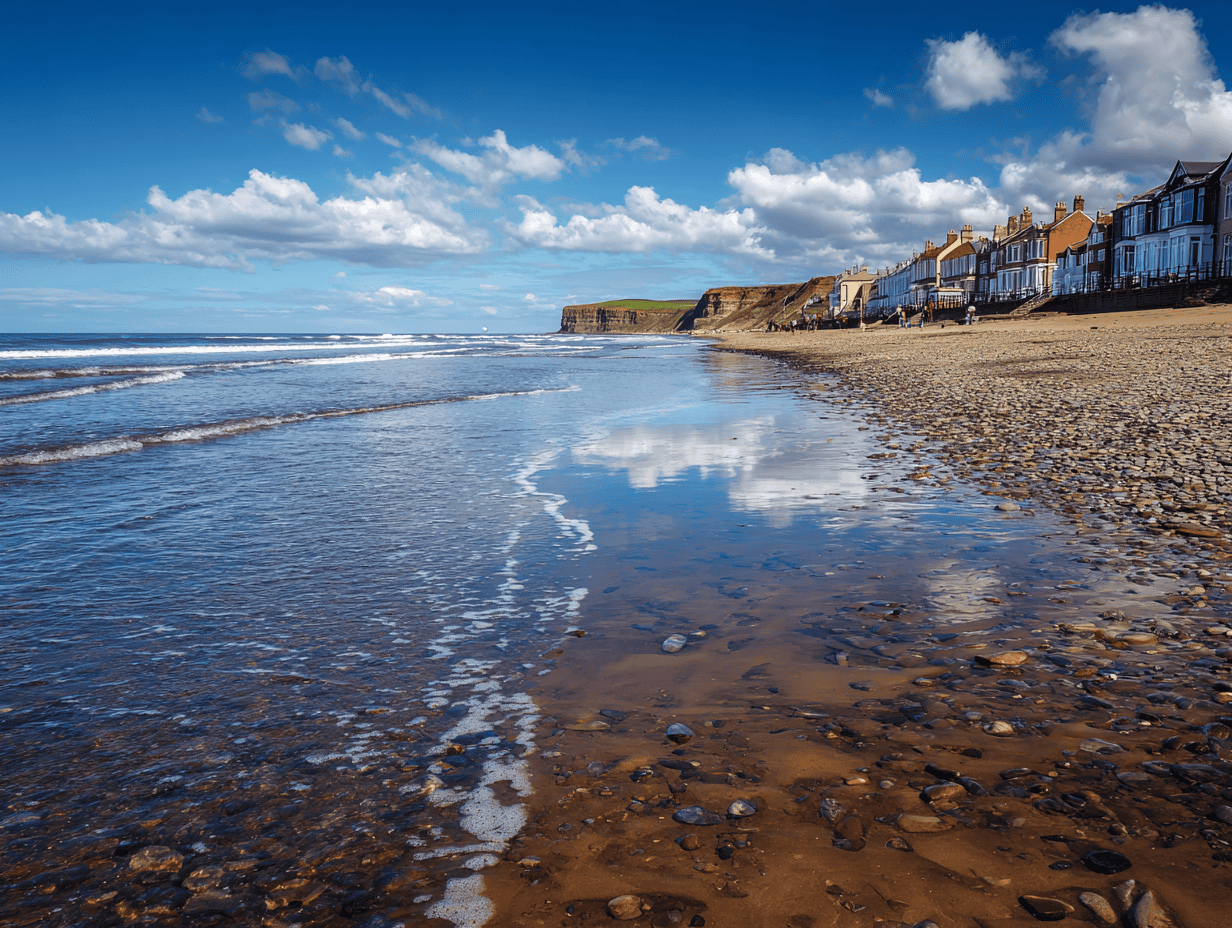
The sandy main beach isn’t your primary target. The rocky outcrops at the north end of the beach are where glass accumulates, but note they become cut off at high tide, so anyone planning to hunt there needs to check tide times before setting out.
Scarborough’s history as a major harbour town, fishing port and Victorian resort all contribute glass to this stretch of coast. Finds tend to be well-frosted greens and browns, with the occasional blue appearing in the rocky sections.
Colours commonly found: Green, white, brown
Occasional finds: Blue, Aqua, Amber, Turquoise
Rare finds: Cobalt Blue, Black, Lavender, Red
Bonus: The rocky north end also yields fossils. The area is on the Dinosaur Coast, and rock pools reward careful exploration.
Find something special? Use our sea glass scanner, GlassLore, to find out rarity, value and history; then you can share to our finds gallery and, more importantly, earn points to climb our hunters leaderboard – are you ready to compete?
When to go
Both bays face east, which means the North Sea drives directly onto them. Easterly and northeasterly conditions are what you want; the post-storm scenario that produces results further up the Yorkshire coast applies here too. A winter visit after a prolonged easterly blow, on a spring low tide, is the best Scarborough scenario.
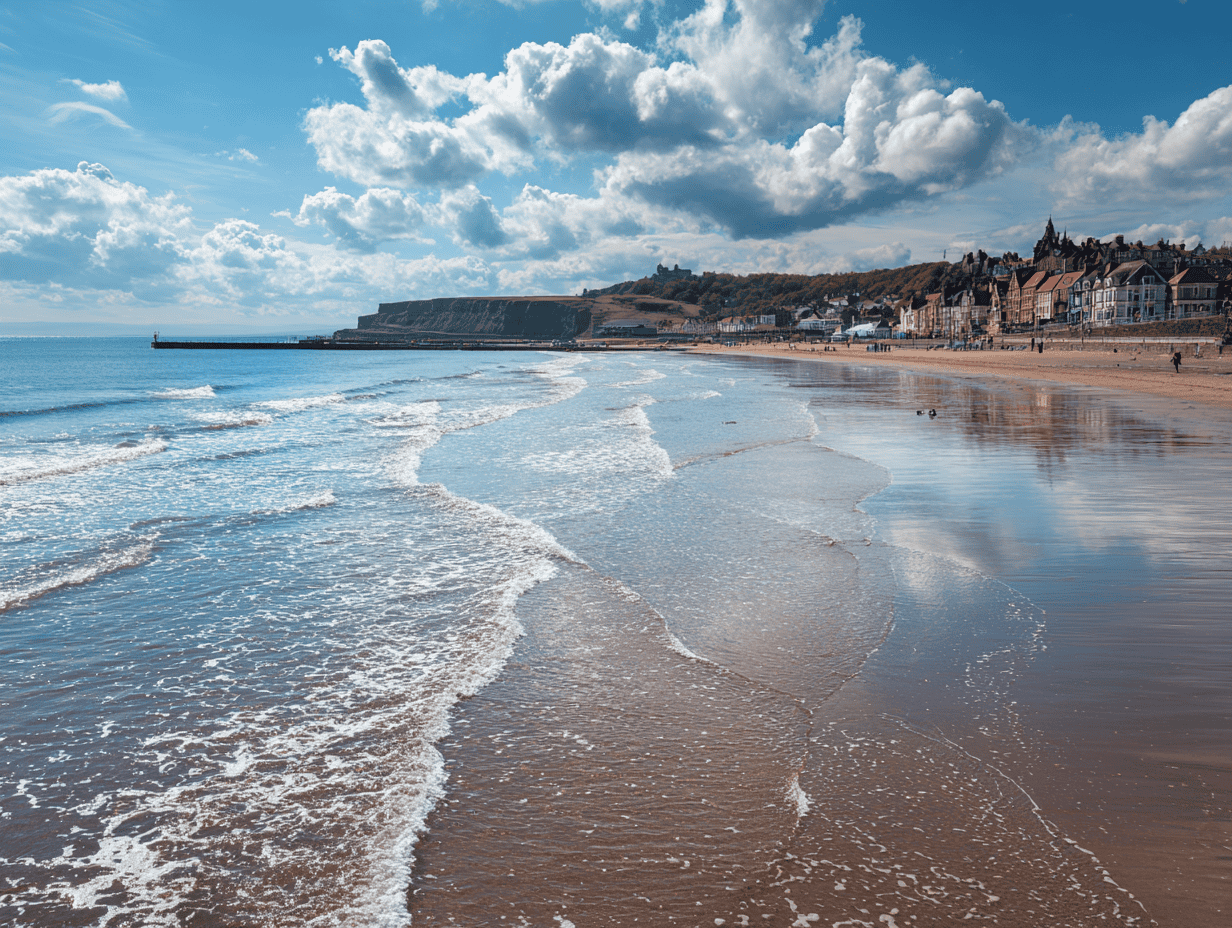
North Bay is the better option for glass hunting. It’s quieter than South Bay, has a rockier northern section that concentrates material more effectively than open sand, and the dog-friendly area near the Sea Life Centre is accessible year-round. South Bay is the classic seaside experience: fish and chips, amusements, the harbour, but for glass, the harbour end at low tide and the rocks below the castle headland are the productive sections.
The tidal range at Scarborough on a spring tide is around 4–5 metres, a generous drop that exposes a substantial strip of beach at low water. Time your visit around the ebb for the widest access
Today’s ShoreSense Score & Best Hunting Window
Scarborough’s two bays face east into the North Sea, with a tidal range of around 4–5 metres on a spring tide, enough to expose a meaningful strip of sand and rock at low water. North Bay and South Bay are separated by the castle headland, and the two bays behave slightly differently in swell conditions. North Bay is more exposed to northerly swells, and South Bay catches more of an easterly fetch.
The ShoreSense widget below combines recent marine conditions, tide timing and practical hunting weather to show today’s overall ShoreSense Score, Hunting Potential, Comfort and the best available hunting window for Scarborough North Bay. It uses UKHO tide data alongside current marine and weather inputs to help you judge whether conditions look promising for a hunt.
Lower tides are particularly useful at Scarborough because they expose more of the rock pools, pebble bands and harbour edges. Check today’s ShoreSense Best Window before travelling, as the most promising period varies with the tide and recent marine conditions.
Scarborough North Bay sea glass conditions
Scarborough North Bay
North Yorkshire
43/100 — Limited, best window 10:41–13:41.
Best window is 10:41–13:41 with calm sea and little recent wave energy to move glass, so the chance of fresh finds is limited today. Sea is likely calm and picked-over — go early.
Limited — better days ahead here
Ranked #45 in the UK ShoreSense leaderboard today.
| Tide | Time | Height |
|---|---|---|
| High water | 05:43 | 6.1 m |
| Low water | 12:11 | 0.9 m |
| High water | 18:08 | 5.6 m |
Where to look on the beach
Scarborough North Bay is the main focus of this guide, but South Bay’s harbour end is also worth checking if you’re making a day of it.
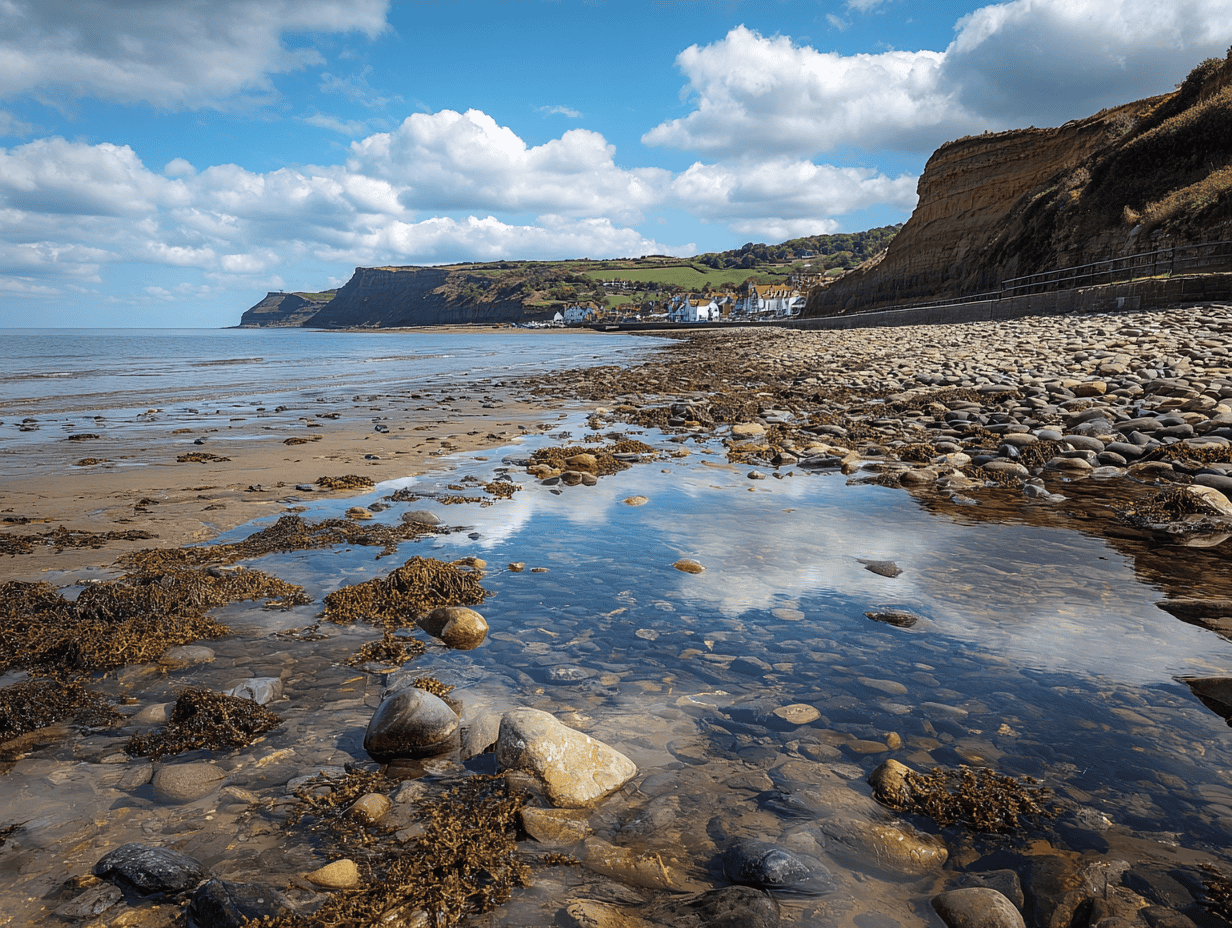
North Bay -northern end near the Sea Life Centre: This is the most productive section for sea glass. The northern end of North Bay near the Sea Life Centre has rock pools and mixed pebble sections that trap glass between tides. Work the rock pool edges and the pebble band at the base of the sea wall. This section is also dog-friendly and accessible year-round.
North Bay – central section: Predominantly sand. Glass turns up here along the strandline after storms, but it’s less reliably concentrated than the rocky ends.
South Bay- harbour area: The rocks at the base of the Vincent Pier and around the harbour entrance are worth checking at low tide. Scarborough’s harbour has been active since medieval times, and centuries of maritime activity have deposited material close to the pier walls. This is a low-volume but historically interesting section; the glass that turns up here has been working its way out from the harbour area for a very long time.
South Bay – below the castle headland: The rocky sections at the northern end of South Bay, in the shadow of Scarborough Castle, produce occasional finds. Less picked over than the central sandy beach and is worth including on any South Bay visit.
Key Tip:
Skip the central sandy beaches and head straight for the northern end of North Bay near the Sea Life Centre. The rock pools and pebble bands here consistently trap more glass than the open sand and are the most productive hunting ground in Scarborough.
Difficulty Level – Beginner
- Easy access to all hunting areas via promenades and beach paths
- Productive hotspots are easy to locate
- Minimal scrambling required for most searches
- Multiple hunting areas can be visited in a single trip
- Suitable for first-time sea glass hunters and families
Hunting Style – The Harbour & Reef Hunter
Scarborough rewards hunters who focus on the edges. Search around harbour structures, rock pools, sea walls and rocky headlands where glass becomes trapped. The open sandy bays can produce finds after storms, but the most consistent results come from the rockier sections.
Beach Personality
Scarborough offers two very different sea glass experiences in one destination. North Bay feels wilder and more natural, with rock pools and pebble bands providing excellent hunting opportunities, while South Bay brings centuries of maritime history into play around the harbour and castle headland. It’s a beach where history and geology work together, creating a variety of hunting grounds that reward both casual beachcombers and dedicated collectors.
Dog friendly?
Yes, with seasonal restrictions.
Dogs are allowed at either end of North Bay during the seasonal restriction period (1st May to 30th September), with designated areas clearly signposted and ample space available. Outside the main summer season, dogs are welcome across the full beach.
For sea glass hunters, the timing works perfectly: winter and early spring, when restrictions don’t apply, are when the beach delivers its best finds anyway.
Scalby Mills at the end of North Bay has a white-washed pub with plenty of outside seating, dog bowls and a fantastic view back across the bay, the ideal end to a hunting session.
Looking for dog-friendly stops in Scarborough? Check our Yappy Places listing.
Practical information
Parking: Parking is available, with disabled spaces, but it is over a 5-minute walk from the beach. There is a charge for using the car park. Roadside pay-and-display parking is available starting from the slipway and around the headland, but fills up very quickly during peak season and on fine-weather weekends. North Bay Car Park (YO12 6RP) is your best bet; arrive early in summer.
Toilets: Toilets are available, were described as spotless by recent visitors, and are free to use. Facilities are close to the beach along the esplanade.
Food and drink: Good range of cafes along the North Bay esplanade. Scalby Mills pub at the north end of the bay is a favourite with dog walkers, great views, dog-friendly and a solid menu. The Sea Life Centre is nearby if you’re visiting with children.
Getting there without a car: Scarborough has its own railway station, well connected to York, Leeds and Hull. From the station, the seafront is accessible by bus or a reasonable walk. North Bay is slightly further from the station than South Bay. The open-top bus service runs along the seafront in season.
Accessibility: Level access to the beach via a ramped slipway. The main sandy beach is flat and easy-going. The rocky north end involves more uneven terrain. The esplanade promenade runs the full length of the bay and is fully accessible.
What to bring
- Sturdy footwear – the rocky north end requires solid shoes
- A small container for finds
- A hand rake for working rock crevices at the north end
- Layers – North Bay is exposed, and the North Sea wind is sharp
- Tide times – the rocky north end cuts off at high tide
The history behind the glass
Scarborough was the fourth largest town in Yorkshire from the 13th to the 16th century. From the 17th to the 19th century, in the great days of sail, this was a major shipbuilding port. The harbour was sustained by a levy on the Newcastle and Sunderland coal trade to London and Europe.
During the 17th century, Scarborough took part in the Greenland whale fishery and manufactured oil. Whaling ships from Scarborough worked the Arctic waters alongside the Whitby fleets; both towns sent vessels north for whale oil and generated the accumulated glass waste of those voyages.
The name Scarborough itself comes from the Old Norse “Skarði’s borg” meaning “Skarði’s fortress” and Viking settlers established a significant settlement here, with archaeological discoveries revealing pottery, coins and other artefacts from the Norse period. The harbour, which began with Norse fishermen, has been busy continuously for over a thousand years.
The spa history adds another layer entirely. Scarborough was the nation’s first seaside resort, with spa visitors from the 17th century onwards taking the waters, bathing in the sea, and bringing with them the full paraphernalia of Georgian and Victorian leisure life.
By the early 19th century, specialised shops on the seafront offered beach stones, shells and fossils to spa visitors; the beachcombing tradition here is older than you’d think. The medicine bottles, spa water flasks, wine and spirit containers brought by those early resort visitors, disposed of in the sea over two centuries of Scarborough holidays, are part of the glass inventory the North Sea has been returning to these beaches ever since.
Tea and silk were cheap in Georgian Scarborough because of the smuggling. The same smuggling networks that operated out of Robin Hood’s Bay and Whitby worked these waters too: Dutch and French vessels offshore, contraband landed under cover of night, gin and brandy jars discarded on the seabed. It all adds up to a surprisingly rich glass history for a beach that’s honest enough to call itself Fair.
Disclaimer: Tide times, dog restrictions, parking charges and beach conditions change regularly. Always verify before visiting. Dog ban boundaries and fixed penalty notice levels are subject to annual review- check with North Yorkshire Council for current rules before visiting with a dog in the restricted season.
From beach to jewellery
Found something on the Yorkshire coast? At Mermaid Tears, our Seaglass jewellery starts on a beach just like this one, hand-hunted and handmade. Browse the collection.
Frequently asked questions
Is Scarborough North Bay good for sea glass hunting? It’s a fair beach; the sandy sections make glass harder to spot than on shingle beaches. The rocky north end is your best target, particularly at low tide after a North Sea storm. Worth combining with Robin Hood’s Bay for a full Yorkshire coast day.
Which end of Scarborough North Bay is best for sea glass? The rocky north end near Scalby Mills. Glass accumulates in the rock crevices and around the outcrops, but this area cuts off at high tide, so timing is essential.
Is Scarborough North Bay dog-friendly? Yes, with seasonal restrictions from 1st May to 30th September on the central section. Both ends of the beach remain accessible to dogs during this period. Full access outside the restriction period.
What is the best time to visit Scarborough North Bay for sea glass? Low tide after a North Sea storm, ideally in winter or early spring, before the seasonal restrictions begin. The beach is quieter, finds are fresher, and you have full access to the rocky north end.
Can I combine Scarborough with other sea glass beaches nearby? Yes, Robin Hood’s Bay is 20 minutes south and one of our good-rated beaches. Whitby is 20 minutes north with its own hunting ground. Scarborough makes a great base for a multi-beach Yorkshire coast trip.
More Yorkshire Beaches
Check out our Full Yorkshire Guide or plan your trip with our Interactive UK Map