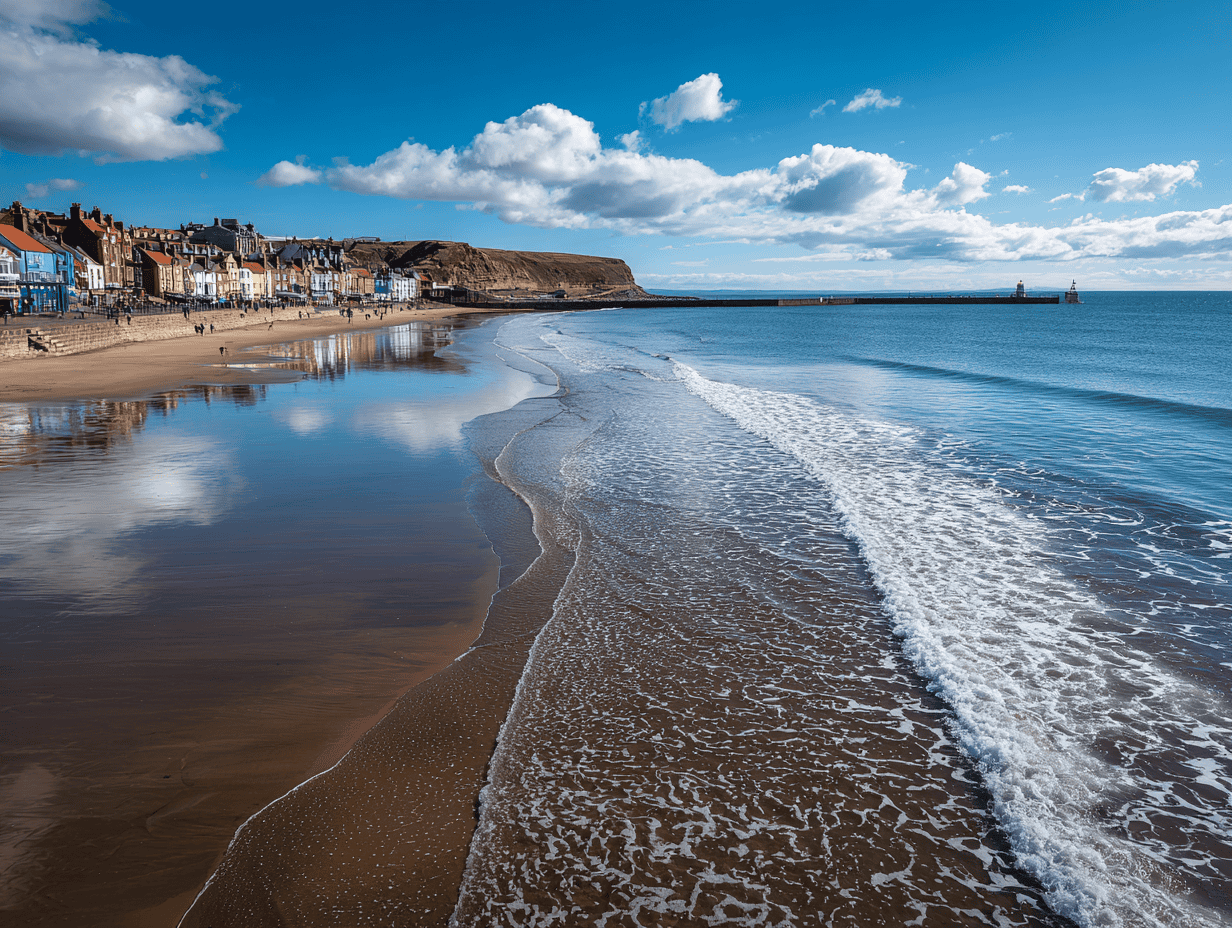
Gothic Skies, Abbey Views and Frosted Glass
Whitby is a good sea glass hunting destination, especially at Tate Hill Beach and along the shoreline towards Sandsend. White, green and brown are the most common finds, with blue, aqua, amber, cobalt, black, lavender, red and pink also reported. Tate Hill is the more concentrated hunt, while the West Cliff–Sandsend stretch gives you far more shoreline to explore.
- Rating: Good Beach
- Terrain: Easy (West Cliff Beach) · Tricky (Tate Hill Beach – steep cobbled access)
- Level: Intermediate
- Dog friendly: Seasonal – dogs banned from West Cliff Beach and from Sandsend 1 May–30 September; Tate Hill Beach and Upgang Beach are open all year
- Common colours: White, green, brown
- Rare colours: Cobalt Blue, Black, Lavender, Red, Pink
- Location: Whitby, North Yorkshire
- Sat Nav: West Cliff Car Park YO21 3EN · Tate Hill YO22 4JR
Best For:
- Sea glass hunting
- Harbour finds
- Sea pottery
- Long beach walks
Today at Whitby
Check out the Full 7 Day Widget lower down on this page, but here is today’s score at a glance – No scrolling required.
Whitby Beach sea glass conditions
Whitby Beach
North Yorkshire — Sea settling
64/100 — Good, best window 16:01–19:01.
Best window is 16:01–19:01 with big seas in the last few days, now easing — glass should be washing in, so the chance of fresh finds is good today.
Good day at a reliable beach
Ranked #49 in the UK ShoreSense leaderboard today.
| Tide | Time | Height |
|---|---|---|
| Low water | 04:55 | 2.5 m |
| High water | 11:24 | 4.2 m |
| Low water | 17:31 | 2.8 m |
| High water | 23:33 | 4.4 m |
Why Whitby is worth the trip
Whitby doesn’t need sea glass to pull people in. It’s got Dracula, a ruined abbey on the clifftop, 199 steps, fish and chips, and a harbour that’s been working since the medieval period. But if you know where to look, it also has glass and quite a lot of it.
This is a proper Good beach, not a world-beater like Seaham, but consistently rewarding if you put in the effort. The town’s centuries of maritime history, including whaling, shipbuilding, fishing, and harbour trade, have put an enormous amount of glass into this stretch of the North Sea. Bottles from the old harbour pubs, Victorian medicine jars, trade cargo lost overboard, the everyday detritus of a working port across hundreds of years. It all ends up, eventually, on the beach.
The glass here tends to be chunky, well-frosted, and genuinely old. Whitby pieces often date to the late 1800s or earlier. You’re not just finding glass, you’re finding history.
The best hunting is along the walk between Whitby and Sandsend, a stretch that most summer visitors never bother with, and down at Tate Hill Beach, tucked under the East Cliff below the abbey. That’s the one locals know about. Small, sheltered, and often overlooked. Trigger loves it down there.
What you’ll find here
The glass at Whitby skews older and chunkier than many beaches. Thick, well-tumbled pieces are common; this isn’t the thin modern stuff. The sea glass community finds a good range of colours here, with some genuinely exciting, rare finds reported over the years.
Colours commonly found: White, green (including seafoam, likely old Coca-Cola bottles), brown
Occasional finds: Blue, Aqua, Amber, Turquoise
Rare finds: Cobalt Blue, Black, Lavender, Red, Pink
Bonus: Clay pipe stems (17th–18th century), pottery shards, fossils, Whitby jet. It’s a beachcomber’s beach in the fullest sense. Don’t get so focused on the glass that you miss everything else.
Found something unusual? Try GlassLore, our free sea glass scanner, to explore what it could be and log your find to the gallery and, more importantly, earn points and climb the leaderboard.
When to go
October through March is the sweet spot. Winter storms push material up the beach, quieter footfall means less competition, and the stretch toward Sandsend is practically deserted. Whitby in peak summer is busy, the main beach fills with families, the car parks queue out, and the best hunters have long since been and gone.
Go on an ebbing tide, two hours either side of low water, when the most beach is exposed, and the fresh strandline is right in front of you. Spring tides (around new and full moon) give the greatest tidal range and expose sections that rarely see the light. After a North Sea storm, it’s always worth the trip. Conditions churn up glass that’s been sitting on the seabed for decades.
Tate Hill Beach is sheltered by the harbour walls, which is part of why the glass there stays in such good condition; it doesn’t get the same relentless pounding. That cuts both ways: the tumbling action is gentler, so pieces can be better frosted, but they also take longer to work their way ashore. Patience and return visits are rewarded.
Today’s ShoreSense Score & Best Hunting Window
Whitby sits on the North Yorkshire coast facing east into the North Sea, with a tidal range of around 4–5 metres on a spring tide, a generous drop that exposes the rocky sections of Tate Hill and the lower cliff base stretches toward Sandsend at low water. The semi-diurnal tidal pattern produces two highs and two lows per day, with the range varying considerably through the spring-neap cycle.
The ShoreSense widget below combines recent marine conditions, tide timing and practical hunting weather to show today’s overall ShoreSense Score, Hunting Potential, Comfort and the best available hunting window for Whitby Sea Glass. It uses UKHO tide data alongside current marine and weather inputs to help you judge whether conditions look promising for a hunt.
Whitby Beach sea glass conditions
Whitby Beach
North Yorkshire — Sea settling
64/100 — Good, best window 16:01–19:01.
Best window is 16:01–19:01 with big seas in the last few days, now easing — glass should be washing in, so the chance of fresh finds is good today.
Good day at a reliable beach
Ranked #49 in the UK ShoreSense leaderboard today.
| Tide | Time | Height |
|---|---|---|
| Low water | 04:55 | 2.5 m |
| High water | 11:24 | 4.2 m |
| Low water | 17:31 | 2.8 m |
| High water | 23:33 | 4.4 m |
Where to look on the beach
Tate Hill Beach -this small, sheltered beach tucked below the East Cliff and Whitby Abbey is the one to know. It sits right beside the harbour entrance, accessed via Tate Hill steps off Church Street on the east side of town. Dogs are welcome here year-round (no seasonal restrictions), it rarely gets crowded, and the glass is consistently good. Work the high-tide strandline and around the base of the harbour wall where glass collects in crevices. Tate Hill has a quiet reputation among beachcombers as a spot that can out-produce far more famous beaches in a single session. It’s small and sheltered, which keeps the competition low.
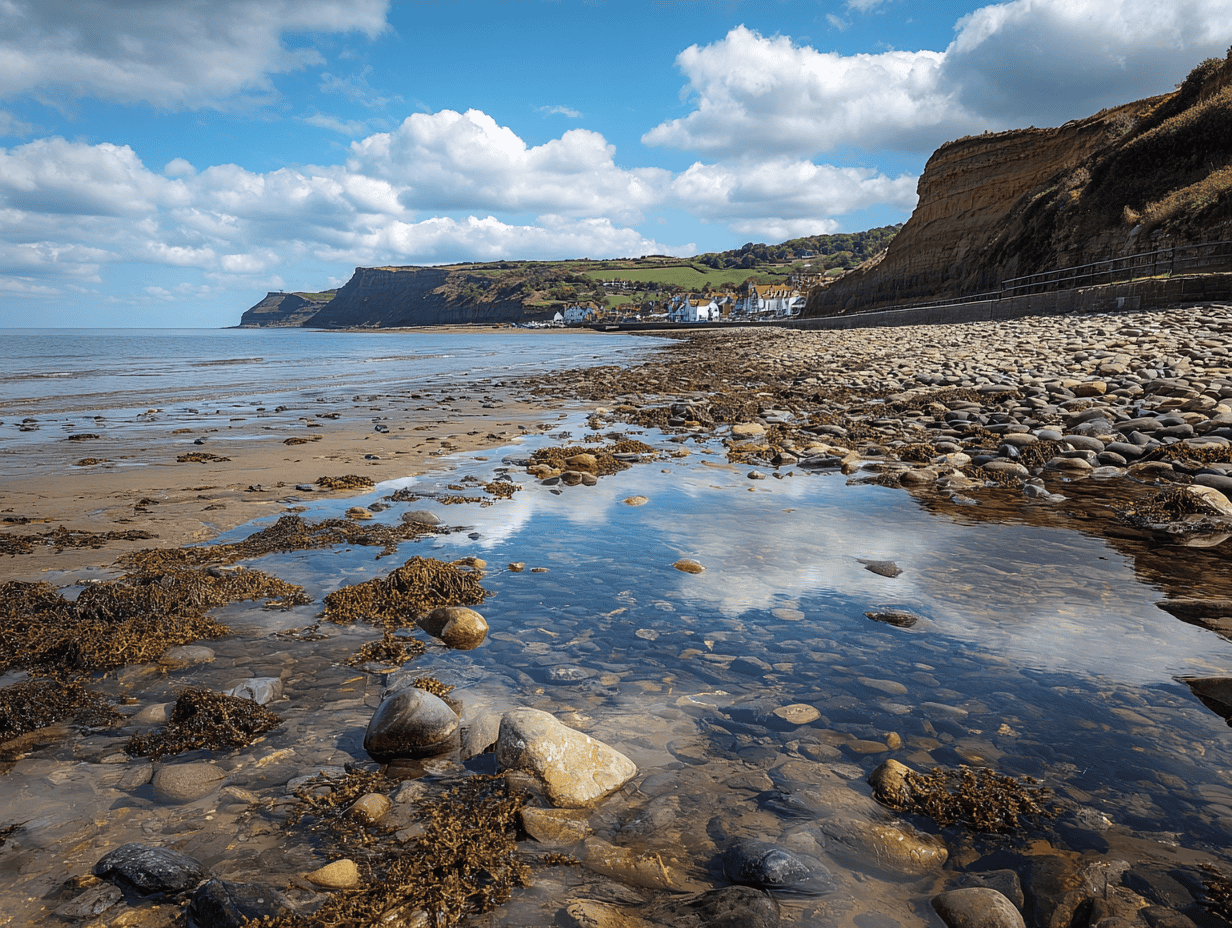
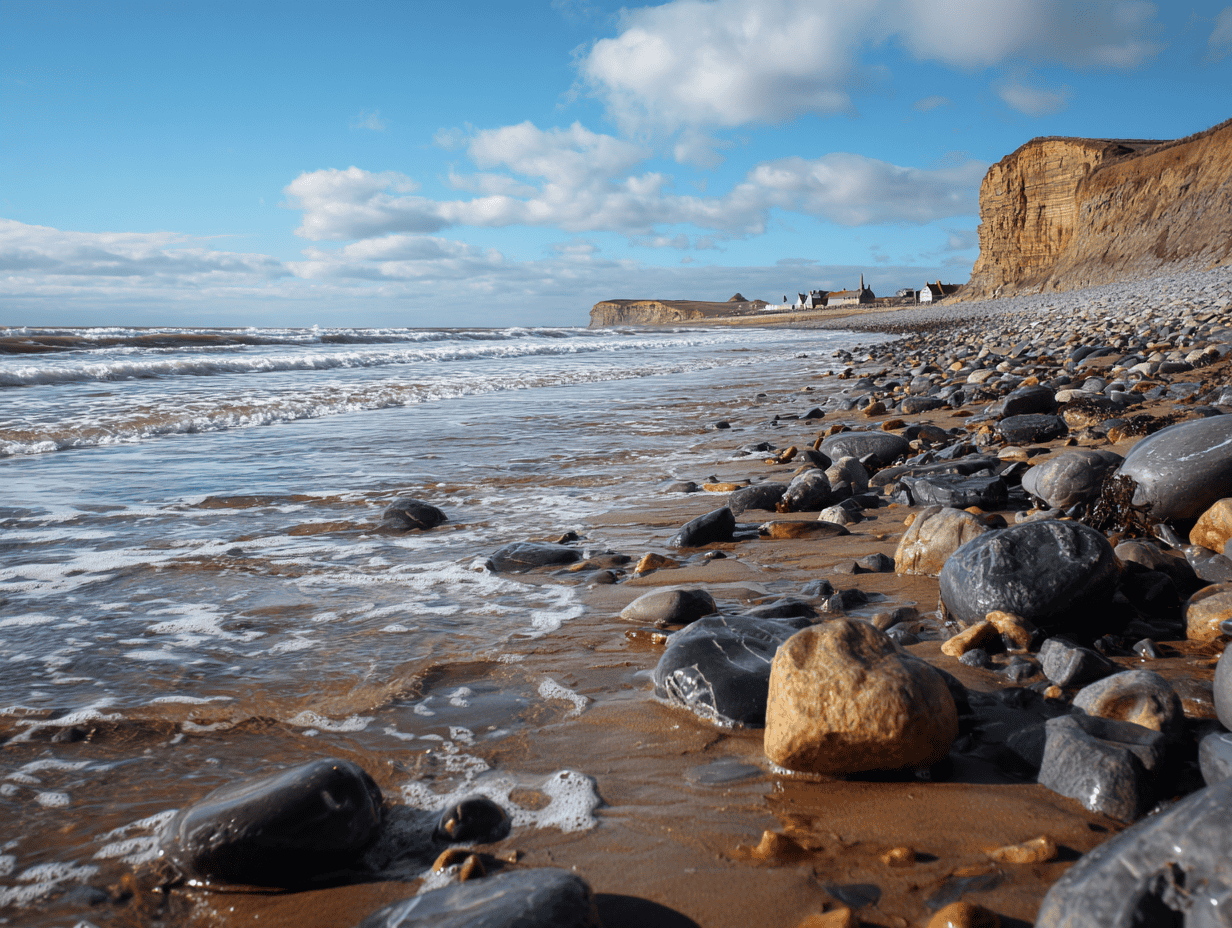
West Cliff Beach and the walk toward Sandsend – the main sandy beach below the West Cliff has seasonal dog restrictions, but the stretch that interests hunters is the continuation northwest toward Upgang and then Sandsend, along the cliff base. This is where Whitby’s most dedicated local glass hunters do their best work. The glass here has more exposure, comes in higher volume, and the walk itself is stunning. Start at the end of West Cliff beach, where the chalets stop, and follow the shoreline northwest. The going is pebbly. Watch your footing on the stones near the waterline, especially when the tide’s still running.
Get your eye level down. Train yourself to spot the matte, frosted edge against the shine of wet pebbles. At Tate Hill, especially, look in crevices and where the harbour wall meets the beach. Glass wedges itself in and stays put.
Safety note: check tide times before walking the Sandsend stretch. The cliff base sections can be cut off by the tide, and that coast doesn’t mess about.
Key Tip:
Start at Tate Hill Beach and search the harbour wall thoroughly before heading towards Sandsend. The small size of Tate Hill makes it easy to hunt systematically, while the shoreline beyond West Cliff offers a larger volume of glass for those willing to walk.
Difficulty Level – Intermediate
- Multiple productive hunting zones require some exploration
- Pebbly sections can be tiring underfoot on longer walks
- Harbour-wall finds are often hidden in crevices
- Tide awareness is important on the Sandsend stretch
- Success comes from careful searching rather than quick scanning
Hunting Style – The Harbour-to-Horizon Hunter
Whitby rewards hunters who combine detailed searching with longer shoreline exploration. Begin at Tate Hill, working the strandline and harbour wall pockets methodically, then move west towards Sandsend where fresh material is constantly being sorted by the North Sea. The best days often involve both approaches.
Beach Personality
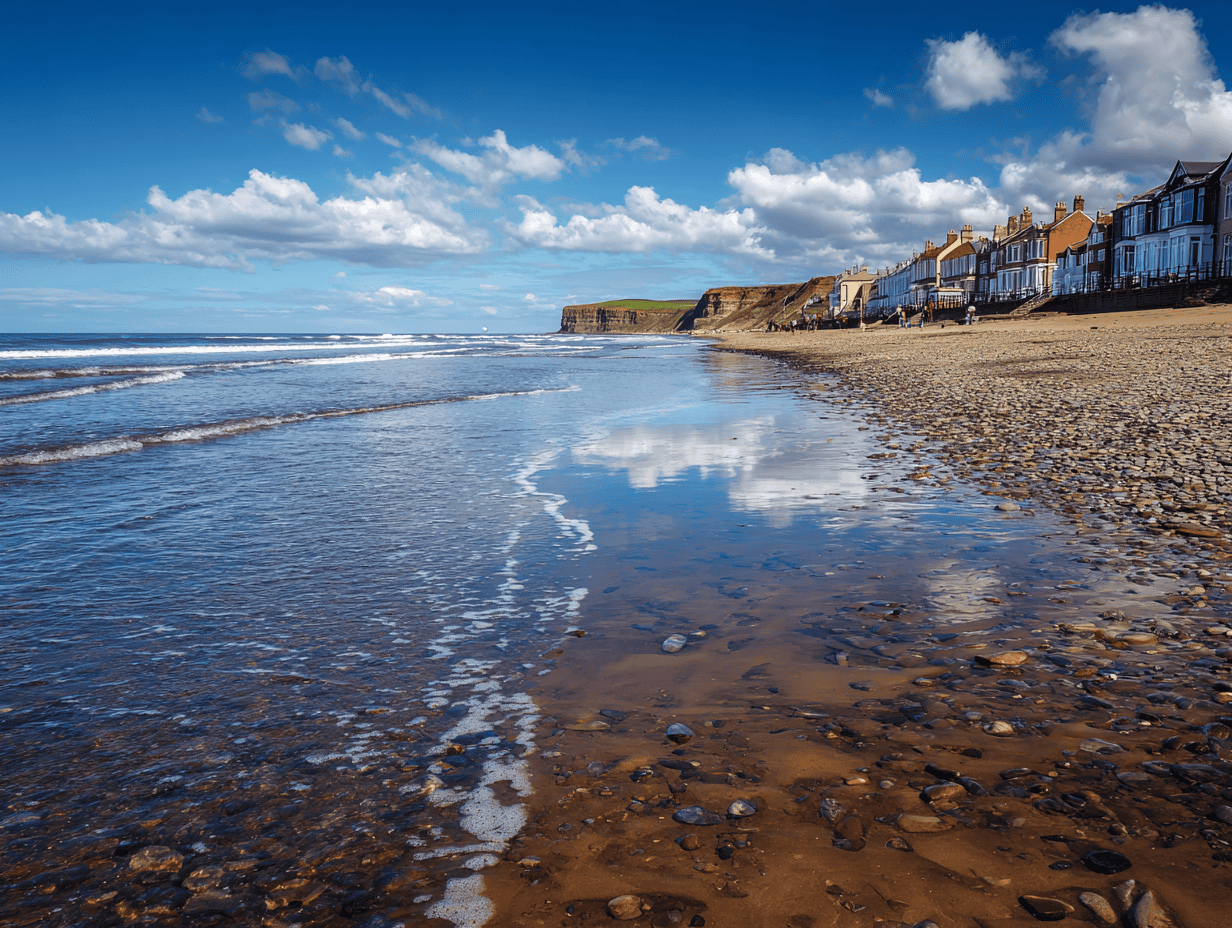
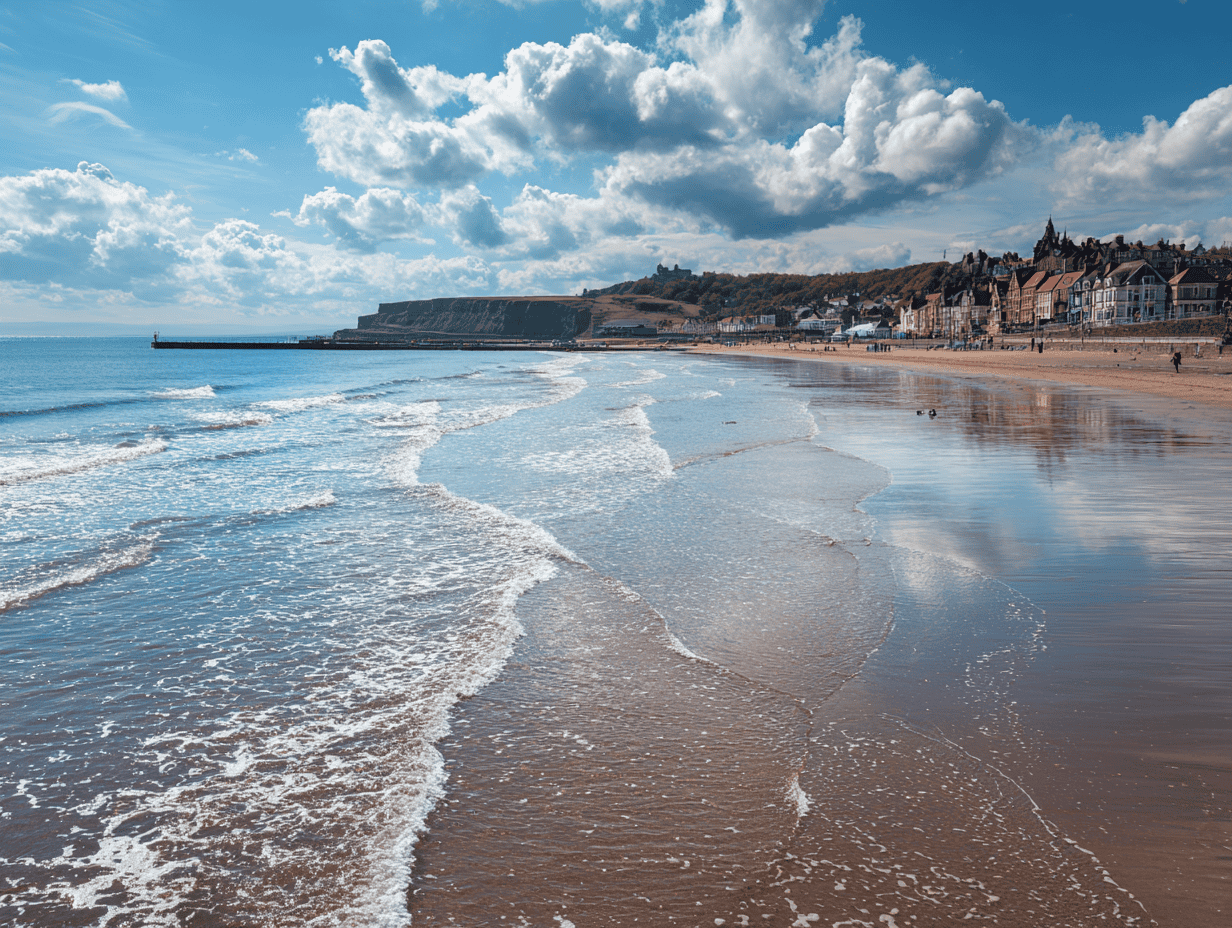
Whitby feels like a sea glass hunter’s town. Fishing boats, harbour walls, abbey ruins and centuries of maritime history create the perfect backdrop for a day’s beachcombing. Tate Hill offers intimate, almost secretive hunting in the shadow of the East Cliff, while the walk towards Sandsend opens into one of the North Yorkshire coast’s great shoreline adventures. It is a beach that rewards both patience and curiosity, with every tide carrying a little more of Whitby’s history back onto the shore.
Dog friendly?
It depends where you go, and Whitby works out well for hunters.
From 1 May to 30 September, dogs are banned from the main West Cliff Beach, from the West Pier east to the promenade by the beach steps at the western end of the chalets. Sandsend, at the far end of the coastal walk, has its own exclusion zone over the same dates. Breaches carry a £100 fixed penalty notice, up to £1,000 if it goes to court, and the zones are signposted at the access points.
Tate Hill Beach, tucked under the East Cliff on the east side of the harbour, is open to dogs all year. It’s also the better hunting ground, so a summer visit with a dog isn’t a compromise. North Yorkshire Council consulted on removing the remaining restrictions there, so check the signs when you arrive.
Upgang Beach, between West Cliff and Sandsend, has no seasonal restrictions either, which means you can work most of the Sandsend stretch in summer. Just turn back before you reach Sandsend itself.
Whitby is one of the most dog-friendly towns on the Yorkshire coast. Check our Yappy Places listing for Whitby for pubs and cafés near both hunting spots.
Practical information
Parking: West Cliff car park (YO21 3EG) is the most convenient for the main beach; large, open, pay-and-display. High season rates (March–October) are around £2.90 per hour or £9.20 for over 6 hours. It can get very busy in peak summer. Arrive before 9 am on weekends, or you’ll be circling. Abbey Headland car park (YO22 4JT) holds 415 cars, has toilets and CCTV, and is free in low season (November to February). For Tate Hill Beach, use the Church Street car park (YO22 4AS), about a 5-minute walk across the swing bridge.
Park and Ride is available north of town at the A171/B1460 junction (YO21 1TL). Dogs travel free at the driver’s discretion.
Toilets: Public toilets at the Abbey Headland car park, near the harbour, and at the main beach facilities. None on Tate Hill Beach itself. Plan accordingly.
Food and drink: You’re in Whitby. Fish and chips from the harbour, Fortune’s Kippers on Henrietta Street (a few steps from Tate Hill Beach, one of the best-known smokehouses in England), and a huge range of cafes, pubs and restaurants within easy walking distance of both hunting spots. Check Yappy Places for dog-friendly options.
Getting there without a car: Whitby is served by the Esk Valley Line from Middlesbrough, and by frequent buses from Scarborough and Middlesbrough. The station is a short walk from the town centre and both main beaches.
Accessibility: West Cliff beach is accessible via a slipway. Tate Hill Beach involves steps (Tate Hill steps) from Church Street, not suitable for wheelchairs or buggies. The harbour area and promenade along the West Cliff are largely accessible.
What to bring
- Wellies or sturdy walking shoes – the Sandsend stretch is pebble and rock, uneven underfoot
- A small container or zip-lock bag for your finds – you’ll want both hands free for climbing the bank
- A hand rake or old garden fork for turning the strandline pebbles
- Layers – the North Yorkshire coast is properly exposed, and the wind off the North Sea cuts through even in summer
- A flask – Tate Hill Beach has no facilities, and you’ll want to stay for a while
- A tide table or the widget on this page: the Sandsend stretch has a cut-off risk on a big tide
The history behind the glass
Whitby has been a working port since at least the 14th century. It was once the sixth-largest port in England, with eleven shipyards lining the upper harbour estuary and ships setting out for Greenland, the Arctic, and beyond. The alum industry, which took off in the late 16th century when a local entrepreneur smuggled Italian workers to Yorkshire and broke the Pope’s monopoly on the substance, drove rapid growth, filling the harbour with trade ships and the town with industry. By the 1790s, Whitby was competing with Newcastle as the country’s second-largest producer of merchant ships.
Then came the whalers. From around 1753 until well into the 19th century, Whitby ships sailed for Greenland and the Arctic. Boiler houses lined the harbourside, rendering blubber into oil. The town was prosperous, rough, and busy, and a prosperous, rough, busy harbour puts a prodigious amount of glass into the water. Cargo bottles, harbour tavern waste, medicine from the ship’s chest, trade goods dropped overboard, and glass from the chandlery yards. All of it ended up in the sea, and a significant portion of it is still coming back.
The pieces you find at Tate Hill Beach may have been in the water since the whaling era. Some could predate Queen Victoria. The clay pipe stems that turn up alongside the glass date to the 17th and 18th centuries. Beachcombers who’ve had a good day here describe getting fussy, walking past pieces they’d normally have pocketed because something better keeps turning up. On the right tide, that’s the level this beach can operate at.
From beach to jewellery
Found something beautiful at Whitby? That frosted blue or a chunky green with real age on it? At Mermaid Tears, every piece of jewellery starts exactly like that, hand-hunted from UK beaches and handmade into something worth keeping. Browse the collection.
Frequently asked questions
Is Whitby Beach good for sea glass hunting? Yes – Whitby is a reliable Good beach with a long maritime history that has put centuries of glass into the sea. Tate Hill Beach, in particular, is consistently productive and is one of the best-kept secrets on the Yorkshire coast.
Where exactly should I hunt for sea glass in Whitby? Tate Hill Beach (east side of the harbour, below the abbey) is the top spot, dog-friendly all year, sheltered, and less picked-over than the main beach. The walk northwest from West Cliff Beach toward Upgang and Sandsend along the cliff base is also productive and quieter than the main tourist areas.
Are dogs allowed on Whitby Beach? It depends where. West Cliff Beach and Sandsend both ban dogs from 1 May to 30 September. Tate Hill Beach and Upgang Beach are open to dogs all year, and Tate Hill is the best hunting spot anyway.
What is the best time of year to find sea glass at Whitby? October to March, when storms are frequent, the beach is quieter, and the tidal range is at its greatest around new and full moons. Always hunt on an ebbing tide.
Can you find anything other than sea glass at Whitby Beach? Yes – Whitby is exceptional for beachcombers. Clay pipe stems, pottery shards, fossils (the whole coast sits on Jurassic-era rock), and occasionally Whitby jet turn up alongside the glass. Keep your eyes open for more than one kind of treasure.
What are the rarest colours of sea glass at Whitby? Collectors have reported red, orange, lilac and pink from the Whitby area, all genuinely rare. The more common finds are white, green (especially the pale seafoam green from old glass bottles) and brown. Blues and aquas turn up with patience and return visits.
Disclaimer: Tide times, dog restrictions, parking charges and beach conditions change regularly. Always verify before visiting. North Yorkshire Council reviews its dog control order periodically and consulted on changes affecting Tate Hill Beach, so check northyorks.gov.uk before visiting with a dog between May and September. The cliff base sections towards Sandsend can be cut off by the tide.
Last updated: September 2026
Dog rules checked: September 2026 — North Yorkshire Council (revised PSPO; confirm Tate Hill status)
More Yorkshire Beaches
Check out our Full Yorkshire Guide, or our interactive map to find more beaches; you can even filter by colour.