Where Dolphins Hunt and History Runs Deep
Chanonry Point is a good sea glass hunting beach, especially along the south-facing shingle on the Fortrose side of the point. White, green and brown are the most common finds, with blue, aqua, amber, turquoise, cobalt and black also reported. The glass can be surprisingly hard to spot among the grey-brown pebbles, so this is a slow, texture-led hunt rather than a high-volume beach
- Rating: Good Beach
- Level: Intermediate
- Terrain: Easy – loose shingle foreshore, flat approach from car park
- Dog friendly: Yes, dogs welcome all year round, no seasonal restrictions
- Common colours: Green, white, brown
- Rare colours: Turquoise, Cobalt Blue, Black
- Location: Black Isle, Scottish Highlands
- Sat Nav: IV10 8SD (Chanonry Point car park, Ness Road, Fortrose)
Today at Chanonry Point
See below for the latest ShoreSense Score; scroll down for the full 7-day forecast.
Chanonry Point sea glass conditions
Chanonry Point
East Scotland
35/100 — Limited, best window 06:11–09:11.
Best window is 06:11–09:11 with calm sea and little recent wave energy to move glass, so the chance of fresh finds is limited today. Sea is likely calm and picked-over — go early.
Limited — better days ahead here
Ranked #93 in the UK ShoreSense leaderboard today.
| Tide | Time | Height |
|---|---|---|
| High water | 01:41 | 4.6 m |
| Low water | 07:41 | — |
| High water | 14:04 | 4.3 m |
| Low water | 19:36 | — |
Best For:
- Experienced beachcombers
- Pebble ridge hunting
- Current convergence zones
- Frosted sea glass
- Storm-following hunts
- Scenic wildlife trips
- Dolphin spotting + beachcombing
- Patient slow scanning
Why Chanonry Point
There aren’t many sea glass beaches in the UK where you can find a frosted piece of glass, look up, and watch a wild dolphin breach ten metres from shore. Chanonry Point is one of them.
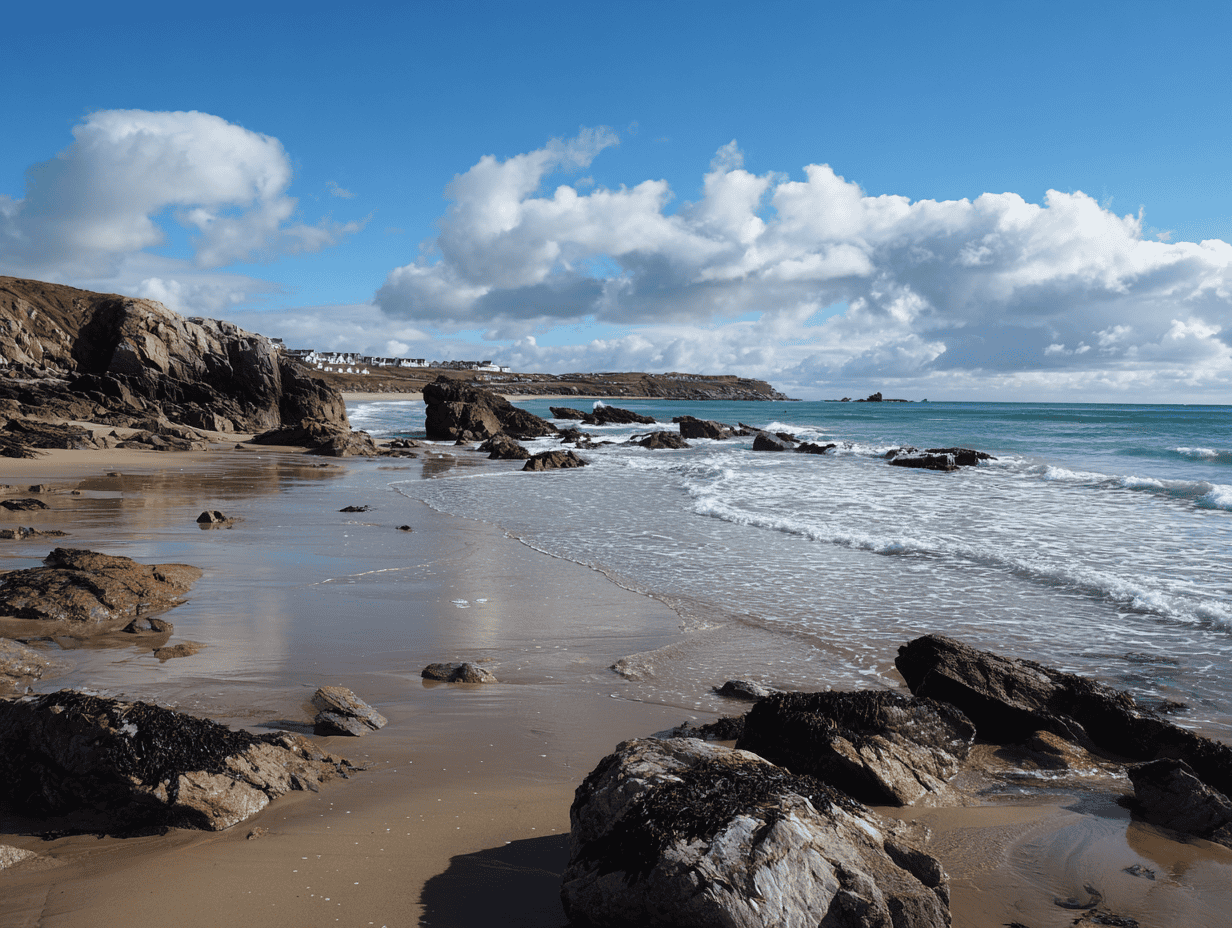
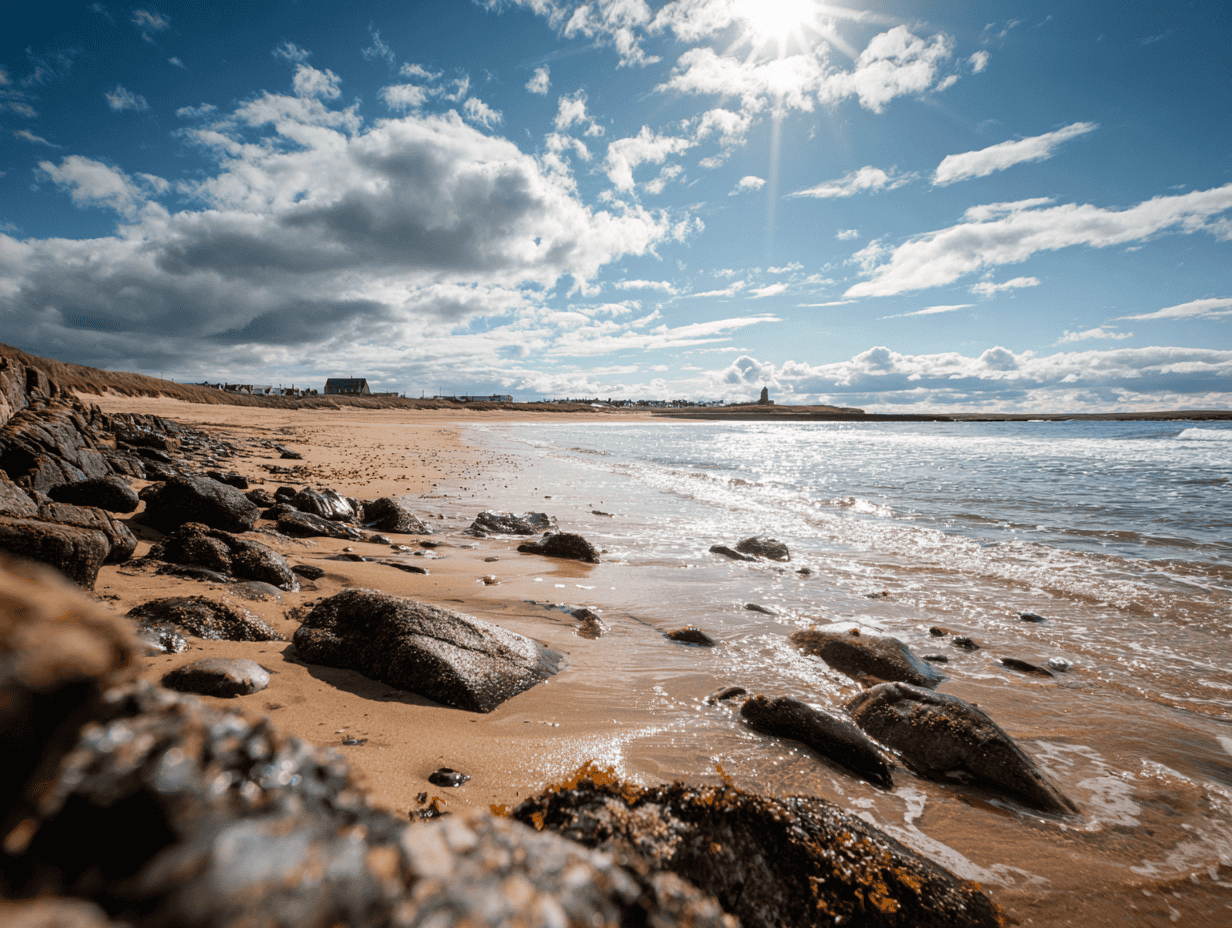
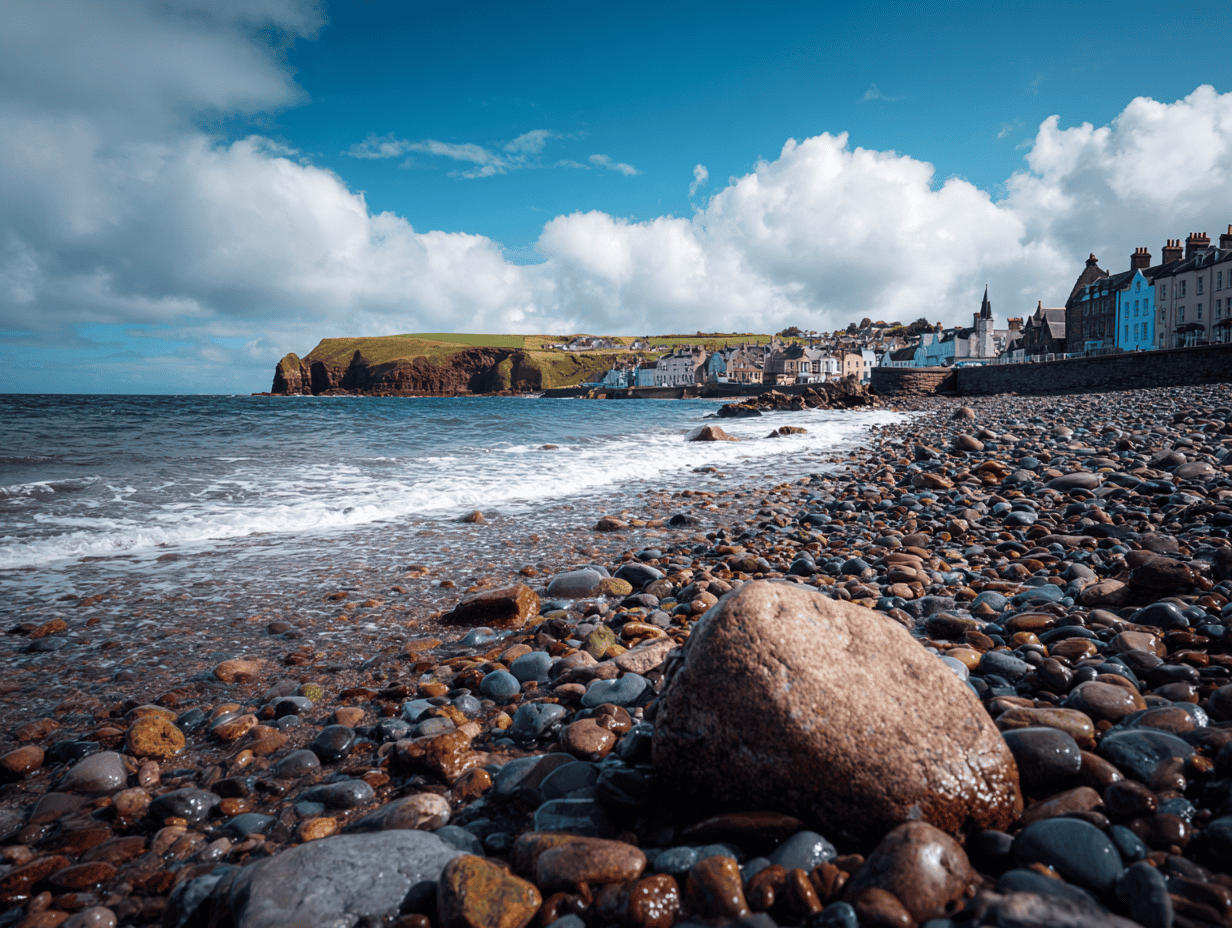
This narrow finger of land juts into the Moray Firth between Fortrose and Rosemarkie, flanked by water on both sides and flanked by a golf course on the approach. The beach itself, a loose, pebbly shingle on the southern, Fortrose-facing side, isn’t the biggest hunting ground in Scotland, but it’s productive, genuinely beautiful, and surrounded by a depth of history that few coastal spots can match.
The Stevenson lighthouse at the tip has been lit since 1846; the tidal currents here are among the most powerful on the east coast; and the name Chanonry itself echoes the medieval ecclesiastical community of canons who made this peninsula their home in the 13th century. This place has been important to people for a very long time.
For sea glass hunters, the appeal is real but requires honest framing. Chanonry is a Good beach, not a Top one. You won’t be wading through glass the way you would at Seaham. But the combination of strong tidal currents, the Moray Firth’s shipping and fishing heritage, and the tumbling action of a shingle shore with a significant tidal range means finds are genuine and satisfying.
Go with the tides, go with patience, and go with the knowledge that even if the glass is light on a given day, you are standing in one of the most remarkable places on the Scottish coast.
What you’ll find here
The glass at Chanonry is predominantly well-tumbled, smoothed by the powerful Moray Firth tidal action rather than heavy surf. Pieces tend to be nicely frosted with good definition; the currents do the work here.
Colours commonly found: White, green, brown
Occasional finds: Blue, Aqua, Amber
Rare finds: Turquoise, Cobalt Blue, Black
Bonus: Sea pottery fragments, occasionally Victorian stoneware; smooth pebbles of Moray Firth jasper and quartz, worth collecting in their own right
Found something unusual? Try GlassLore, our free sea glass scanner, to explore what it could be and log your find to the gallery and, more importantly, earn points and climb the leaderboard.
When to go
Timing matters significantly at Chanonry Point, and not just for the dolphins.
The tidal currents through the narrows here are extreme on a spring tide. This is, after all, the same tidal action that concentrates hundreds of salmon and draws dolphins in from across the Firth. That same energy turns the pebbles. Visit in the ebb, as the tide is going out, and work the newly exposed strandline. The best glass tends to sit where the pebbles cluster against the natural ridges that form along the waterline.
Storm periods in autumn and winter are your best bet for fresh material. The Moray Firth can get genuinely rough, and northerly gales push glass up from the seabed and redistribute what’s been accumulating over the summer. Spring tides around new and full moon expose the greatest area of beach. Summer is the busiest season thanks to the dolphins; if you want the place to yourself, a quiet winter morning between November and February is the move.
One important note: the currents at Chanonry Point are genuinely dangerous. There have been helicopter rescues here. Don’t wade. Keep your dog well back from the water on the point side. The channel is deep, the current is fast, and the water is cold even in July.
Today’s ShoreSense Score & Best Hunting Window
Chanonry Point’s glass comes from the same place as its dolphins: those brutal Moray Firth currents that funnel through the narrows and turn everything over on the seabed. Which means the tides here genuinely matter.
A good tide on the right day makes this place sing. The strong tidal flows through the narrows constantly rework the shingle and can redistribute material along the point, which is one reason the pebble ridges and current-facing margins are worth careful attention.
The ShoreSense widget below combines recent marine conditions, tide timing and practical hunting weather to show today’s overall ShoreSense Score, Hunting Potential, Comfort and the best available hunting window for Chanonry Point. It uses UKHO tide data alongside current marine and weather inputs to help you judge whether conditions look promising for a hunt.
Chanonry Point sea glass conditions
Chanonry Point
East Scotland
35/100 — Limited, best window 06:11–09:11.
Best window is 06:11–09:11 with calm sea and little recent wave energy to move glass, so the chance of fresh finds is limited today. Sea is likely calm and picked-over — go early.
Limited — better days ahead here
Ranked #93 in the UK ShoreSense leaderboard today.
| Tide | Time | Height |
|---|---|---|
| High water | 01:41 | 4.6 m |
| Low water | 07:41 | — |
| High water | 14:04 | 4.3 m |
| Low water | 19:36 | — |
See Today’s best ShoreSense beaches, including our movers and shakers this week
Where to look on the beach
Chanonry Point has two distinct beach sections, and they behave differently for hunting:
South-facing shingle (Fortrose side) – This is your primary hunting ground. The shingle beach running from the small car park along the south shore of the Ness concentrates material at the waterline and in the pebble ridges that form along the high-tide strandline. Work slowly, crouch down, and let your eyes adjust. The glass here blends convincingly into the grey-brown Moray Firth shingle.
East-facing beach (Rosemarkie side) – Walkable from the car park towards Rosemarkie village (about a mile of beach). This stretch is sandier and broader at low tide. It’s less productive for glass than the south side, but worth a scan on the way back, particularly after northerly weather.
Around the lighthouse base – Don’t neglect the area immediately around the point itself. The convergence of currents deposits material in unexpected clusters. Poke around any natural depressions in the shingle and wherever pebble ridges run parallel to the water.
Safety: Do not wade or stand close to the waterline on the point itself. The Moray Firth tidal channel is extremely fast-moving and deceptively powerful. Step back further than feels necessary. Keep dogs on a lead near the water; the currents have caused serious incidents here.
Key Tip
At Chanonry Point, stop looking for colour and start looking for texture. The best sea glass blends almost perfectly into the Moray Firth shingle, especially when wet. Slow down, crouch lower, and work the pebble ridges carefully.
Difficulty Level
Intermediate
Not because the terrain is especially difficult, but because:
- glass visibility is low
- shingle camouflage is strong
- currents are serious
- productive zones are subtle rather than obvious
Hunting Style
“Pebble Ridge + Current Hunting”
Meaning:
- move slowly
- search methodically
- focus on ridges/depressions
- don’t expect obvious surface finds
- revisit after changing conditions
This is not a fast beach.
Dog friendly?
Yes – Chanonry Point is dog-friendly year-round with no seasonal restrictions. Your dog would absolutely be in his element on the beach walk from the car park to the point and back, though keep him firmly on lead near the waterline. The currents are not a hazard you can eyeball reliably.
The wider Rosemarkie beach stretching north from the point is also dog-friendly year-round, and the walk between the two is one of the better dog walks on the Black Isle, with good footing, big views, and a lighthouse at the end.
For food and drink with your dog after the hunt, the Rosemarkie Beach Café on Marine Terrace allows dogs at outdoor tables and even keeps dog treats and a water bowl. A couple of minutes’ walk up the road, Crofters Café Bar is also worth a stop.
The Anderson in Fortrose is an award-winning restaurant and pub that is pet-friendly too. Check our Yappy Places listing for the Black Isle for current details on dog-friendly spots in the area.
Practical information
Parking: Small pay-and-display car park at Chanonry Point (IV10 8SD). There are two blue badge bays. No campervans or motorhomes — there is a height restriction barrier on the overflow car park, and the narrow single-track road through the golf course is not suitable for larger vehicles. In peak summer, it fills quickly, particularly when dolphins have been reported.
Arrive early or park in Rosemarkie (free on-street parking on Marine Terrace, IV10 8UL) and walk the beach to the point, about 20 minutes along the shingle.
Toilets: None at Chanonry Point. The nearest are at Rosemarkie Beach Café (next to the car park at the Rosemarkie end of the beach) and in Fortrose village.
Food and drink: Rosemarkie Beach Café (IV10 8UW) – community-run, dog-friendly outdoor seating, great coffee and home baking. Crofters Café Bar on Marine Terrace – good for lunch. IV10 café-bar-deli in Fortrose for food any time of day. The Anderson on Union Street, Fortrose award-winning evening restaurant and whisky bar, pet-friendly.
Getting there without a car: Service bus 26 and 26A run between Inverness and Cromarty, stopping at both Fortrose and Rosemarkie. From either stop, it’s a 20–30 minute walk along the coast path or beach to Chanonry Point. Check Traveline Scotland (travelinescotland.com) for current timetables.
Accessibility: The car park is flat and level. The beach is shingle firm enough for walking but not suitable for wheelchairs or buggies. The dolphin-watching area at the point is reached via a short beach walk over loose pebbles. The viewing area near the car park is accessible without crossing difficult terrain.
What to bring
- Wellies or waterproof walking boots. The shingle is loose, and the spray from the Firth can reach further than expected
- Layers and a windproof outer layer – Chanonry Point is fully exposed, and the Moray Firth creates its own weather
- A small bag or tin for your finds
- Binoculars – not just for dolphins; the glass hunting improves when you scan the strandline from a distance first
- A fully charged phone, for tide times – strong currents mean timing your visit properly matters
- Midge repellent from May to September – the wooded stretches near Rosemarkie can be lively
The history behind the glass
The glass at Chanonry Point doesn’t have one source. It has many layers across centuries.
The Point takes its name from the medieval ecclesiastical community that grew up on this peninsula from the 13th century onward. When Bishop Robert was granted papal permission in 1235 to build a new cathedral at what became Fortrose, secular canons built their manses around the Cathedral Green, and the whole area became known as the Chanonry, meaning the place of the canons.
For 300 years, this was an important crossing point of the Moray Firth, with pilgrims rowed across the narrows en route to the Shrine of St Duthac at Tain, including King James IV of Scotland on multiple occasions. All of that human traffic means glass, pottery and artefacts have been entering these waters for a very long time.
After the Reformation of 1560, the cathedral fell into decline. Oliver Cromwell’s forces later quarried much of its red sandstone in the 1650s to build a citadel at Inverness, and fragments of worked stone, along with occasional pieces of medieval window glass, are part of this shoreline’s heritage. A tiny piece of stained glass from the cathedral itself is said to survive, set into the rose window of St Andrews Church in Fortrose.
By the 18th and 19th centuries, the Moray Firth was a working maritime route, with fishing boats, trading vessels, and harbour activity at Fortrose and Inverness, all contributing to the background layer of bottle glass, stoneware and domestic debris that eventually tumbles its way onto these beaches. The powerful tidal currents through the narrows have been working on that material ever since, grinding it smooth against the Moray shingle.
When you find something here, it almost certainly came from the sea rather than from a single industrial source. That’s a different kind of find, quieter provenance, harder to pinpoint, but no less real.
From beach to jewellery
Found something beautiful on the shingle at Chanonry Point? At Mermaid Tears, every piece of jewellery starts exactly where you’re standing, hand-hunted from UK beaches and handmade into something you’ll wear and keep. If you’d rather carry a piece of the coast home than leave it in a pocket, browse the collection.
Disclaimer: Tide times, parking charges and beach conditions change regularly. Always verify before visiting. The tidal channel at Chanonry Point carries extremely strong currents; stay well back from the water’s edge at all times, particularly on the Firth-facing side of the point. Midge season runs from May to September; come prepared. Information on this page is provided in good faith but may not reflect the most current situation.
Updated: Aug 26
Frequently asked questions
Is Chanonry Point good for sea glass hunting? Yes, though it’s a Good beach rather than an exceptional one. The finds are genuine and well-tumbled thanks to the powerful Moray Firth currents, but you won’t be picking up handfuls. Go on the ebb tide after stormy weather for the best results.
Can I see dolphins at Chanonry Point while sea glass hunting? Very possibly. The dolphins follow salmon on the incoming tide, typically about an hour after low tide. If you time your glass hunting on the ebb and wait through the turn of the tide, you have a reasonable chance of seeing the Moray Firth bottlenose dolphins, one of the UK’s most famous resident populations, while you search.
Is Chanonry Point dog-friendly? Yes, year-round with no seasonal restrictions. Keep dogs on a lead near the waterline. The currents through the narrows are extremely powerful and have caused serious incidents. The beach walk from Rosemarkie to the Point is excellent for dogs.
Where do I park for Chanonry Point sea glass hunting? The small pay-and-display car park at IV10 8SD is the closest option. No campervans. In summer, it fills quickly, so arriving earlier or parking in Rosemarkie and walking the beach (around 20 minutes) is a solid alternative.
What is the nearest UKHO tide station to Chanonry Point? The nearest UKHO reference port is Fortrose (station ID: 0255), located in the Moray Firth, very close to Chanonry Ness. This is the station used in the tide widget above.
Is it safe to collect sea glass at Chanonry Point? The beach itself is safe for careful exploration, but exercise real caution near the waterline on the point side. The tidal channel between Chanonry Point and Fort George is one of the fastest-moving currents on the east coast of Scotland. Stay well back from the water’s edge, and always check tide times before you go.
More Scottish Beaches
Check out our Full East Scotland Guide or plan your trip with our UK Sea Glass Map.