The Jewel of the Moray Firth
Lossiemouth is a good sea glass hunting destination, with West Beach the stronger of the two beaches for glass. The shingle-backed upper beach and rock pools towards Covesea are the best places to search, while East Beach is sandier and rewards a more targeted hunt around the River Lossie mouth and any pebble accumulations. White, green, brown and amber are the most common finds, with blue, aqua, turquoise, cobalt and lavender among the less common colours reported.
- Rating: Good Beach
- Terrain: Easy
- Level: Beginner
- Dog friendly: Yes
- Location: Lossiemouth, Moray, Scotland
- Sat Nav: IV31 6NR (East Beach car park) or IV31 6SP (West Beach, Stotfield Road)
- Common colours: White, green, brown, amber
- Rare colours: Turquoise, Cobalt Blue, Lavender
Today at Lossiemouth Beach
Check below for your latest ShoreSense score and Tide Times. Scroll down for your full 7-day forecast
Lossiemouth Beach sea glass conditions
Lossiemouth Beach
Moray
42/100 — Limited, best window 06:00–09:00.
Best window is 06:00–09:00 with calm sea and little recent wave energy to move glass, so the chance of fresh finds is limited today.
Limited — better days ahead here
Ranked #49 in the UK ShoreSense leaderboard today.
| Tide | Time | Height |
|---|---|---|
| High water | 01:17 | 4.3 m |
| Low water | 07:30 | 0.6 m |
| High water | 13:41 | 3.9 m |
| Low water | 19:34 | 0.9 m |
Best For
- Long beach walks
- Sea glass hunting
- Rock pool searching
- Harbour finds
- Beginners
- Families
- Dog walkers
- Full-day hunting trips
Why Lossiemouth keeps drawing people back
Lossiemouth has earned its nickname – the Jewel of the Moray Firth. Two stunning sandy beaches flank the harbour and the town, pointing north into the Moray Firth, and between them they offer something genuinely unusual for a sea glass hunter: two completely different beaches with two different characters, a short walk apart, on a single visit.
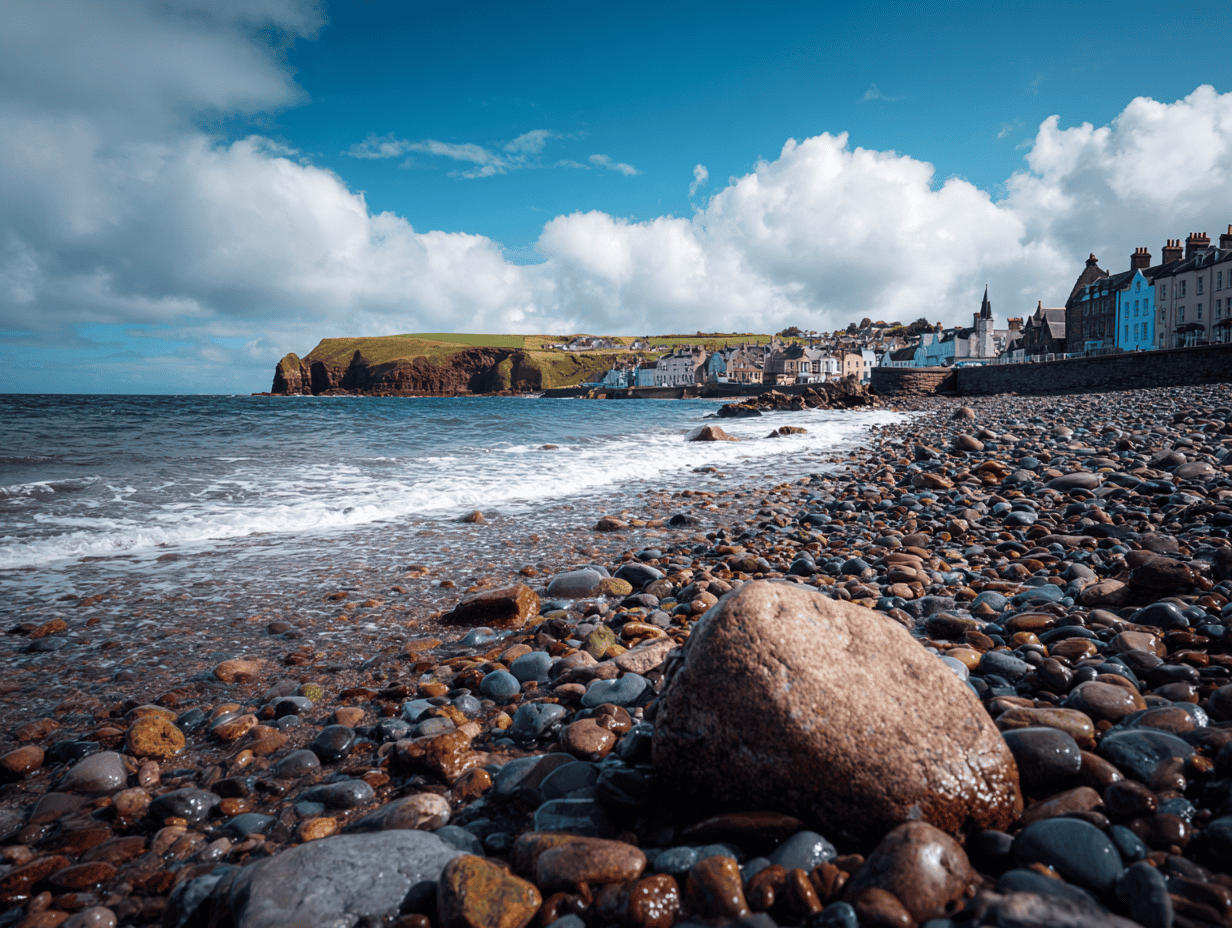
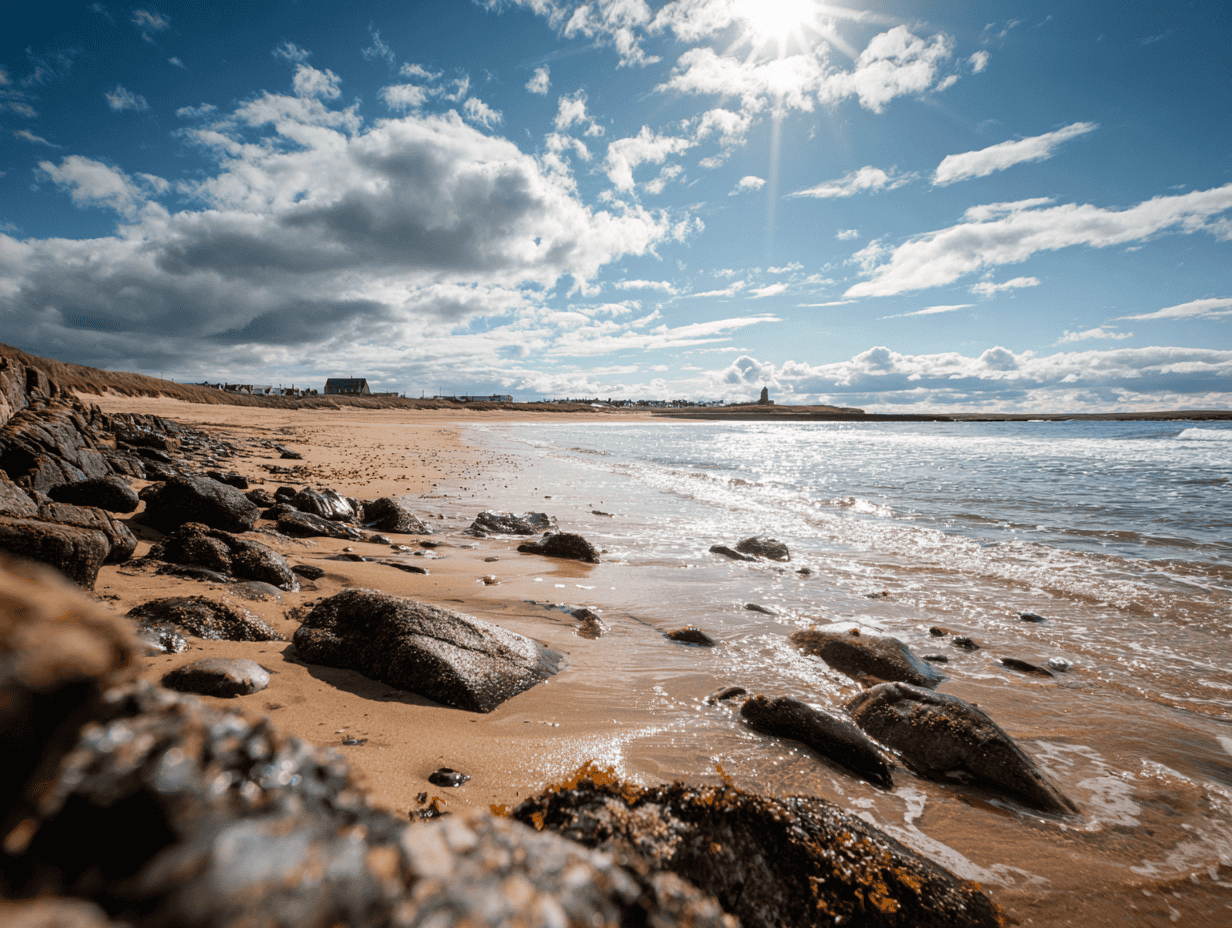
The West Beach faces north and arcs round to the striking white Covesea lighthouse. The higher reaches of the beach, backed by dunes, are mostly shingle, but it’s sandy by the water at low tide. There are rock pools to explore. The East Beach is a wide, open sweep of sand stretching for miles, accessible via the new bridge built in 2022, which connects the sandy shores to Clifton Road, a lovely wooden crossing over the mouth of the River Lossie that adds a small adventure to the start of every hunt.
Between the two beaches, you have shingle, rock pools, open sand and the constant backdrop of RAF Typhoons doing low passes overhead. It’s a strange and wonderful combination.
The glass here comes from Lossiemouth’s long life as one of the most important fishing ports on the Scottish north coast. During the early 1900s, Lossiemouth became a major fishing port and the third-largest white-fish landing port in Scotland.
Centuries of fishing boats, harbour activity, and the inevitable waste that comes with it are what put glass on these beaches. Frosted white, pale clear turquoise, pale green and olive green pieces have all been found here, almost all with nice rounded edges. It’s honest, well-tumbled North Sea glass, and on a good day with the right tide, there’s plenty of it.
What you’ll find here
Colours commonly found: White, green, brown
Occasional finds: Blue, Aqua, Amber, Black
Rare finds: Turquoise, Cobalt Blue, Lavender
Bonus: Sea pottery can be found with more intact patterns and colours than on many other beaches, possibly because the Moray Firth’s inland position means the sea hasn’t had as strong an effect on discarded pottery, leaving it more patterned and colourful. Worth collecting alongside the glass.
Found something unusual? Try GlassLore, our free sea glass scanner, to explore what it could be and log your find to the gallery and, more importantly, earn points and climb the leaderboard.
When to go
The West Beach shingle is your best hunting ground, and it opens up at low tide. The higher reaches are mostly shingle-backed by dunes, where glass accumulates over time. Work the strandline carefully and follow the waterline as it retreats.
Autumn and winter are prime seasons. The Moray Firth faces north-east into the North Sea and catches everything that comes in on a north-easterly blow. After a good storm, the beaches turn over fresh material, and glass that has been buried under sand suddenly appears at the waterline. Winter mornings are cold and quiet, which is exactly what a sea glass hunter wants.
The East Beach is predominantly sandy, which means glass is harder to spot than on a shingle beach. Concentrate your search on the rocky sections and any shingle banks that appear at low tide, particularly near the river mouth, where the current deposits material.
Today’s ShoreSense Score & Best Hunting Window
Lossiemouth sits on the southern shore of the Moray Firth, with a tidal range of around 3.5 to 4 metres on a spring tide, enough to expose a good stretch of shingle and rock pool foreshore on the West Beach at low water.
West Beach is the main target. Start on the upper shingle and strandline near the town end, then follow the retreating waterline west towards Covesea as more of the lower foreshore opens. On bigger spring lows, the rock-pool sections towards the lighthouse become much more accessible and are well worth the extra walk. If you also check East Beach, focus on the River Lossie mouth and any shingle or pebble accumulations rather than the open sand. After stronger north-easterly conditions begin to settle, those transition zones can be especially interesting
The ShoreSense widget below combines recent marine conditions, tide timing and practical hunting weather to show today’s overall ShoreSense Score, Hunting Potential, Comfort and the best available hunting window for Lossiemouth. It uses UKHO tide data alongside current marine and weather inputs to help you judge whether conditions look promising for a hunt.
Lossiemouth Beach sea glass conditions
Lossiemouth Beach
Moray
42/100 — Limited, best window 06:00–09:00.
Best window is 06:00–09:00 with calm sea and little recent wave energy to move glass, so the chance of fresh finds is limited today.
Limited — better days ahead here
Ranked #49 in the UK ShoreSense leaderboard today.
| Tide | Time | Height |
|---|---|---|
| High water | 01:17 | 4.3 m |
| Low water | 07:30 | 0.6 m |
| High water | 13:41 | 3.9 m |
| Low water | 19:34 | 0.9 m |
See Today’s best ShoreSense beaches, including our movers and shakers this week.
Where to look on the beach
Lossiemouth has two distinct beaches, and they reward different approaches.
West Beach is the better of the two for sea glass. The higher reaches of the beach, backed by dunes, are mostly shingle, but it’s sandy by the water at low tide. There are rock pools to explore. Work the shingle strandline carefully from the town end and head west towards Covesea. The further you walk from the car park, the less picked-over the ground tends to be.
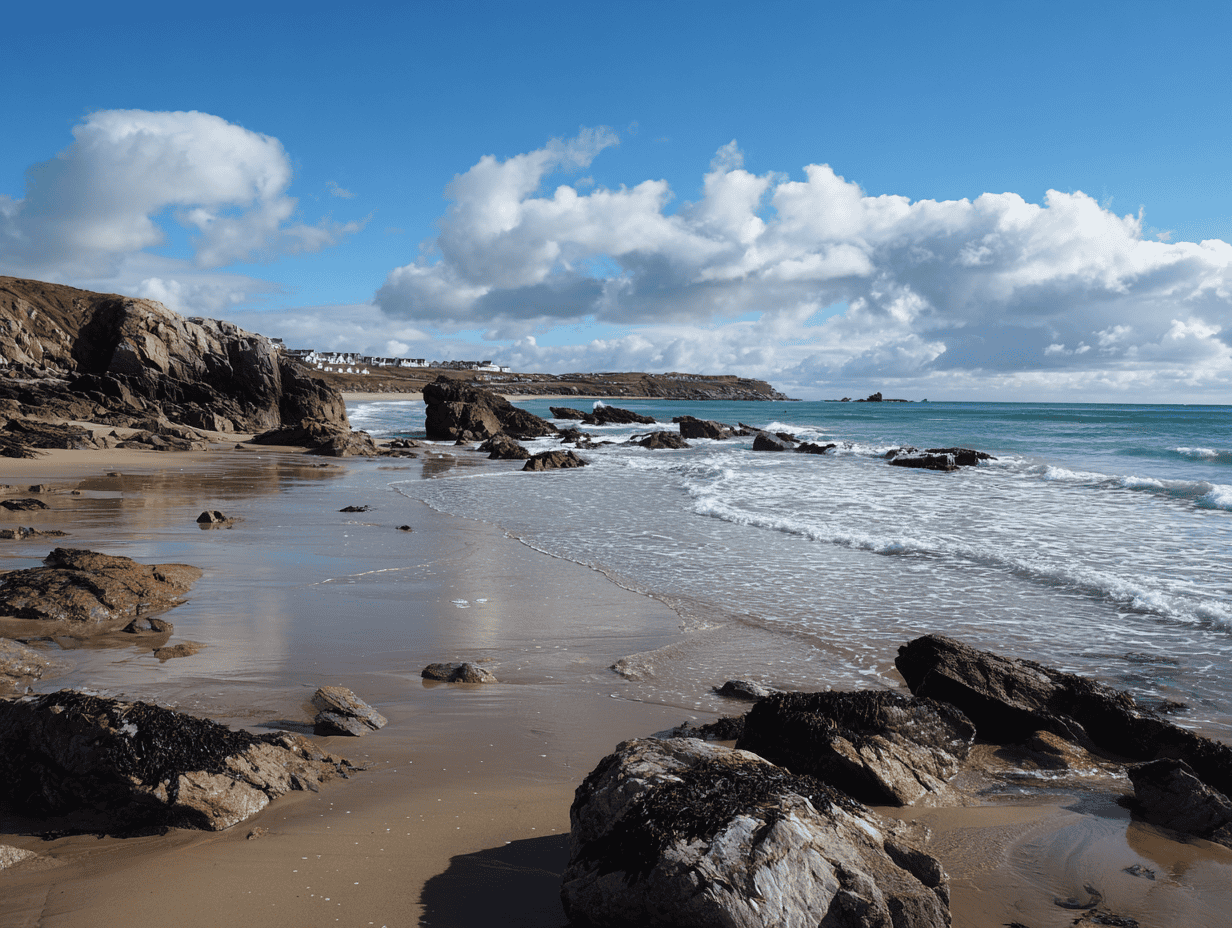
The rock pools further along towards the lighthouse are excellent at low tide and well worth the walk. This is a three-mile stretch of beach that you could spend a full morning here and not cover it all.
East Beach is a vast, open expanse of golden sand, accessible via the new footbridge over the mouth of the River Lossie. It’s predominantly sandy, which makes sea glass harder to spot, but the area immediately around the river mouth and any shingle patches or rock outcrops repay careful looking. Walk north along the beach and check any pebble accumulations. Glass concentrates where heavier material settles.
The harbour area between the two beaches is worth a slow look at low tide. Centuries of fishing activity have deposited material into the water here, and the harbour edges sometimes yield older, interesting pieces.
One practical note: the East Beach car park and the West Beach access are on opposite sides of town. Check the map before you go, so you arrive at the right end for where you want to hunt first.
Difficulty Level: Beginner
- Wide, accessible beaches with plenty of space to search
- Most productive areas can be reached without scrambling
- Multiple hunting locations offer options at different tide states
- Easy to explore on foot, even for first-time visitors
- Suitable for families, casual hunters and experienced collectors alike
Hunting Style: The Explorer
Lossiemouth rewards those who keep moving. Search the shingle along West Beach, investigate the rock pools towards Covesea, check the harbour edges at low tide and don’t overlook pebble accumulations around the mouth of the River Lossie. The more ground you cover, the more opportunities you’ll uncover.
Dog friendly?
Both beaches have no dog restrictions. Dogs are welcome all year round on both East and West beaches. No seasonal bans in place at the time of writing, though always worth checking with Moray Council before travelling. The West Beach, in particular, is a popular dog-walking route, and you’ll have company on the shingle most mornings.
Bottlenose dolphins are a common sight near Lossiemouth. From the West Beach, you have a genuine chance of spotting them offshore, particularly in the morning. Keep dogs under control near the water if dolphins are active close to shore.
The town has a good range of dog-friendly cafes and pubs. Check the Yappy Places listing for Lossiemouth for current recommendations. The harbour area has the highest concentration of eating options.
Practical information
Parking: The East Beach is accessible from its car park on Church Street (IV31 6NR). The West Beach is accessed from Stotfield Road (IV31 6SP) near the golf club. Both car parks are free. Multiple car parks are available around the harbour and seafront and beach access points, plus on-street parking. Summer weekends can get busy. Arrive early.
Toilets: Public toilets on and near the seafront.
Food and drink: Lossiemouth has a well-regarded food scene for its size. Number 79 on the seafront comes up repeatedly in visitor reviews as excellent. The Stotfield Hotel and Golf View Hotel both serve food. Meiles ice cream parlour near the East Beach is a local institution. A post-hunt ice cream with a view is hard to argue with. The Harbour Lights Café is a good option near the marina.
Getting there without a car: Regular buses run between Elgin and Lossiemouth. Elgin is the nearest railway station, around five miles south, with connections to Inverness and Aberdeen. The bus service from Elgin runs regularly throughout the day.
Accessibility: Both main beaches are broadly accessible; the East Beach, in particular, is flat and easy going. The West Beach shingle section is more uneven underfoot, but the main path along the dune edge is manageable. The new East Beach bridge is a lovely, accessible crossing.
What to bring
- Wellies or sturdy waterproof shoes – the West Beach shingle is uneven, and the rock pools near Covesea require care
- A small container or zip-lock bag for your finds
- A hand rake or trowel for working the shingle strandline
- Windproof layers – Lossiemouth faces north into the Moray Firth, and the wind has a long run at you
- Binoculars – dolphins, seals and RAF Typhoons are all regular sightings, often on the same morning
- A flask – the West Beach is a long stretch, and Covesea is a significant walk from the car park
The history behind the glass
Lossiemouth’s origins go back over a thousand years. The settlement at Kinneddar is referenced in records from the 10th century, and in the Middle Ages, the town served as the main port for Elgin, the religious and administrative centre of Moray. The River Lossie was the main access to Elgin for centuries, and the harbour handled everything from grain to timber to fish.
The fishing industry is what transformed the town. During the early 1900s, Lossiemouth became a major fishing port and was the third largest white fish landing port in Scotland. The harbour was constantly busy with boats coming in and going out, catches being landed and processed, nets repaired, and supplies loaded. All of that activity generated glass bottles, jars, storage vessels, and fishing equipment, and all of it eventually found its way into the Moray Firth.
The Morayshire Railway was officially opened in 1852, the steam engines having been delivered to Lossie by sea. It was the first railway north of Aberdeen, and it transformed the town’s ability to move fish south to market. The railway sheds that serviced the harbour have long since been swept away, replaced by the yachting marina that now occupies the eastern harbour. But the glass from that era is still out there, tumbling in the Firth, occasionally washing back up on the shingle of West Beach.
The dunes backing the East Beach were created deliberately in the early 1900s by placing disused railway carriages behind the beach to provide better protection for the Seatown. Some of those carriages are still buried under the dunes, a remarkable piece of industrial improvisation that is a reminder of how resourceful this coast has always been.
From beach to jewellery
Found a piece of pale turquoise from the Moray Firth, a well-tumbled green from the West Beach shingle, something you can’t quite identify but can’t put down? At Mermaid Tears, every piece of jewellery starts exactly where you’re standing: hand-hunted from UK beaches and handmade into something worth keeping. Browse the Mermaid Tears collection.
Disclaimer: Tide times, dog restrictions, parking charges and beach conditions change regularly. Always verify before visiting. The West Beach near Covesea involves a long walk on uneven shingle; appropriate footwear is essential. Beach byelaws are updated annually -check with Moray Council for the most current rules before travelling.
Last updated: Aug 2026
Frequently asked questions
Is Lossiemouth good for sea glass hunting? Yes – it’s a Good beach with two very different hunting environments on a single visit. The West Beach shingle is the more productive of the two, particularly at low tide and after north-easterly weather. The East Beach sandy stretch rewards patience around the river mouth and any shingle patches.
Which beach at Lossiemouth is better for sea glass? West Beach. The shingle and rock pool sections between the town and Covesea Lighthouse consistently produce better finds than the predominantly sandy East Beach. That said, the East Beach river mouth area is always worth checking, especially after a storm.
What colours of sea glass can I find at Lossiemouth? White, green, brown and amber are the most common. Pale turquoise and aqua turn up regularly- a colour with a strong following among collectors. Cobalt blue and red are rare but have been found here. Sea pottery with intact patterns is a notable bonus find on this stretch of the Moray Firth.
Is Lossiemouth dog friendly? Yes, both East and West beaches welcome dogs year-round, with no seasonal restrictions currently in place. West Beach is a popular local dog-walking route. Always verify with Moray Council before travelling, as byelaws can change annually.
When is the best time to visit Lossiemouth for sea glass? Low tide on a spring tide, ideally in autumn or winter after a period of north-easterly weather. Early morning on a weekday in the off-season gives you the best chance of an unpicked strandline on the West Beach shingle.
How do I get to Lossiemouth? By bus from Elgin, the nearest railway station- regular services run throughout the day; journey time around 20 minutes. By car, Lossiemouth is five miles north of Elgin on the A941. Use IV31 6NR for the East Beach car park or IV31 6SP for the West Beach. From Inverness, allow around 45 minutes; from Aberdeen, approximately 70 miles.
More Scottish Beaches
Check out our Full East Scotland Beaches or plan your trip with our UK Sea Glass Map.