Under the Broadchurch Cliffs
West Bay is a fair but worthwhile sea glass hunting beach, with the strongest areas around the harbour mouth and the shingle of East Beach. Green, brown and white are the most common finds, with blue, aqua and amber appearing occasionally and turquoise, cobalt blue, black, lavender and red among the rarer reported colours. It is not a high-volume beach, but the harbour walls, shifting pebble ridges and centuries of maritime activity make it a useful stop on a Dorset sea glass trip.
Where to hunt: East Beach harbour wall → upper shingle ridge → freshly sorted pebble bands → harbour entrance pockets → West Beach pier base
- Rating: Fair Beach
- Terrain: Easy
- Level: Beginner
- Dog-friendly: Seasonal (dogs banned 1 May–30 September on all beaches; welcome off-lead 1 October–30 April)
- Location: West Bay, Bridport, Dorset
- Sat Nav: DT6 4EW – East Beach car park
- Common colours: Green, brown, white
- Rare colours: Cobalt Blue, Black, Lavender, Red
Today at West Bay Beach
Check for the latest ShoreSense Score and tide times. Scroll down for your full 7-day forecast
West Bay sea glass conditions
West Bay
Dorset — Building swell
63/100 — Good, best window 10:42–13:42.
Best window is 10:42–13:42 with spring tides (near full/new moon) and building SW swell, so the chance of fresh finds is good today.
Good window, though this beach is hit-and-miss
Ranked #45 in the UK ShoreSense leaderboard today.
| Tide | Time | Height |
|---|---|---|
| High water | 06:46 | 4.3 m |
| Low water | 12:12 | 0.6 m |
| High water | 19:08 | 4.2 m |
Best For:
- Sea glass hunting
- Harbour finds
- Sea pottery
- Long beach walks
Why West Bay – more than just a TV backdrop
Most people come to West Bay because of Broadchurch. The East Cliff, that great vertical wall of golden Bridport sandstone rising nearly fifty metres above the shingle, is one of the most recognisable coastlines in Britain; after three series of the ITV crime drama, it turned it into a national landmark. Fair enough. It deserves attention.
But West Bay was a working harbour long before a television crew arrived, and it’s that history, not the filming location, that puts glass on this beach. The harbour at the mouth of the River Brit has been handling cargo since at least the 13th century. By 1830, over 500 vessels a year were using it. Bridport’s rope and net industry, supplying the Royal Navy, outfitting the Newfoundland fishing fleet, making the hangman’s nooses that gave the town its grimly practical nickname of the Bridport Dagger, ran through the harbour for centuries.
All that maritime activity, over all those centuries, leaves a trace in the shingle.
It’s a Fair beach, not a destination hunt. The glass here is scattered rather than plentiful, and the fine shingle of East Beach is less productive than the coarser material at Charmouth or Portland. But West Bay is a genuinely lovely place to spend a morning; the Broadchurch cliffs are extraordinary, and the harbour is packed with good food. If you’re working the Dorset coast and you’re here anyway, work the strandline.
What you’ll find here
Colours commonly found: Green, brown, white
Occasional finds: Blue, Aqua, Amber, Turquoise
Rare finds: Cobalt Blue, Black, Lavender, Red
Bonus: Sea pottery fragments turn up along the Jurassic Coast strandline. The East Cliff shingle also occasionally yields fossil material washed from the sandstone above, nothing as dramatic as Charmouth, but worth keeping an eye out for.
Find something special? Scan it with GlassLore, our free sea glass identifier, to explore what it could be and how rare it is. Then share it to our finds gallery and earn points to climb our hunters’ rankings– are you ready to compete?
When to go
October to April is the most productive window. The dog ban lifts on 1 October, the beach is quieter, and autumn and winter Channel weather refreshes the strandline after the calmer summer months. Low tide on the ebb exposes the most foreshore on East Beach, which shelves steeply and narrows considerably at high water.
Post-storm is always worth timing. West Bay faces south-south-west into Lyme Bay with a reasonable Channel fetch, and after sustained southwesterly weather, the strandline on East Beach turns over properly. The harbour area is also worth checking after rough weather; debris concentrates against the pier walls and in the corners where the harbour mouth meets the beach.
Avoid the peak summer season if possible. West Bay is busy from June through August; the dog ban is in force, and the beach gets well-walked before the tide has a chance to refresh it.
Today’s ShoreSense Score & Best Hunting Window
West Bay sits at the western end of Chesil Beach on the Dorset coast, facing south-south-west into Lyme Bay. The tidal range here is around 3.5–4 metres on a spring tide, enough to substantially alter the character of East Beach as the tide drops.
Start immediately east of the harbour mouth and work the upper shingle where material collects against the harbour wall. Then follow the pebble ridge east along East Beach as more foreshore opens, checking freshly sorted bands rather than staying on one level of the beach. Finish by checking the harbour-wall pockets and, if time allows, the smaller pebble pockets around the West Beach pier base. After stronger south-westerly weather begins to settle, recheck the East Beach strandline and harbour margins. Use today’s ShoreSense Best Window to choose when to arrive, then follow this harbour wall → East Beach ridge → sorted pebble bands → harbour pockets progression once you’re there.
The ShoreSense widget below combines recent marine conditions, tide timing and practical hunting weather to show today’s overall ShoreSense Score, Hunting Potential, Comfort and the best available hunting window for West Bay Beach. It uses UKHO tide data alongside current marine and weather inputs to help you judge whether conditions look promising for a hunt.
West Bay sea glass conditions
West Bay
Dorset — Building swell
63/100 — Good, best window 10:42–13:42.
Best window is 10:42–13:42 with spring tides (near full/new moon) and building SW swell, so the chance of fresh finds is good today.
Good window, though this beach is hit-and-miss
Ranked #45 in the UK ShoreSense leaderboard today.
| Tide | Time | Height |
|---|---|---|
| High water | 06:46 | 4.3 m |
| Low water | 12:12 | 0.6 m |
| High water | 19:08 | 4.2 m |
Compare your Beaches on our Hot Beaches page, updated daily with the best beaches for today, the next seven days, as well as the movers and shakers.
Where to look on the beach
West Bay has three distinct beach sections separated by the harbour:
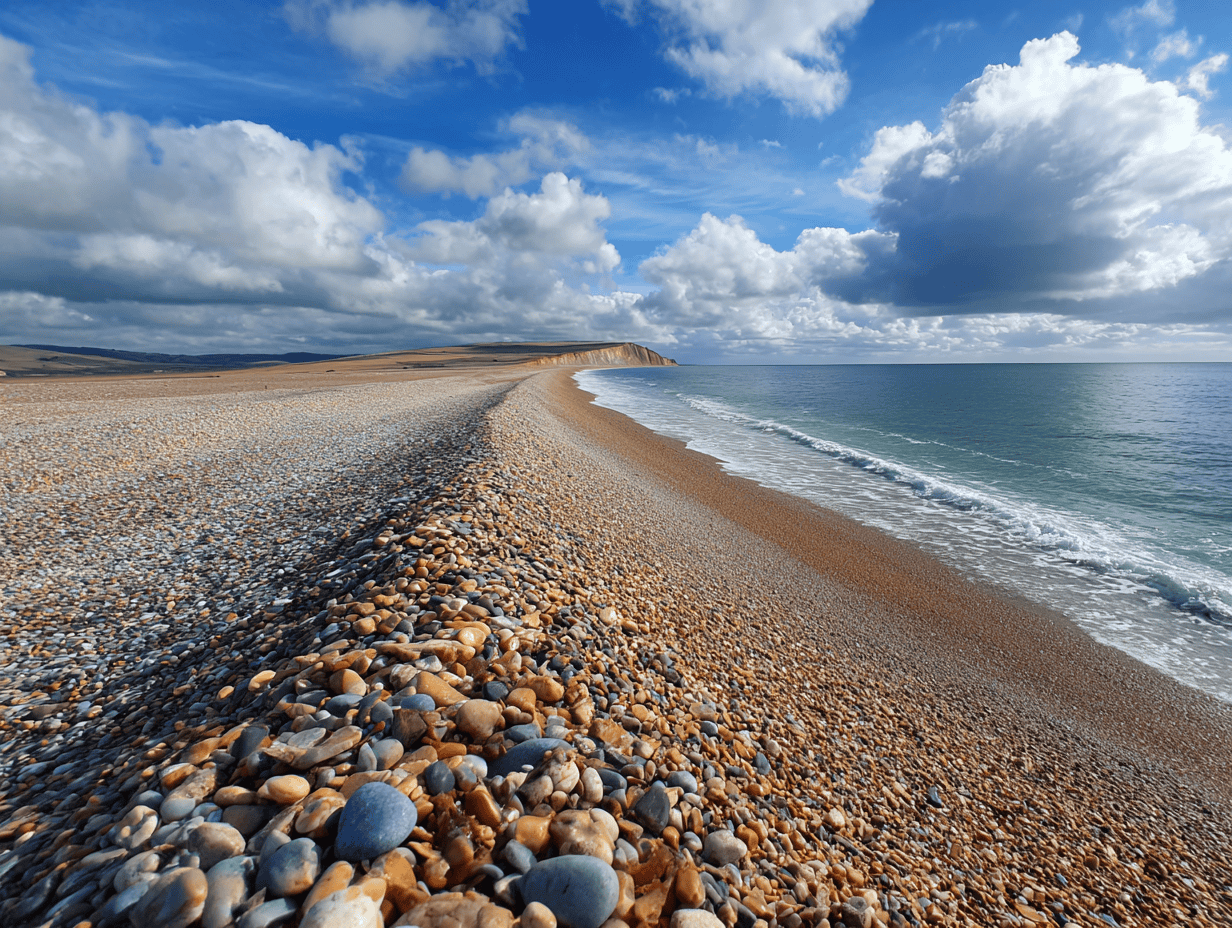
East Beach – the main hunting ground. The long shingle stretch running east from the harbour mouth toward Burton Bradstock, backed by the towering East Cliff. Work the strandline where it banks up against the harbour wall, and along the ridge of pebbles that forms above the waterline at low tide. The section immediately east of the harbour mouth concentrates debris from the harbour itself, worth spending time here. Dogs banned May–September; permitted off-lead October–April.
West Beach – the smaller sheltered cove on the western side of the harbour, between the Jurassic Pier and the rocky West Cliff headland. More protected than East Beach, less exposed to Channel swell, but worth a quick scan of the pebble pockets around the pier base. Dogs banned May–September.
Harbour area – the outer harbour walls and the beach immediately inside the harbour mouth. After rough weather, glass and debris wash into the harbour and collect against the walls. Worth checking.
A cliff safety note: the East Cliff is actively eroding and has seen major rock falls in recent years, some with serious consequences. Stay well back from the cliff base and observe all warning signs. The glass is on the foreshore, not below the cliff face.
Key Tip:
Start on East Beach and focus your efforts near the harbour mouth before working further along the shingle ridge. This section receives material from both the harbour and the wider bay, making it the most consistently productive area.
Difficulty Level – Beginner
- Easy access from the harbour and surrounding car parks
- Productive areas are simple to identify
- Wide shingle beach with straightforward walking
- No scrambling or technical terrain required
- Suitable for beginners and family hunters
Hunting Style – The Harbour Wanderer
West Bay rewards hunters who follow the movement of material away from the harbour. Search the strandline near the harbour walls first, then work the shingle ridge along East Beach, paying close attention to areas where pebbles, shells and debris naturally accumulate. Finish with a quick look around the harbour walls and the sheltered pockets of West Beach.
Beach Personality
West Bay feels every bit the working harbour it has been for centuries. Fishing boats, harbour walls and dramatic golden cliffs create a coastline with plenty of character, while the long sweep of East Beach offers room to roam and explore. It is a beach where maritime history and natural coastal processes combine, creating a hunting ground that rewards those who understand that the harbour is the real heart of the story.
Dog friendly?
Dogs are not allowed on East Beach or West Beach from 1 May to 30 September. From 1 October to 30 April, they are allowed on both beaches. The third beach beyond the large rock groyne west of West Beach has no seasonal restriction, and dogs may pass through the port on a lead during the summer restriction period. Always check current signs on arrival.
Practical information
Parking: East Beach car park is the closest to the main hunting ground, with 162 spaces but no disabled bays and no motorcycle bays. West Bay Road (DT6 4EL) is the large main car park with 438 spaces and 8 disabled bays: £1.50 for an hour, £2.30 for two, £5.30 for four and £9 for ten hours, charged 8am to 6pm, free from 6pm to 10pm, and locked overnight from 10pm to 8am. It’s the only car park motorhomes may use, in allocated bays. Bridport Arms (DT6 4ER) is short stay with a four-hour maximum. All take cash, card or JustPark. Blue Badge holders pay in Dorset Council car parks, with one extra hour free on top of the tariff purchased. West Bay gets extremely busy in summer, so arrive early.
Toilets: Public toilets behind the shingle ridge at East Beach, near the old Methodist chapel by the Bridport Arms, and at the West Bay Road car park, which has baby changing and disabled facilities.
Food and drink: Good choice around the harbour; the Watch House Café on the beach is well regarded for pizza and seafood; the old West Bay station building operates as a tearoom; and there are several fish and chip options around the harbour front. The Bridport Arms and other harbour pubs are dog-friendly outside the summer season.
Getting there without a car: The X53 Jurassic Coaster serves West Bay and connects it with Weymouth, Bridport, Charmouth, Lyme Regis and Axminster. Check the current First Bus timetable before travelling, as seasonal services can vary.
Accessibility: The harbour front, promenade and areas behind East Beach are largely level and accessible, with accessible toilets nearby. The actual sea-glass hunting area is loose, steeply shelving shingle and is not wheelchair-friendly. West Beach is easier to reach from the harbourside, but the beach surface itself is still shingle.
What to bring
- Sturdy shoes – shingle beaches are uneven, and the East Beach shelves steeply
- A small container for finds
- Tide times checked before you leave. East Beach narrows significantly at high water
- Layers – West Bay is exposed to southwesterly weather off Lyme Bay
- A camera – the East Cliff in good light is genuinely spectacular
The history behind the glass
West Bay was known as Bridport Harbour for most of its history, and the name change to the more tourist-friendly West Bay happened only in 1884, when the railway arrived, and the town began repositioning itself as a resort. By then, the harbour’s commercial heyday was already passing. But for the centuries before that, this was a working port of real significance.
Bridport had been producing rope, twine, netting and sailcloth since at least the 13th century, and the harbour was the export point for all of it. The Royal Navy depended on Bridport rope during the Napoleonic Wars so heavily that the town’s rope-making was designated a critical industry and the Navy actively invested in it.
By 1830, over 500 vessels were using the harbour annually. Bridport’s wide main street, unusual for an English market town, existed because the ropes were laid out along it to dry after spinning. The town’s dark nickname, the Bridport Dagger, came from the hangman’s nooses that were among its exports.
The trade that put the most glass into the water was the Newfoundland triangle. From the late 17th century, West Bay ships sailed to Canada each spring, loaded with Bridport rope, netting and salt.
In Newfoundland, they traded with the fishing fleet, loaded dried salted cod, and then sailed south to the Caribbean, exchanging the cod for rum and sugar, before crossing back to Dorset. Three legs, three different cargoes, and all the ordinary breakage and waste of a working merchant fleet on every voyage.
When the railway arrived in 1884 and the trade declined, the harbour didn’t go quiet overnight. Commercial use continued into the 1960s. The fishing boats never stopped entirely; they’re still here today, and the harbour still lands mackerel in season. Every generation of maritime activity adds another layer to what’s in the water.
The Broadchurch cliffs are the dramatic backdrop to all of it, but the glass in the shingle is the harbour’s longer, quieter story.
From beach to jewellery
Found something against the East Cliff shingle? At Mermaid Tears, every piece starts exactly where you’ve been standing: hand-hunted sea glass from UK beaches, handmade into something lasting. Browse the collection.
Disclaimer: Tide times, dog restrictions, parking charges and beach conditions change regularly. Always verify before visiting. The East Cliff at West Bay is actively eroding. Never stand below the cliff face or approach fresh cliff falls. Beach byelaws are updated annually. Check with Dorset Council for the most current dog restriction rules.
Last updated: September 2026
Dog rules checked: September 2026 – Dorset Council (all beaches banned 1 May–30 September; off-lead 1 October–30 April)
Frequently asked questions
Is West Bay good for sea glass? It’s a Fair beach; glass is scattered through the shingle around the harbour and along East Beach, but it’s not a high-volume location. It’s best approached as part of a Dorset coast day rather than a dedicated trip. The harbour history gives it a genuine glass source, and the setting under the Broadchurch cliffs makes even a modest find feel worthwhile.
Where is the best place to look for sea glass at West Bay? The strandline immediately east of the harbour mouth on East Beach, and the pebble pockets around the harbour walls, after rough weather. The section between the harbour and the base of the East Cliff is the most productive.
Are dogs allowed at West Bay beach? Dogs are banned on all three beaches from 1 May to 30 September. From 1 October to 30 April, all beaches are dog-friendly off-lead, which conveniently coincides with the best glass-hunting season.
Is the East Cliff safe to walk under? No – the East Cliff is actively eroding with documented major rock falls. Stay well back from the cliff base and observe all warning signs on the day. The glass is on the open foreshore, not at the cliff foot.
Was West Bay really used for Broadchurch? Yes, the East Cliff and harbour were used extensively as the filming location for all three series of the ITV drama. The cliffs are instantly recognisable to anyone who watched it.
What is the best time to visit West Bay for sea glass? October to April, low tide on the ebb, after Channel storms. The dog ban has been lifted, the strandline is freshest, and the beach is at its quietest.
More Beaches
Check out our Full Dorset and Hampshire Guide or plan your trip with our UK Sea Glass Map