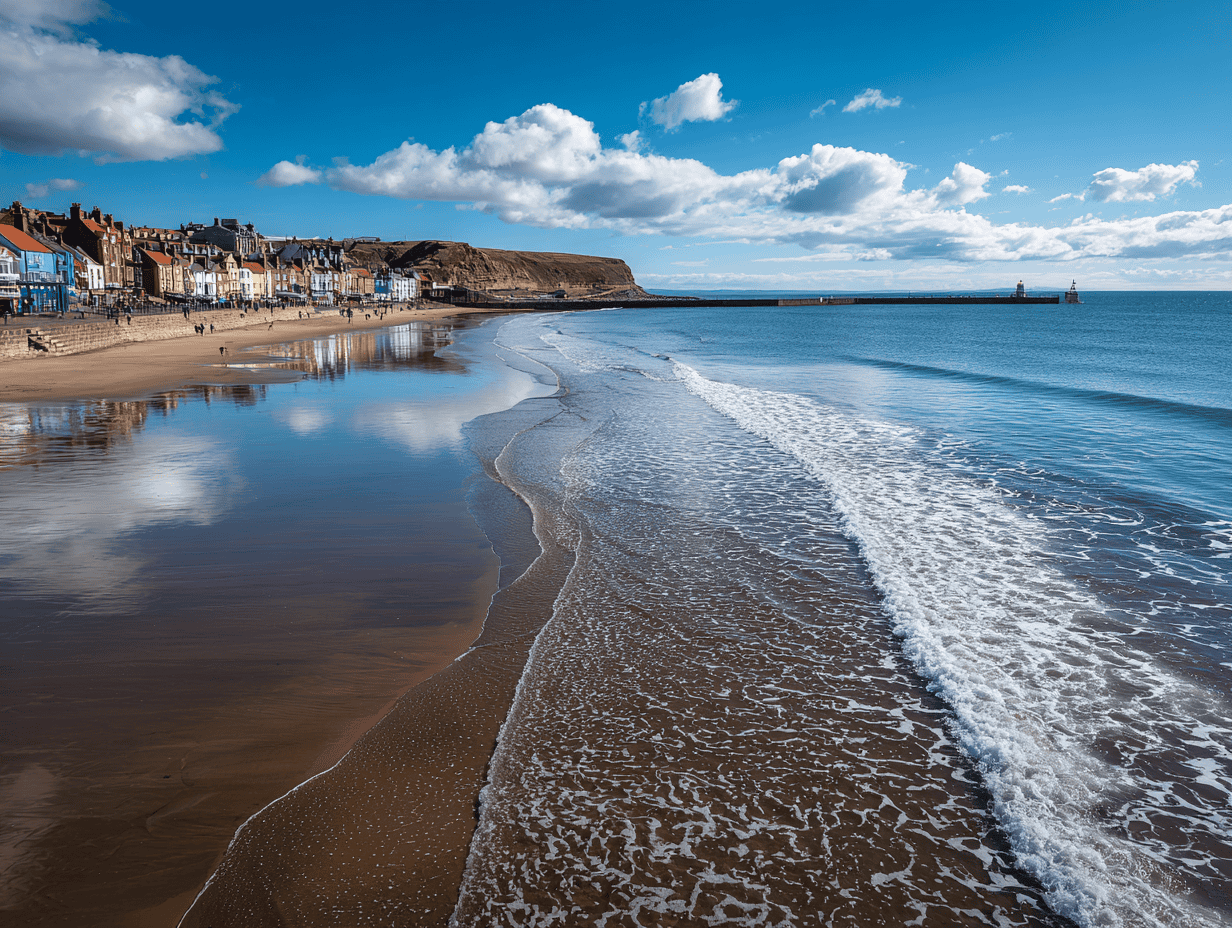
The Ironstone Shore
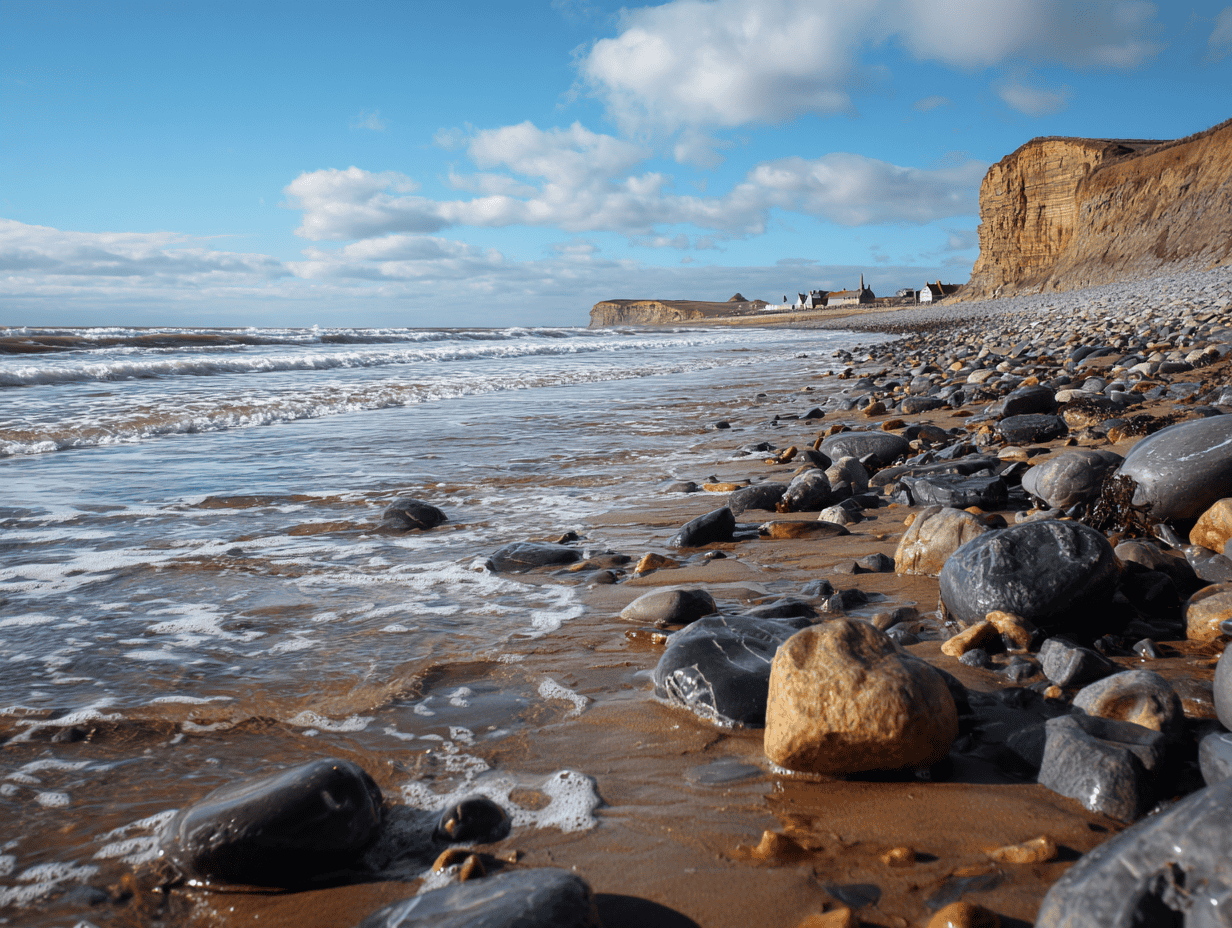
Skinningrove is a good sea glass hunting beach, particularly around the shingle patches and rock pools on the village side of the old ironstone jetty. Green, brown and white are the most common finds, with blue, aqua, amber, turquoise, cobalt, black, lavender, red and pink also reported. It’s a quiet, beginner-friendly beach where the rocky eastern end is usually more rewarding than the long open sands of Cattersty.
- Rating: Good Beach
- Terrain: Easy
- Level: Beginner
- Dog friendly: Yes, dogs welcome all year round
- Location: Skinningrove, North Yorkshire
- Sat Nav: TS13 4BJ
- Common colours: Green, brown, white
- Rare colours: Cobalt Blue, Black, Lavender, Red, Pink
Today at Skinningrove
See the latest ShoreSense Score and tide times. Scroll down to see the full 7-day forecast.
Skinningrove sea glass conditions
Skinningrove
North Yorkshire — Sea settling
65/100 — Good, best window 08:36–11:36.
Best window is 08:36–11:36 with spring tides (near full/new moon) and offshore wind, so the chance of fresh finds is good today. Sea is likely calm and picked-over — go early.
Good day at a reliable beach
Ranked #36 in the UK ShoreSense leaderboard today.
| Tide | Time | Height |
|---|---|---|
| High water | 03:35 | 5.6 m |
| Low water | 10:06 | 0.7 m |
| High water | 16:06 | 5.5 m |
| Low water | 22:24 | 0.8 m |
Best For
- Sea glass hunting
- Sea pottery
- Long beach walks
- Storm hunting
Why Skinningrove – Yorkshire’s best-kept secret
Most people driving the North Yorkshire coast bypass Skinningrove entirely. The village doesn’t advertise itself; it sits at the bottom of a steep valley, tucked between dramatic cliffs, with a scrappy cluster of buildings and a working feel that puts off the casual day-tripper. That suits the sea glass hunters who’ve found it just fine.
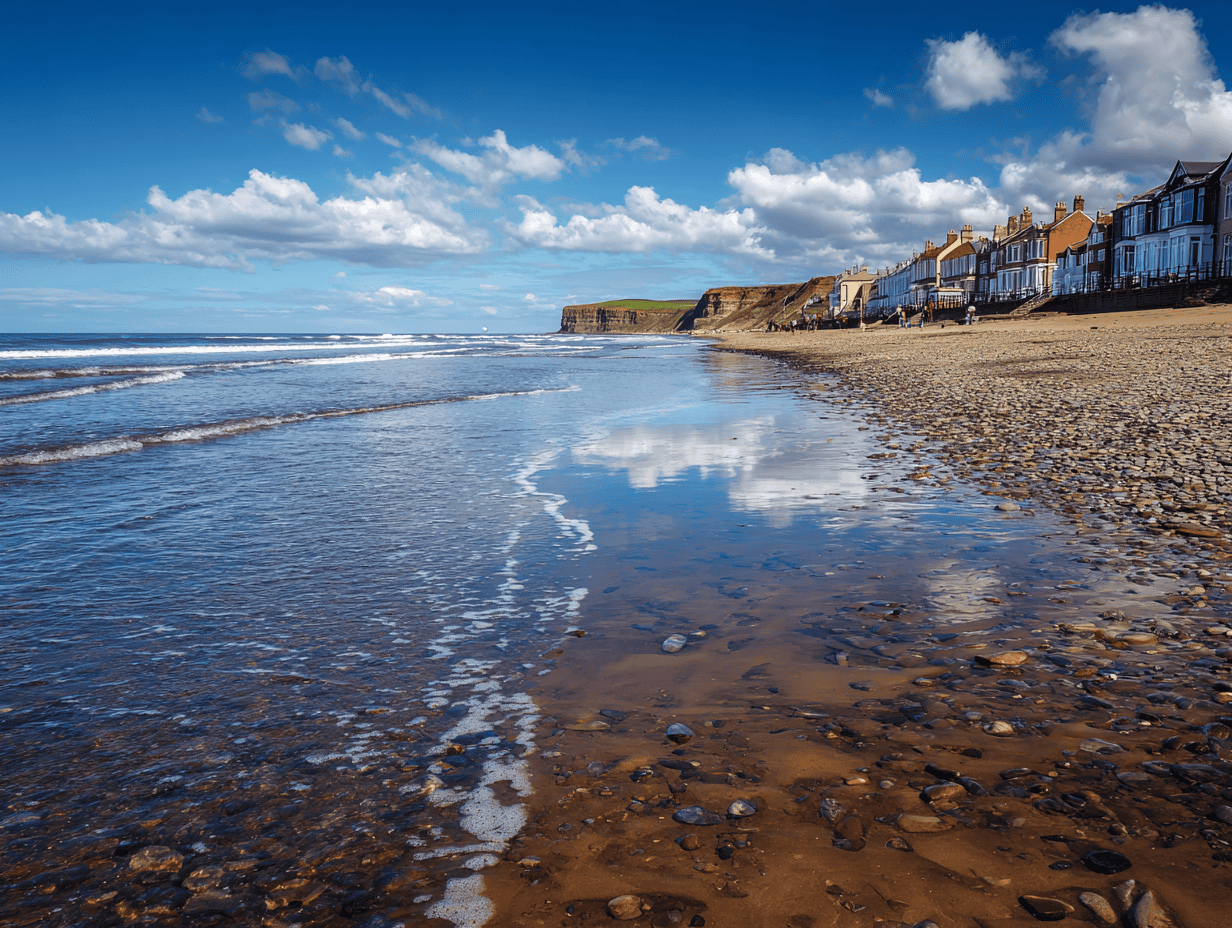
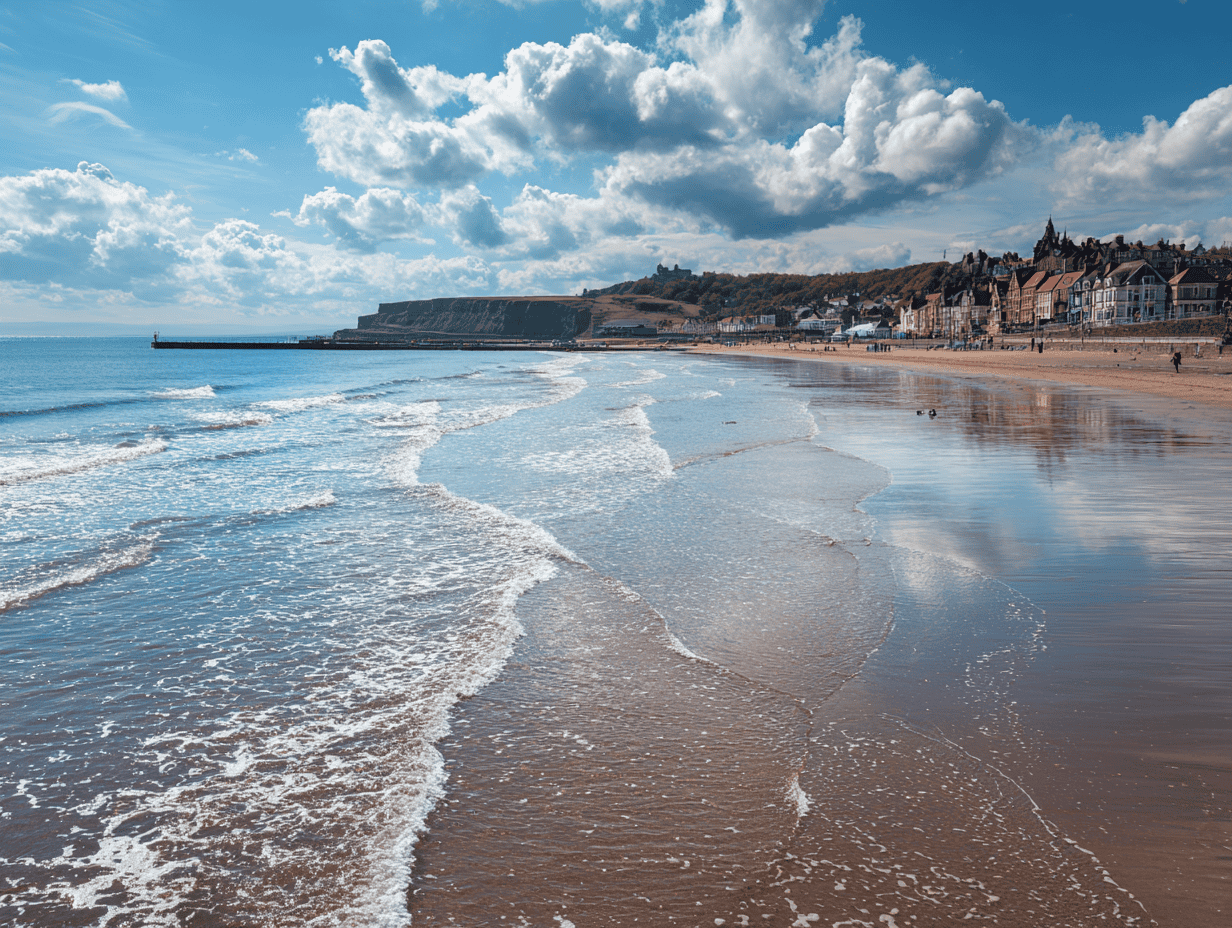
Skinningrove or Cattersty Sands, as the wider beach is known, is one of those quiet discoveries that you end up going back to. The beach itself is a long sweep of sand and shingle, bookended by rocky outcrops at each end, bisected by an 1886 ironstone jetty that stretches into the North Sea and still carries the ghost of its industrial purpose. At low tide, the foreshore opens up beautifully, rock pools scatter across the lower sections, and the shingle patches trap glass against the base of the cliffs.
The village has a deep ironstone mining history. Cleveland produced more than a third of the world’s iron and steel at its peak, and the ore came from the cliffs above this very beach. The Land of Iron Museum in the village, sited at Cleveland’s first ironstone mine, tells that story. Industrial coastal communities like this one generated glass for generations, and the North Sea has been redistributing it ever since.
It’s rarely busy. The car park is free. The Cleveland Way passes through and gives you spectacular clifftop walking in either direction. And your dog, I can confirm, will make maximum use of an all-year dog-friendly beach with absolutely no intention of leaving.
What you’ll find here
Colours commonly found: Green, brown, white
Occasional finds: Blue, Aqua, Amber, Turquoise, Sea pottery
Rare finds: Cobalt Blue, Black, Lavender, Red, Pink
Bonus: Fossils; the cliffs are part of the Yorkshire coast’s fossil-rich geology, and the rocky sections at low tide are worth checking
Found something unusual? Try GlassLore, our free sea glass scanner, to explore what it could be and log your find to the gallery and, more importantly, earn points and climb the leaderboard. Found something unusual?
When to go
Low tide opens up the best of Skinningrove: the rock pools and shingle sections on either side of the jetty, and the lower foreshore along Cattersty Sands to the north. The beach is sheltered enough to hunt in most weather, but post-storm visits in autumn and winter are the classic formula: fresh glass churned up from offshore, no one else on the beach, and the cliffs doing their dramatic best in grey North Sea light.
The free car park is small. Arrive early in summer if you’re visiting in peak season, or better still, come in the shoulder months when it’s at its quietest and most rewarding.
Today’s ShoreSense Score & Best Hunting Window
Skinningrove sits on the North Yorkshire Heritage Coast roughly midway between Saltburn and Staithes, facing northeast into the North Sea. The tidal range here is around 4 to 5 metres on a spring tide, exposing a good stretch of foreshore and uncovering the rocky sections and shingle patches on either side of the old ironstone jetty.
The ShoreSense widget below combines recent marine conditions, tide timing and practical hunting weather to show today’s overall ShoreSense Score, Hunting Potential, Comfort and the best available hunting window for Skinningrove. It uses UKHO tide data alongside current marine and weather inputs to help you judge whether conditions look promising for a hunt.
Lower tides are especially useful at Skinningrove because they expose more of the shingle, rock pools and lower foreshore around the old jetty. Autumn and winter can be particularly interesting when stronger North Sea conditions are more common, and the beach is quieter. Once rougher weather begins to settle, check today’s ShoreSense Best Window before travelling.
Skinningrove sea glass conditions
Skinningrove
North Yorkshire — Sea settling
65/100 — Good, best window 08:36–11:36.
Best window is 08:36–11:36 with spring tides (near full/new moon) and offshore wind, so the chance of fresh finds is good today. Sea is likely calm and picked-over — go early.
Good day at a reliable beach
Ranked #36 in the UK ShoreSense leaderboard today.
| Tide | Time | Height |
|---|---|---|
| High water | 03:35 | 5.6 m |
| Low water | 10:06 | 0.7 m |
| High water | 16:06 | 5.5 m |
| Low water | 22:24 | 0.8 m |
Where to look
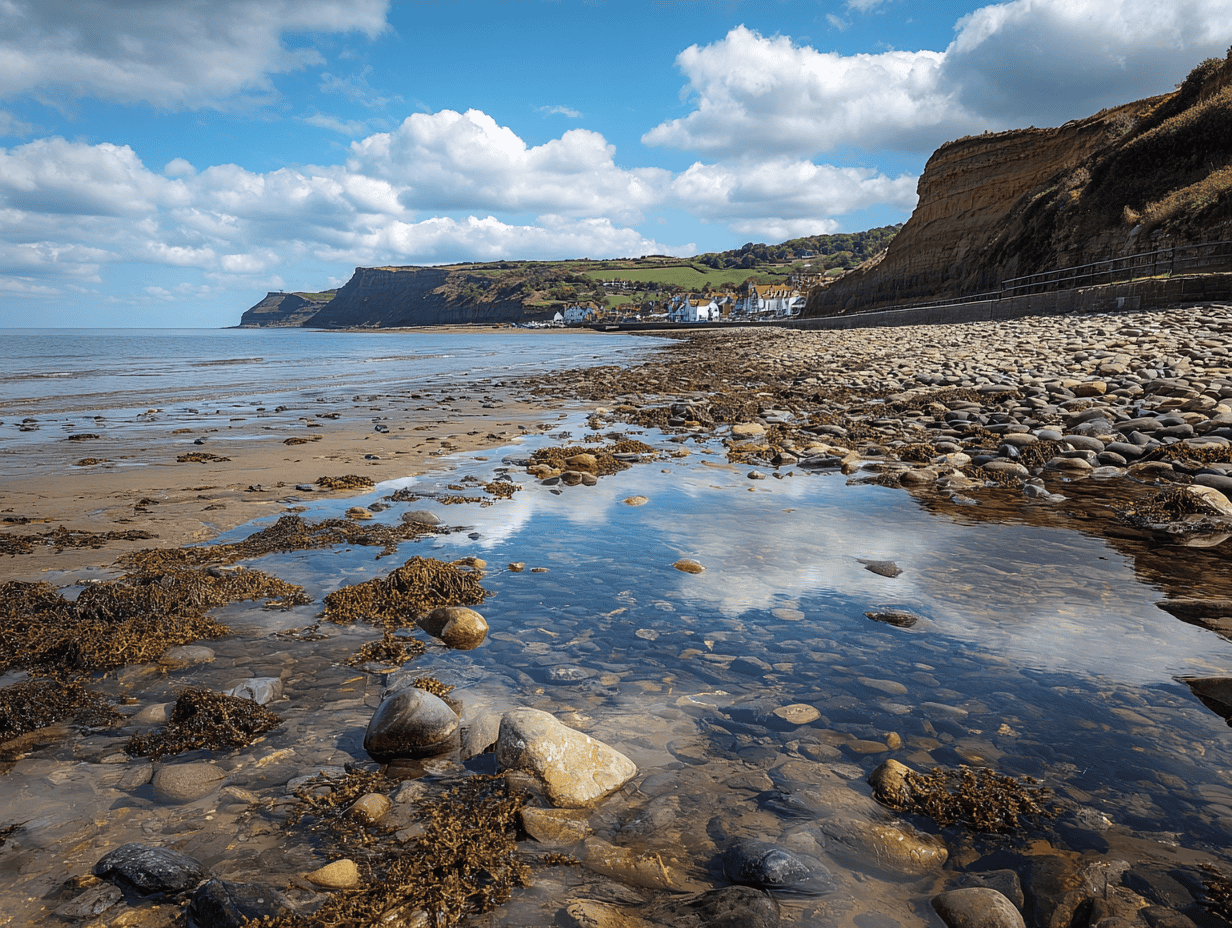
Skinningrove side of the jetty (east) – the beach to the east of the 1886 pier is the primary hunting ground. Work along the shingle patches and high-tide strandline here, and check any rocky outcrops at the base of the cliffs at low water.
Rock pools at the southern end – at low tide, rocky sections emerge at the southern end of the beach near the village. Glass lodges in rock pool edges and crevices worth a careful, slow look.
Cattersty Sands (north of the jetty) – the long sandy stretch to the north is beautiful but predominantly open sand. Glass does turn up here along the strandline, particularly after storms, but the shingle sections on the Skinningrove side are generally more productive.
Note on the tide: Redcar and Cleveland Council asks people to be clear of the cliffs between Saltburn and Skinningrove from three hours after low tide. If you’re walking the foreshore towards Saltburn, that’s the number to work back from. Know your low water time before you go out onto the rocks.
Key Tip:
Start on the Skinningrove side of the old jetty and focus on the shingle patches rather than the open sand. The area east of the pier consistently holds more glass, especially around the strandline and rocky sections exposed at low tide.
Difficulty Level – Beginner
- Easy access directly from the village
- Productive hunting areas are easy to identify
- No significant scrambling required
- Low-tide rock pools provide additional hunting opportunities
- Suitable for beginners and experienced hunters alike
Hunting Style – The Jetty Hunter
Skinningrove rewards hunters who understand how structures influence material movement. Work the strandline and shingle deposits on the eastern side of the jetty first, then explore the rock pools and crevices at the southern end of the beach. After storms, a quick check of the strandline along Cattersty Sands can also be worthwhile.
Beach Personality
Skinningrove feels like a hidden corner of the North Yorkshire coast. Surrounded by steep cliffs and industrial history, it has a rugged charm that many larger resort beaches lack. The old jetty, rocky shoreline and quiet atmosphere create a beach where hunting feels relaxed and unhurried. It may not have the reputation of Seaham, but it rewards patient searchers with a genuine sense of discovery.
Dog friendly?
Yes. Skinningrove and Cattersty Sands have no dog restrictions at any time of year. Redcar and Cleveland Council’s dog order only excludes dogs from parts of Redcar and Saltburn beaches between 1 May and 30 September, and that order now runs to June 2028. That makes this one of the most straightforward dog-friendly beaches on this coast in summer, when Saltburn next door is partly closed off.
One borough-wide rule to know: where a lead is required, it must be no more than two metres, and extendable leads must not go beyond four metres. Fines are £100 on the spot.
Check Yappy Places for dog-friendly cafes and pubs in the Skinningrove, Loftus and Saltburn-by-the-Sea area.
Practical information
Parking: Free car park at the beach (TS13 4BJ). It’s small. Arrive early in summer or midweek to be sure of a space. There is also parking at Saltburn Parade, from which you can walk the Cleveland Way coastal path to Skinningrove.
Toilets: Public toilets in the village. No facilities directly at the beach.
Food and drink: Kaskane Cafe and Bar in the village is the main option and is well reviewed. The Queens Arms is also nearby. For a wider choice, Saltburn-by-the-Sea is a short drive along the coast and has a good range of cafes and independent shops.
Getting there without a car: The Cleveland Way coastal path passes through Skinningrove. It’s walkable from Saltburn (around 4 miles along the clifftops) for those who want to earn their sea glass. There is no direct train to Skinningrove; Saltburn station is the closest, on the Middlesbrough line.
Accessibility: The beach is reached via a short walk from the car park past the jetty. The beach itself is sandy and relatively flat, making it more accessible than many Yorkshire coast alternatives. The rocky sections at the southern end are more uneven.
What to bring
- Sturdy shoes or wellies – the rocky sections at low tide are slippery
- A small bag or container for finds
- Tide times, checked before you set off. The foreshore opens up a long way at low water, and the tide comes back quickly
- A picnic – facilities are limited, and this is very much a bring-your-own kind of beach
- Layers- the beach is exposed to the north-east, and the Cleveland coast has its own microclimate
The history behind the glass
The cliffs above Skinningrove held some of the richest ironstone seams in Cleveland, and the village grew up entirely in service of extracting it. Mining began here in earnest in the 1850s, and at the industry’s peak, this stretch of the Yorkshire coast was part of a complex that produced more than a third of the world’s iron and steel. The ore was taken by narrow-gauge railway to the clifftop, then down to the beach, where the jetty built in 1886 by the Skinningrove Iron Company allowed steamboats to load and carry it to the furnaces at Middlesbrough.
Mining continued until 1958. Iron production in the area persisted into the 1970s. The Land of Iron Museum, situated at Cleveland’s first ironstone mine in the village, preserves that history through photographs, artefacts and the stories of the miners who lived it.
What that history means for the beach is what it means across the industrial North East: a coastline that served heavy industry for over a century left traces that the sea has been working on ever since. The glass that finds its way onto Skinningrove’s shingle arrives from the wider North Sea system, decades of drift from the same industrial corridor that gave Seaham its fame. Here it washes in quietly, with very few people looking for it.
From beach to jewellery
Found something worth keeping on the Skinningrove shore? At Mermaid Tears, every piece of jewellery starts exactly where you’ve been standing, hand-hunted from UK beaches and handmade into something worth keeping. Browse the collection
Disclaimer: Tide times, dog restrictions, parking charges and beach conditions change regularly. Always verify before visiting. The tide at Skinningrove can come in quickly, so know your low water time before venturing onto the rocky sections.
Last updated: September 2026
Dog rules checked: September 2026 – Redcar and Cleveland Council PSPO (renewed to 30 June 2028; no restrictions at Skinningrove or Cattersty)
Frequently asked questions
Is Skinningrove good for sea glass hunting? Yes – it’s one of Yorkshire’s quieter but genuinely rewarding sea glass beaches. The mix of shingle, rock pools and a long sandy foreshore gives you plenty to work with at low tide, and the industrial history of the Cleveland coast means there’s a real source for the glass that washes up here.
Where is the best place to look for sea glass at Skinningrove? The Skinningrove side of the 1886 ironstone jetty (east of the pier) is the most productive section; the shingle patches and rock pools at the base of the cliffs are where glass accumulates. The long sandy Cattersty Sands stretch to the north is worth walking for strandline finds after storms.
Are dogs allowed at Skinningrove beach? Yes – dogs are welcome all year round with no seasonal restrictions, making it a particularly good option in summer when nearby beaches operate bans.
Is there parking at Skinningrove beach? Yes, and it’s free – which is increasingly rare on the Yorkshire coast. The car park is small, though, so an early start is worthwhile in summer.
What else is worth seeing at Skinningrove? The Land of Iron Museum in the village is excellent – it tells the story of the Cleveland ironstone industry with genuine depth and sits at the site of the area’s first mine. The Cleveland Way clifftop walk in either direction from Skinningrove is spectacular, and Staithes is a short drive up the coast.
How do I get to Skinningrove without a car? The closest train station is Saltburn-by-the-Sea on the Middlesbrough line. From Saltburn, the Cleveland Way coastal path to Skinningrove is around 4 miles -a rewarding clifftop walk that ends at the beach.
More Yorkshire Beaches
Check out the Full Yorkshire Guide, or plan your trip with our UK Sea Glass Map.