Tudor Shingle and North Sea Gold
Aldeburgh is a good sea glass hunting beach, with the long shingle north of town towards Thorpeness the main target and the Slaughden stretch south of town a useful secondary hunt. Work the latest wrack line, lower pebble ridges and temporary hollows rather than trying to search the whole shingle bank evenly. Green, brown and white are the most common finds, with blue, aqua and amber appearing occasionally and turquoise, cobalt blue, black and lavender among the rarer colours reported. The real appeal is the combination of North Sea shingle, working fishing heritage and the remarkable history of Aldeburgh and lost Slaughden.
Where to hunt: North beach beyond the Scallop → upper wrack line → lower pebble ridges towards Thorpeness → Slaughden / Martello Tower as a separate southern hunt
- Rating: Good Beach
- Terrain: Easy
- Level: Beginner
- Dog friendly: Seasonal; dogs are banned on the main town beach from 1 May to 30 September. The mile of shingle north of town towards Thorpeness is dog-friendly year-round.
- Location: Aldeburgh, Suffolk
- Sat Nav: IP15 1BH (Thorpe Road, north end for the Thorpeness stretch) · IP15 5DD (Fort Green, south end for Slaughden and the Martello Tower)
- Common colours: Green, brown, white
- Rare colours: Turquoise, Cobalt Blue, Black, Lavender
Today at Aldeburgh Beach
Check below for the latest ShoreSense Score; scroll down for the full 7-day forecast.
Aldeburgh sea glass conditions
Aldeburgh
Suffolk — Sea settling
62/100 — Good, best window 13:44–16:44.
Best window is 13:44–16:44 with spring tides (near full/new moon) and calm sea, so the chance of fresh finds is good today. Sea is likely calm and picked-over — go early.
Good day at a reliable beach
Ranked #55 in the UK ShoreSense leaderboard today.
| Tide | Time | Height |
|---|---|---|
| Low water | 02:42 | 1.1 m |
| High water | 08:57 | 2.8 m |
| Low water | 15:14 | 0.5 m |
| High water | 21:53 | 2.7 m |
Best For:
- Long peaceful walks
- Dog-friendly hunting
- Shingle scanning
- Post-storm finds
Why Aldeburgh – where the Tudor port slipped into the sea
Walk the shingle at Aldeburgh, and you’re walking on history. The Moot Hall stands right at the beach edge, now a 16th-century timber-framed council chamber that once stood in the middle of a prosperous town.
Everything between it and the sea has gone. Streets, houses, a harbour, an entire Tudor port, all of it consumed by the North Sea over four hundred years of slow erosion. What the sea took, it is still giving back, piece by piece, in the frosted glass you find on this beach.
Aldeburgh is Suffolk’s most famous shingle beach and one of the most atmospheric places on the entire English coastline. The fishermen’s huts are still working, black-tarred, positioned above the tide, stacked with lobster pots and selling the catch of the day. Fishing boats are launched and recovered directly from the shingle, hauled up by tractor in the old way.
The Scallop sculpture by Maggi Hambling stands above the pebbles, inscribed with a line from Benjamin Britten’s Peter Grimes, a work set on exactly this coast. It’s a beach that earns every word that’s been written about it.
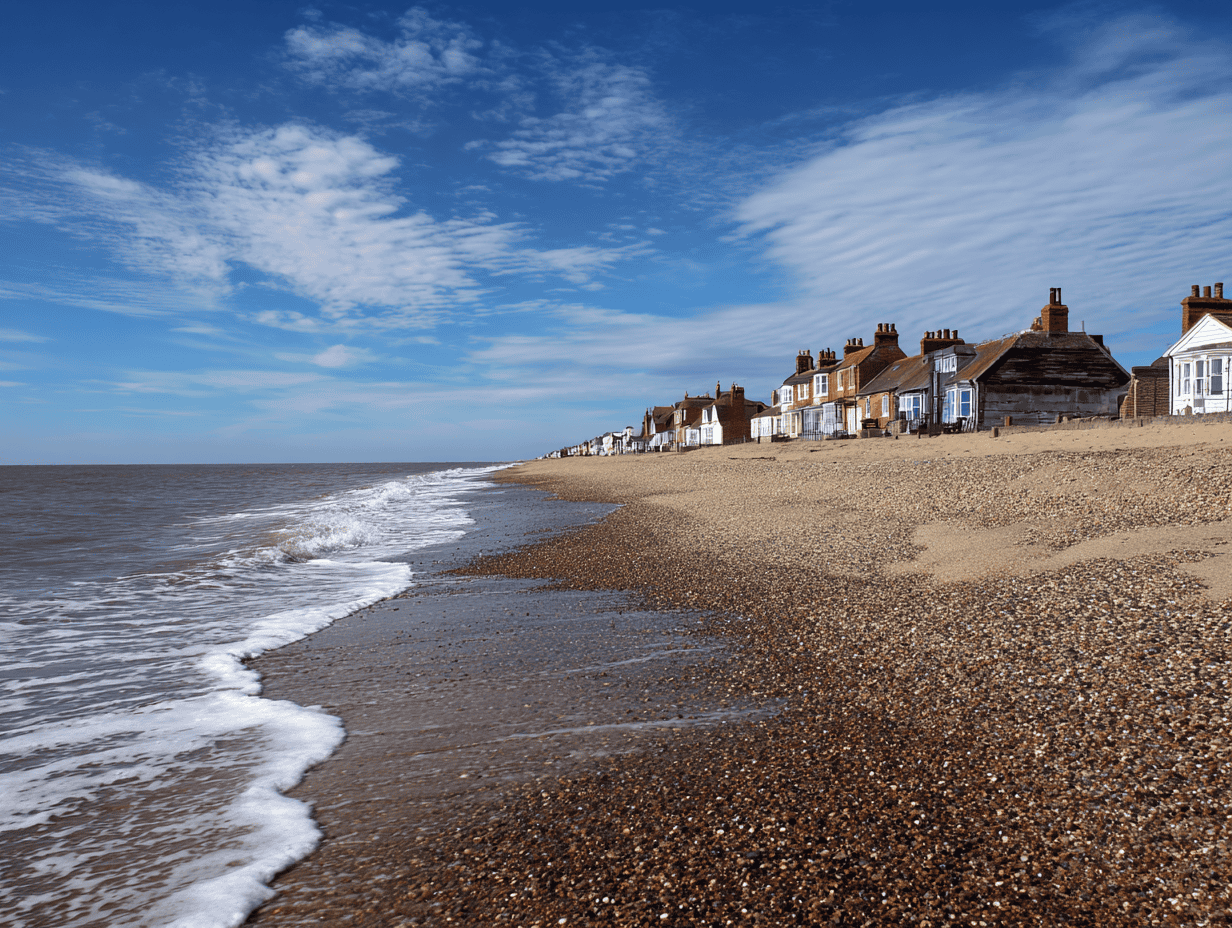
And for sea glass hunters, it delivers. Aldeburgh has a long shingle beach that produces steady finds. The terrain is right steep-shelving, predominantly pebble, facing due east into the open North Sea, and the historical sourcing story stretches back to the Tudor era.
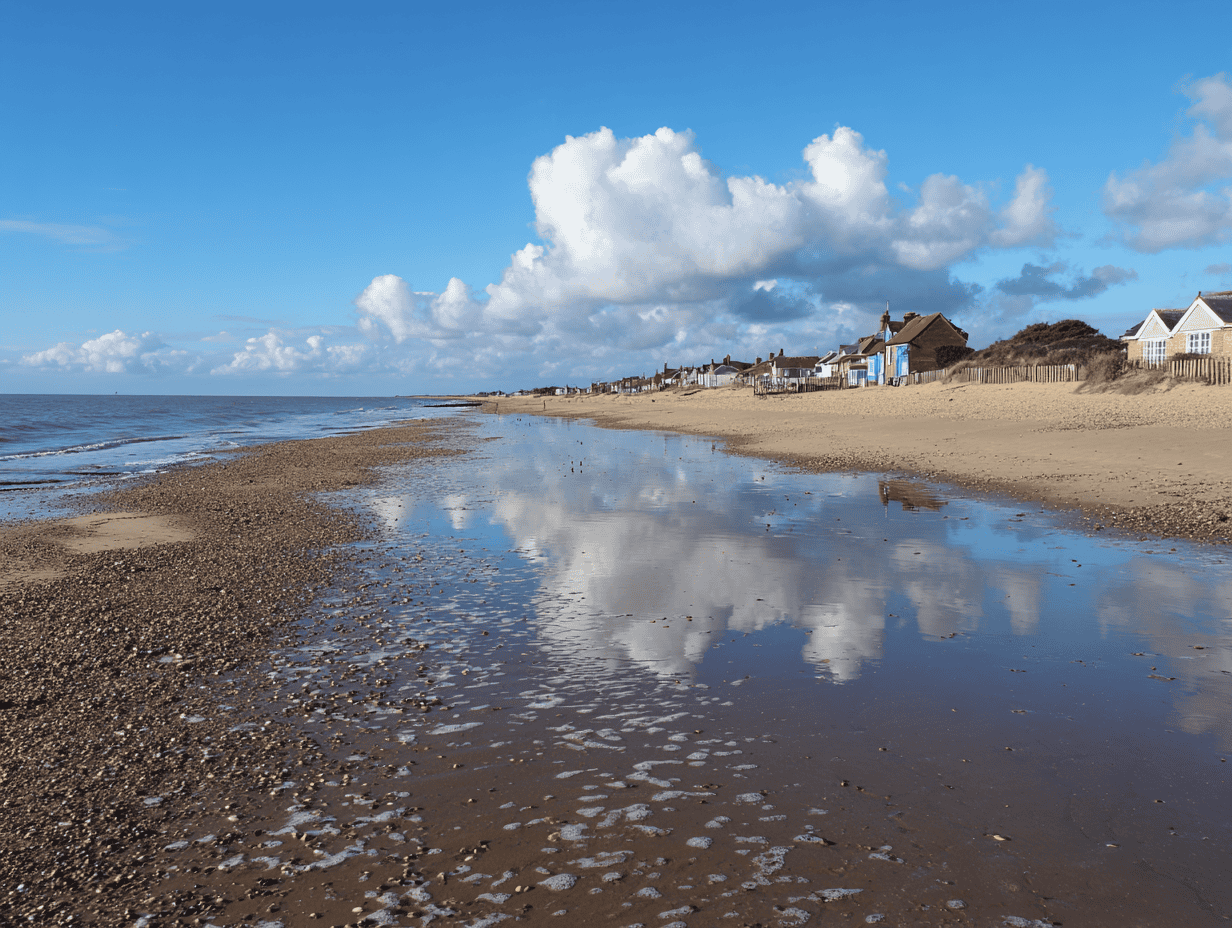
North of town, the beach to Thorpeness is a mile of quieter, less-visited shingle where glass accumulates away from the summer crowds. That’s the hunting ground.
What you’ll find here
Colours commonly found: Green, brown, white
Occasional finds: Blue, Aqua, Amber
Rare finds: Turquoise, Cobalt Blue, Black, Lavender
Bonus: Sea pottery, stoneware and earthenware from centuries of domestic and maritime life; Victorian bottle bases; the occasional piece of clinker brick from the drowned village of Slaughden, just south of town
Found something unusual? Try GlassLore, our free sea glass scanner, to explore what it could be and log your find to the gallery and, more importantly, earn points and climb the leaderboard.
When to go
You can easily combine a morning of sea glass hunting with an afternoon exploring the town, which is part of Aldeburgh’s appeal. But the hunting is best timed properly. Low tide is the window: the shingle foreshore drops away steeply here, and at high water, there’s little beach to work.
On an ebbing spring tide, the beach opens up significantly, revealing the lower pebble banks where glass settles and hides.
Winter is the productive season. After a north-easterly storm, the beach resets; glass that’s been buried gets lifted and deposited in the wrack line, and the summer visitors have long gone. The mile of shingle towards Thorpeness is particularly rewarding in the quiet months when few people make it past the Scallop.
Summer mornings before 9 am at the north beach are worth it, even in season, before the crowds arrive. The glass is unharvested. Avoid the main town beach strip in July and August; go north instead.
Today’s ShoreSense Score & Best Hunting Window
Aldeburgh sits on the Suffolk coast, facing due east into the North Sea, with a spring tidal range of around 2.5 metres, slightly more generous than that of Southwold or Lowestoft to the north. The beach is steep-shelving shingle, meaning the difference between high and low water is dramatic, and the foreshore that opens at low tide is genuinely productive.
Start on the north beach beyond the Scallop and work the latest wrack line before moving down through the lower pebble ridges as the tide falls. Look for temporary hollows, denser shingle bands and places where the otherwise uniform pebble bank has recently been re-sorted rather than simply walking as far towards Thorpeness as possible.
If you want a second hunt, treat Slaughden south of town as a separate section and check the shingle ridges and natural pinch points around the Martello Tower area. After stronger north-easterly conditions begin to settle, recheck any newly rearranged strandlines and lower pebble banks.
Use today’s ShoreSense Best Window to choose when to arrive, then follow this Scallop → wrack line → lower pebble ridges → Thorpeness progression once you’re there.
The ShoreSense widget below combines recent marine conditions, tide timing and practical hunting weather to show today’s overall ShoreSense Score, Hunting Potential, Comfort and the best available hunting window for Aldeburgh Beach. It uses UKHO tide data alongside current marine and weather inputs to help you judge whether conditions look promising for a hunt.
Aldeburgh sea glass conditions
Aldeburgh
Suffolk — Sea settling
62/100 — Good, best window 13:44–16:44.
Best window is 13:44–16:44 with spring tides (near full/new moon) and calm sea, so the chance of fresh finds is good today. Sea is likely calm and picked-over — go early.
Good day at a reliable beach
Ranked #55 in the UK ShoreSense leaderboard today.
| Tide | Time | Height |
|---|---|---|
| Low water | 02:42 | 1.1 m |
| High water | 08:57 | 2.8 m |
| Low water | 15:14 | 0.5 m |
| High water | 21:53 | 2.7 m |
Compare today’s scores on Hot Beaches.
Where to look on the beach
Two distinct sections are worth knowing.
The north beach (the hunting ground): From the large car park at the north end of town, the shingle stretches a full mile towards Thorpeness, passing the Scallop sculpture and the Martello Tower at Slaughden. This is the less-visited, dog-friendly stretch where glass accumulates between visits. Work the upper shingle bank along the wrack line, then drop down to the pebble ridges as the tide falls. The further north you go, the quieter it gets.
The town beach: The stretch directly in front of town, past the fishermen’s huts, the Moot Hall and the beach-facing cottages, gets more foot traffic but is still worth a look, particularly around the boat-launch area where the shingle gets regularly turned over by activity. Early morning, off-season.
At the very south end of the beach, the isthmus that leads towards the Martello Tower and Orford Ness narrows dramatically. The shingle here has been deposited by longshore drift over centuries, and glass tends to concentrate at natural pinch points and ridges where pebble movement slows.
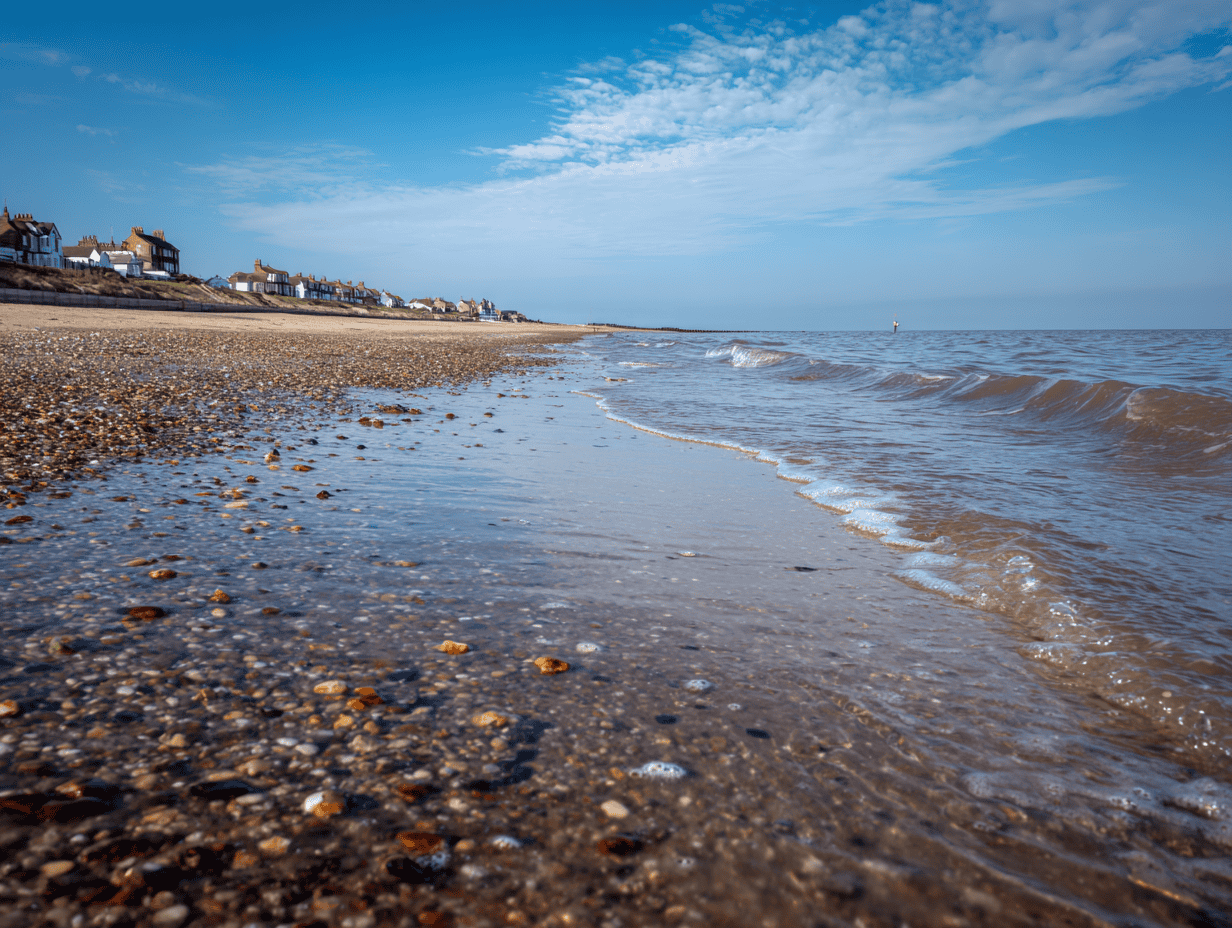
Get low to the ground. Aldeburgh shingle is uniform in colour and glass hides well. Look for the slight translucency and frosted surface that distinguishes sea glass from its neighbours. After rain, the glass stands out better as the pebbles darken, but the glass retains its characteristic frosted appearance.
Key Tip:
Head north from the main car park towards Thorpeness and don’t stop at the town beach. The quieter shingle beyond the Scallop sculpture consistently receives less hunting pressure and offers the best chance of finding overlooked pieces.
Difficulty Level -Intermediate
- Searching on deep shingle can be physically demanding
- Glass is often well camouflaged amongst similarly coloured pebbles
- Productive areas are spread across a long stretch of coastline
- Success depends on identifying natural collection points within the shingle ridges
- A patient, methodical approach is rewarded more than covering distance quickly
Hunting Style -The Shingle Specialist
Aldeburgh rewards hunters who understand how material moves through a shingle system. Focus on wrack lines, pebble ridges and natural pinch points where longshore drift slows, and material settles. The best finds come from carefully working productive sections rather than rushing along the beach.
Beach Personality
Aldeburgh feels like a classic East Coast sea glass beach. The vast banks of shingle, fishing heritage, Martello Tower and ever-changing shoreline create a landscape shaped by centuries of wind, waves and longshore drift. At first glance, it can appear daunting, with endless pebbles stretching into the distance, but experienced hunters know that hidden amongst those stones are pockets where glass quietly accumulates. It’s a beach that rewards patience, observation and a willingness to walk a little further than most visitors.
Dog friendly?
Workable- with good news for hunters. The main beach in Aldeburgh has restrictions from May 1 to September 30, covering the stretch from Brudenell Street to Market Cross Place. However, a mile of wide dog-friendly shingle beach runs from The Wentworth Hotel to Thorpeness, welcoming year-round. As it happens, that north stretch is the better hunting ground anyway.
Outside the restricted zone and outside the seasonal period, dogs are permitted on the beach and off lead. In winter, the whole beach is yours.
For dog-friendly food and drink, The Mill Inn near the fish huts is dog-friendly. Check our Yappy Places listing for Aldeburgh for current recommendations.
Practical information
Parking: For the north beach hunting ground, Thorpe Road car park (IP15 1BH) is the closest to the stretch running towards Thorpeness. At the southern end, Fort Green (IP15 5DD) and Slaughden (IP15 5DE) serve the Martello Tower and the isthmus, and Slaughden takes motorhomes up to 8 metres. There’s free parking at Slaughden Road (IP15 5NA) and on the Slaughden sea wall, both subject to signed time restrictions. King Street and Oakley Square are short-stay in town.
East Suffolk Council charges seasonally: £4 for two hours, £7 for four and £10 for ten in season, dropping to £2, £3.50 and £5 off-season. Pay by cash or the RingGo app; motorhomes pay £20 for 24 hours, by app only. Aldeburgh gets extremely busy in summer.
Toilets: Public toilets are available around Aldeburgh seafront and town. If you are heading far north towards Thorpeness or south towards Slaughden, use the facilities in town before starting a longer hunt.
Food and drink: Aldeburgh is justifiably famous for its fish and chip shops, both family-run operations rated among the best in the country. The fishermen’s huts sell lobster, crab and smoked fish directly from the boats. The High Street has independent cafés, delis and a gin distillery with a tasting room on the seafront. This is one of the best-provisioned beaches on the site for post-hunt food.
Getting there without a car: Aldeburgh’s nearest station is Saxmundham on the East Suffolk Line (Ipswich–Lowestoft). A bus service connects Saxmundham to Aldeburgh in around 20 minutes. The town is also reachable by bus from Ipswich. More manageable than Southwold.
Accessibility: The seafront promenade and Crag Path are relatively level, and there is level access from the promenade towards the beach. The actual hunting surface is steep, loose shingle and is difficult for standard wheelchairs or anyone with limited mobility. Aldeburgh does not currently have an East Suffolk Council beach-wheelchair scheme.
What to bring
- Sturdy shoes – Aldeburgh shingle is steep and shifts underfoot, particularly when wet
- A hand rake or trowel for the upper pebble ridge
- A container for finds – the fish hut pottery shards can be sharp-edged on early finds
- Layers – the beach faces directly east and funnels the wind
- Something to eat on the beach – the fishermen’s huts are reason enough to stay longer
- Tide times – the steep profile means timing matters significantly here
The history behind the glass
Aldeburgh’s history is written into its changing shoreline. The Moot Hall was built around 1520 when the town was developing into an important fishing, trading and shipbuilding centre. At that time it stood much farther inside the settlement than it appears today; centuries of coastal erosion have removed buildings and streets that once stood seaward of the present town.
South of Aldeburgh, Slaughden developed as a busy shipbuilding and trading settlement with cottages, warehouses, a pub, salt stores, industrial buildings and shipyards. It was gradually lost as the coastline retreated, with the last surviving house finally disappearing during the 1953 floods.
Aldeburgh’s fishing and maritime history continued long after its larger port declined, and fishing boats are still hauled directly onto the shingle today. That long history of settlement, shipbuilding, trade and fishing gives the beach a compelling historical backdrop for sea-glass hunting,
The glass on this beach has been accumulating over five hundred years of a town watching the sea take things away. Every piece has a long story behind it.
From beach to jewellery
Aldeburgh glass is well-travelled; the steep shingle gives it a good tumbling, and the North Sea here is serious enough to frost pieces properly. At Mermaid Tears, every piece of sea glass jewellery starts exactly where you’re standing: hand-hunted from UK beaches and handmade into something worth keeping. Browse the collection.
Disclaimer: Tide times, dog restrictions, parking charges and beach conditions change regularly. Always verify before visiting. The dog ban on the main town beach runs from 1 May to 30 September. The north beach towards Thorpeness is dog-friendly year-round, but always check local signage. There are no lifeguards on Aldeburgh beach at any time of year. East Suffolk Council reviews beach byelaws annually.
Last updated: September 2026
Dog rules checked: September 2026 – East Suffolk Council (town beach banned 1 May–30 September, Brudenell Street to Market Cross Place; north beach to Thorpeness unrestricted)
Frequently asked questions
Is Aldeburgh good for sea glass hunting? Yes, it’s one of the stronger shingle beaches on the Suffolk coast. Green, brown and white are your reliable finds; blue and aqua come up regularly; red is rare but has been found. The north beach towards Thorpeness is the less-harvested stretch and is worth prioritising.
Where exactly should I look for sea glass at Aldeburgh? Start from the north car park (IP15 5PQ) and walk a mile of shingle towards Thorpeness. This stretch gets less foot traffic than the town beach, and glass accumulates between visits. Focus on the upper wrack line and the pebble ridges that form parallel to the waterline.
When is the best time to visit Aldeburgh for sea glass? Low tide on an ebbing spring tide, autumn through winter. After a north-easterly storm, the beach resets with fresh glass. Early morning in any season, before other walkers arrive, is always productive.
Are dogs allowed on Aldeburgh beach? The main town beach bans dogs from 1 May to 30 September. The mile of shingle north of town from The Wentworth Hotel to Thorpeness is dog-friendly year-round — which is the better hunting ground anyway.
What makes Aldeburgh’s sea glass history interesting? Aldeburgh was a major Tudor shipbuilding port; the drowned village of Slaughden, south of the Martello Tower, was swallowed by the sea in 1936; and four centuries of coastal erosion have been consuming the old town and feeding its material into the shingle. The glass on this beach has been accumulating since the 1500s.
Can I buy fresh fish at Aldeburgh? Yes, the fishermen’s huts above the high-tide line sell lobster, crab and the day’s catch most mornings, weather and catch permitting. Two fish and chip shops in town are rated among the best.
More Beaches
Check out the Full East Anglia Guide or plan your trip with our UK Sea Glass Map.