The Scottish Borders’ Best Kept Secret
Coldingham Bay is a good sea glass hunting beach, with the rocky northern end around The Kip the main target and the southern rocks below Yellow Craig a useful second zone. Ignore most of the broad sandy centre and concentrate on rock gullies, shingle-filled crevices, pebble pockets and the strandline after rougher North Sea weather. White, green and brown are the most common finds, with blue, aqua and amber appearing occasionally and turquoise, cobalt blue and black among the rarer colours reported. The real appeal is the combination of rocky crevice hunting, a beautiful enclosed bay and the fishing and religious history of Coldingham and nearby St Abbs.
Where to hunt: The Kip → northern rock gullies and shingle pockets → southern rocks below Yellow Craig → full strandline after rougher weather
- Rating: Good Beach
- Terrain: Tricky
- Level: Intermediate
- Common colours: White, green, brown
- Rare colours: Turquoise, Cobalt Blue, Black
- Dog friendly: Seasonal (dogs on lead June–September)
- Location: Coldingham, Scottish Borders, Scotland
- Sat Nav: TD14 5PA (Coldingham Bay car park)
Today at Coldingham Bay Beach
See below for your latest ShoreSense score and tide times. Scroll down for your full 7-day forecast
Best For:
- Intermediate hunters
- Rocky crevice searching
- Quiet low-tide hunting
- Burn outflow searching
- Storm-following visits
- Scenic Scottish beaches
- Patient methodical hunters
- Less-worked beaches
Why Coldingham Bay is worth the drive from anywhere
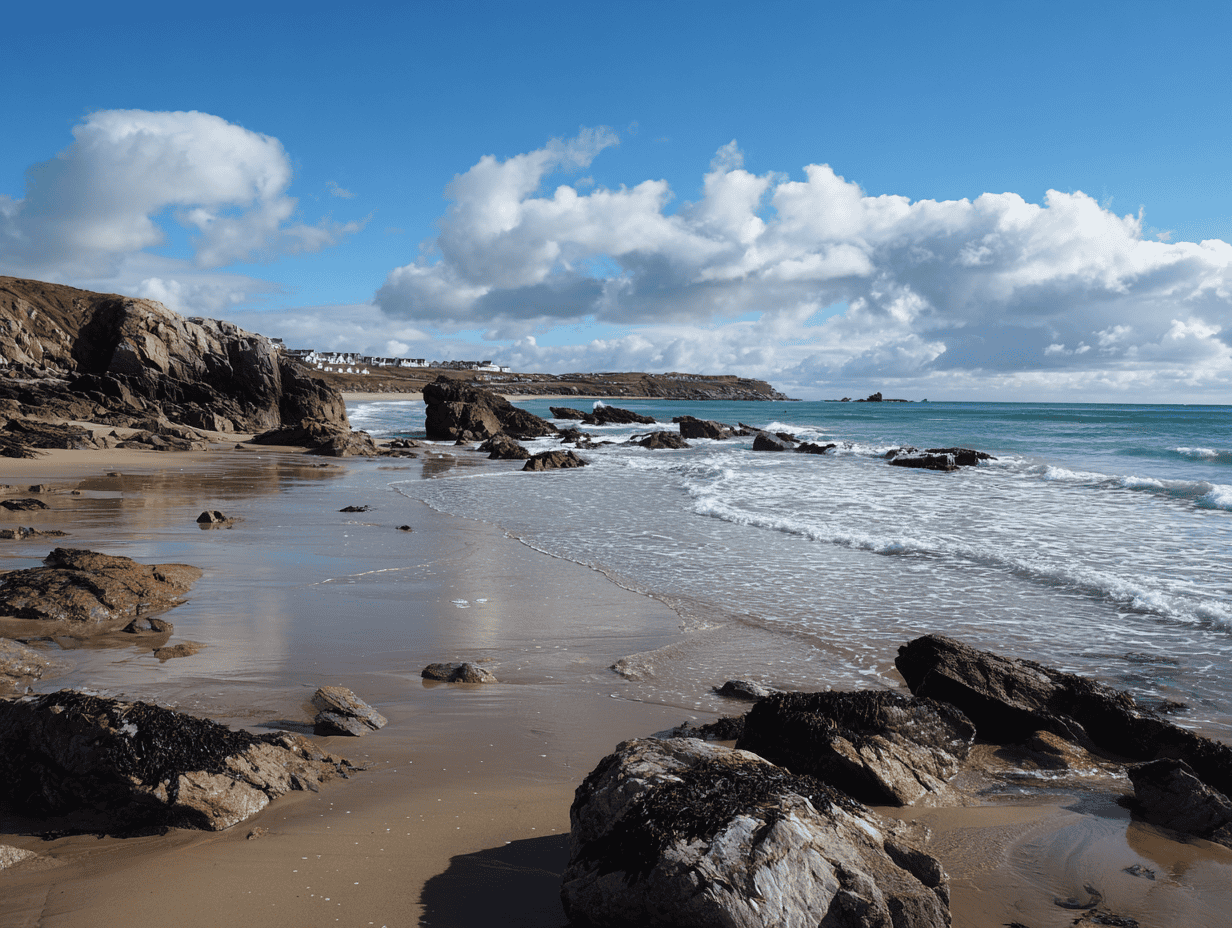
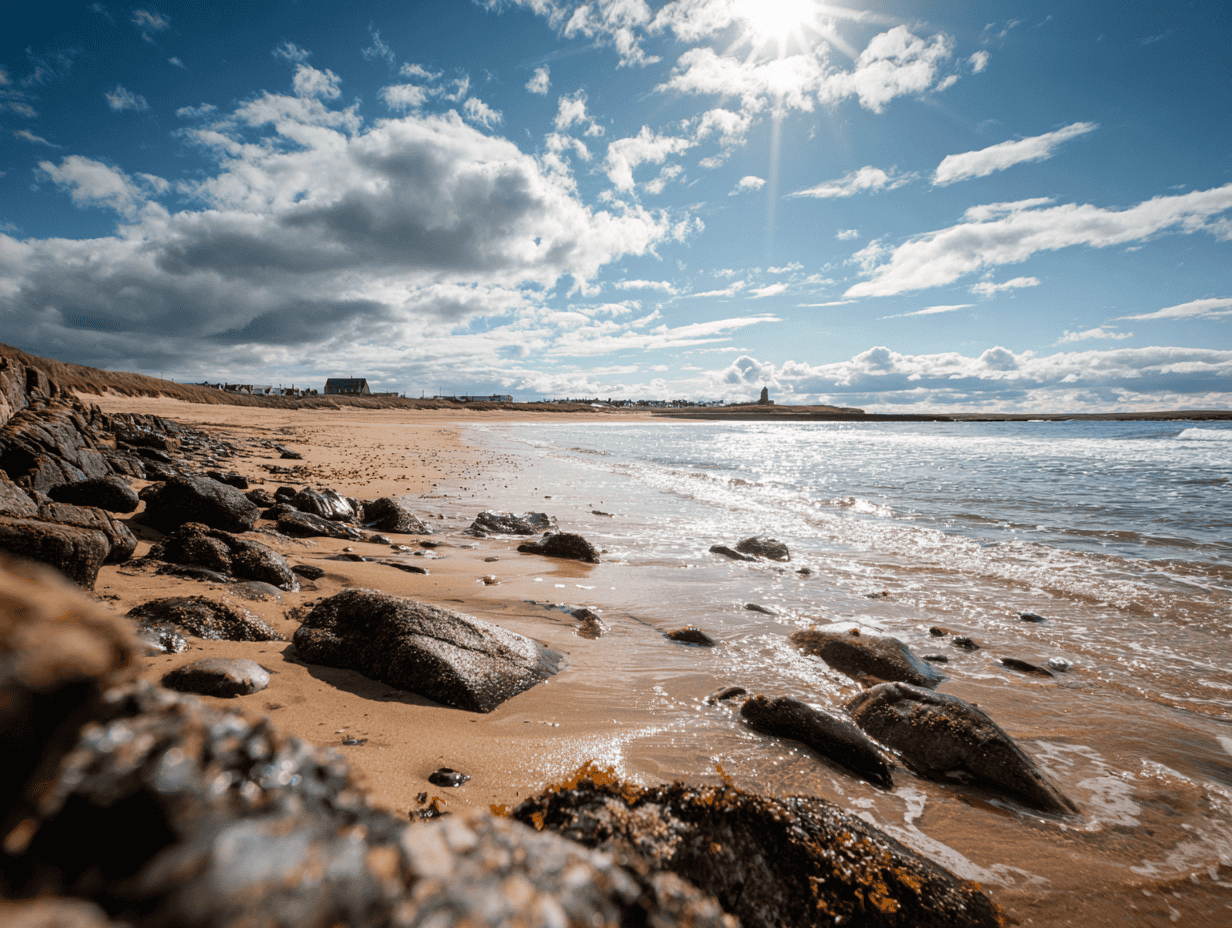
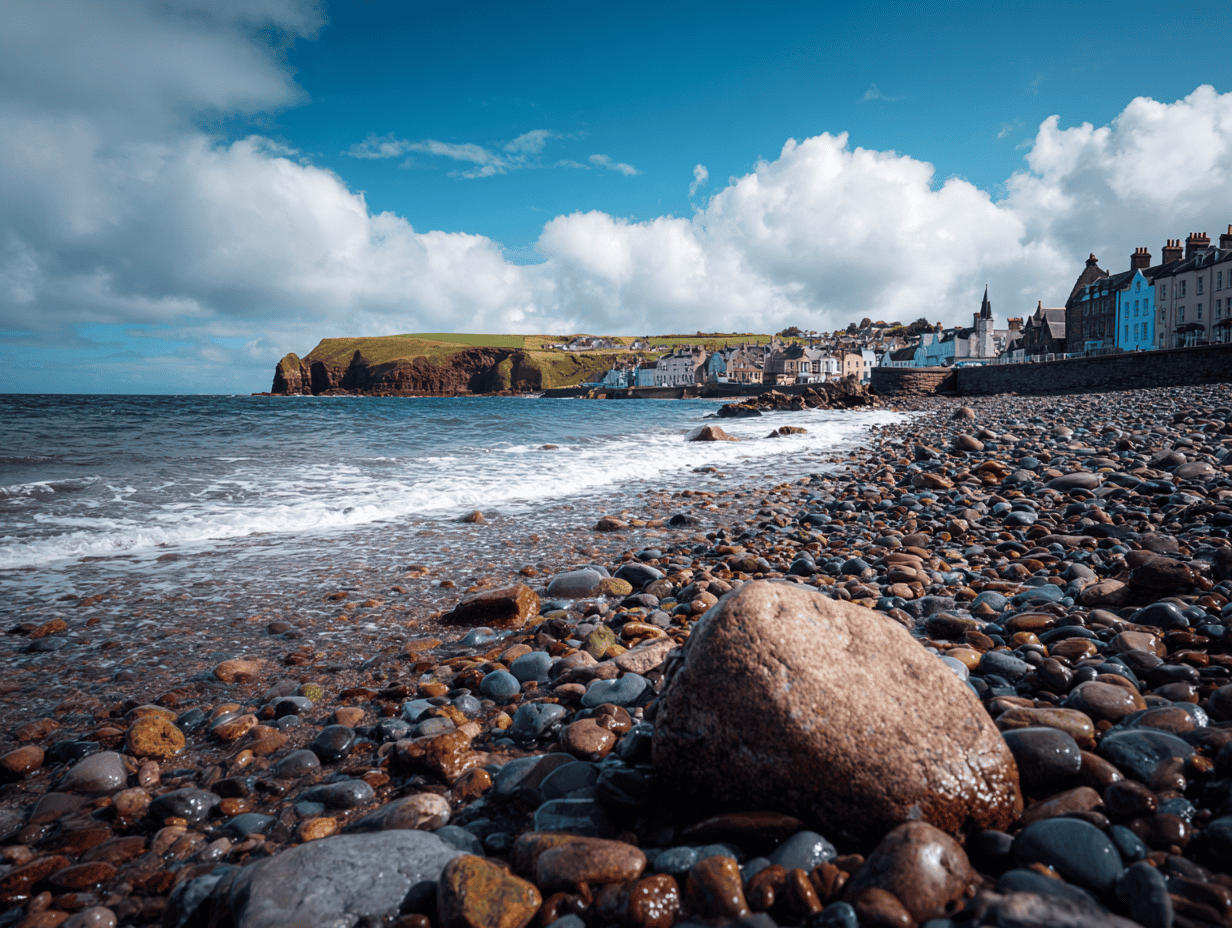
Coldingham Bay is one of those beaches that stops you the moment you come over the last rise in the road and see it. A stunning crescent-shaped inlet on Scotland’s rugged southeast coastline, tucked between the villages of Coldingham and St Abbs, is renowned for its natural beauty, historical associations, and ecological richness.
On a clear morning with the North Sea coming in green and clean against the dark rocks at either end of the bay, it genuinely takes your breath away.
It also produces sea glass. Coldingham Bay is consistently named as one of the most promising spots in East Lothian and the Scottish Borders for beachcombing by hunters who know this coastline well, and the rocky sections at either end of the main beach are where the finds concentrate.
This is not a high-volume beach; the central sweep is predominantly sandy, but the rocky northern end around The Kip sea stack and the southern end below Yellow Craig are genuinely productive at low tide. Come with patience, the right tide, and good footwear, and Coldingham rewards you.
The wider setting is exceptional by any standard. The Berwickshire Coastal Path passes close to the beach and can be used to walk to St Abbs and Eyemouth, two of the most characterful fishing communities on the Scottish coast. Not far behind the beach are the romantic ruins of Coldingham Priory, founded in the 11th century by King Edgar I of Scotland and destroyed by Cromwell’s troops in the 17th century.
A sea glass hunt, a coastal walk and a thousand years of history all within a mile of the car park.
What you’ll find here
Colours commonly found: White, green, brown
Occasional finds: Blue, Aqua, Amber
Rare finds: Turquoise, Cobalt Blue, Black
Bonus: The rocky shore around the bay has abundant marine life, with many types of sea creatures and seaweed, and the large area of tide pools is popular with rockpoolers. Pottery sherds from the long fishing history of the St Abbs coast also wash up alongside the glass, well worth collecting separately.
Found something unusual? Try GlassLore, our free sea glass scanner, to explore what it could be and log your find to the gallery and, more importantly, earn points and climb the leaderboard.
When to go
The North Sea faces Coldingham Bay directly from the east, and an easterly blow is your best friend here. After a period of rough weather from the east or north-east, the bay turns over material that has been sitting on the seabed undisturbed for months.
Winter is the season when the beach is quiet, the storms are more frequent, and the glass accumulates on the rocky sections where casual visitors don’t bother to look.
Low tide is the window that matters. The rocky sections at either end of the bay, particularly the northern end around The Kip, open up significantly as the water retreats, revealing shingle pockets and rock gullies where glass collects. Spring tides around new and full moon give you the most ground to work. Arrive as the tide is ebbing, start at the northern rocks, and work methodically south along the strandline.
Summer brings crowds, lifeguards and families, none of which are conducive to a quiet hunt. If you must come in summer, go early on a weekday morning before the beach fills up, and head straight for the rocky ends rather than the main sandy stretch.
Today’s ShoreSense Score & Best Hunting Window
Coldingham Bay faces directly east into the North Sea, with a tidal range of around 3.5 metres on a spring tide, enough to expose the rocky sections at either end of the bay and reveal the shingle pockets where glass accumulates.
Start at the northern end around The Kip and work the shingle pockets, rock gullies and crevices as they become exposed. Then move across the bay to the southern rocks below Yellow Craig, checking trapped pebble pockets rather than spending time on the broad sandy centre.
After stronger easterly or north-easterly conditions begin to settle, walk the latest strandline across the bay and recheck any newly rearranged shingle at both rocky ends. The lower ledges can be slippery, so give yourself plenty of time before the tide returns.
Use today’s ShoreSense Best Window to choose when to arrive, then follow this: The Kip → northern gullies → southern rock pockets → strandline progression once you’re there
The ShoreSense widget below combines recent marine conditions, tide timing and practical hunting weather to show today’s overall ShoreSense Score, Hunting Potential, Comfort and the best available hunting window for Coldingham Bay. It uses UKHO tide data alongside current marine and weather inputs to help you judge whether conditions look promising for a hunt.
Coldingham Bay sea glass conditions
Coldingham Bay
Scotland
54/100 — Fair, best window 14:48–15:48.
Best window is 14:48–15:48 with spring tides (near full/new moon) and calm sea, so the chance of fresh finds is fair today. Sea is likely calm and picked-over — go early.
Fair — a decent beach in the right window
Ranked #84 in the UK ShoreSense leaderboard today.
| Tide | Time | Height |
|---|---|---|
| High water | 01:19 | 5.1 m |
| Low water | 07:37 | 1.0 m |
| High water | 13:48 | 5.1 m |
| Low water | 19:46 | 1.1 m |
See Today’s best ShoreSense beaches, including our movers and shakers this week
Where to look on the beach
Coldingham Sands is a sandy beach which stretches for approximately one kilometre within the bay, with a rocky shore at either end. The sandy central section is beautiful but largely unproductive for glass; it’s the rocky ends that earn this beach its Good rating.
The northern end, around The Kip, is the primary hunting ground. On the north side of the bay stands The Kip, an eight-metre-high sea stack which stands on dry land at low tide. The ground around its base, and the rock ledges and shingle pockets on either side of it, are where glass collects. Get down low, check every crevice, and work slowly.
The terrain here earns the Tricky rating; the rock ledges are uneven and can be slippery at low tide. Take care and watch your footing.
The southern end, below Yellow Craig, is quieter and less visited. At the southern extremity of the beach lie the 30-metre-high grassy cliffs of Yellow Craig. The rocky section below them is worth a careful look at low tide; fewer people come this far, and the ground tends to be less picked over. The burn outflow from Milldown Burn enters the bay here, and burn outflows are always worth checking, as they act as natural collection points for heavier material.
The strandline across the full width of the beach is worth a slow walk after a storm, as glass deposited at the high-tide mark is sometimes easier to spot on the upper beach than in the lower rocky sections.
A note on safety: the rock ledges at both ends can be slippery, and the tide at Coldingham comes in with some pace on a flood. Keep an eye on the water when you’re working the lower rocks and don’t get so absorbed in hunting that you lose track of conditions around you.
Key Tip:
Head straight for the rocky ends of the bay rather than spending time on the sandy middle section. The northern end around The Kip is the priority, with glass collecting in ledges, crevices and shingle pockets exposed at low tide.
Difficulty Level – Intermediate-Advanced
- Productive areas are rocky and uneven underfoot
- Rock ledges can be slippery at low tide
- Tide awareness is important as the flood tide can move quickly
- The best finds are often hidden in crevices rather than visible on open sand
- Careful footing is needed at both ends of the bay
Hunting Style – The Rock Ledge Hunter
Coldingham rewards hunters who ignore the obvious sandy beach and work the edges instead. Search around The Kip first, checking every shingle pocket and rock crevice, then explore the quieter southern end below Yellow Craig. After storms, walk the full strandline across the bay before dropping back to the rocks.
Beach Personality
Coldingham Sands looks like a gentle family beach at first glance, but its sea glass potential sits in the rougher margins. The sandy bay, sea stack, rocky ledges and grassy cliffs give it a split personality: easy and scenic in the centre, more adventurous at the edges. It is a beach for hunters who are happy to slow down, watch their footing and search the less obvious corners where the best pieces quietly collect.
Dog friendly?
Dogs are allowed on the beach but must be kept on a lead from June to September. Outside those months, from October to May, dogs are welcome without restriction. If you’re planning a hunt with your dog in tow, the off-season is your best bet on every count: quieter beach, better glass, no lead requirement in the rocky sections where he’ll want to scramble.
During the restricted months, the lead rule applies across the whole beach. The rocky ends are manageable on a lead for a confident small dog, but be aware of the uneven terrain and slippery surfaces at low tide.
The village of Coldingham a mile inland has a pub and a small shop. St Abbs, a short walk along the coastal path, is one of the most dog-friendly fishing villages on this coast. Check the Yappy Places listing for Coldingham and St Abbs for current dog-friendly options. There are good stops in both villages and along the coastal path.
Practical information
Parking: Free parking in the small car park opposite the beach (TD14 5PA), with a short but fairly steep access road down to the sand. Disabled access parking for two cars is available at the beach itself. The car park fills quickly on summer weekends and busy days can bring over a thousand visitors to the bay, so arrive early or be prepared to walk in from the nearby roads. Motorhomes may park overnight; tents and caravans may not. There’s also a small paid parking area at St Abbs harbour, a short walk along the coastal path.
Toilets: Toilet block on the beach. Available at the car park at the end of the beach.
Food and drink: There is a seasonal cafe on the beach. Confirm opening times before visiting. The cafe is open through the summer season, but hours vary outside peak months. The village of Coldingham a mile inland has a pub and shop. Eyemouth, ten minutes by car, has a wider range of options, including excellent fish and chip shops right on the harbour.
Getting there without a car: Regular buses run from Berwick-upon-Tweed via Eyemouth to Coldingham and St Abbs. The beach is about 1 km from either village, with access from St Abbs via the Berwickshire Coastal Path. Berwick-upon-Tweed has direct rail connections on the East Coast Main Line.
Accessibility: Two disabled-access parking spaces are available close to beach level, and a beach-wheelchair service operates at Coldingham Bay. The route down from the main car park is short but fairly steep. The central sandy beach is much easier to access than the actual sea-glass hunting areas, as the rocky ends around The Kip and Yellow Craig are uneven, slippery and not wheelchair-friendly.
What to bring
- Sturdy waterproof boots with ankle support – the rocky sections are uneven and slippery at low tide
- A small container or zip-lock bag for your finds
- A hand rake or trowel for working the shingle pockets between the rocks
- Windproof layers – Coldingham faces directly into the North Sea and catches every easterly going
- Binoculars – thousands of cliff nesting birds can be seen at the nearby St Abbs Head Nature Reserve, and seals are regularly spotted in the bay
- A dog lead -even in winter, the rocky terrain near The Kip requires keeping an eye on a curious terrier
The history behind the glass
Coldingham has been sacred ground for nearly 1,400 years. The site of Coldingham Priory has been holy ground for close on 900 years, possibly for 1,300, and perhaps for nearly 2,000 years. A Bronze Age cemetery site lies a quarter of a mile away. The priory itself was founded on a site that had already seen centuries of religious activity, and its ruins still stand in the village today, visited by pilgrims and historians long after Cromwell’s soldiers reduced the main structures to rubble in the 17th century.
The glass on the beach has more recent origins. St Abbs was originally called Coldingham Shore. Before any buildings, fishermen who worked their boats from the beach lived at Fisher’s Brae in Coldingham, carrying their fishing gear one and a half miles down what is now known as the Creel Path to where their vessels were tied up. In 1832, when the harbour was built, sixteen fishing families lived there while twenty others were Coldingham-based, with around 40 boats operating from the shore. By the end of the 19th century, the village had grown into a proper fishing community and was renamed St Abbs to avoid confusion with Coldingham inland.
The fishing industry here ran hard through the 19th and early 20th centuries; herring, white fish, crab and lobster all worked out of St Abbs harbour, and the harbour continues to be used for fishing for crab and lobster to this day, though most of the small boats now take recreational divers out to explore the marine reserve.
Centuries of maritime activity along this coast mean the sea glass at Coldingham has been entering the water from multiple sources: fishing boats, harbours, the town of Eyemouth, four kilometres south, and the long stretch of Berwickshire coast that feeds into the same North Sea currents.
The Creel Path still exists. You can walk it today from Coldingham down to St Abbs, following the same route that fishermen have taken for generations. It’s worth doing after a hunt; the views over the bay from the path are among the finest on this stretch of coast.
From beach to jewellery
Found something in the rocks at The Kip that you can’t leave behind: a cobalt blue, a red, a piece of amber with perfect frosting? At Mermaid Tears, every piece of jewellery starts exactly where you’re standing, hand-hunted from UK beaches and handmade into something worth keeping forever. Browse the Mermaid Tears collection
Disclaimer: Tide times, dog restrictions, parking charges and beach conditions change regularly. Always verify before visiting. Dog lead restrictions at Coldingham Bay apply from June to September. Check with the Scottish Borders Council for the most current byelaw information before travelling with your dog. The rocky sections at either end of the bay can be hazardous at low tide; appropriate footwear is essential.
Last updated: September 2026
Dog rules checked: September 2026 — Scottish Borders Council (on lead June–September; unrestricted October–May)
Frequently asked questions
Is Coldingham Bay good for sea glass hunting? Yes – it’s a Good beach, rated above average for the Scottish Borders coast. The rocky sections at either end of the bay, particularly around The Kip sea stack at the northern end, produce consistent finds at low tide. It rewards patience and the right conditions more than some beaches, but delivers well when both come together.
Where exactly should I look for sea glass at Coldingham Bay? The rocky northern end around The Kip sea stack is the primary hunting ground; check every shingle pocket and rock gully carefully at low tide. The southern end below Yellow Craig is quieter and less picked over. The burn outflow at the southern end is worth checking. Avoid the sandy central stretch; glass sinks and becomes invisible in the sand.
Can I bring my dog to Coldingham Bay? Dogs are welcome from October to May with no restrictions. From June to September, dogs must be kept on a lead across the whole beach. Always verify the current rules with the Scottish Borders Council before visiting, as byelaws are reviewed annually.
When is the best time to visit Coldingham Bay for sea glass? Low tide on a spring tide, in autumn or winter, after a period of easterly weather. Early morning on a weekday in the off-season gives you the best chance of an unpicked beach and no crowds. Summer visits are best at first light, before the beach fills.
What else is there to do near Coldingham Bay? The coastal walk to St Abbs along the Berwickshire Coastal Path is superb, one of the finest short coastal walks in Scotland. St Abbs Head National Nature Reserve has extraordinary seabird colonies in spring and summer. Coldingham Priory ruins are worth a visit. Eyemouth, ten minutes by car, is a proper working fishing town with an excellent harbour and good fish and chips.
How do I get to Coldingham Bay without a car? Take a train to Berwick-upon-Tweed on the East Coast Main Line, then a bus through Eyemouth to Coldingham village or St Abbs; the beach is a kilometre from either stop. The journey from Edinburgh by train and bus takes about 90 minutes to two hours.
More Scottish Beaches
Check out our Full East Scotland Guide or plan your trip with our UK Sea Glass Map.