Five Villages, One Extraordinary Coast
The East Neuk of Fife is one of Scotland’s best areas for a sea glass road trip, linking Elie, St Monans, Pittenweem, Anstruther and Crail along a compact stretch of coast. The rockier sections between the villages are generally more rewarding than the broad sandy beaches, with green, white and brown glass common and blue, aqua, amber, turquoise, cobalt, black and lavender among the more unusual finds. Crail is the standout individual hunting stop, but the real appeal is the variety across the whole route.
- Rating: Good (collective)
- Terrain: Tricky – rocky foreshore, uneven shingle between villages, coastal path sections over clifftop; Easy on harbour fronts
- Dog friendly: Seasonal – Elie main beach dogs banned May to September; all other village beaches and the Fife Coastal Path are dog friendly all year round
- Common colours: Green, white, brown
- Rare colours: Cobalt Blue, Black, Lavender, sea pottery
- Location: East Neuk of Fife, Scotland
- Base yourself in: Anstruther (KY10 3AB) or Crail (KY10 3TT)
Why the East Neuk
There is a stretch of the Scottish coast that serious beachcombers travel from across the world to reach. Not one beach, a series of them, strung together along a winding coastal path like beads on a thread, each village different from the last, each shoreline hiding something the previous one didn’t.
The East Neuk of Fife, being the old Scots word for corner or nook, runs along the southern tip of the Fife peninsula from Elie in the west to Crail in the east. Five fishing villages, five harbours, five different characters. Elie with its wide south-facing sand. St Monans, with its church practically in the sea. Pittenweem is still landing lobster and crab from working boats. Anstruther with its Scottish Fisheries Museum and the famous fish bar. And Crail, the most photographed harbour in Scotland, is already covered in its own dedicated post on this site.
What unites them is the Fife Coastal Path, which connects every village along rocky clifftops and shingle shores, and a shared industrial and maritime history that has been putting glass, pottery and salt industry waste into the Firth of Forth for centuries. The East Neuk is not one beach; it’s a day, or a weekend, or a week of hunting, with outstanding food and extraordinary scenery at every stop.
This is not a post about a single beach. It’s a guide to doing the East Neuk properly, where to hunt at each village, what you might find, how to string the day together, and how to eat very well in between.
What you’ll find here
The glass across the East Neuk reflects centuries of varied coastal industry, fishing, salt panning, kelp burning, glass manufacture and maritime trade. Each village has a slightly different character to its finds.
Colours commonly found: Green, white, brown across all villages
Occasional finds: Blue, Aqua, Amber, Turquoise are more likely at the rockier sections between villages
Rare finds: Cobalt Blue, Black, Lavender, True turquoise and unusual colours most commonly associated with Crail, but occasionally found along the broader coast
Bonus: Sea pottery with decorative glaze, fragments of salt pan vitrified slag, old stoneware, pottery kiln stilts from Fife’s Victorian pottery industry, pieces with partial embossing, and occasionally sea marbles
The Beachcombing Magazine describes the East Neuk as one of the finest beachcombing stretches in the world, where each beach is vastly different; one may have massive chunks of sea glass, another pottery, another a mix. That variety is exactly why it rewards a full day rather than a single stop.
Found something unusual? Try GlassLore, our free sea glass scanner, to explore what it could be and log your find to the gallery and, more importantly, earn points and climb the leaderboard.
When to go
The East Neuk faces south into the Firth of Forth, which gives it more shelter than the fully exposed North Sea coast. Tidal action is gentler than at Stonehaven, but the combination of historic industrial deposition, rocky shorelines and consistent tidal movement makes it productive year-round.
For the whole stretch, mid-tide is generally more productive than dead low water, according to the consensus among experienced Fife hunters. As the tide rises to mid-point, glass concentrates around rocky outcrops and along the waterline rather than dispersing across exposed flat sand.
Autumn and winter, after North Sea swells that push up the Forth, are the most productive times. The villages are quieter, fewer people are on the beaches, and the coast is at its most dramatic. Summer works too; the beaches don’t get stripped in the way busier hunting spots do, but you’ll be sharing the path with more walkers. Early morning on any day gives you the best chance of fresh ground.
Today’s ShoreSense Score & Best Hunting Window
The East Neuk coastline faces south into the Firth of Forth, with a tidal range of around 3–4 metres on a spring tide. Each village sits on a slightly different aspect and responds slightly differently to swell conditions. St Monans and Pittenweem face more squarely south, while Elie opens up to the southwest, and Anstruther is partially sheltered by the harbour walls. What unites them is that low tide exposes the rocky foreshore sections and harbour bases where glass concentrates, and spring tides give the biggest windows.
The widget below uses Anstruther Easter tide data from the central UKHO station for this stretch of coast to show today’s Sea Glass Score, tide curve and best hunting window. Time your arrival at each village around the ebb and you’ll have the best of what every harbour has to offer.
Crail sea glass conditions
Crail
Fife — Sea settling
71/100 — Good, best window 16:08–19:08.
Best window is 16:08–19:08 with big seas in the last few days, now easing — glass should be washing in and offshore wind, so the chance of fresh finds is good today.
Good day at a reliable beach
Ranked #29 in the UK ShoreSense leaderboard today.
| Tide | Time | Height |
|---|---|---|
| Low water | 05:33 | 1.7 m |
| High water | 11:32 | 4.4 m |
| Low water | 17:38 | 1.9 m |
| High water | 23:42 | 4.6 m |
Compare today’s scores on Hot Beaches.
The villages – where to hunt
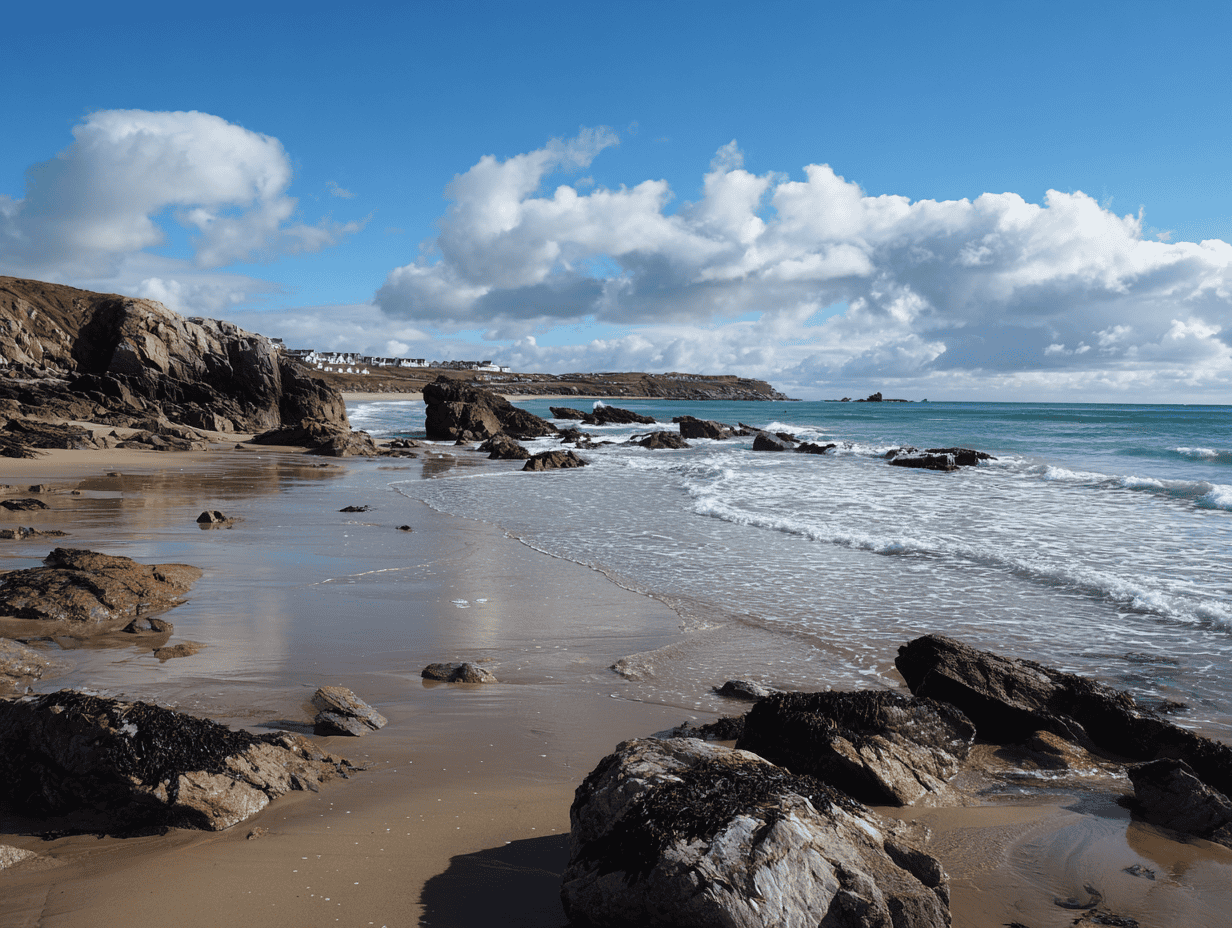
Elie and Earlsferry, the western gateway to the East Neuk, has the widest and sandiest beach of the stretch. Ruby Bay is broad, south-facing and beautiful, but predominantly sandy and not the most productive hunting ground. The better spots are the rocky sections around Elie Ness, the area below the lighthouse, and the trickier rocky ground accessible at low tide around the headland.
The Chain Walk, a series of iron chains bolted to the cliff face, allowing a scramble around the headland at low tide, opens up sections of completely unhunted rocky shore that most visitors never reach. Only attempt it in suitable conditions and with the right footwear; check tide times carefully before committing. The glass you find in these sections tends to be chunkier and less picked over. Elie has seasonal dog restrictions on the main beach; check before visiting.
St Monans, the smallest and quirkiest village in the East Neuk, has a church so close to the sea it catches spray in heavy weather, a wiggly harbour that photographs beautifully, and a welly boot garden on the slipway that wins small awards. For hunting, the interest is in the rocky foreshore between St Monans and Pittenweem- the Fife Coastal Path runs along it, and the section between the two villages passes the visible remains of the 18th-century St Monans salt works, with vitrified coal slag still visible on the beach.
Salt panning and kelp burning, both significant glass-related industries, operated along this specific stretch for centuries. Work the rocky sections carefully here and look for material that traces back to that industrial past alongside the glass.
Pittenweem is still a working fishing port on weekday mornings; you’ll see langoustines and crab landed at the pier. The rocky foreshore west of the harbour, and the rocky sections between Pittenweem and St Monans, are the productive hunting areas. Archaeological evidence of salt panning and possible kelp burning pits has been found specifically between these two villages, confirming centuries of industrial activity along this shoreline.
The Pittenweem tidal pool at West Braes sits in a sheltered rocky section worth checking carefully at low tide. The village itself is worth a slow wander. St Fillan’s Cave (collect the key from the Cocoa Tree café) is one of the more unusual things you’ll see on any coastal walk in Scotland.
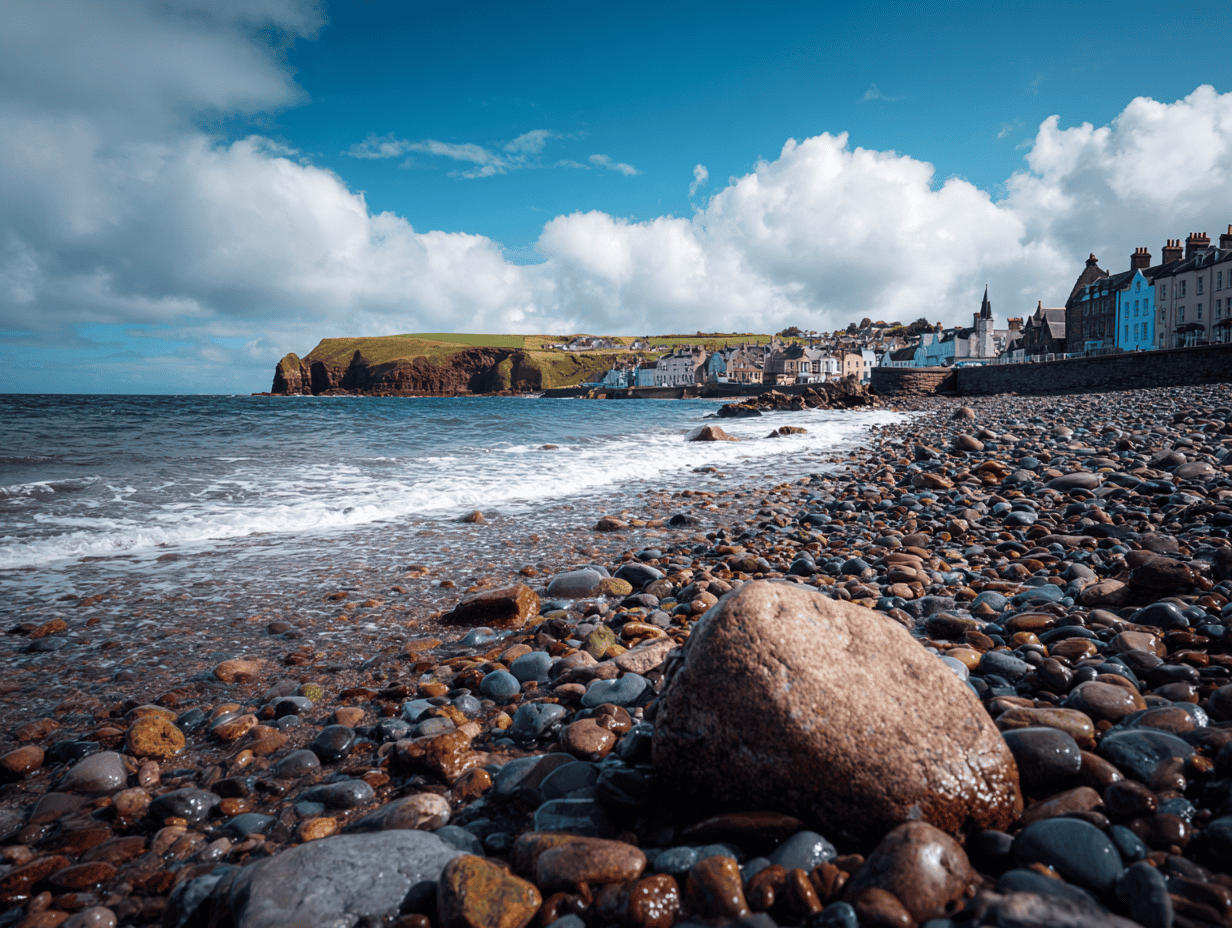
Anstruther (and Cellardyke) is the largest town in the East Neuk and its natural hub. Billow Ness beach, just west of the harbour beside the golf course, is a sandy bay with scattered rock pools worth checking along the strandline and around the rocks. The more productive stretch for glass is the rocky shore between Anstruther and Pittenweem, accessible along the coastal path.
Cellardyke, the smaller community immediately east of Anstruther, has its own tidal pool and a quieter section of rocky shore that doesn’t get the same footfall as the harbour area. The stepping stones across the Dreel Burn into Anstruther from the east are a lovely moment, and the burn mouth itself, like all river mouths on this coast, is worth a check for deposited material.
Crail is covered in full in the dedicated Crail post on this site. The headline: focus on the rocky Cowie end of Roome Bay, hunt at mid tide, and look for turquoise. It’s the standout hunting beach of the East Neuk and deserves the full post treatment it gets.
How to do the day
The classic approach is to drive or bus to Elie, walk the coastal path eastward toward Anstruther (about six miles, two to three hours at a hunting pace), eat at Anstruther, then either catch the Stagecoach 95 bus back to Elie or continue to Crail by bus. This gives you the most varied hunting across the most interesting section of the coast.
If you want more time in the water than on the path, base yourself in Anstruther or Crail and work outward in both directions, using the bus to hop between villages rather than walking the whole stretch. The 95 runs approximately hourly through all the villages.
For a two-day approach: Elie to Pittenweem on day one, Anstruther to Crail on day two. Stay overnight in Anstruther or Crail and eat very well in between.
Dog friendly?
Mostly yes. The Fife Coastal Path is fully dog-friendly and one of the better long coastal walks in Scotland with a dog. Most of the beaches in the East Neuk allow dogs year-round. Anstruther’s Billow Ness beach is confirmed year-round. Elie has seasonal restrictions on the main beach between May and September. Always check local signage on arrival.
The path between villages is the best section for dogs – open clifftop walking, rocky shore access, and space to run. Keep dogs close around the tidal sections and rocky headlands where the footing is uneven.
Check the Yappy Places listing for the East Neuk for dog-friendly cafes and pubs – there are good options across all five villages. The Dreel Tavern in Anstruther, the Cocoa Tree café in Pittenweem and the Golf Hotel in Crail all welcome dogs.
Practical information
Getting there: By car from Edinburgh, cross the Forth Road Bridge and follow the A92 then A917 along the coast. Anstruther is about 90 minutes from Edinburgh. By bus, the X60 from Edinburgh runs directly to Elie, St Monans, Pittenweem and Anstruther in around two hours and twenty-five minutes. From St Andrews, the Stagecoach 95 runs hourly through all the villages to Crail. There is no direct train to the East Neuk; the nearest station is Leuchars, served by the Edinburgh–Dundee mainline, from which you can take a bus to St Andrews and change to the 95.
Parking: Each village has its own parking arrangements. Anstruther has a pay-and-display car park near the harbour (KY10 3AB). Crail uses street parking on Roome Bay Crescent (KY10 3TT). Elie, Pittenweem and St Monans all have small car parks or roadside parking in the village centres. On summer weekends, Anstruther fills quickly. Arrive early or base yourself in a quieter village and bus in.
Toilets: Public facilities are available in Anstruther, Crail and Elie. Pittenweem and St Monans have limited facilities; check before you rely on them.
Food and drink: The East Neuk is exceptional for food. Anstruther Fish Bar is one of the most celebrated chippies in Scotland; the queue tells you everything. The Cellar in Anstruther (book well ahead) is Michelin-listed. The East Pier Smokehouse in St Monans is excellent for seafood. Reilly Shellfish at Crail harbour serves fresh lobster and crab in season. The Cocoa Tree in Pittenweem is the perfect mid-hunt stop. Ardross Farm Shop, between St Monans and Elie, is outstanding for local produce. Craig Millar at 16 West End in St Monans offers fine dining with a sea view.
Accessibility: The Fife Coastal Path between villages is mixed; some sections are paved and accessible, others are rocky and uneven. The harbour fronts and village centres of all five villages are generally accessible on foot. The rocky hunting sections between villages are not suitable for wheelchairs or mobility aids.
What to bring
- Sturdy waterproof boots with grip – the rocky sections between villages are uneven and can be slippery
- A small container for finds -the glass here varies in size, and you’ll want to separate pieces carefully
- The Stagecoach 95 timetable downloaded or bookmarked – the bus is your friend on this coast
- Tide times for Anstruther Easter, and the knowledge that mid-tide is your productive window
- A full day – this coast rewards time, not rushing
- A lead for Trigger and the patience to check local dog rules at each village
The history behind the glass
The East Neuk has been a working fishing coast since at least the 12th century. Anstruther was granted Royal Burgh status in 1587; Pittenweem in the same era; Crail even earlier. The Dutch influence visible in the pantiled rooftops and harbour architecture tells you these villages traded across the North Sea centuries before the modern era, and that trade brought maritime traffic, provisioning, glass, pottery, and all the material that eventually enters the sea.
Salt panning was a major industry along this specific stretch. The St Monans salt works are archaeologically visible on the foreshore today, with vitrified coal slag and pan house foundations eroding from the coastal cliff. Pittenweem salt panning dates to at least 1587.
The kelp burning industry which used seaweed to produce the glassy substance rich in potash and soda used in early glass manufacture has been documented in Anstruther from 1694, with possible archaeological evidence now identified between Pittenweem and St Monans. Glass manufacture itself operated along the broader Fife coast through the Victorian era, and Fife’s fishing industry put countless bottles, jars and storage vessels into these waters across centuries of working harbour life.
What you find walking this coast isn’t the residue of a single factory or a single period. It’s the accumulated deposit of a working fishing culture across many hundreds of years, varied, historically layered, and still being returned by the tide one piece at a time.
From beach to jewellery
Love what you find along the East Neuk? At Mermaid Tears, every piece of jewellery starts exactly where you’re standing, hand-hunted from UK beaches and handmade into something you’ll keep forever. Browse the collection.
Disclaimer: Tide times, dog restrictions, seasonal opening hours for cafes and facilities, and bus timetables change regularly. Always verify current information before visiting, particularly regarding dog access at Elie and bus timetables for the 95 and X60 services. The information in this post was accurate at the time of writing, but should not be relied upon as a substitute for checking current local guidance.
Last updated: Aug 2026
Frequently asked questions
Which East Neuk village is best for sea glass hunting? Crail is the standout hunting beach. See the dedicated Crail post on this site. For the broader stretch, the rocky sections between villages along the coastal path are often more productive than the village beaches themselves, particularly between St Monans and Pittenweem, where centuries of salt panning and industrial activity have left material in the foreshore.
Do I need a car to do the East Neuk? No. The Stagecoach 95 bus runs approximately hourly through all the villages between Leven and St Andrews, and the X60 connects Edinburgh directly to Elie, St Monans, Pittenweem and Anstruther. The Fife Coastal Path connects all the villages on foot; it’s one of the most accessible sections of any long coastal path in Scotland.
What tide is best for sea glass hunting in the East Neuk? Mid tide, not low water, is the consistent advice from experienced Fife hunters. As the tide rises to the midpoint, glass concentrates around rocky outcrops and along the waterline. After a Forth swell or North Sea storm, the day following mid tide is your best window.
Are the East Neuk beaches dog-friendly? Most are. The coastal path between villages is fully dog-friendly. Anstruther’s Billow Ness beach welcomes dogs year-round. Elie has seasonal restrictions on the main beach between May and September. Always check local signage on arrival.
How long does it take to walk between the villages? Elie to Anstruther is about six miles and takes two to three hours at a comfortable walking pace, more if you’re stopping to hunt. Anstruther to Crail is about six and a half kilometres, around an hour and a half to two hours. The 95 bus runs hourly, making it easy to walk one direction and ride back.
What’s the best food stop on the East Neuk? Anstruther Fish Bar for fish and chips; queue early or late to avoid the worst of it. East Pier Smokehouse in St Monans for seafood. Reilly Shellfish at Crail harbour in summer. Cocoa Tree in Pittenweem for coffee and chocolate in between.
More Scottish Beaches
Check out the Full East Scotland Guide or plan your trip with our interactive map.