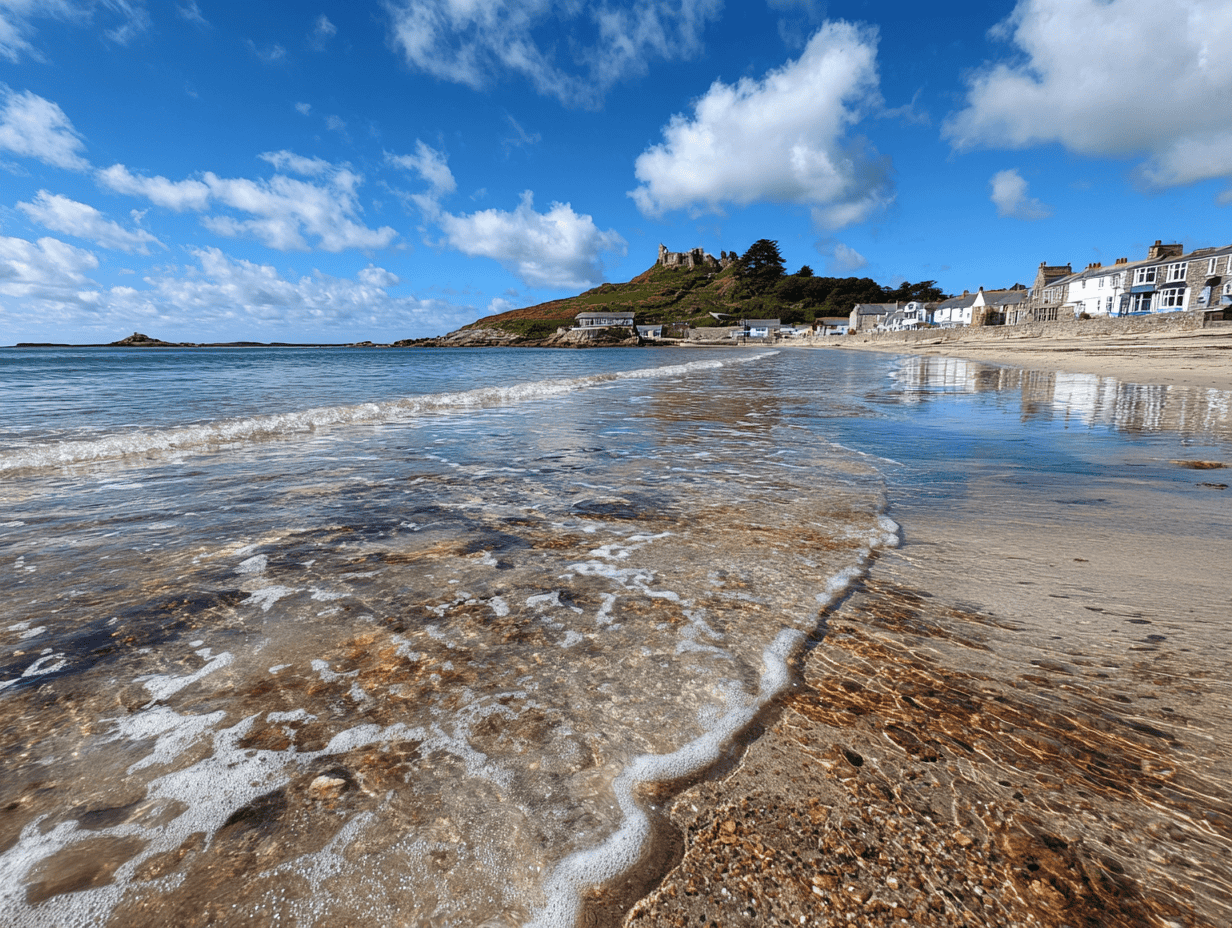
Holy Wells, Ancient Dunes and One of Cornwall’s Easiest Glass Hunts
Holywell Bay is a good sea glass hunting beach, especially around the shingle patches, northern rock pools and cave area exposed at lower tides. Green, brown and white are the most common finds, with blue, aqua, cobalt, black and lavender also reported.
- Rating: Good Beach
- Terrain: Easy
- Level: Intermediate
- Dog friendly: Yes, all year round, no restrictions
- Common colours: Green, brown, white
- Rare colours: Cobalt Blue, Black, Lavender
- Location: Holywell, near Newquay, North Cornwall
- Sat Nav: TR8 5PF (Holywell Bay car park)
Today at Holywell Bay
Check below for ShoreSense Score and tide times. Scroll down for the full 7-day forecast
Holywell Bay sea glass conditions
Holywell Bay
Cornwall — Fresh swell
78/100 — Excellent, best window 13:45–16:45.
Best window is 13:45–16:45 with strong recent seas delivering glass and fresh W swell (2.1m), so the chance of fresh finds is excellent today.
Strong window at a solid beach
Ranked #6 in the UK ShoreSense leaderboard today.
| Tide | Time | Height |
|---|---|---|
| Low water | 02:50 | 2.4 m |
| High water | 08:59 | 5.3 m |
| Low water | 15:15 | 2.7 m |
| High water | 21:19 | 5.0 m |
Best For:
- Rock pool hunting
- Cave exploration
- Storm strandline hunting
- Intermediate hunters
- Colourful sea glass
- Low-tide adventures
- Cornwall beachcombing
- Long beach walks
Why Holywell Bay – the beach that makes glass hunting look easy
Holywell Bay has a reputation among glass hunters that the beach itself doesn’t shout about. Hidden from the main road behind a five-minute walk through dunes, it arrives as a proper reveal, a wide arc of sand flanked by two rocky headlands, the twin offshore islands distinctive on the horizon, the Atlantic filling the whole frame.
It’s one of the most recognisable beaches in Cornwall, partly because it keeps appearing on television: Poldark filmed here, House of the Dragon filmed here, and ‘And Then There Were None’ filmed here. The dunes, the cave headland, and the general drama of the place make it an obvious choice for period production designers.
What glass hunters know, and what doesn’t make it onto the film posters, is that the beach is strewn with large patches of shingle and gritty sand that are the best places to look. You can spot these patches quite easily, making this one of the easiest and most popular places to find sea glass.
The Atlantic swell that gives Holywell its surf reputation also works the glass smooth, and those shingle patches that scatter the sandy beach concentrate and hold the finds in a way that pure sand beaches don’t.
The most productive ground is the rock pool zone at the northern end, below Kelsey Head, where the cave containing the holy well sits. Rocks interrupt the wave energy, and the glass settles in the crevices and pools between them.
All-year dog-friendly, wide-open dunes for a run before the hunt, and accessible terrain throughout: Holywell is the beach that earns its place on the list through consistent, findable results.
What you’ll find here
Colours commonly found: Green, brown, white
Occasional finds: Blue, Aqua, Amber, Turquoise
Rare finds: Cobalt Blue, Black, Lavender
Bonus: Sea pottery, smooth Atlantic pebbles, gritty sand minerals, occasional driftwood
Found something special? Scan it with GlassLore, our free sea glass identifier, to explore what it could be, its rarity and possible value; then add it to our finds gallery, earn points for your finds and climb the leaderboard.
When to go
Holywell Bay is excellent for sea glass, especially when the tide is going out, or it has been a rough, stormy couple of days. The ebbing tide is the key; as the water drops, the shingle patches emerge, and the rock pool margins at the northern end open up.
Post-storm is the other reliable trigger: the Atlantic swell that makes the surf break powerful also churns glass up from the seabed and deposits it on the beach.
The tidal range here is around 5.5–6 metres on a spring tide, referenced to Newquay, six miles north. At high tide, the beach narrows; at low tide, it opens considerably, particularly at the northern end, where the rocky section below Kelsey Head becomes accessible. The cave containing the holy well is only reachable at low tide.
Plan your visit to arrive an hour before low water to cover both the glass hunt and the cave.
Winter and autumn are the best seasons for glass hunting, the beach is quiet, the storms are more frequent, and the dunes and coast path are entirely to yourself. Summer brings holidaymakers, but the beach is wide enough that competition on the shingle patches is never a serious issue. Year-round dog freedom means your dog is welcome every month.
Today’s ShoreSense Score & Best Hunting Window
Holywell Bay faces northwest into the Atlantic on Cornwall’s north coast, with a tidal range of around 5.5–6 metres on a spring tide. That range is significant; the northern rock pool section and the cave at Kelsey Head are only accessible at low water, and the beach profile changes substantially between high and low tide.
The ShoreSense widget below combines live marine conditions, tide timing and practical hunting weather to show today’s ShoreSense Score, Hunting Potential, Comfort and the best available hunting window for Holywell Bay. It uses nearby UKHO tide data and current marine/weather inputs to help you judge whether conditions favour a dedicated hunt or a more casual visit.
At Holywell, aim to arrive an hour before low water to get the full northern rock section and cave before the tide turns.
Holywell Bay sea glass conditions
Holywell Bay
Cornwall — Fresh swell
78/100 — Excellent, best window 13:45–16:45.
Best window is 13:45–16:45 with strong recent seas delivering glass and fresh W swell (2.1m), so the chance of fresh finds is excellent today.
Strong window at a solid beach
Ranked #6 in the UK ShoreSense leaderboard today.
| Tide | Time | Height |
|---|---|---|
| Low water | 02:50 | 2.4 m |
| High water | 08:59 | 5.3 m |
| Low water | 15:15 | 2.7 m |
| High water | 21:19 | 5.0 m |
Compare today’s scores on Hot Beaches
Where to look on the beach
Holywell Bay is a large beach with a clear hunting hierarchy. The northern rocky end is the most productive, and working from there south along the shingle patches gives the best results.
The northern rock pool section below Kelsey Head is the prime zone. The rocky outcrops at the northern end of the beach, below the cliffs that lead to the cave, concentrate glass in their crevices and pools. Work slowly along the rock pool margins, crouching and looking carefully. This section is only accessible at lower states of the tide.
The shingle patches across the main beach are large patches of shingle and gritty sand scattered across the beach that are easily spotted and are the best places to look. When you hit a shingle patch, slow down and work it thoroughly; glass settles here rather than moving with the sand on each tide.
The base of the dunes at the back of the beach holds strandline material from the highest tides. After a storm with a big swell, the strandline at the dune edge is worth walking in full before dropping to the water.
Holywell Cave at the northern end below Kelsey Head is worth a careful look around the entrance at low tide; the rocky approach to the cave concentrates material. Take a torch if you’re entering the cave itself and leave well before the tide turns; the cave floods quickly.
Key Tip
Head straight for the northern end below Kelsey Head and work every rock pool edge and shingle pocket methodically. At Holywell Bay, the best glass collects where rocks interrupt wave energy, not across the open sandy beach.
Dog friendly?
Yes, all year round, with no restrictions. Holywell Bay isn’t on Cornwall Council’s seasonal restriction list, which makes it one of the genuinely dog-friendly beaches on this coast at any time of year. The wide open dunes behind the beach give your dog a proper run before or after the hunt, and the coast path around Kelsey Head to Porth Joke is a fine extension walk.
Porth Joke, the small cove immediately north of Kelsey Head, known locally as Polly Joke, is also all-year dog-friendly and worth adding to the walk. It’s a fifteen-minute walk around the headland from Holywell.
Check our Yappy Places listing for Holywell and nearby Newquay for dog-friendly options after the hunt.
Practical information
Parking: Pay and display car park at TR8 5PF in Holywell village, a five-minute walk from the beach. The path to the beach is level but partly on sand. Holiday parks adjacent to the beach have their own parking. Arrive early in peak season.
Toilets: Facilities in Holywell village near the car park. No toilets on the beach itself.
Food and drink: The Treguth Inn in Holywell village is the main pub option. The Holywell Bay Fun Park, adjacent to the dunes, has a café. Limited options on the beach itself. Bring supplies for a long winter hunt.
Getting there without a car: Bus services connect to Newquay, which is on the mainline from London Paddington via Par. Local services from Newquay to the surrounding villages are limited; check the current First Kernow timetables. A car is recommended for timed low-water visits.
Accessibility: The path from the car park to the beach is level but on sand for part of the route, manageable with a beach wheelchair, but not straightforward. The beach itself is wide and flat at low tide. The northern rock section requires careful footing.
What to bring
- Sturdy shoes – the northern rock section requires care at the pool margins
- A bag or tin for finds – Holywell glass tends to be varied in size, from small well-frosted pieces to occasional larger finds
- A hand rake for working the shingle patches scattered across the main beach
- Layers and a windproof outer – Holywell faces northwest, and the wind off the Atlantic is considerable in winter
- A torch – essential if you plan to enter the cave at the northern end
- A tide table or app/ShoreSense – the cave and northern rock section flood quickly; leave well before the tide turns
The history behind the glass
Holywell Bay’s history runs deeper than almost any beach in this guide, not through industry, but through time.
The remarkable sand dunes that run along the beach are thought to have formed around 5,000 years ago and make up one of the largest dune systems in Britain.
People have been living around this bay since before those dunes existed. On Kelsey Head, there are the remains of an Iron Age cliff castle, a promontory fort using the natural cliff edge as its primary defence, looking out over the same Atlantic horizon you’re scanning for glass. Bronze Age barrows sit on Cubert Common behind the dunes.
The holy well is the bay’s oldest named feature. In the cave at the foot of Kelsey Head, only reachable at low tide, pools have formed from natural mineral buildup, tinted red and blue, with the edges encrusted with calcareous deposits formed by water seeping through the rock above.
On Holy Thursday, children from the neighbourhood were historically carried to the well, passed through a narrow fissure in the rock, and immersed in the water, a ceremony said to benefit the child in soul and body. The origins of the well as a sacred site are pre-Christian, though the Victorians were enthusiastic about claiming it for their own Romantic purposes.
Then came the military. Hidden beyond the dunes up on Penhale Point are the derelict remains of Penhale Camp, built by the War Office in 1939 to train soldiers, and later developed by the Ministry of Defence. Some of the men who came were returning from the battlefields of Europe to rest and recuperate.
The camp continued in military use for decades, with Combined Cadet Force training and various Army units, before falling into dereliction. The masts and infrastructure remain on the headland.
The glass history at Holywell doesn’t have a single industrial source like Porthleven or Portreath. It comes from the long accumulation of a working north Cornwall coastline: fishing communities at Cubert and Crantock, coastal trade past the headlands, generations of occupation around one of the longest stretches of Atlantic-facing beach on the north coast.
The Atlantic swell does the rest. Five thousand years of human presence beside this bay has given the sea plenty to work with.
From beach to jewellery
Found something in the Holywell shingle? At Mermaid Tears, every piece starts exactly where you’re standing, hand-hunted from UK beaches and handmade into something lasting. Browse the Sea Glass collection.
Disclaimer: Tide times, dog restrictions, parking charges and beach conditions change regularly. Always verify before visiting. Holywell Cave is only accessible at low tide and floods quickly; always check tide times before entering and leave well before the tide turns. Strong undercurrents and large breaking waves are present at Holywell Bay; heed all warning signs. The cliffs on Kelsey Head are unstable in places, so stay on the marked paths above the beach.
Last updated: September 2026
Dog rules checked: September 2026 – Cornwall Council (Holywell Bay not on the seasonal restriction list)
Frequently asked questions
Is Holywell Bay good for sea glass? Yes – one of the most consistently productive and accessible glass beaches in Cornwall. The shingle patches scattered across the sandy beach are easy to spot and reliably hold glass. The northern rock section below Kelsey Head and the cave approach are the most concentrated zones. Post-storm and ebbing tide is the ideal combination.
What is the holy well at Holywell Bay? A cave at the base of Kelsey Head at the northern end of the beach is only accessible at low tide. Inside, natural mineral pools have formed from water seeping through the rock above, tinted red and blue with calcareous deposits on their edges. Historically used for healing ceremonies, with children immersed in the water on Holy Thursday. The site’s sacred origins predate Christianity. Take a torch and leave well before the tide turns.
Are dogs allowed at Holywell Bay? Yes, year-round with no seasonal restrictions. One of the most genuinely dog-friendly beaches on the north Cornwall coast, with wide dunes for off-lead running and a dog-friendly coast path walk to Porth Joke around Kelsey Head.
What TV shows were filmed at Holywell Bay? Poldark (BBC), House of the Dragon (HBO), and the BBC mini-series And Then There Were None were all filmed at Holywell Bay. The distinctive twin offshore islands and the rolling dunes make it a recognisable location for period production.
When is the best time to visit Holywell Bay for sea glass? The ebbing tide after a northwesterly Atlantic swell, particularly in autumn and winter. The northern rock section and cave are only accessible at low water. Arrive an hour before low tide to cover both the rock pool section and the cave before the tide turns.
What is Porth Joke? A small, unspoilt cove immediately north of Kelsey Head, known locally as Polly Joke. About a fifteen-minute walk around the headland from Holywell. No car access, no facilities, no development; one of the most peaceful beaches on the north Cornwall coast and all-year dog-friendly.
Other Beaches
Check out our interactive map to find more beaches; you can even filter by colour.
Our full Cornwall Guide will help you if you decide to take a sea glass road trip around one of the most beautiful places in the UK.