Rock Pools, Oil Shale and a 400-Year Glass Story
Kimmeridge Bay is a fair but fascinating sea glass hunting beach, especially around the shingle near the slipway and the shale crevices, gravel pockets and rock-pool margins exposed at lower tides. Green, brown and white are the most common finds, with blue, aqua and amber appearing occasionally and turquoise, cobalt blue and lavender among the rarer colours reported. It’s not a high-volume beach, but the unusual rock-platform terrain and 400-year glassmaking story make it one of Dorset’s most interesting places to hunt.
- Rating: Fair Beach
- Terrain: Tricky
- Level: Advanced
- Dog friendly: Yes, all year round, no restrictions
- Common colours: Green, brown, white
- Rare colours: Turquoise, Cobalt Blue, Lavender
- Location: Kimmeridge, Isle of Purbeck, Dorset
- Sat Nav: BH20 5PE
Today at Kimmeridge Bay Beach
Kimmeridge Bay sea glass conditions
Kimmeridge Bay
Dorset
42/100 — Limited, best window 11:11–14:11.
Best window is 11:11–14:11 with spring tides (near full/new moon) and calm sea, so the chance of fresh finds is limited today.
Limited — a modest beach on a quiet day
Ranked #82 in the UK ShoreSense leaderboard today.
| Tide | Time | Height |
|---|---|---|
| Low water | 00:32 | 0.1 m |
| High water | 08:24 | 2.3 m |
| Low water | 12:41 | 0.2 m |
| High water | 20:31 | 2.4 m |
Best For
- Rock platform hunting
- Experienced beachcombers
- Rock pool searching
- Geological exploration
- Fossil and sea glass hunting
- Low-tide adventures
- Patient hunters
- Dorset day trips
Why Kimmeridge- where the glassmaking started on the cliff
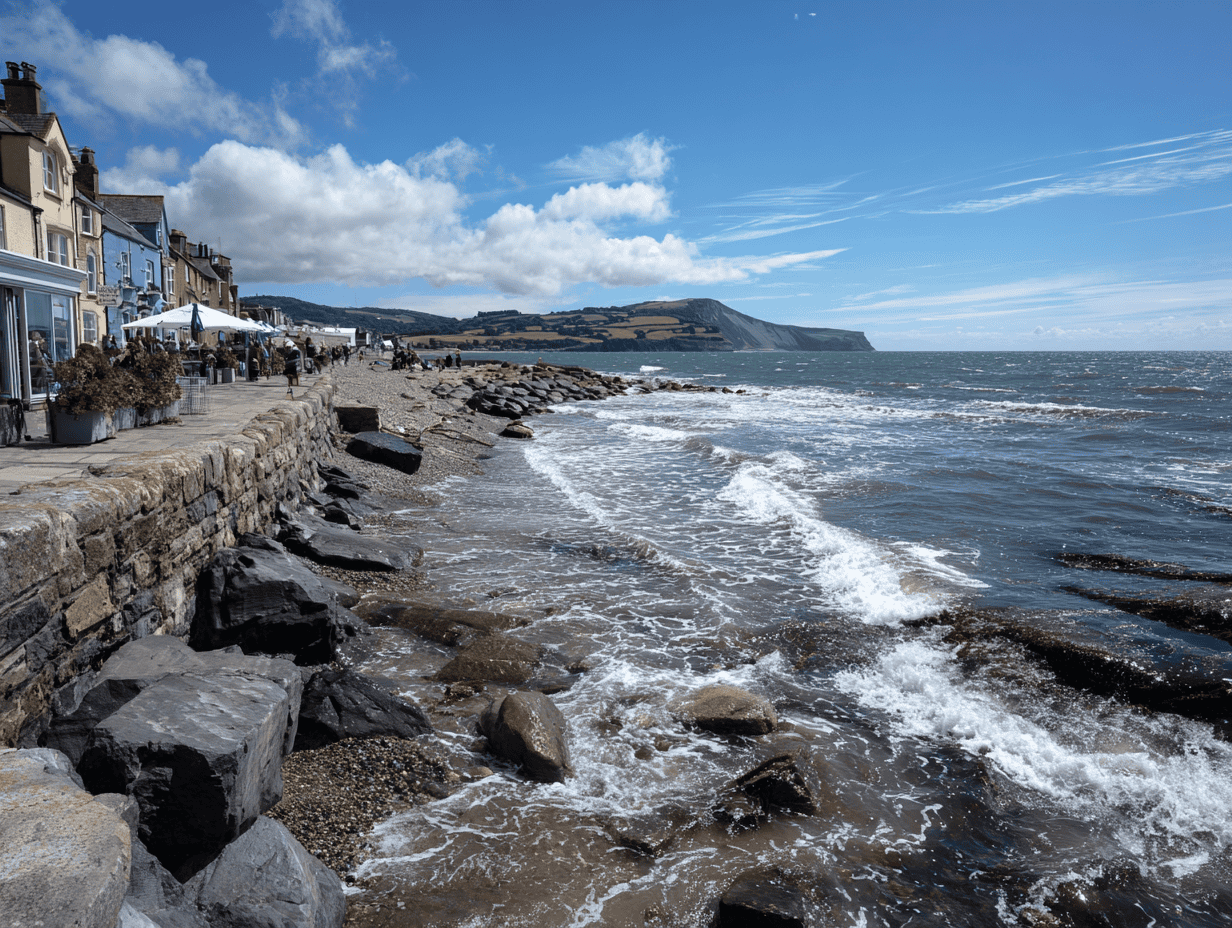
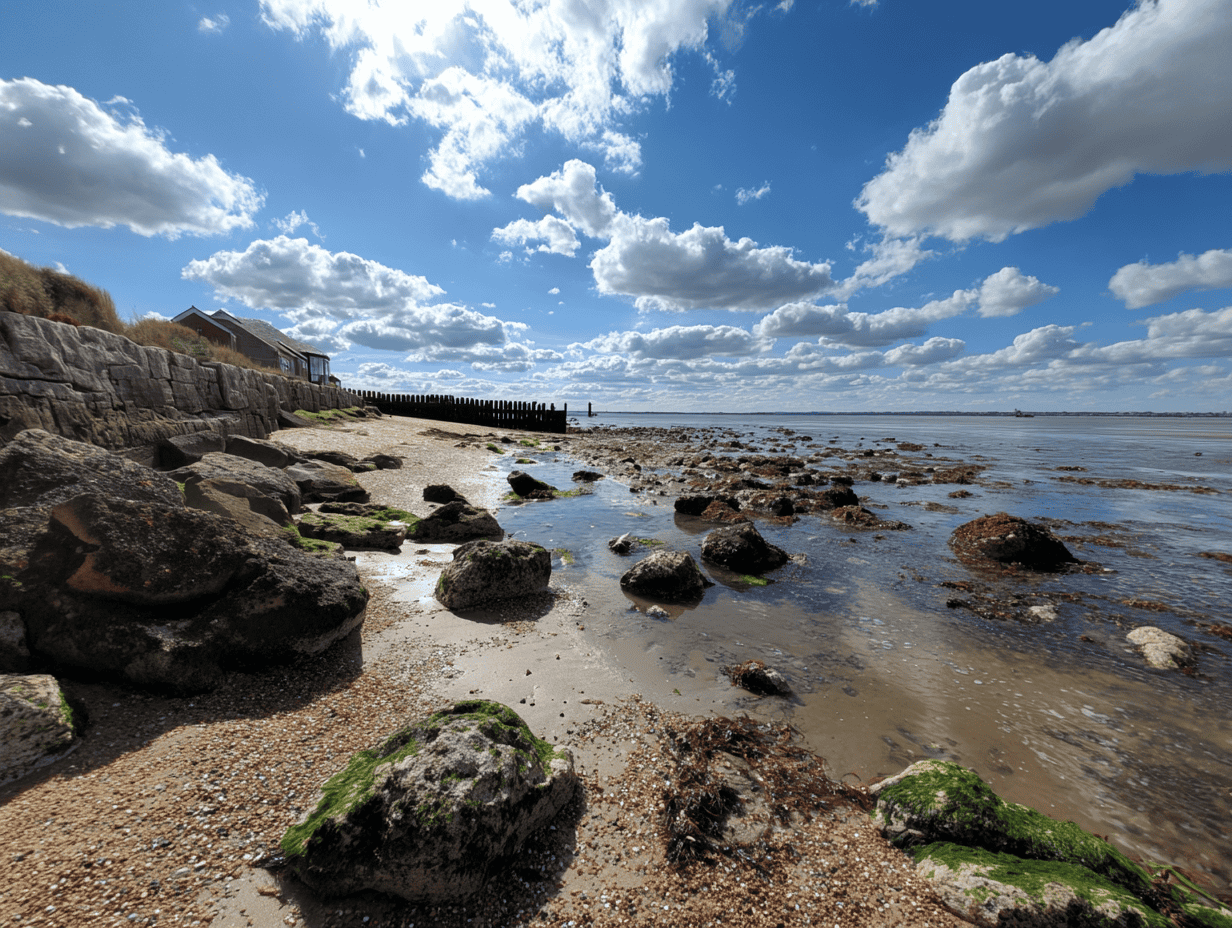
Kimmeridge Bay is one of those places that rewards people who go looking for something and come back with something else entirely. It is not a high-volume glass beach. The foreshore here is predominantly wave-cut rock ledge and shale platform rather than pebble, and that means less of the sorting action that concentrates glass in drifts along a strandline.
What you find at Kimmeridge you will find in ones and twos, tucked into the shale pockets and crevices, not in handfuls.
But Kimmeridge has a glass story that almost no other beach in this guide can match for age. In the early 17th century, Sir William Clavell, lord of the Smedmore Estate that still owns the bay today, was burning Kimmeridge oil shale as fuel for his glassmaking operations on this very stretch of coast.
The shale beds exposed in the cliffs are naturally flammable; Clavell figured this out around 1605 and built alum works and a small port to ship the product out. He also made glass. The physical remains of the industrial operation he established are still visible in the bay today, on the eastern side, where the cliff face shows the traces of his works.
Come here as a sea glass hunter with calibrated expectations, and Kimmeridge is a Fair beach with a genuinely extraordinary setting. The rock pools are among the finest in Britain. This is the Purbeck Marine Wildlife Reserve, a Marine Special Area of Conservation, and the underwater life is remarkable even at the surface.
The fossil shale exposes layers of the Late Jurassic seabed. The nodding donkey oil pump on the clifftop has been running since 1959, making it the oldest working oil well in the UK. Clavell Tower watches over all of it from the eastern headland. The glass is a bonus, but the place is a destination in its own right.
What you’ll find here
Colours commonly found: Green, brown, white
Occasional finds: Blue, Aqua, Amber, Black
Rare finds: Turquoise, Cobalt Blue, Lavender
Bonus: Rock pooling here is exceptional; the wave-cut shale ledges at low tide expose some of the finest pools on the south coast, with a dedicated snorkel trail marked by buoys (May–September). Loose fossils can be found among the shale on the beach, though hammering is strictly forbidden. The nodding donkey oil pump on the clifftop is a peculiar and photogenic landmark.
Find something special? Use our sea glass scanner, GlassLore, to find out rarity, value and history; then you can share to our finds gallery and, more importantly, earn points to climb our hunters leaderboard – are you ready to compete?
When to go
Low tide is essential at Kimmeridge in a way it simply isn’t at sandy or shingle beaches. The rock ledges that dominate the foreshore are submerged at high water; when the tide drops, a wide expanse of wave-cut shale platform is revealed, and this is where everything concentrates. The pockets and crevices between the ledges trap glass, fossils and shale fragments in the same places. Work with the ebb.
Autumn and winter are the best seasons for glass. The bay’s southerly exposure means Channel swell does reach it, and after storms, the foreshore is refreshed. In summer, the bay is busy with snorkellers, divers and families. Early morning, before the crowds arrive, is the sensible strategy in peak season.
One practical note specific to Kimmeridge: the approach road is a toll road, privately owned and maintained by the Smedmore Estate. The toll is currently £5 per car. It’s worth knowing before you turn down the lane.
Difficulty Level – Advanced
- Productive areas are only accessible at lower tides
- Extensive rock ledges can be slippery when wet
- Uneven terrain requires careful footing
- Glass is often hidden within crevices and pockets
- Tide awareness is essential when exploring the ledges
Beach Personality -“the rock platform beach.”
Unlike many beaches where glass is concentrated into obvious strandlines or pebble ridges, Kimmeridge spreads its opportunities across acres of exposed ledges.
That means the hunters who do best aren’t the fastest.
They’re the most observant.
Today’s ShoreSense Score & Best Hunting Window
Kimmeridge Bay faces south into the English Channel on the Isle of Purbeck coast, sheltered to a degree by the headlands of St Alban’s Head to the east and the Purbeck Hills behind. The spring tidal range here is around 2–2.5 metres, more modest than the open west Dorset beaches, but the extensive wave-cut ledge platforms mean that even a moderate tidal drop reveals a substantial area of foreshore.
As the tide falls, start in the coarser shingle and pebble pockets near the slipway and fishermen’s huts. As more of the wave-cut platform opens, move out onto the shale ledges and search the deeper crevices, gravel pockets and rock-pool margins rather than the bare rock itself.
On bigger lows, continue east towards the old industrial workings, where more of the lower platform becomes accessible. Kimmeridge is unusual because the rock ledges are the hunt: once the tide covers them, most of the useful search ground disappears. Use today’s ShoreSense Best Window to choose when to arrive, but treat safe access to the exposed ledges as the key local constraint.
The ShoreSense widget below combines recent marine conditions, tide timing and practical hunting weather to show today’s overall ShoreSense Score, Hunting Potential, Comfort and the best available hunting window for Kimmeridge Bay Beach. It uses UKHO tide data alongside current marine and weather inputs to help you judge whether conditions look promising for a hunt.
Kimmeridge Bay sea glass conditions
Kimmeridge Bay
Dorset
42/100 — Limited, best window 11:11–14:11.
Best window is 11:11–14:11 with spring tides (near full/new moon) and calm sea, so the chance of fresh finds is limited today.
Limited — a modest beach on a quiet day
Ranked #82 in the UK ShoreSense leaderboard today.
| Tide | Time | Height |
|---|---|---|
| Low water | 00:32 | 0.1 m |
| High water | 08:24 | 2.3 m |
| Low water | 12:41 | 0.2 m |
| High water | 20:31 | 2.4 m |
Where to look on the beach
The beach at Kimmeridge divides broadly into the western shingle area near the slipway and Wild Seas Centre, and the extensive rock ledge platforms that run east and west from the bay.
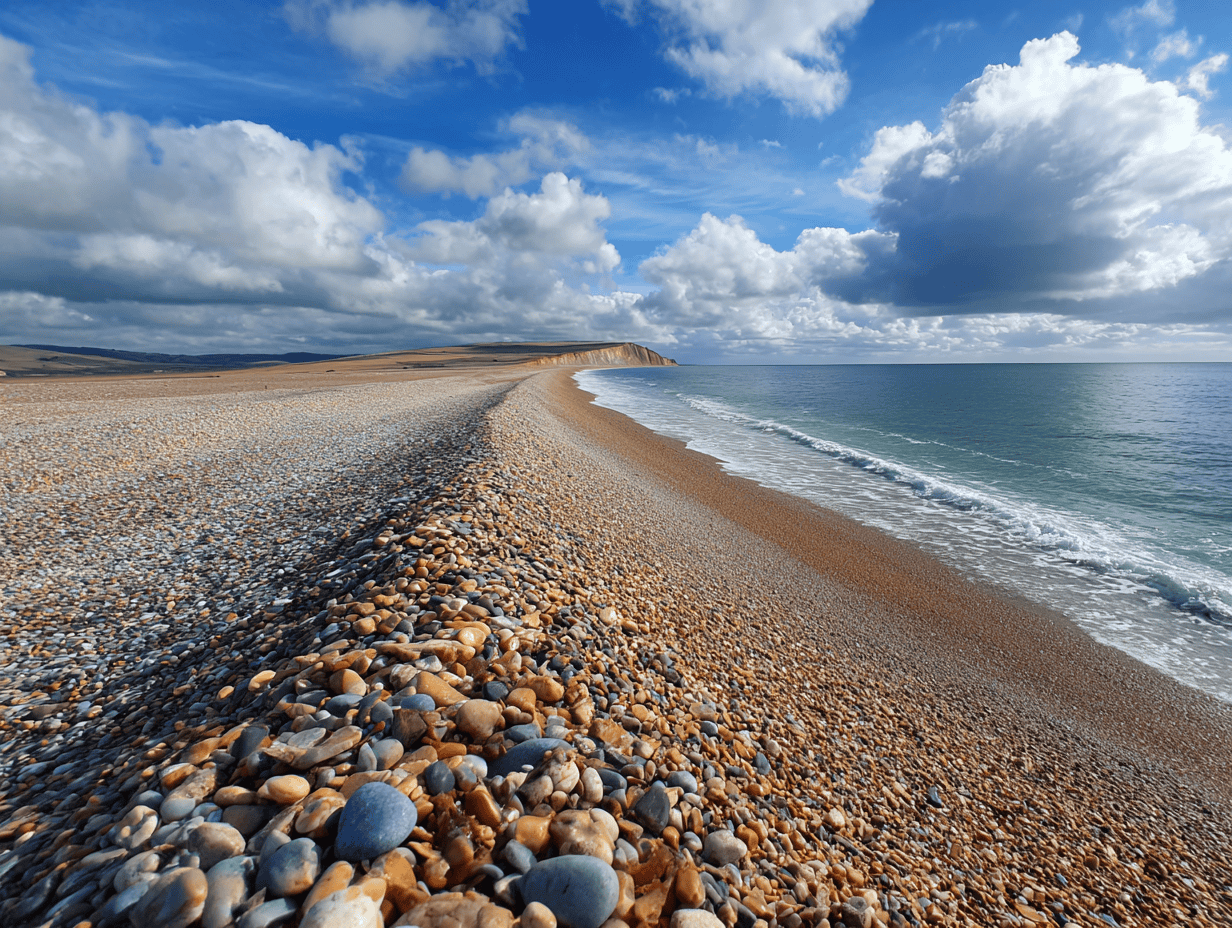
Near the slipway and fishermen’s huts – the small area of coarser shingle and pebble near the slipway is your best starting point for glass. This is where material from the whole bay concentrates, sorted by the tidal movement across the ledges. Work the pebble pockets methodically.
The ledge platforms at low tide – as the tide drops, head out onto the rock platforms. Glass sits in the shale crevices, in the deeper rock pool margins, and in the sand and gravel pockets between ledge sections. Take your time; this is not a sprint-and-fill-your-bag beach. Move slowly, look into every pocket.
Eastern bay – the area near the old industrial workings on the eastern side of the bay, where Clavell’s original shale operations were based. Worth exploring at low water, given the historical glass connection.
The rock platforms are slippery; wear grippy footwear and move carefully. The tides at Kimmeridge can cut you off if you have walked east along the base of the cliffs; always know where the tide is before you venture far in either direction.
Key Tip
Don’t waste time scanning the open rock ledges. At Kimmeridge, the glass is usually hidden in shale crevices, gravel pockets and rock pool margins where wave energy slows and material becomes trapped.
Dog friendly?
Yes – all year round with no restrictions. This is one of Kimmeridge’s genuine strengths and a meaningful differentiator from most of the Dorset beaches in this guide. Your dog can come in every season, and the coastal walks in both directions from the bay are exceptional.
The South West Coast Path east toward Clavell Tower and west toward Tyneham village and Worbarrow Bay are both outstanding dog walks. Check our Yappy Places listing for the Purbeck area for the nearest dog-friendly options after the hunt.
Note: Access to the beach is via the Smedmore Estate toll road. The toll is levied per vehicle, but pedestrians and cyclists are free.
Practical information
Parking: Clifftop car park managed by the Smedmore Estate, accessed via the toll road through Kimmeridge village (BH20 5PE). Currently £5 toll per car. Separate slipway car park below with toilets.
Toilets: At the slipway car park, including accessible facilities.
Food and drink: The Wild Seas Centre has a small café in season (March–November, 10:30am–4pm). No other on-site catering; bring supplies or plan around Corfe Castle or Wareham for food before or after.
Getting there without a car: Remote location; a car is the realistic option. The nearest bus services are at Wareham or Corfe Castle; from there, it’s a rural road with no public transport to the bay itself.
Accessibility: The area around the Wild Seas Centre near the slipway is accessible. The toll road and clifftop car park are accessible by vehicle. The beach foreshore is rocky, uneven and not suitable for wheelchairs.
What to bring
- Footwear with proper grip – the shale ledges are genuinely slippery when wet
- A small container for glass finds
- Tide times checked carefully in advance – the ledges are only accessible at low water, and the tides can cut you off
- Layers – the bay faces south, but the Purbeck coast is exposed
- £5 for the toll – cash accepted
The history behind the glass
The glass story at Kimmeridge starts earlier than almost anywhere else in this guide, not in the Victorian era, but in the reign of James I.
Sir William Clavell, lord of the Smedmore Estate, established industrial operations at Kimmeridge Bay between 1605 and 1620, exploiting the Kimmeridge clay shale that outcrops in the cliffs and ledges throughout the bay.
The shale is naturally flammable; you can still find pieces today that will hold a flame, and Clavell used it to fuel a remarkable range of industrial activity: alum works for the cloth trade, salt pans boiling seawater to manufacture salt, and, critically for our purposes, glassmaking. He built a small port on the eastern side of the bay to ship the product out.
The remains of this industrial operation are still visible in the bay.
The enterprise failed commercially. Clavell was eventually imprisoned for debt, but the physical legacy remained in the shale, and the tradition of industrial activity at Kimmeridge continued. In 1849, commercial mining of oil shale from the cliffs resumed, extracting material to make varnish, paint, lubricating grease and paraffin, with the shale shipped by sea to factories in Weymouth and later Wareham.
The operation ran until the economics made it unviable. Then in 1936, trial drilling for oil found reserves beneath the bay. The nodding donkey pump began working in 1959 and has been running ever since, pumping around 65 barrels a day, making it the oldest working oil well in the United Kingdom.
The Clavell Tower on the eastern headland watches over all of this history. Built in 1830 as a folly and observatory by the Reverend John Clavell, it was later used as a navigation mark by sailors and, reportedly, smugglers. Relocated and reconstructed by the Landmark Trust in 2008, it is now available as a holiday let. It is one of the most distinctive landmarks on the Dorset coast.
The glass you find at Kimmeridge is almost certainly from more recent and more modest sources than Clavell’s 17th-century glassworks, but this is one of the very few beaches where you can legitimately say the tradition of making glass here predates the Tudors.
From beach to jewellery
Found something in the Kimmeridge shale pockets? At Mermaid Tears, every piece starts exactly where you’ve been standing, hand-hunted from UK beaches and handmade into something lasting. Browse the collection →
Disclaimer: Tide times, dog restrictions, parking charges and beach conditions change regularly. Always verify before visiting. The rock ledges at Kimmeridge are slippery, and the tides can cut off sections of the foreshore.
Always check tide times before venturing east or west along the cliff base. Toll charges for the access road are set by the Smedmore Estate and are subject to change. Check for Lulworth Range firing times if planning coastal walks east of the bay.
Last updated: Aug 2026
Frequently asked questions
Is Kimmeridge Bay good for sea glass? It’s a Fair beach – glass is found here in ones and twos in the shale crevices and pebble pockets, but it’s not a volume location. The rock ledge foreshore is more productive for rock pooling and fossil spotting than glass hunting. Come for the whole experience, not just the glass, and you won’t be disappointed.
What is the best time to visit Kimmeridge for sea glass? Low tide, full stop. The beach effectively disappears at high water. Autumn and winter after Channel storms are the best seasons; early morning before the snorkellers and families arrive in summer is worthwhile if you’re visiting then.
Are dogs allowed at Kimmeridge Bay? Yes, all year round with no restrictions, one of the few Dorset beaches with no seasonal dog ban.
Is there a charge to visit Kimmeridge Bay? Yes – the approach road is a private toll road managed by the Smedmore Estate, currently £5 per car. Pedestrians and cyclists enter for free.
Can I use a hammer to find fossils at Kimmeridge? No hammering is strictly forbidden at Kimmeridge Bay. Loose fossil material can be found among the shale on the beach, which is permitted to collect in small quantities, but the site is protected, and the ledges must not be damaged.
What is the nodding donkey at Kimmeridge? It’s the UK’s oldest working oil well, pumping continuously since 1959 from reserves found beneath the bay in 1936. It produces around 65 barrels of oil a day and is visible from the clifftop. A strange and fascinating addition to one of the most beautiful bays in Dorset.
More Beaches
Check out our Full Dorset and Hampshire Guide or plan your trip with our UK Sea Glass Map.