Coal, Cobbles and a Cracking Bay
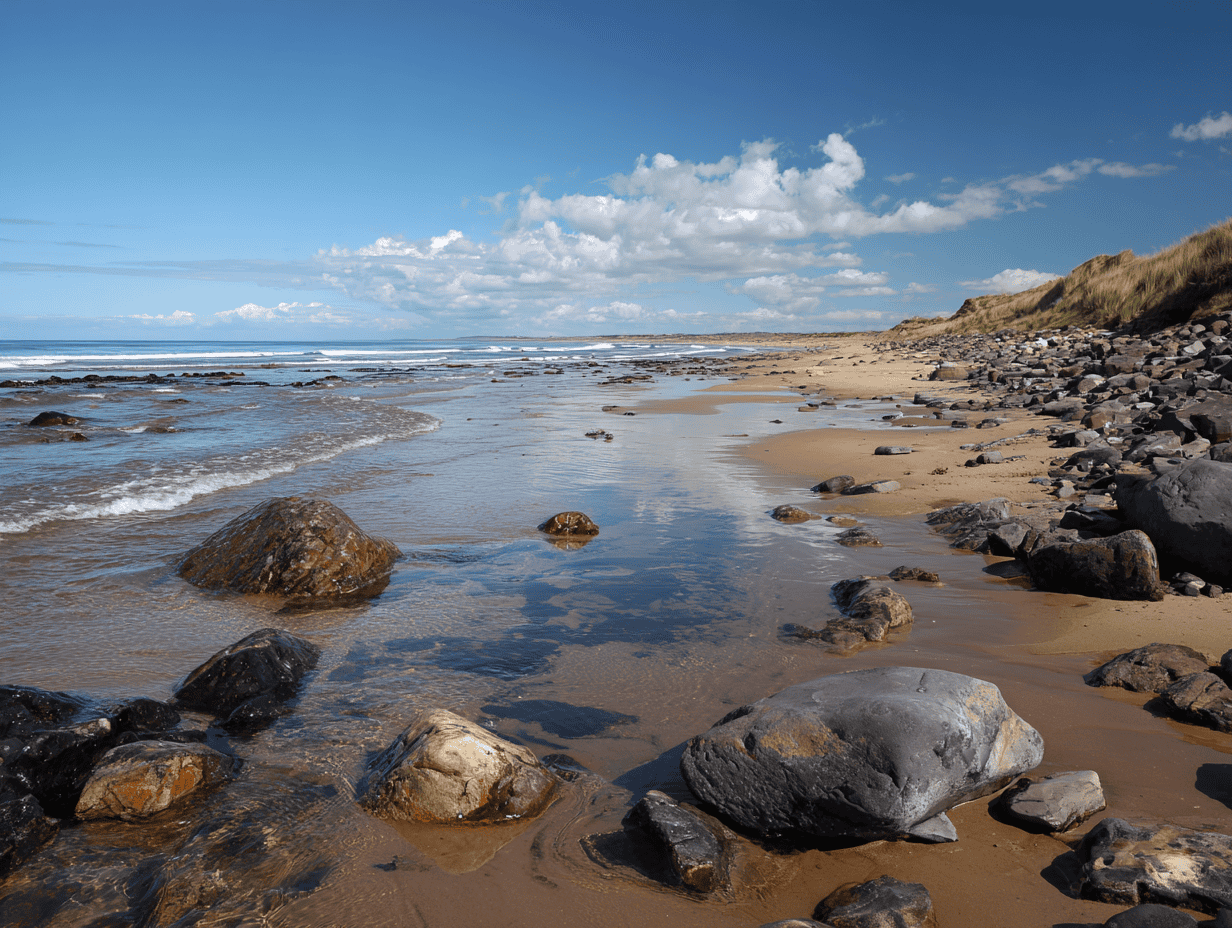
Newbiggin-by-the-Sea is a good sea glass hunting beach, especially around the rocky foreshore below the golf club between Church Point and Beacon Point. Green, brown and white are the most common finds, with blue, aqua, amber, cobalt, black, lavender and occasional red also reported. The rocky shelves and boulder channels make this one of the more interesting Northumberland beaches to search at lower tides.
- Rating: Good Beach
- Terrain: Easy
- Level: Intermediate
- Dog friendly: Seasonal (dogs banned on the main bay May 1 – September 30)
- Location: Newbiggin-by-the-Sea, Northumberland
- Sat Nav: NE64 6QD (Church Point car park)
- Common colours: Green, brown, white
- Rare colours: Cobalt Blue, Black, Lavender, Red
Today at Newbiggin-by-the-Sea
Check below for your latest ShoreSense score and tide times. Scroll down for your full 7-day forecast.
Newbiggin-by-the-Sea sea glass conditions
Newbiggin-by-the-Sea
Northumberland
43/100 — Limited, best window 09:16–12:16.
Best window is 09:16–12:16 with spring tides (near full/new moon) and calm sea, so the chance of fresh finds is limited today.
Limited — better days ahead here
Ranked #73 in the UK ShoreSense leaderboard today.
| Tide | Time | Height |
|---|---|---|
| High water | 04:10 | 5.4 m |
| Low water | 10:46 | 0.3 m |
| High water | 16:42 | 5.1 m |
| Low water | 22:49 | 0.8 m |
Best For:
- Sea glass hunting
- Rock pool searching
- Storm hunting
- Historic finds
- Well-tumbled glass
- Low-tide exploration
- Coastal photography
- Experienced beachcombers
Why Newbiggin deserves more attention from sea glass hunters
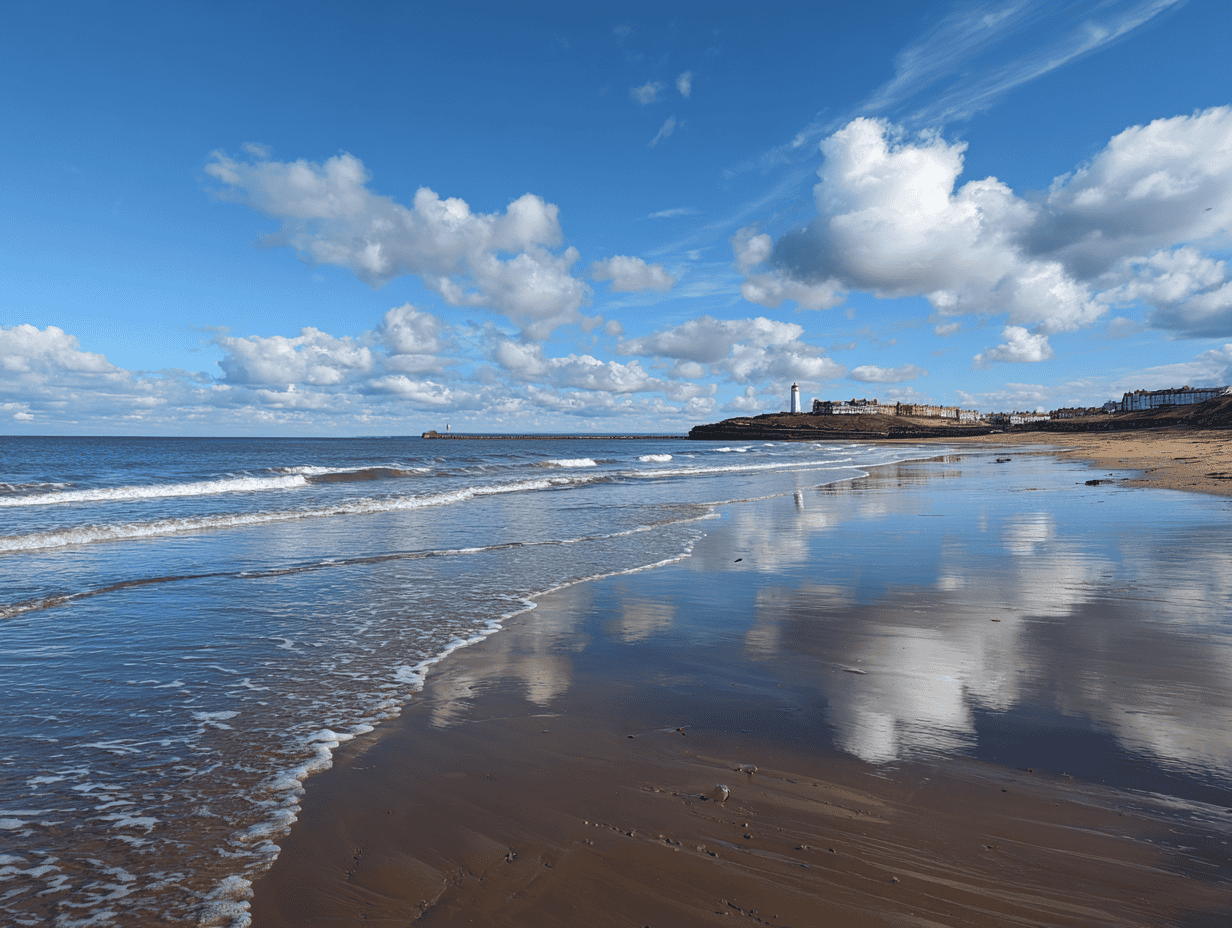
Newbiggin-by-the-Sea doesn’t shout about itself. It sits at the southern end of the Northumberland Heritage Coast, a proper working-class seaside town with fishing cobles still launching off the beach, a promenade that catches the sunrise better than almost anywhere I know, and a history layered thick enough to keep a beachcomber busy for years.
A sea glass company is based here. That tells you something. The Sea Glass Company runs guided sea glass safaris from Newbiggin, which is the clearest possible signal that this bay reliably produces it. The hotspot everyone points to is the section of beach below the Golf Club, between Church Point and Beacon Point, a stretch where boulder clay cliffs have been eroding for millennia, and the rocky foreshore has been catching industrial debris, fishing gear and bottle glass for just as long.
The geology here is upper Carboniferous coal measure rock, which means exposed shelves, channels between boulders, and the kind of uneven terrain that traps glass beautifully.
This isn’t a pristine AONB beach with manicured sand. It’s the real north-east coast: a bit chaotic, full of history, with views that go all the way to the Couple sculpture standing out in the bay, and the 13th-century church on the headland watching over everything. If you want picture-postcard Northumberland, go to Bamburgh. If you want finds, come here.
What you’ll find here
Colours commonly found: Green, brown, white
Occasional finds: Blue, Aqua, Amber, Turquoise
Rare finds: Cobalt Blue, Black, Lavender, Red
Bonus: Coal fragments (a legitimate local find, this was a mining coast), pottery shards, old clay pipe stems, occasionally sea-worn brick
Find something special? Use our sea glass scanner, GlassLore, to find out rarity, value and history; then you can share to our finds gallery and, more importantly, earn points to climb our hunters leaderboard – are you ready to compete?
When to go
Timing is everything at Newbiggin. The bay itself is sheltered by the offshore breakwater installed as part of the 2007 beach regeneration project, which means the main sandy bay is calmer than it used to be. That’s good news for families, but it means sea glass hunters need to focus their attention carefully.
The rocky section below the golf club is where the action is. This stretch faces north-east and is far less sheltered than the main bay. It catches the full force of north-easterly storms, and that’s when glass moves. Aim for the section of coast north of the breakwater in autumn and winter, after a blow. Low spring tides are particularly productive here because they expose the full width of the boulder clay foreshore and the rocky shelves where glass accumulates.
Summer is still worth visiting; you can work the strandline on the main beach and the rock pool edges at either end of the bay, but October through March can be especially interesting, with stronger North Sea conditions more common and fewer people on the beach.
Today’s ShoreSense Score & Best Hunting Window
Newbiggin-by-the-Sea sits on the open North Sea facing north-east, with a tidal range of around 4.5 metres on a spring tide, a solid range that exposes a substantial foreshore as the water drops. The bay’s offshore breakwater provides some shelter, but the rocky sections at Church Point and the stretch north of the bay beyond are fully exposed and respond well to low spring tides.
The ShoreSense widget below combines recent marine conditions, tide timing and practical hunting weather to show today’s overall ShoreSense Score, Hunting Potential, Comfort and the best available hunting window for Newbiggin-by-the-Sea. It uses UKHO tide data alongside current marine and weather inputs to help you judge whether conditions look promising for a hunt.
Arrive an hour before low water on a spring tide to make the most of the exposed rocky foreshore below the golf club. That’s where your best pieces will be.
Compare your Beaches on our Hot Beaches page, updated daily with the best beaches for today, the next seven days, as well as the movers and shakers.
Where to look on the beach
Below the Golf Club (Church Point to Beacon Point): this is the primary sea glass zone at Newbiggin, confirmed by local hunters and the Sea Glass Company alike. The boulder clay cliffs here have been eroding for centuries, releasing material into the sea, which then tumbles back onto the foreshore. The rocky shelves and boulder channels trap glass at every tide. Get here at low water, work along the base of any exposed ledge, and check between boulders carefully.
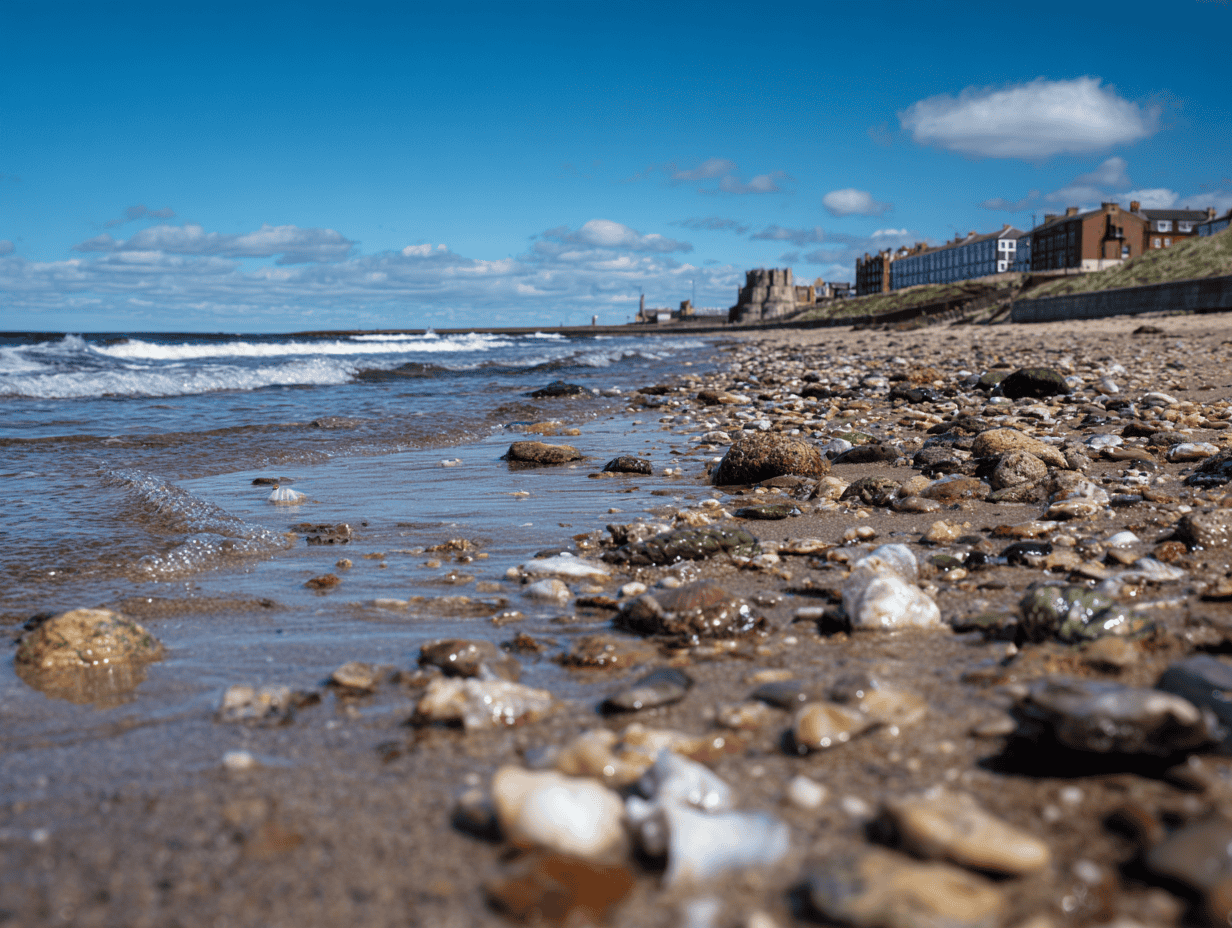
The main bay strandline: after a north-easterly storm, the strandline across the main bay collects whatever the sea has brought in. It’s worth a systematic walk along this line before hunting the rockier sections. Green and brown glass blends easily with pebbles and shingle. Slow down and look at foot level.
The rock pools at either end of the bay: Newbiggin Bay is bookended by rocky outcrops at Church Point to the north and Spital Point to the south. Both areas have rock pools at low tide worth investigating. Check the margins of each pool rather than in the water itself.
The beach and promenade are flat and easy to navigate. The rocky section north of Church Point requires more care, as the boulder clay foreshore can be slippery and some boulders are awkward underfoot. Stout boots are worthwhile.
Key Tip
Make the area below the golf course between Church Point and Beacon Point your first stop. The rocky shelves and boulder channels here consistently trap material released from the cliffs and are widely regarded as the most productive sea glass hunting ground in Newbiggin.
Difficulty Level – Intermediate
- The most productive hunting areas are best accessed at low tide
- Rocky shelves and boulder fields require careful footing
- Glass is often hidden amongst rocks rather than lying in plain sight
- Storms can dramatically improve conditions and change collection areas
- Success comes from understanding where material becomes trapped
Hunting Style -The Rock Pool Forager
Newbiggin rewards hunters who search slowly and thoroughly. Focus on rocky shelves, boulder channels and rock pool margins where glass becomes trapped by each tide. This isn’t a beach for covering lots of distance quickly; it’s about investigating every promising pocket and crevice.
Beach Personality
Newbiggin feels like a working sea glass beach. The eroding cliffs, rocky foreshore, and constantly shifting shoreline create a coastline that is always producing new opportunities. While the sweeping bay can look deceptively simple from a distance, the real treasure lies amongst the rocks, ledges and hidden pockets revealed at low tide. It’s the sort of beach where patience and attention to detail are often rewarded with finds that less careful hunters walk straight past.
Dog friendly?
Seasonal. From 1 May to 30 September, Northumberland County Council bans dogs from the central section of Newbiggin Bay, from the breakwater beside Church Point to the promenade access at Sidney Crescent. Breaches carry a £100 fixed penalty notice. The ban has been in place since 2011.
The good news for summer hunters is that the best glass ground is outside it. The rocky foreshore north of Church Point, below the golf club, is open to dogs all year, and so is the south end of the bay and the whole promenade. With a dog between May and September, start at Church Point and head north.
From October to April, the whole bay is open to dogs.
For dog-friendly places nearby, check the Yappy Places listing for Newbiggin -the Old Ship pub right by the beach comes highly recommended, with proper food and a welcoming attitude towards dogs.
Practical information
Parking: The main car park is at Church Point (NE64 6QD), free. On-street parking is also available along the Front Street area of the village. It fills in summer, but Newbiggin is less visited than other Northumberland coast towns, so finding a space is rarely a problem outside peak summer weekends.
Toilets: Public toilets are located beside the entrance to Newbiggin Golf Club, near the Church Point car park.
Food and drink: The Old Ship pub on the seafront is the local favourite. The Front chippy has won awards for best in Northumberland. The village has a good selection of independent cafes, bakeries and food shops along the High Street, notably with no chains in sight.
Getting there without a car: Newbiggin doesn’t currently have a railway station (the line closed in 1964), but bus services connect it to Ashington and, from there, to Newcastle. A feasibility study for extending the Northumberland Line to Newbiggin was formally launched in December 2025, so watch this space.
Accessibility: The promenade is Newbiggin’s strongest suit for accessibility; it’s the longest in Northumberland, fully paved, and runs the length of the bay. Beach wheelchairs are available to hire at Newbiggin Maritime Centre. Accessible ramps lead onto the main sands.
What to bring
- Sturdy boots or wellies for the rocky section below the golf club
- A small container or zip-lock bags for finds – you’ll want this
- Layers – Newbiggin is on an open bay, and the wind off the North Sea has no manners
- A tide table – the rocky foreshore below the golf club opens up significantly at low spring tide
- A dog lead for the rocks and the promenade. Between May and September, remember the central bay is off-limits to dogs entirely
The history behind the glass
Newbiggin has been sending things into the sea, and the sea has been sending them back, for longer than almost any town on this coast. There’s been a settlement here since at least the 12th century, a fishing community, a small port, a place that traded grain and herring with London and Scotland. By the 18th century, the fishermen of Newbiggin were catching pilchard, herring, cod, haddock, whiting and more, and in 1869, there were 142 cobles registered here. Every one of those boats contributed something to the seabed.
In 1908, the colliery arrived. Newbiggin Colliery employed 1,400 men at its peak in the 1940s, and decades of intensive coal mining profoundly affected the coastline. The beach itself suffered badly: erosion accelerated, the shoreline degraded, and it wasn’t until 2007 that a £10 million regeneration project imported 500,000 tonnes of sand from Skegness to rebuild the bay. Sean Henry’s Couple sculpture, installed on the offshore breakwater as part of that project, now stands as a landmark visible for miles. But beneath the new sand and around the rocky headlands, the old industrial coast remains intact.
Newbiggin was also, unexpectedly, at the receiving end of the first telegraph cable from Scandinavia in 1868, a line laid from Jutland, Denmark, coming ashore at the Cable House beside the Lifeboat House. You can still see the building today. Fishing, mining, Victorian resort, telegraph terminal- this is a town that has accumulated history in every era, and the glass on this beach reflects all of it.
From beach to jewellery
Found something special at Newbiggin? At Mermaid Tears, every piece starts exactly where you’re standing, hand-hunted from UK beaches and handmade into something you’ll keep forever. Browse the collection.
Disclaimer: Tide times, dog restrictions, parking charges and beach conditions change regularly. Always verify before visiting. The seasonal dog ban at Newbiggin Bay (1 May – 30 September) has been consistently enforced since 2011 under a Public Spaces Protection Order; check with Northumberland County Council for the most current boundaries and enforcement. Beach byelaws are updated annually.
Last updated: Aug 2026
Frequently asked questions
Where exactly is the best spot for sea glass at Newbiggin? The section of beach below the Golf Club, between Church Point and Beacon Point. This is the rocky foreshore section north of the main bay, where the boulder clay cliffs have been eroding for centuries, and glass concentrates in the channels between boulders. Low spring tide is when it’s at its best.
Is Newbiggin-by-the-Sea dog-friendly? Partially and seasonally. Dogs are banned from the main section of the bay from 1 May to 30 September each year. Outside those months, dogs are welcome on the main bay. The area around Church Point and north of it is accessible with dogs year-round.
Is there a guided sea glass tour at Newbiggin? Yes, The Sea Glass Company is based in Newbiggin and offers guided sea glass safaris, including a craft workshop to make a keyring from your finds. Worth booking if you’re new to the hobby or want a more structured day out.
What’s the Couple sculpture at Newbiggin? It’s a large bronze sculpture by artist Sean Henry, installed on the offshore breakwater as part of the 2007 beach regeneration project. The two figures stand facing the North Sea and are one of the most recognisable landmarks on the Northumberland coast, visible from the beach and the promenade alike.
Why was Newbiggin’s beach rebuilt? Coal mining at Newbiggin Colliery (1908–1967) caused severe erosion and degradation of the beach over several decades. By the late 20th century, the beach had largely disappeared. In 2007, a £10 million project imported 500,000 tonnes of sand and installed a new breakwater to restore it.
What colours of sea glass can I find at Newbiggin? Green, brown and white are the everyday finds. Blue and aqua turn up with some regularity in the rocky sections. Black glass from old spirit bottles is possible, given the fishing community’s history. Hold any dark piece up to the light to check. Red is rare but not impossible.
More North East Beaches
Check out our Full North East Guide or our interactive map to find more beaches; you can even filter by colour.