Where Suffolk’s Wild Edge Begins
Pakefield is a good sea glass hunting beach, especially where Lowestoft’s managed sandy frontage gives way to rougher shingle and pebble foreshore. Start at the last wooden groyne and work south, concentrating on the upper shingle bank, wrack line and pebble pockets rather than the open sand. Green, brown, and white are the most common finds, with blue, aqua, amber, and turquoise appearing occasionally, and cobalt blue, black, lavender, and red among the rarer colours reported.
Where to hunt: Last Lowestoft groyne → upper shingle bank → wrack line & pebble pockets → south towards Kessingland
- Rating: Good Beach
- Terrain: Easy
- Level: Intermediate
- Dog friendly: Yes, dogs are welcome all year round
- Location: Pakefield, Lowestoft, Suffolk
- Sat Nav: NR33 0HX — Pakefield Cliffs car park
- Common colours: Green, brown, white
- Rare colours: Cobalt Blue, Black, Lavender, Red
Today at Pakefield Beach
Check for the latest tide times and ShoreSense score. Scroll down for the full 7-day forecast.
Pakefield Beach sea glass conditions
Pakefield Beach
Suffolk — Sea settling
61/100 — Good, best window 12:29–15:29.
Best window is 12:29–15:29 with spring tides (near full/new moon) and calm sea, so the chance of fresh finds is good today. Sea is likely calm and picked-over — go early.
Good day at a reliable beach
Ranked #67 in the UK ShoreSense leaderboard today.
| Tide | Time | Height |
|---|---|---|
| Low water | 01:27 | 1.1 m |
| High water | 07:27 | 2.5 m |
| Low water | 13:59 | 0.7 m |
| High water | 20:23 | 2.4 m |
Best For:
- Sea glass hunting
- Storm hunting
- Long beach walks
- Well-tumbled glass
- Quiet hunting spots
- Coastal exploration
- Intermediate collectors
- Less crowded beaches
Why Pakefield: where the resort ends and the real beach begins
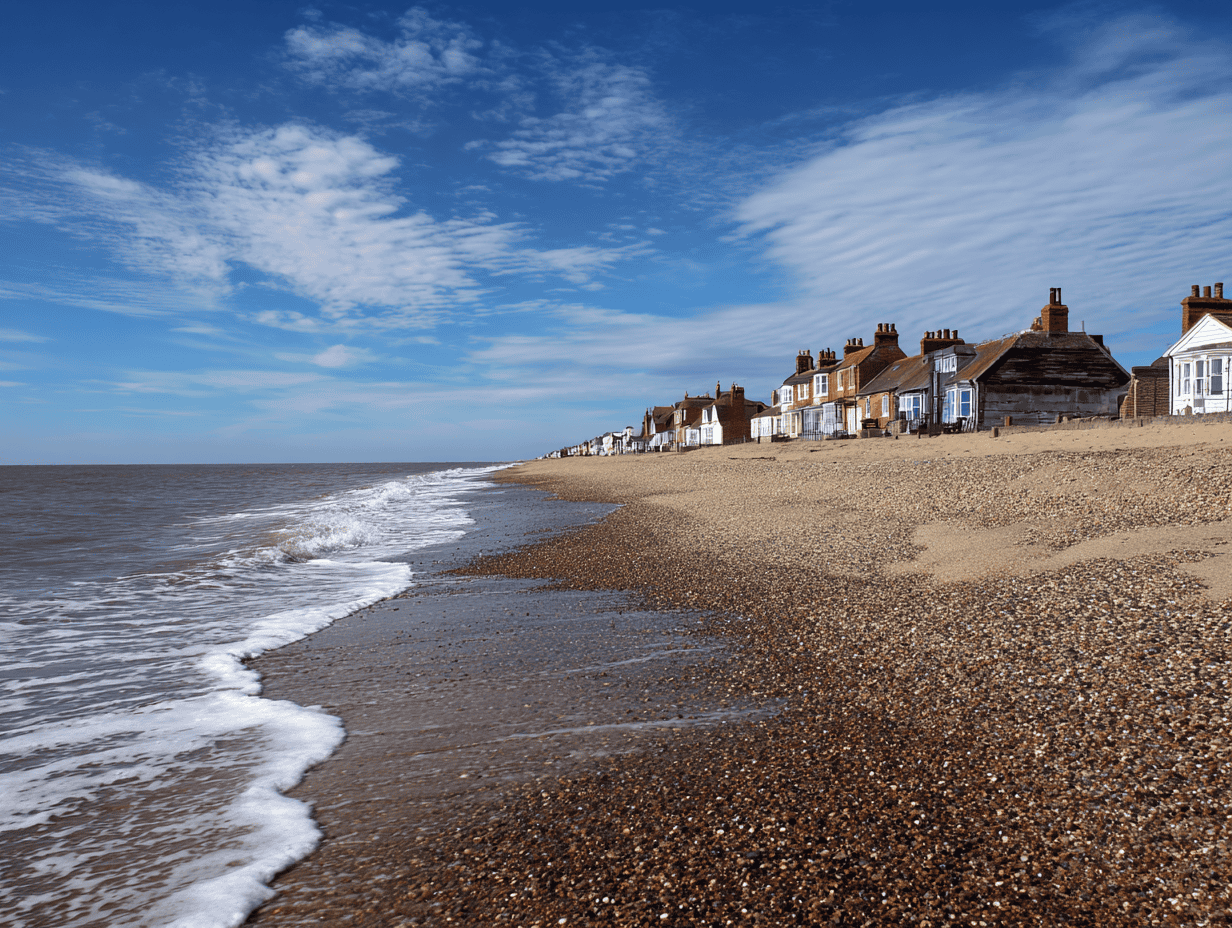
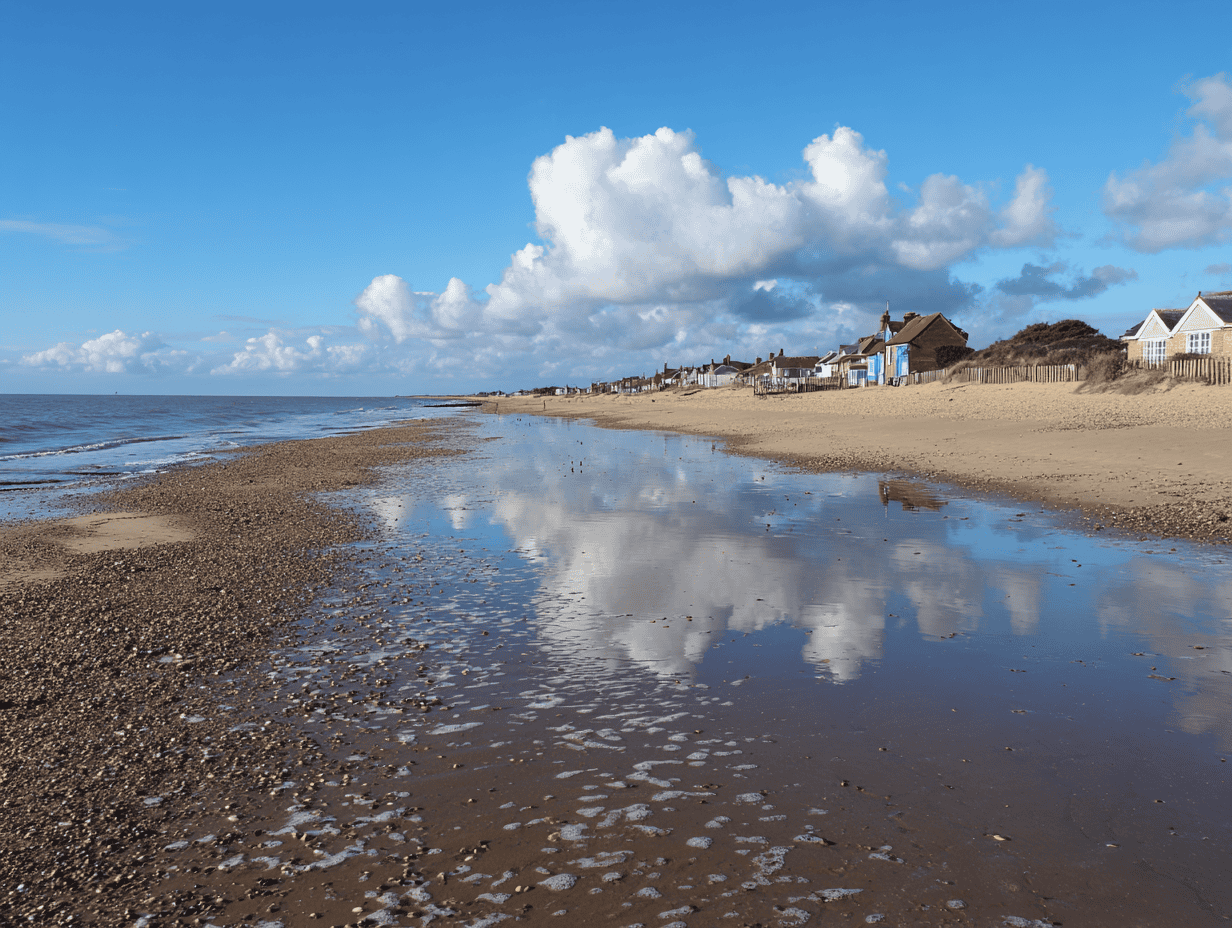
Walk south along Lowestoft’s promenade and something changes. The beach huts get quieter. The donkey rides and amusements fall away. The neatly managed sandy resort beach starts to give way to something wilder, a pebbled, wind-blown foreshore backed by crumbling cliffs, with fishing boats pulled up above the tideline and marram grass rattling in the breeze.
You’ve crossed into Pakefield, a couple of miles south of Ness Point, the most easterly point in Britain.
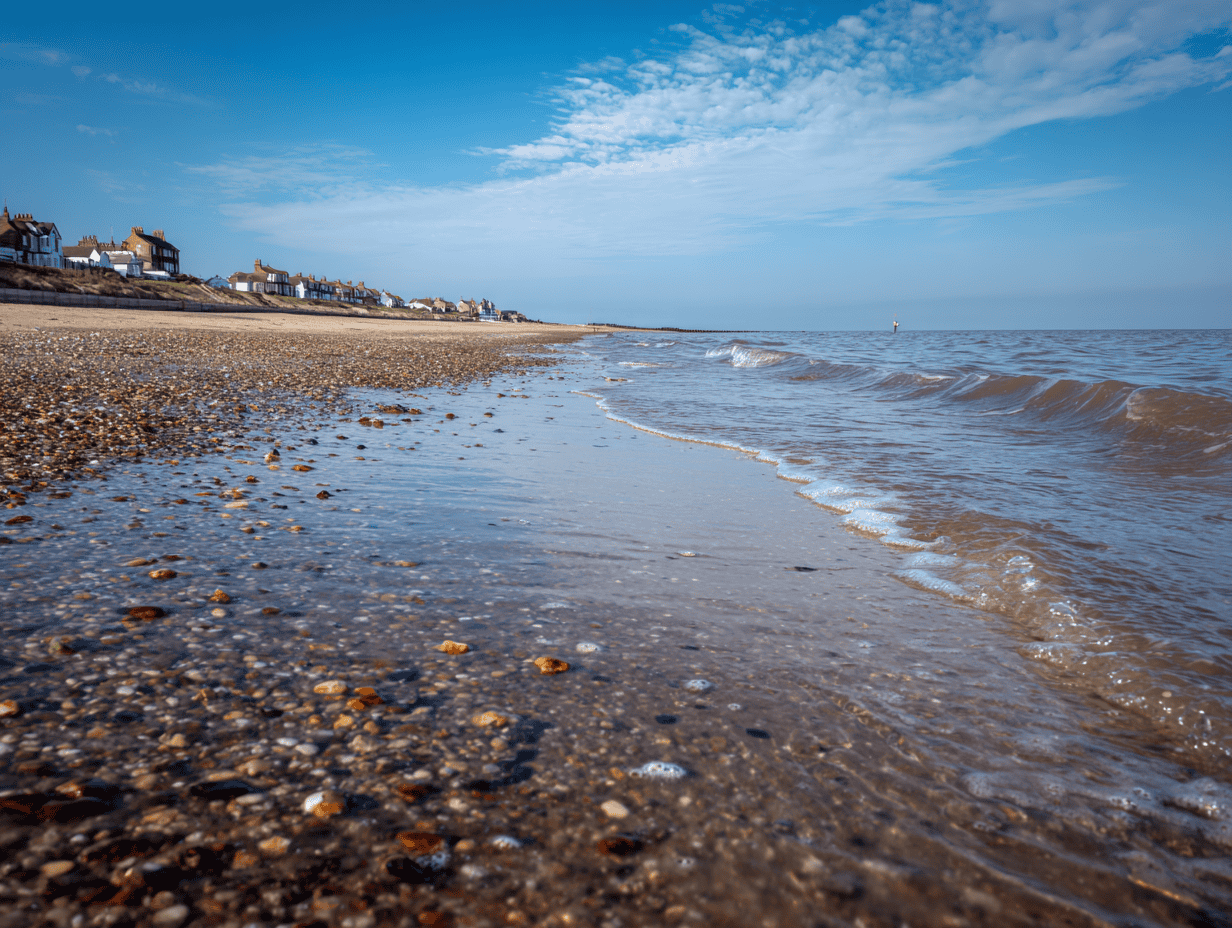
This is where the wooden groynes of Lowestoft stop and where sea glass begins. On the Lowestoft side, the beach is managed, raked and sandy. At Pakefield, the substrate changes to a mix of sand and shingle, the kind of cobbly, textured foreshore that traps and tumbles glass rather than letting it sink and disappear.
Pair that with direct North Sea exposure facing due east, active cliff erosion constantly releasing new material onto the beach, and one of the most layered maritime histories on the East Anglian coast, and you have the making of a genuinely interesting sea glass hunt.
This is not Seaham. No single industrial glass source carpets the beach. Instead, Pakefield offers a cumulative history of centuries of herring fishing, a Victorian port boom, two World Wars, a porcelain tradition, and generations of seafarers, all leaving their mark in the glass that washes up here. It’s a beach for patient, curious hunters who are happy to piece together the story of what they find.
What you’ll find here
Colours commonly found: Green, brown, white/clear
Occasional finds: Blue, Aqua, Amber, Turquoise
Rare finds: Cobalt Blue, Black, Lavender, Red
Bonus: Sea pottery from the Lowestoft Porcelain tradition; Victorian bottle glass; the occasional Codd marble neck from the Victorian soda bottle trade
Found something unusual? Try GlassLore, our free sea glass scanner, to explore what it could be and log your find to the gallery and, more importantly, earn points and climb the leaderboard.
When to go
Timing at Pakefield follows the same rules as any North Sea beach: arrive as the tide is going out and walk the foreshore as it drops. Low tide is when the shingle and pebble band at the base of the cliffs is most exposed, and that’s where glass collects and hides.
Winter is better than summer on two counts. First, storm activity is highest from October through to March, and North Sea storms are what churn up glass that’s been buried and push new pieces onto the beach. Second, summer brings tourists to Lowestoft, but Pakefield itself stays quieter, but winter gives you real solitude and an unharvested beach. Go the morning after a north-easterly has blown through, and you’re in with the best chance of finds.
Spring tides, the biggest tidal range, occur around new and full moons and expose more foreshore, so it’s worth timing your visit around them. At Pakefield, where the tidal range is modest compared to the North East coast, spring tides make a real difference to how much beach you’ve got to work with.
Today’s ShoreSense Score & Best Hunting Window
Pakefield sits on the North Sea coast of Suffolk, facing due east into the open water with a spring tidal range of around 2 metres. That’s a modest range compared to beaches further north, but the exposed east-facing foreshore means the beach opens up usefully at low tide.
As the tide falls, start where the last Lowestoft groyne marks the change from managed sand to Pakefield’s rougher shingle. Work the upper shingle bank and wrack line first, then move down through the pebble pockets as more foreshore opens. Keep heading south towards Kessingland, where the beach becomes quieter and gives you much more ground to search. On bigger spring lows, more of the lower shingle and pebble band becomes accessible.
After stronger north-easterly weather begins to settle, recheck the wrack line and newly rearranged shingle. Use today’s ShoreSense Best Window to choose when to arrive, then follow this last-groyne → upper-shingle → pebble-pocket → Kessingland progression once you’re there.
The ShoreSense widget below combines recent marine conditions, tide timing and practical hunting weather to show today’s overall ShoreSense Score, Hunting Potential, Comfort and the best available hunting window for this beach. It uses UKHO tide data alongside current marine and weather inputs to help you judge whether conditions look promising for a hunt.
Pakefield Beach sea glass conditions
Pakefield Beach
Suffolk — Sea settling
61/100 — Good, best window 12:29–15:29.
Best window is 12:29–15:29 with spring tides (near full/new moon) and calm sea, so the chance of fresh finds is good today. Sea is likely calm and picked-over — go early.
Good day at a reliable beach
Ranked #67 in the UK ShoreSense leaderboard today.
| Tide | Time | Height |
|---|---|---|
| Low water | 01:27 | 1.1 m |
| High water | 07:27 | 2.5 m |
| Low water | 13:59 | 0.7 m |
| High water | 20:23 | 2.4 m |
Compare today’s scores on Hot Beaches.
Where to look on the beach
The key transition point at Pakefield is where the managed Lowestoft beach ends, marked by the last wooden groyne, and the wilder pebble and shingle zone begins. That’s your hunting ground. Work south from here, keeping your eye on the upper shingle bank where the tide deposits debris, and in the pockets of pebble that collect between the base of the cliffs and the tideline.
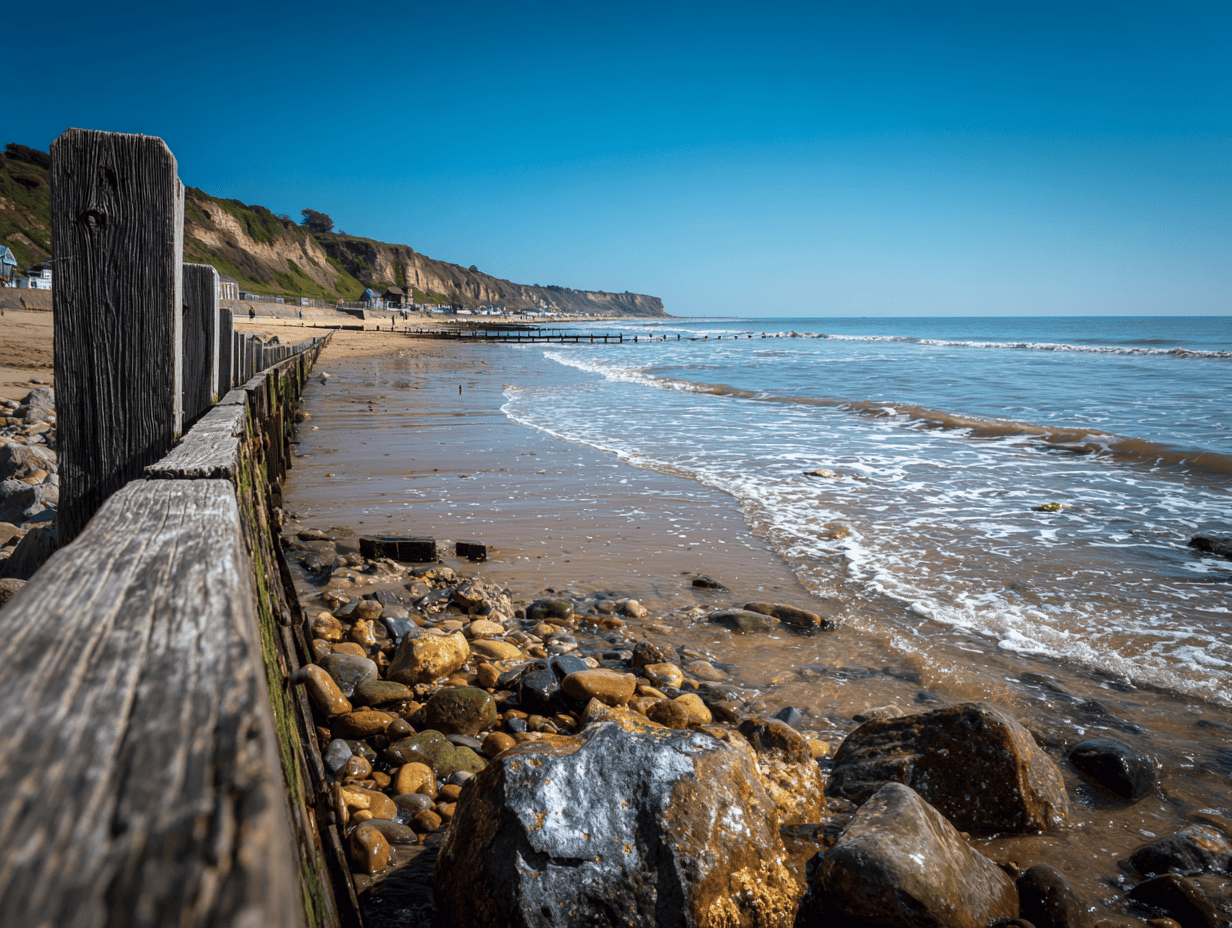
Glass tends to accumulate in groyne pockets, in clusters around heavier cobbles where it gets trapped rather than washed back, and along the wrack line, the dark stripe of weed and debris left by the previous high tide. Get your eye level down close to the pebbles and move slowly. Pakefield glass won’t announce itself; you’re looking for frosted edges and the slight translucency that distinguishes sea glass from wet stone.
The cliffs themselves are worth keeping in mind and keeping a safe distance from. Coastal erosion here is significant and active. Recent storm conditions caused cliff collapse, affecting access via the Arbour Lane steps; always check before visiting and never stand directly below the cliff face. The erosion is precisely why glass keeps appearing on this beach, but it deserves respect.
The beach continues south towards Kessingland for a good stretch, giving you room to explore if the main Pakefield section has been well-combed. Fewer people walk this far, and it’s worth pushing on.
Key Tip
Start where the managed beach ends and the shingle-dominated shoreline begins. Work south towards Kessingland, paying particular attention to groyne pockets and the upper wrack line, where sea glass is far more likely to accumulate than on the open beach.
Difficulty Level- Intermediate
- Productive areas can be spread across a long stretch of coastline
- Success depends on identifying shingle accumulations, groyne pockets and wrack lines
- Recent weather conditions can dramatically affect results
- Uneven shingle can make searching more physically demanding than a sandy beach
- Coastal erosion means hunters need to remain aware of changing conditions and access restrictions
Hunting Style- The Shingle Tracker
Pakefield rewards hunters who learn to read the beach. Rather than searching everywhere equally, focus on the upper shingle banks, groyne pockets, wrack lines and areas where heavier cobbles collect. The best finds often appear where the sea has naturally sorted and trapped material.
Beach Personality
Pakefield feels rugged, restless and constantly changing. The eroding cliffs that tower above the beach are reshaping the coastline year after year, continually feeding new material into the system. It’s a beach where conditions matter, and every storm has the potential to uncover something new. For sea glass hunters, that unpredictability is part of the appeal. No two visits ever feel quite the same.
Dog friendly?
Yes. Pakefield is dog-friendly year-round, with no seasonal restrictions, and that’s one of its real practical advantages. The Lowestoft ban runs from South Pier south to the CEFAS building, day and night from 1 May to 30 September, with fines of up to £1,000. The CEFAS building is where Pakefield begins, so once you’re past it, you’re clear. Your dog can join you in July as happily as January, which is unusual on this stretch of the Suffolk coast.
The beach itself is quiet and open, good for dogs to stretch their legs while you hunt. Keep an eye on the cliff base and don’t let dogs scramble up the eroded sections. A lead near other beach users is courteous and often required on the access paths.
Looking for somewhere dog-friendly to eat or drink after the hunt? Check the Yappy Places listing for Pakefield and Lowestoft for current recommendations. The Jolly Sailors pub in Pakefield village is a short walk from the beach.
Practical information
Parking: All Saints Road car park (NR33 0JN) is a convenient option for Pakefield village, while Pakefield Cliffs car park on Pakefield Road (NR33 0HX) gives good access to the southern seafront. Check current East Suffolk Council signage for charges and time limits before leaving the car.
Toilets: Public toilets are available along the Lowestoft seafront north of Pakefield, so plan to use facilities before heading farther south along the shingle section.
Food and drink: The Jolly Sailors pub is a short walk up from the beach in Pakefield village. Tea by the Sea is also close by for cake and a hot drink. For a fuller café stop with beach views, Zak’s Sunrise Café on Lowestoft South Beach is about a 20-minute walk north along the promenade.
Getting there without a car: Lowestoft railway station is served by Greater Anglia, with direct services from Norwich and Ipswich. From the station, walk south along the seafront towards Pakefield; check current rail and local bus timetables before travelling.
Accessibility: The managed Lowestoft seafront north of Pakefield has accessible promenade sections and ramps, but the main sea-glass hunting ground at Pakefield is uneven shingle with cliff-side access and is not wheelchair-friendly.
What to bring
- Sturdy trainers or wellies – the shingle section is uneven, and wet pebbles are slippery
- A small trowel or hand rake for shifting pebbles on the upper bank
- A zip-lock bag or small container for your finds
- Layers – Pakefield faces directly into North Sea winds, and it’s exposed
- A tide time printed or saved on your phone – modest tidal range means timing matters
- A spare bag for any litter you find – good karma on a beach with this much history behind it
The history behind the glass
Stand on Pakefield beach, and you’re standing at the end of a very long story.
The cliffs behind you have already yielded flint tools dating back 700,000 years, some of the earliest evidence of human habitation anywhere in Britain. That’s the deep backdrop. But the glass on the beach in front of you comes from a more recent chapter, and it’s no less rich for that.
In the Domesday Book of 1086, Pakefield is recorded paying part of its taxes in herrings, 600 of them. Fishing was the engine of this community from the very beginning, and it stayed that way for nearly a thousand years. By the Victorian era, Lowestoft had grown into one of the most important fishing ports on the East Coast, its harbour packed with drifters and trawlers working the North Sea for herring, cod and plaice.
At the industry’s peak, it was said you could cross the harbour by walking across the moored boats. Every vessel that worked out of this port- every net-mender, every fish curer, every harbourside pub was part of the glass story. Bottles, jars, fishing equipment, and household waste are all finding their way into the sea across generations.
The Victorian boom brought something else, too. From 1757 to 1802, Lowestoft operated its own porcelain factory, producing soft-paste porcelain for longer than almost any other English manufacturer, except Royal Worcester and Royal Crown Derby. Teapots, jugs and domestic wares were made here for nearly fifty years, and plenty of it stayed in local households long after the factory closed. Some of that ended up in the water. The pottery shards you find at Pakefield aren’t random. They’re fragments of a local tradition.
Then came the wars. Lowestoft was bombarded by German ships in April 1916 and was a Luftwaffe target throughout the Second World War, easily found by enemy aircraft at Britain’s most easterly point. The Royal Naval Patrol Service was headquartered here, and wartime activity around the harbour and coast was intense.
The 1953 North Sea floods devastated the town, washing away homes and sending decades’ worth of accumulated debris into the sea. Every storm since has been moving that material slowly southward, depositing pieces on the Pakefield foreshore one tide at a time.
The glass you pick up here has been in transit for a long time. Some of it started as a herring bottle. Some of it is a Victorian china piece. Some of it was something broken in the chaos of a wartime harbour. The North Sea has been polishing it for you.
From beach to jewellery
Pakefield glass has a character worn smooth by a North Sea that doesn’t readily give up its secrets. At Mermaid Tears, every piece of jewellery starts exactly where you’re standing: hand-hunted from UK beaches and handmade into something you’ll keep forever. Browse the collection.
Disclaimer: Tide times, dog restrictions, parking charges and beach conditions change regularly. Always verify before visiting. The Arbour Lane cliff steps have been subject to erosion damage – check locally before using this access route. Beach byelaws are updated annually; check with East Suffolk Council for the most current rules.
Last updated: September 2026
Dog rules checked: September 2026 – East Suffolk Council (no restrictions at Pakefield; Lowestoft ban ends at the CEFAS building)
Frequently asked questions
Is Pakefield Beach good for sea glass hunting? It’s a solid Good beach with reliable finds of green, brown and white glass with occasional blue and amber, particularly after storms or following spring tides. The pebble zone where the managed Lowestoft beach ends is the most productive section. Volume won’t match the big dedicated glass beaches like Seaham, but the history behind the glass here is genuinely layered and interesting.
When is the best time to visit Pakefield for sea glass? Winter and early spring are the most productive seasons; storm activity is higher, tourist footfall is lower, and glass that’s been buried over summer tends to resurface. Time your visit around low tide, ideally on an ebbing spring tide after a north-easterly blow.
Are dogs allowed on Pakefield Beach? Yes, year-round with no seasonal restrictions. This differs from the main Lowestoft beach to the north, which has a May-to-September dog ban.
How do I get to Pakefield Beach without a car? Lowestoft station has regular Greater Anglia services from Norwich and Ipswich. From the station, walk south along the flat promenade for around 25 to 30 minutes until the managed beach gives way to the wilder shingle and pebble section that’s Pakefield.
Is the beach accessible? The promenade approach from Lowestoft is flat and accessible. Beach access is via steps and slopes from the clifftop, not wheelchair-accessible. Note that the Arbour Lane steps have been affected by recent cliff erosion and may not always be usable; the promenade approach is the more reliable route.
Why is there sea glass at Pakefield? Pakefield sits at the southern end of Lowestoft, a major fishing port since medieval times, with additional history from the Victorian herring boom, a local porcelain industry, two World Wars, and generations of maritime activity. Combined with active cliff erosion, which releases material onto the beach, and direct North Sea exposure, glass from all those eras continues to wash up on the pebble foreshore.
More Beaches
Check out our Full East Anglia Guide or plan your trip with our UK Sea Glass Map.