North East Sandy Shore with a Hidden History
Seaton Carew can be worth hunting for sea glass, particularly around the pebblier northern end towards Hartlepool Harbour and Middleton Beach. Green, brown and white are the most common finds, with amber, pale blue, cobalt and occasional red also reported. It’s a fair rather than prolific hunting beach, but it’s beginner-friendly and easy to combine with nearby Hartlepool.
- Rating: Fair Beach
- Terrain: Easy
- Level: Beginner
- Dog friendly: Seasonal (dogs banned on the central section between the Norton Hotel and the Coach Park, 1 May to 30 September)
- Location: Hartlepool, County Durham
- Sat Nav: TS25 1AB (Seaview Car Park)
- Common colours: Green, brown, white
- Rare colours: Blue, amber
Today at Seaton Carew Beach
Check for the latest ShoreSense score and tide times. Scroll down for the full 7-day forecast
Seaton Carew sea glass conditions
Seaton Carew
County Durham — Sea settling
62/100 — Good, best window 14:01–15:01.
Best window is 14:01–15:01 with big seas in the last few days, now easing — glass should be washing in and offshore wind, so the chance of fresh finds is good today.
Good window, though this beach is hit-and-miss
Ranked #59 in the UK ShoreSense leaderboard today.
| Tide | Time | Height |
|---|---|---|
| High water | 00:08 | 4.3 m |
| Low water | 06:49 | 1.5 m |
| High water | 13:01 | 4.5 m |
| Low water | 19:04 | 1.8 m |
Best For:
- Sea glass hunting
- Beginners
- Long beach walks
- Family visits
Why Seaton Carew- a beach worth knowing about
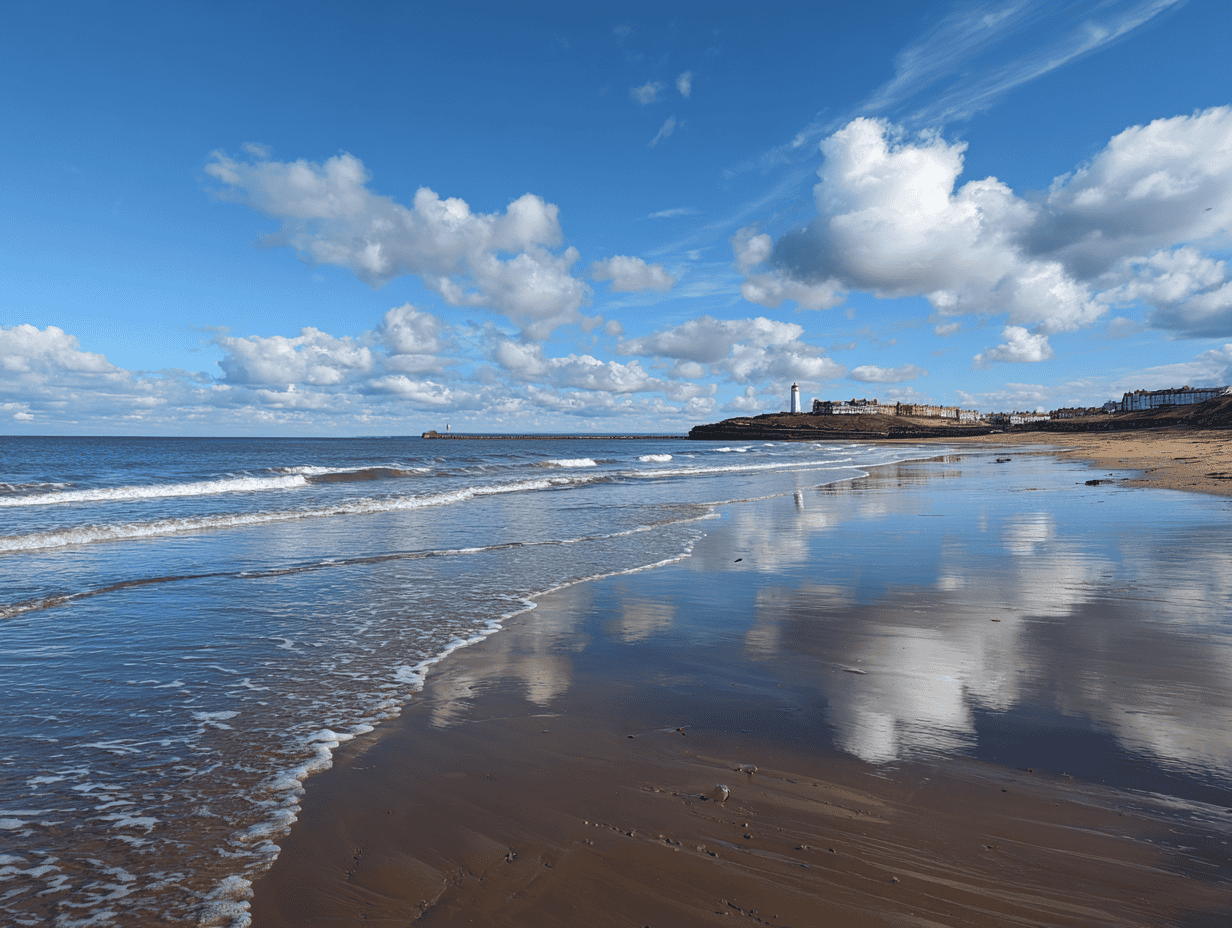
Seaton Carew doesn’t have the same reputation as Seaham, and I want to be straight with you about that upfront. This is a wide, sandy beach on the mouth of the River Tees, and sand isn’t sea glass territory. Glass needs pebbles to tumble against, ridges to trap behind, rocky foreshore to catch it before the tide pulls it back. Sand tends to swallow things.
But Seaton Carew has something the glossy beach guides don’t always mention: Middleton Beach, just to the north near Hartlepool Harbour, was a Victorian dumping ground. Locals and school groups have been finding sea glass there for generations, enough that a public artwork made from that sea glass now stands in Seaton Carew itself. The ‘Waves’ sculpture, installed in 2018, is cast from sea glass collected by community groups from Middleton Beach, suspended in resin. There’s glass in this stretch of coastline. You just have to know where to look.
If you’re already visiting the area, perhaps making the pilgrimage to Seaham, Seaton Carew makes a worthwhile add-on rather than a destination in its own right. Come at low tide, stick to the pebblier northern and southern ends away from the main resort stretch, and manage your expectations accordingly. Your dog trots alongside perfectly happily on the parts of the beach where dogs are welcome, and there’s always a chip shop reward waiting at the end.
What you’ll find here
Colours commonly found: Green, brown, white
Occasional finds: Amber, pale blue
Rare finds: Cobalt blue, red
Bonus: Pottery shards, occasional Victorian clay pipe fragments near the Middleton end
Find something special? Use our sea glass scanner, GlassLore, to find out rarity, value and history; then you can share to our finds gallery and, more importantly, earn points to climb our hunters leaderboard – are you ready to compete?
When to go
Winter is the better season, when the summer crowds have gone, and North Sea storms have had a chance to churn things up along the foreshore. The beach is very wide at low tide; aim for the ebbing tide to give yourself the most foreshore to work with. After a heavy swell, check the tide line at the northern end, closer to Hartlepool Harbour, where pebble patches and harder sand tend to accumulate finds. The central resort section is predominantly soft sand and rarely rewards a hunter. Stick to the edges.
Spring and autumn are decent shoulder-season options. Summer is busy with families, and the main stretch is covered by the seasonal dog ban, which makes it less appealing for a hunt with your dog in tow.
Today’s ShoreSense Score & Best Hunting Window
Seaton Carew sits on the North Sea just north of the River Tees estuary, with a tidal range of around 4.5 to 5 metres on a spring tide, a generous range that exposes a vast expanse of foreshore at low water. That said, much of what’s revealed is soft sand rather than pebble, so the tide drop alone doesn’t guarantee hunting conditions.
The ShoreSense widget below combines recent marine conditions, tide timing and practical hunting weather to show today’s overall ShoreSense Score, Hunting Potential, Comfort and the best available hunting window for Seaton Carew. It uses UKHO tide data alongside current marine and weather inputs to help you judge whether conditions look promising for a hunt.
Aim for low water and the hour either side, and focus your energy on the pebblier stretches at the northern end of the beach near the harbour.
Compare your Beaches on our Hot Beaches page, updated daily with the best beaches for today, the next seven days, as well as the movers and shakers.
Where to look on the beach
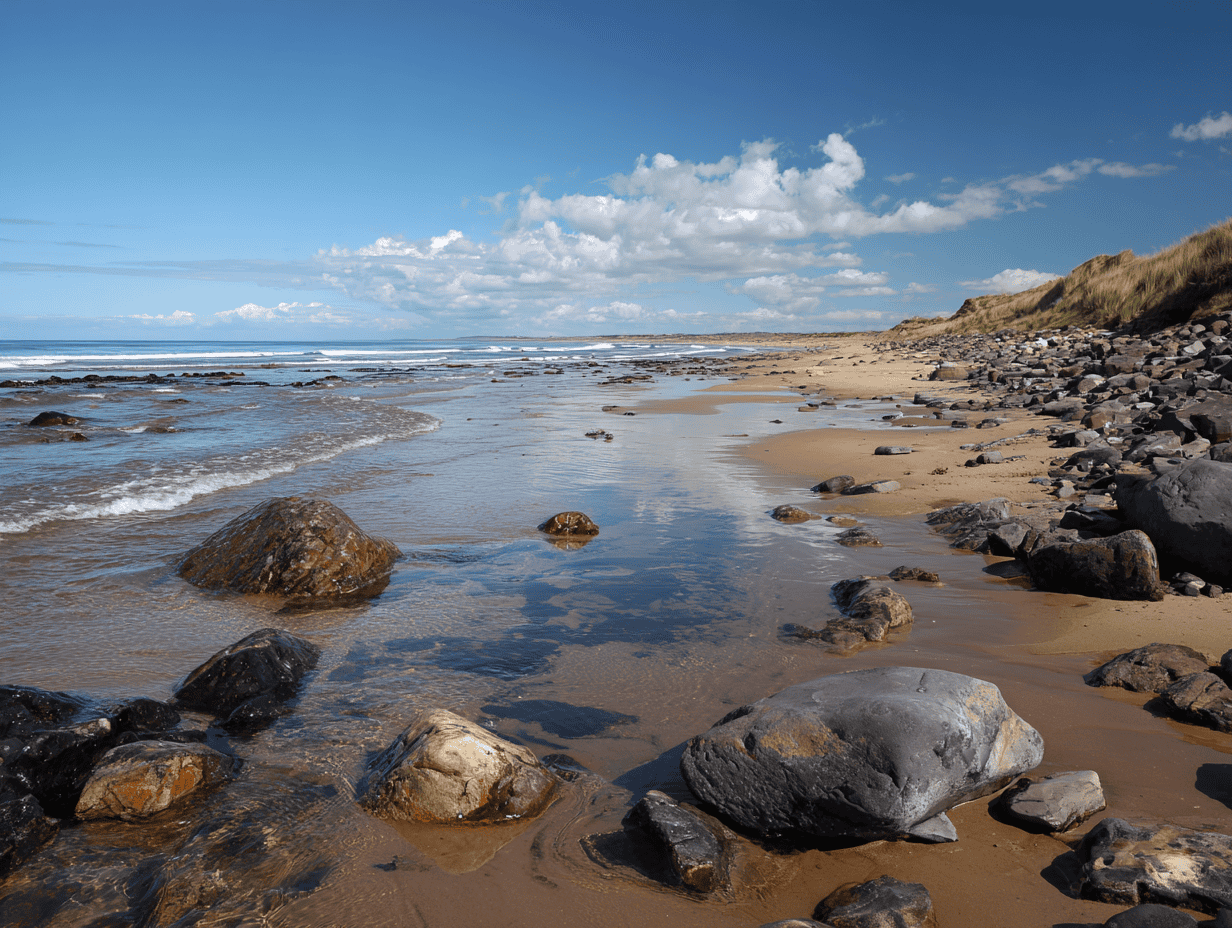
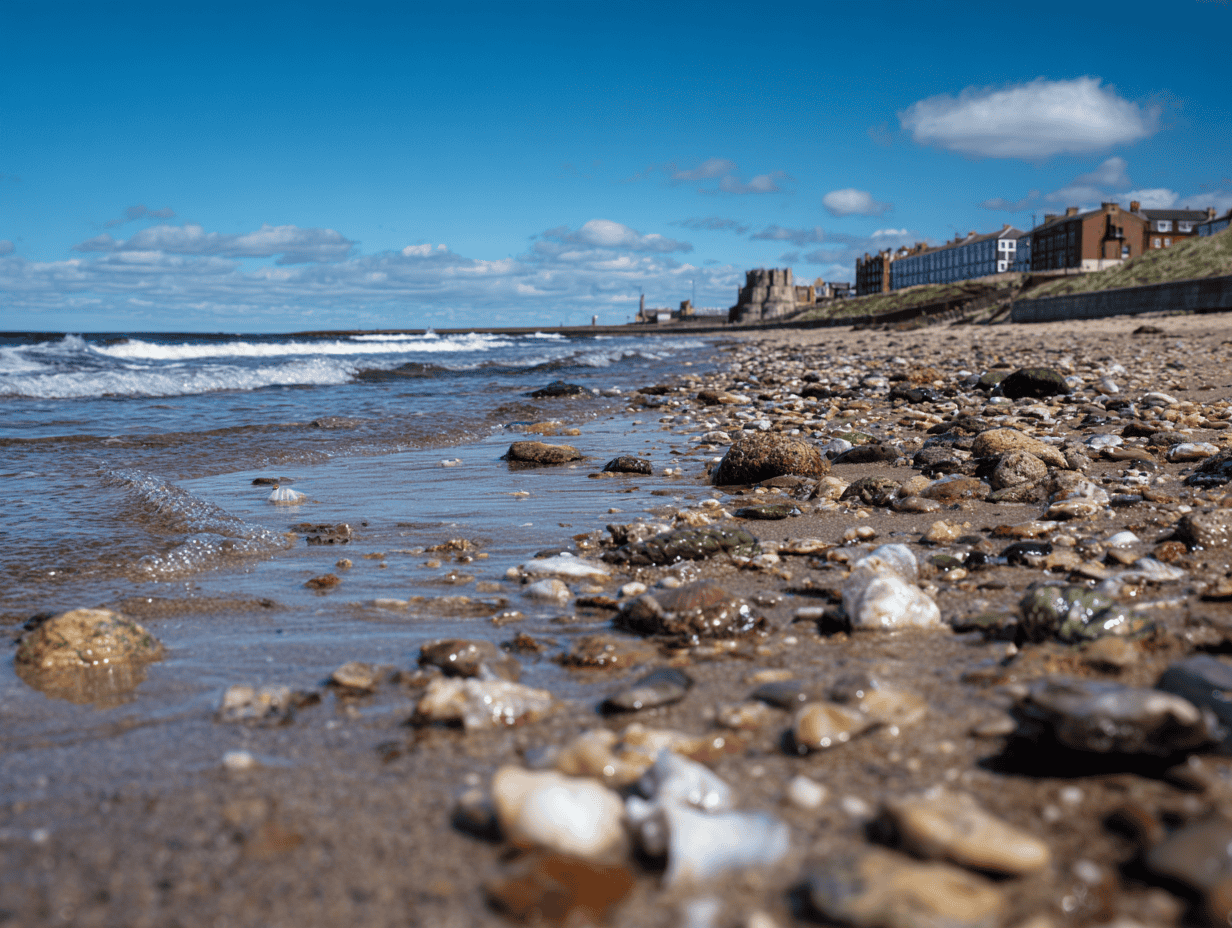
Northern end (near Hartlepool Harbour and Middleton Beach) – this is your best bet. The beach becomes pebblier here, and its proximity to the old Victorian dumping ground at Middleton makes this the likeliest source of older, well-tumbled glass. Work along the high-tide strandline and look for ridges where pebbles have accumulated.
Southern end (towards North Gare) – quieter and more exposed. The beach here edges toward sand dunes and the mouth of the Tees. Less productive for glass but worth a walk at low water if you’re already here. Dogs are welcome year-round at North Gare.
Central resort section – skip it for hunting purposes. The soft sand doesn’t hold glass well, and it’s the busiest part of the beach in summer.
Take your time on any pebble patches you find. Sea glass blends into a pebbly line remarkably well until your eye is calibrated.
From April to August it’s also where the little tern colony nests, fenced off behind the bus station, so give it a wide berth.
Key Tip:
Head north towards Middleton Beach and Hartlepool Harbour rather than spending time on the central resort beach. The pebble accumulations and strandline deposits at the northern end consistently offer the best chance of finding older, well-tumbled glass.
Difficulty Level – Beginner
- Easy access along the promenade and beach
- Flat terrain with straightforward walking
- Productive hunting areas are easy to identify
- No scrambling or technical terrain required
- Suitable for beginners and family beachcombers
Hunting Style – The Strandline Hunter
Seaton Carew rewards hunters who focus on the pebblier northern shoreline. Work the high-tide wrack line first, then search the pebble ridges and gravel deposits where heavier material naturally settles. The central sands are worth little more than a passing glance; the real hunting begins where the pebbles start.
Beach Personality
Seaton Carew feels like a classic North East seaside beach with a hidden history beneath the pebbles. Most visitors come for the sands, arcades and sea air, but sea glass hunters know the northern end tells a different story. Close to Hartlepool Harbour and old industrial shoreline activity, it offers a quieter, more rewarding hunt than first impressions suggest. Patient searchers will find a beach that quietly gives up its treasures without the crowds of more famous hunting destinations.
Dog friendly?
Seasonal restrictions apply. Dogs are banned from the central section of Seaton Carew beach, between the Norton Hotel and the Coach Park, from 1 May to 30 September. The northern end near Hartlepool Harbour and the southern end towards North Gare remain dog-friendly all year round.
The little terns are another reason to take those boundaries seriously. Since 2019, a colony of these tiny, legally protected seabirds has nested on the beach behind the bus station, right inside the exclusion zone. The fence goes up in early April, before the dog ban starts, and Tees Valley Wildlife Trust wardens are on site from mid-April until the last chicks fledge in August. Ringed plovers nest there too. Even in April, before the ban begins, keep dogs well away from the fence.
For your dog, that means the north end is the target on a summer visit, and it’s also the most productive stretch for glass. A win-win. The dog ban is enforced with fixed penalty notices, so check the boundaries before you let anyone off the lead.
Looking for somewhere dog-friendly to stop nearby? Check Yappy Places for dog-friendly cafés and pubs around Hartlepool.
Practical information
Parking: Seaview Car Park (TS25 1AB) is the main car park, situated right by the promenade. Additional parking is available around the bus station area, including Rocket House Car Park, which has disabled bays free to Blue Badge holders. The car park gets busy on summer bank holidays, so an early start is worthwhile in peak season.
Toilets: Public facilities on the promenade.
Food and drink: Seaton Carew has a proper traditional seafront, chip shops, ice cream parlours, and cafes all along the promenade. It’s that kind of place, and none the worse for it.
Getting there without a car: Seaton Carew has its own railway station on the Durham Coast Line, with regular services to Middlesbrough and connections towards Hartlepool and beyond. The beach is a short walk from the station.
Accessibility: The promenade is level and accessible, with a gentle ramp down to the beach from Rocket House Car Park. The beach is predominantly soft sand, which can make wheeling difficult before you reach firmer ground at lower tide.
What to bring
- Wellies or sturdy trainers – the beach is sandy, but the pebble sections can be uneven
- A small bag or container for finds
- Layers – the Tees estuary is exposed, and the wind off the North Sea has some bite
- A tide table – the beach is vast at low water, and you want to make the most of it
- A dog lead for navigating the seasonal restriction zones
The history behind the glass
The glass story at Seaton Carew is quieter than at Seaham, but it’s real. Just to the north, Middleton Beach near Hartlepool Harbour served as a Victorian dumping ground for decades of household and industrial waste tipped near the water’s edge, as was common practice across industrial Britain’s coastlines. Glass from that period has been finding its way along this stretch of shoreline ever since.
In 2018, that history was given a permanent home. The ‘Waves’ sculpture, commissioned by Hartlepool Borough Council, was made using sea glass collected by local schools and community groups from Middleton Beach. Artist Stuart Langley suspended the glass in cast resin with laser-cut steel, catching it in motion, a frozen wave of Victorian fragments. It stands in Seaton Carew as both public art and a quiet acknowledgement that this coastline has glass in its bones.
It’s a different kind of sea glass beach to Seaham, less concentrated, less celebrated, but with its own industrial legacy written into the shore.
From beach to jewellery
Found something special on the North East coast? At Mermaid Tears, every piece starts exactly where you’ve been standing — hand-hunted from UK beaches and handmade into something worth keeping. Browse the collection.
Disclaimer: Tide times, dog restrictions, parking charges and beach conditions change regularly. Always verify before visiting. Beach byelaws are updated annually. Check with Hartlepool Borough Council for the most current dog restriction boundaries and dates.
Last updated: Aug 2026
Frequently asked questions
Is Seaton Carew a good beach for sea glass hunting? It’s a fair-weather addition rather than a dedicated hunting destination. The central resort section is mostly sand, which isn’t ideal. Your best results will come from the northern end near Hartlepool Harbour, especially at low tide after stormy weather, where pebble patches accumulate finds from the area’s Victorian coastal dumping history.
Where is the best place to find sea glass at Seaton Carew? The northern end of the beach, closer to Hartlepool Harbour and Middleton Beach, is the most productive. Avoid the main resort stretch, stick to pebblier sections and work the high-tide strandline.
Are dogs allowed on Seaton Carew beach? Dogs are banned on the central section (between the Norton Hotel and the Coach Park) from 1 May to 30 September. The northern and southern ends are dog-friendly year-round.
What sea glass colours can you find at Seaton Carew? Mostly the common colours: greens, browns, and white. Occasional amber and pale blue. Rare finds include cobalt blue and red, likely originating from the Victorian dumping activity near Hartlepool Harbour.
Is there parking at Seaton Carew beach? Yes – Seaview Car Park is the main option (TS25 1AB), right by the promenade. There are additional car parks near the bus station. It gets busy on summer bank holidays.
Can I get to Seaton Carew without a car? Yes. Seaton Carew has its own train station on the Durham Coast Line, with regular services connecting to Middlesbrough and Hartlepool. The beach is a short walk from the station, making it one of the more accessible North East beaches for public transport users.
More North East Beaches
Check out our full guide to the North East or your interactive map to find more beaches; you can even filter by colour.