Scotland’s North Sea Corner
Fraserburgh is a good sea glass hunting beach, especially along the pebble ridges and strandline near the Esplanade and towards the quieter Philorth end of the bay. White, green, and brown are the most common finds, with blue, aqua, amber, and turquoise appearing occasionally, and cobalt blue, black, lavender, and red among the rarer colours reported. It’s a long, exposed North Sea beach where working the strandline and coarser pebble pockets matters more than searching the broad open sand.
Where to hunt: Esplanade pebble ridges → upper strandline → storm-debris pockets → Philorth end
- Rating: Good Beach
- Terrain: Easy – long, flat sandy beach with pebble sections, straightforward walking
- Level: Beginner
- Dog friendly: Yes – dogs welcome all year round, no seasonal restrictions
- Common colours: White, green, brown
- Rare colours: Cobalt Blue, Black, Lavender, Red
- Location: Fraserburgh, Aberdeenshire, North East Scotland
- Sat Nav: AB43 9TB (Esplanade car park)
Today at Fraserburgh Beach
Check below for ShoreSense Score and tide times. Scroll down for the full 7-day forecast
Fraserburgh sea glass conditions
Fraserburgh
Aberdeenshire — Building swell
54/100 — Fair, best window 13:26–14:26.
Best window is 13:26–14:26 with spring tides (near full/new moon) and building SE swell, so the chance of fresh finds is fair today.
Fair — a decent beach in the right window
Ranked #70 in the UK ShoreSense leaderboard today.
| Tide | Time | Height |
|---|---|---|
| Low water | 06:13 | 0.8 m |
| High water | 12:26 | 3.9 m |
| Low water | 18:30 | 0.9 m |
Best For:
- Strandline hunting
- Storm-chasing beachcombers
- Beginners
- Harbour-adjacent hunting
- Long beach walks
- Quiet beachcombing
- Debris-line searching
- North Sea glass hunting
Why Fraserburgh
Fraserburgh sits at the very tip of Aberdeenshire, the jagged corner where the Moray Firth stops and the open North Sea begins. Stand on the beach on a stormy winter morning, and you’ll understand immediately why this coastline produces sea glass worth travelling for. The swells don’t build here; they arrive. Full-force North Sea rollers with hundreds of miles of fetch behind them, churning the seabed and everything in it.
This is not a beach where glass carpets the shore the way it does at Seaham. Fraserburgh rewards patience and timing. It’s a working beach in a working town. One of the largest shellfish ports in Europe operates just around the headland, and there’s something properly Scottish about hunting glass here with the smell of diesel and salt in the air and the lighthouse keeping watch from the hill behind you. It doesn’t try to be a tourist destination. That’s part of the appeal.
The glass here is genuinely varied, fragments with a maritime and industrial story behind them, some worn exceptionally well by the ferocity of the North Sea, others still carrying hints of their origins in the thick, bubbled glass of old bottles and jars. Come with realistic expectations and good tide timing, and Fraserburgh will pay off. Combine it with a sweep of the Philorth end of the bay, and you can make a proper day of it.
What you’ll find here
Colours commonly found: White, green, brown
Occasional finds: Blue, Aqua, Amber, Turquoise
Rare finds: Cobalt Blue, Black, Lavender, Red
Bonus: Sea pottery fragments, occasional old bottle bases with mould seams, sea-worn coal (a local characteristic of North Sea beaches)
Found something unusual? Try GlassLore, our free sea glass scanner, to explore what it could be and log your find to the gallery and, more importantly, earn points and climb the leaderboard.
When to go
Fraserburgh faces north-east into the full force of the North Sea, and the timing rules are the same here as anywhere on this coast, but they matter more than usual because the beach is predominantly sandy rather than a dedicated pebble bed. After a significant storm or sustained north-easterly blow, glass migrates up the beach and into the strandline. Without that recent swell activity, you may find very little.
Winter is the season. October through March, Fraserburgh’s weather is brutal, and the beach is nearly empty. Those are your best conditions: big seas followed by a fast-ebbing tide with watery morning light. The glass is there when the sea decides to give it up.
Today’s ShoreSense Score & Best Hunting Window
Timing a visit to Fraserburgh without checking the tides first is a gamble not worth taking. This beach gives up its glass on the ebb, as the water pulls back across the flat sand and exposes the pebble ridges and wrack line that sit in the lower half of the shore. Get the timing wrong, and you’ll be standing on featureless wet sand with nothing to show for a long drive north.
Start at the Esplanade end and work the upper strandline rather than heading straight across the open sand. Check the pebble ridges and heavier debris pockets where material has collected, then continue south-east along the bay. If you have time, finish at the quieter Philorth end, where thicker strandline deposits and mixed pebbles can create a very different hunt. Use today’s ShoreSense Best Window to choose when to arrive, then follow this Esplanade → pebble-ridge → strandline → Philorth progression once you’re there.
The ShoreSense widget below combines recent marine conditions, tide timing and practical hunting weather to show today’s overall ShoreSense Score, Hunting Potential, Comfort and the best available hunting window for Fraserburgh. It uses UKHO tide data alongside current marine and weather inputs to help you judge whether conditions look promising for a hunt.
Fraserburgh sea glass conditions
Fraserburgh
Aberdeenshire — Building swell
54/100 — Fair, best window 13:26–14:26.
Best window is 13:26–14:26 with spring tides (near full/new moon) and building SE swell, so the chance of fresh finds is fair today.
Fair — a decent beach in the right window
Ranked #70 in the UK ShoreSense leaderboard today.
| Tide | Time | Height |
|---|---|---|
| Low water | 06:13 | 0.8 m |
| High water | 12:26 | 3.9 m |
| Low water | 18:30 | 0.9 m |
Compare today’s scores on Hot Beaches.
Where to look on the beach
Fraserburgh Bay runs for roughly four kilometres from the harbour end in the north-west to the Waters of Philorth in the south-east. There are two distinct sections worth knowing:
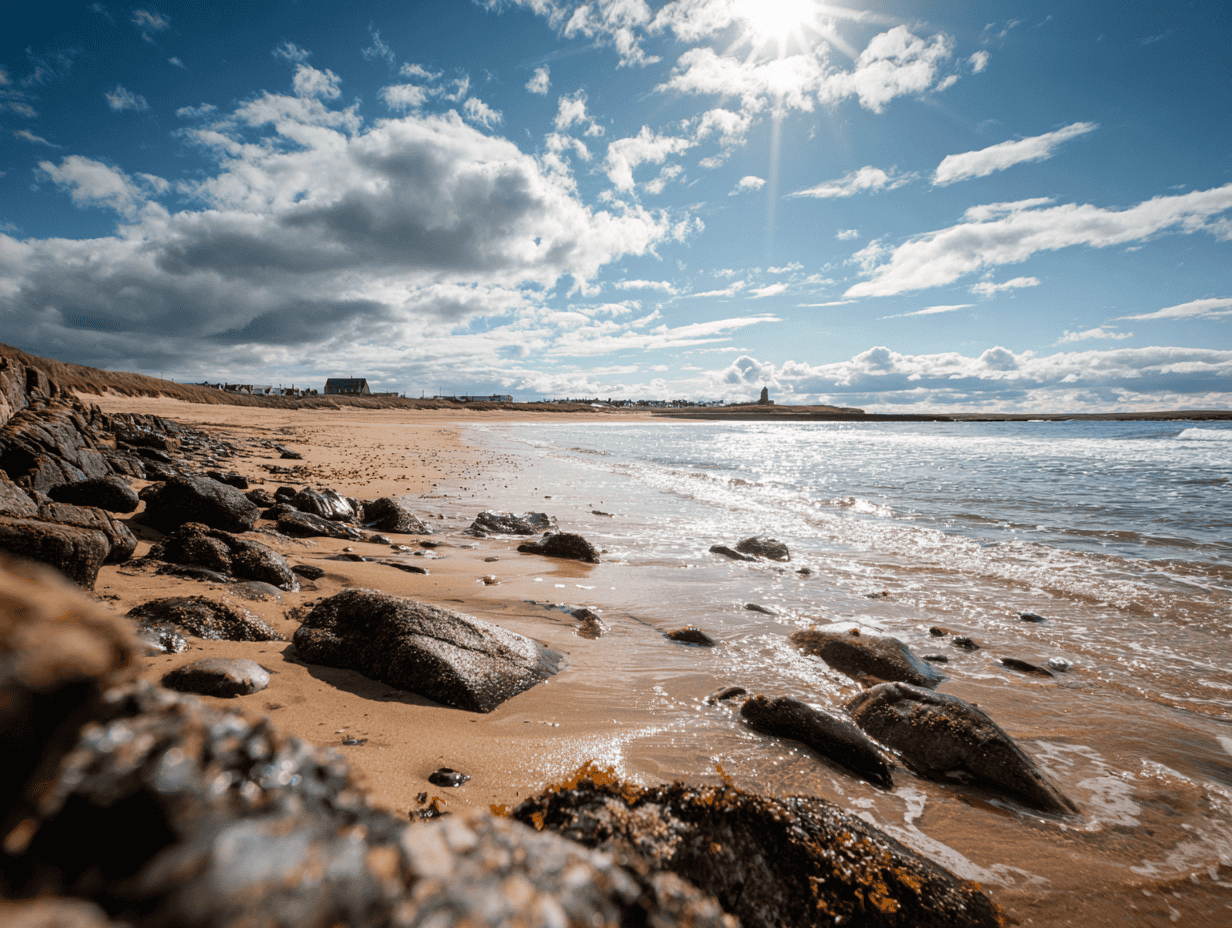
The Esplanade end (north-west) -Access from the car park at AB43 9TB. This is where the beach is at its most popular, but also where you’re closest to the harbour mouth. Glass tends to concentrate here in the rougher pebble ridges that form between the high-tide mark and the dunes. Walk south along the strandline rather than heading straight down to the water. The glass comes to rest in the debris line, not on the open sand.
Philorth end (south-east) – A quieter, wilder stretch where the beach meets the dune system and the Waters of Philorth nature reserve. There’s a separate small car park for this end. The going is less groomed, and the strandline can be thick with debris after a storm, which is exactly what you want. The pebble concentrations here can yield better glass than the busier end of the beach.
Key Tip
At Fraserburgh, hunt the debris line, not the open sand. The best glass is usually trapped in the pebble ridges and wrack deposits between the dunes and the waterline, especially after North Sea storms.
A safety note worth taking seriously: Fraserburgh is an exposed headland beach, and the tide can move quickly across the flat sand. Don’t get caught out. Keep an eye on the water, particularly on the ebb when it looks like conditions are improving. The North Sea here has no sense of humour.
Difficulty Level – Beginner
- Easy access from both ends of the beach
- Flat terrain with straightforward walking
- Productive hunting zones are easy to identify
- The large beach allows hunters to spread out
- Suitable for beginners and experienced hunters alike
Hunting Style – The Strandline Wanderer
Fraserburgh rewards hunters who follow the debris line rather than the waterline. Start by working the strandline methodically, checking every pebble concentration and ridge along the upper beach. After storms, the Philorth end is particularly rewarding, where natural sorting leaves glass hidden amongst heavier material.
Beach Personality
Fraserburgh feels big, windswept and unapologetically coastal. Fishing boats, harbour activity and miles of open shoreline create a beach with a strong connection to the sea. While most visitors are drawn to the broad sands, sea glass hunters quickly learn that the real treasures sit higher up the beach amongst the pebbles and storm deposits. It is a place where patience, fresh weather and a good eye are often rewarded.
Dog friendly?
Fraserburgh Beach is dog-friendly year-round, with no seasonal beach restrictions currently identified. Keep dogs under control around wildlife, dunes and rough sea conditions, and follow any temporary local signage.
Your dog would absolutely approve. Four kilometres of open beach, crashing North Sea waves, and not a soul about in January- this is a proper dog beach. Just keep an eye on conditions and be sensible near the water if it’s rough.
Looking for somewhere to warm up after the hunt? Check our Yappy Places listing for Fraserburgh for dog-friendly cafes and pubs nearby.
Practical information
Parking: The main access point is the Esplanade car park (AB43 9TB), well signed from the A98, just south of the harbour and north of the large Tesco. Parking is free, with toilets and a seasonal café on site, and there are additional free spaces along the seafront overlooking the beach. Spaces can be limited at peak times. For the quieter Philorth end, there’s a separate nature reserve car park reached off the B9033 towards St Combs, around two miles south-east.
Toilets: Public toilets are available beside Fraserburgh Beach on South Harbour Road (AB43 9TB), with accessible facilities. Aberdeenshire Council currently lists them as open 8am–8pm in summer and 8am–6pm in winter.
Food and drink: The Beach Cafe is located on the esplanade at Fraserburgh. For a proper sit-down meal, the Captain’s Table in town focuses on locally landed seafood and is worth knowing about after a long morning on the beach. The town centre is a short walk from the esplanade with plenty of options.
Getting there without a car: Stagecoach bus routes from Aberdeen (the 68 service) serve Fraserburgh. The journey takes approximately 1 hour and 45 minutes. The esplanade is walkable from the town centre bus stops.
Accessibility: The Esplanade is the easiest part of Fraserburgh Beach to approach, with level seafront access, disabled parking nearby and accessible public toilets. The beach itself is sandy with loose pebble ridges, while the quieter Philorth end involves softer sand and a longer walk and is much less suitable for wheelchairs or mobility aids.
What to bring
- Wellies or waterproof walking shoes- the sand here is fine, but the strandline can be wet, and the pebble ridges are uneven
- A small trowel or hand rake for turning wrack and debris in the strandline
- A sealable bag or small container for your finds
- Layers and a windproof outer layer. Fraserburgh is one of the most exposed spots on the Scottish mainland, and the north-easterly wind has real bite
- A flask -the Beach Cafe may not always be open out of season, and you’ll want something warm after a winter hunt
- A charged phone with the tides checked before you leave -conditions here can shift quickly
The history behind the glass
Fraserburgh’s relationship with the sea is ancient and industrial in equal measure. The harbour’s origins go back to 1576 when Sir Alexander Fraser, eighth laird of Philorth, laid the first stone of a new harbour, and the town that grew around it became one of the most significant fishing ports in northern Scotland.
By the early 19th century, the herring-curing industry had arrived in Fraserburgh, with bumper landings through the port driving rapid expansion of the harbour throughout the 1800s. At the height of the herring boom, Fraserburgh was one of the busiest herring ports in Scotland, with vast sums spent on harbour development between 1818 and 1914. The glass bottles, jars and flagons that held pickled herring, preserves, medicinal preparations and spirits were produced and used in enormous quantities, and like everywhere else along this coast, what broke found its way into the sea.
Fraserburgh is also home to the Museum of Scottish Lighthouses, housed in the converted Kinnaird Head Castle, the site of the very first lighthouse on mainland Scotland. That lighthouse watched over the fishing fleets that generated the maritime waste now scattered along this beach. Every piece of glass you pick up here has passed under its beam.
The town’s trading links with Scandinavia and the Baltic – fishing boats, wood, iron, textiles- go back centuries, and the glass fragments on this beach likely tell a wider story than just local industry. This is a port beach with international history tumbled into it.
From beach to jewellery
Found something worth keeping at Fraserburgh? At Mermaid Tears, every piece starts exactly where you’ve just been standing, hand-hunted from UK beaches and made into something you’ll wear forever. Browse the collection.
Please note: Tide times, dog restrictions, parking charges and beach conditions change regularly and should always be verified before visiting. Dog access rules in Scotland are subject to change; check with Aberdeenshire Council for the most current information before your visit.
Last updated: September 2026
Dog rules checked: September 2026 – Aberdeenshire Council (no seasonal restrictions)
Frequently asked questions
Is Fraserburgh Beach good for sea glass hunting? It’s a Good beach, worth a dedicated trip, especially if you time it right. It doesn’t have the volume of Seaham, but the North Sea conditions here produce well-tumbled glass, and after a storm, the strandline can be very productive. Combine it with the Philorth end of the bay for the best results.
When is the best time to visit Fraserburgh for sea glass? After a north-easterly storm in autumn or winter, arriving as the tide is going out. Spring tides around full and new moon expose more of the beach. Avoid dead-calm summer days without recent swell activity. The glass stays buried.
Is Fraserburgh Beach dog-friendly? Yes, dogs are welcome year-round, with no seasonal restrictions currently in place. Verify this before visiting, as rules can change.
How far is Fraserburgh from Aberdeen? Approximately 40 miles north of Aberdeen, about an hour by road via the A90 and A952. It’s a realistic day trip from Aberdeen or Inverness and pairs well with nearby beaches at St Combs and Rosehearty.
Are there facilities at Fraserburgh Beach? Yes, the Esplanade car park has free parking (limited spaces), public toilets and a seasonal beach cafe. The town centre is a short walk from additional food and drink options.
What other sea glass beaches are near Fraserburgh? St Combs is a short drive south-east and worth a look. Rosehearty lies around five miles to the west and has a different character: a smaller beach near a working harbour where glass can concentrate near the breakwater. Both are good additions to a Fraserburgh sea glass day.
More Scottish Beaches
Check out our Full East Scottish Guide or plan your trip with our interactive map.