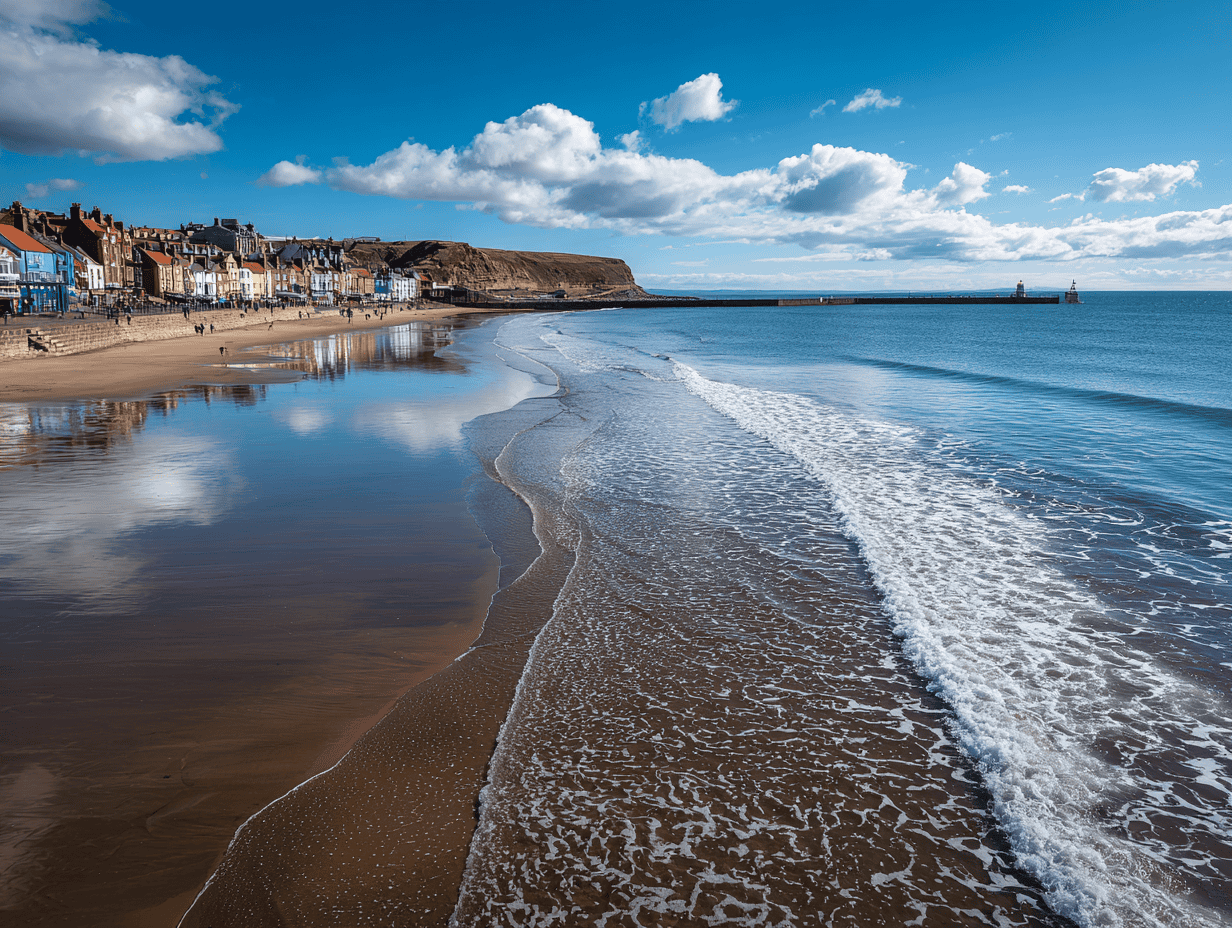
Captain Cook’s Village and the Dinosaur Coast
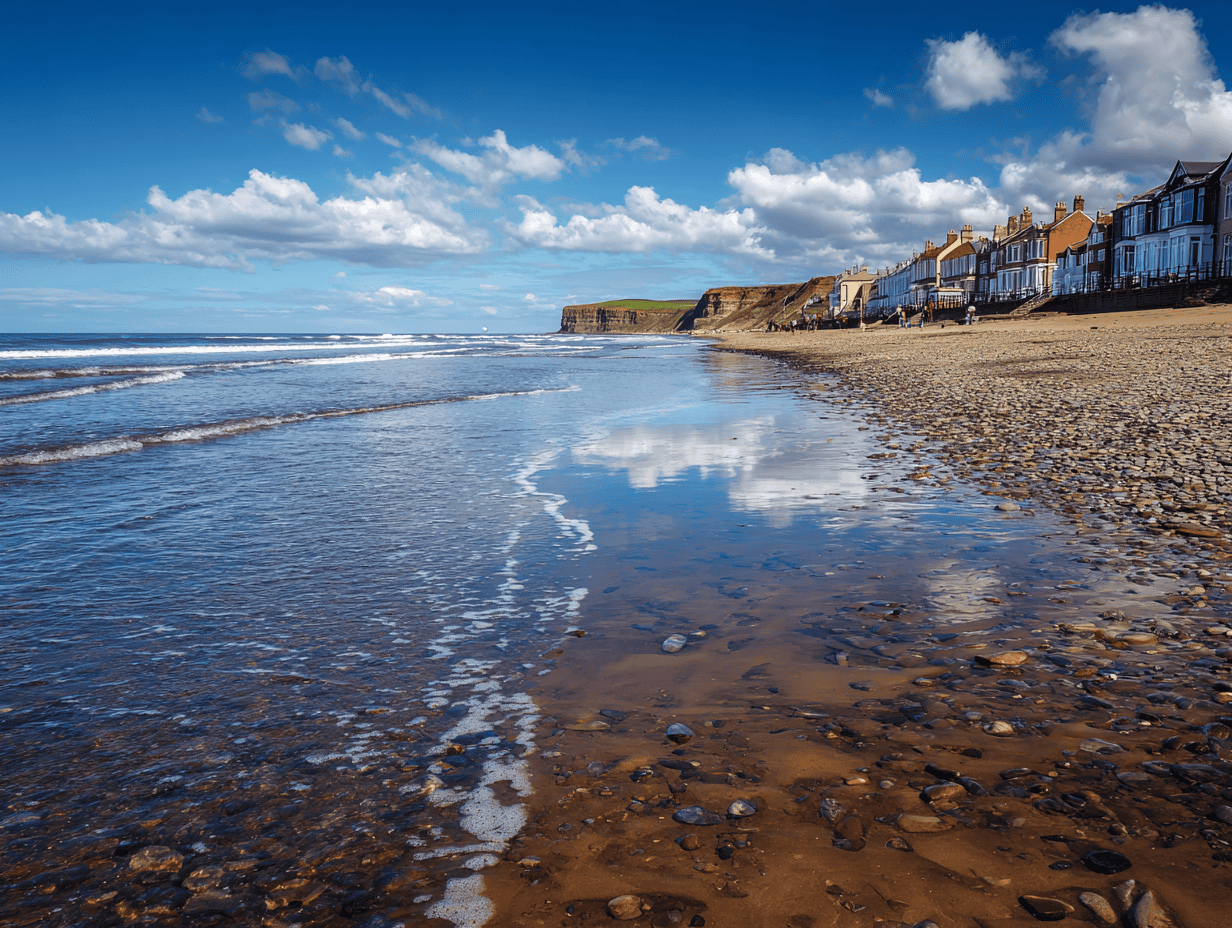
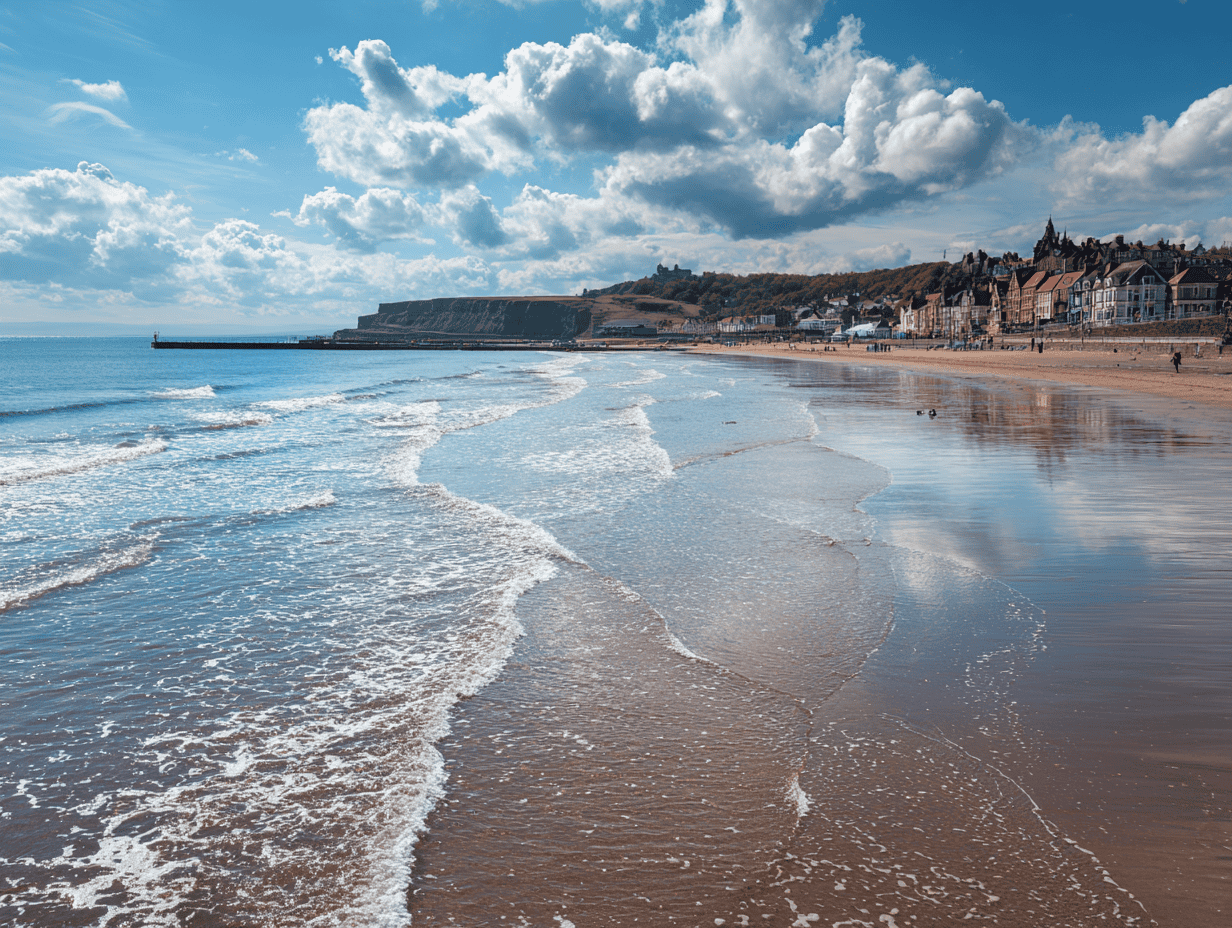
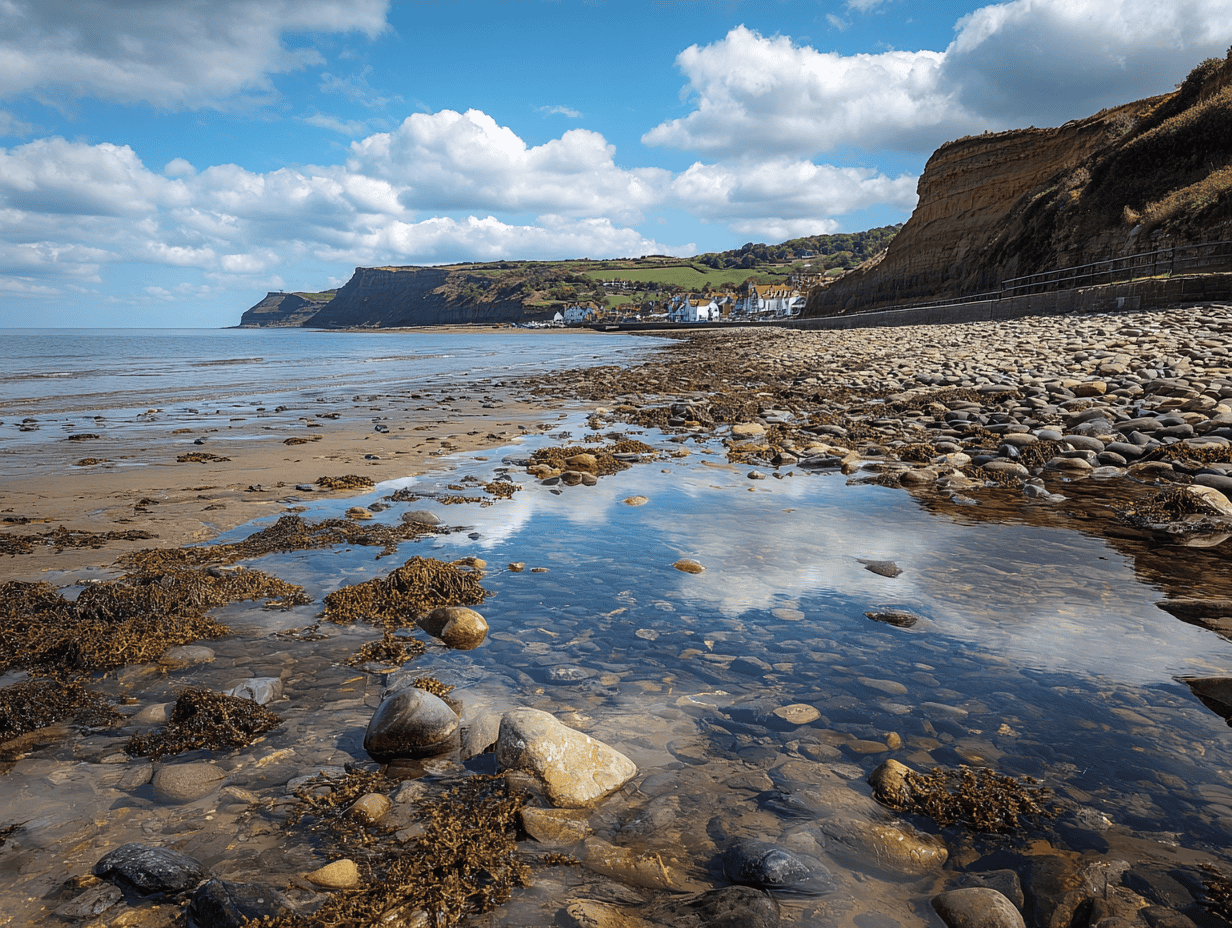
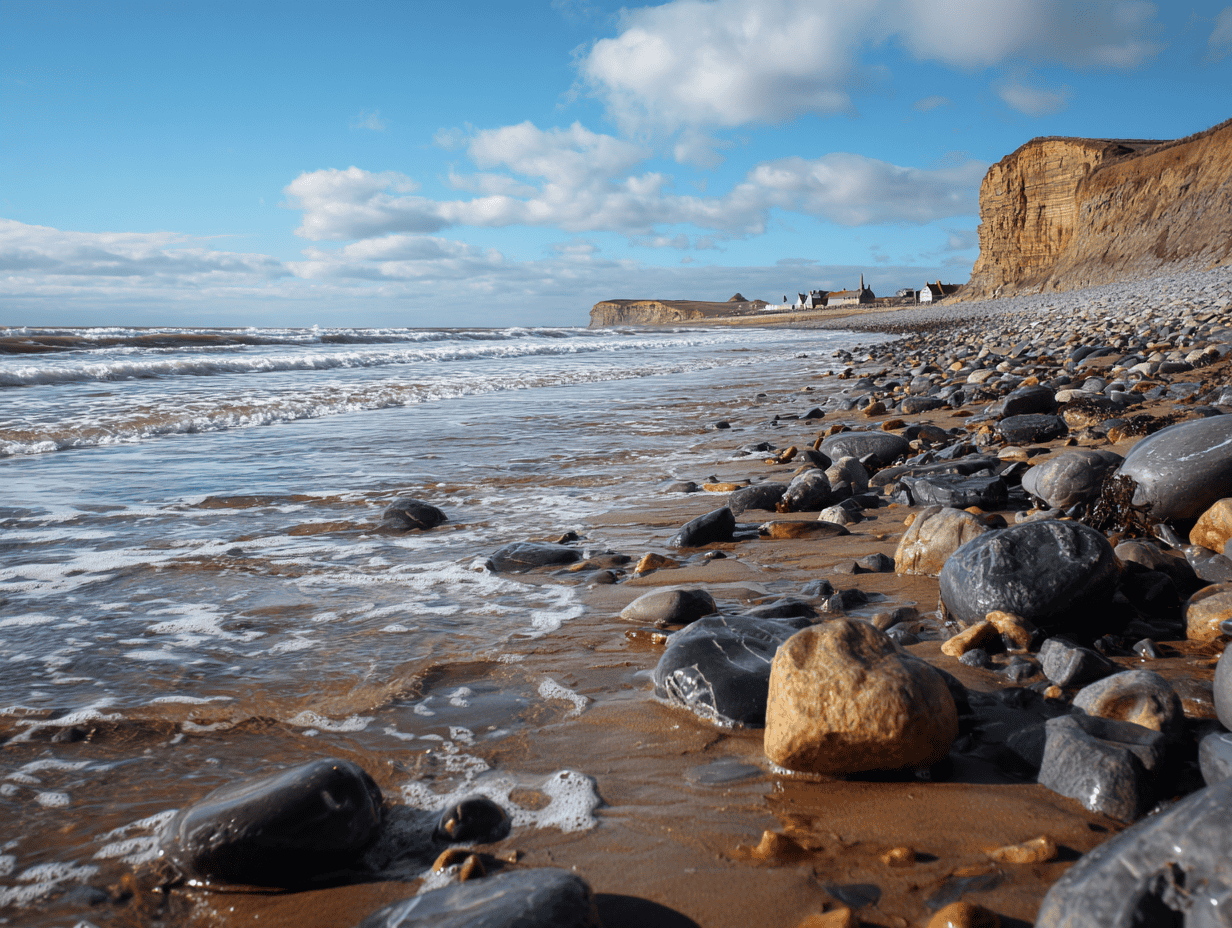
Staithes is a good sea glass hunting beach, especially around the harbour, Beck Mouth, and the rocky foreshore exposed at lower water. Start where Staithes Beck meets the harbour, then work the shingle and pebble beds across the small beach before checking the rock crevices and trapped pockets towards Cowbar. Green, brown and white are the most common finds, with blue, aqua and amber appearing occasionally and turquoise, cobalt blue, black and lavender among the rarer colours reported. The real appeal is the combination of sea glass, sea pottery, fossils and one of Yorkshire’s most distinctive historic fishing villages.
Where to hunt: Staithes Beck mouth → harbour-edge shingle → beach pebble clusters → Cowbar rock crevices
- Rating: Good Beach
- Terrain: Tricky
- Level: Intermediate
- Dog friendly: Yes, no restrictions
- Location: Staithes, North Yorkshire
- Sat Nav: TS13 5AD (Bank Top car park)
- Common colours: Green, brown, white
- Rare colours: Cobalt Blue, Black, Lavender
Today at Staithes
Here’s today’s ShoreSense Score; for the 7-day outlook, scroll down.
Staithes Beach sea glass conditions
Staithes Beach
North Yorkshire — Fresh swell
66/100 — Good, best window 16:01–19:01.
Best window is 16:01–19:01 with strong recent seas delivering glass and fresh E swell (1.5m), so the chance of fresh finds is good today.
Good day at a reliable beach
Ranked #43 in the UK ShoreSense leaderboard today.
| Tide | Time | Height |
|---|---|---|
| Low water | 04:55 | 2.5 m |
| High water | 11:24 | 4.2 m |
| Low water | 17:31 | 2.8 m |
| High water | 23:33 | 4.4 m |
Best For:
- Sea glass hunting
- Harbour finds
- Sea pottery
- Family visits
Why Staithes deserves a place on your list
There are prettier villages on the Yorkshire coast than Staithes. I’ll say that upfront. Actually, no, there aren’t. Staithes is one of the most extraordinary places on the entire English coastline: a clutch of fishermen’s cottages packed so tightly into a cliff-sided valley that they practically lean on each other, cobbled lanes so narrow a dog can barely pass through them, and a harbour that’s been sending cobles out into the North Sea for centuries.
The name comes from Old English and means “landing place.” People have been standing on this foreshore since the Vikings arrived.
For sea glass hunters, Staithes is a Good Beach, reliable rather than spectacular, and better suited to people who want the full experience of the place rather than just the glass in isolation.
The beach and harbour area is small and enclosed, which is exactly what you want for trapping and tumbling glass. The surrounding coastline has centuries of maritime, fishing, alum and ironstone history written into its cliffs
A note on pronunciation before you go: locals call it “Steers” or “Steeas.” Say “Stayths” in the pub, and you’ll be gently corrected.
What you’ll find here
Colours commonly found: Green, brown, white
Occasional finds: Blue, Aqua, Amber, Turquoise
Rare finds: Cobalt Blue, Black, Lavender
Bonus: Ammonite fossils in the cliff base and foreshore, Victorian pottery, harbour debris, ceramic pieces
Find something special? Use our sea glass scanner, GlassLore, to find out rarity, value and history; then you can share to our finds gallery and, more importantly, earn points to climb our hunters leaderboard – are you ready to compete?
When to go
Low tide is essential. The beach at Staithes is small and enclosed at high water; much of it disappears, and the most productive hunting ground is the rocky foreshore and shingle that only opens up as the tide pulls back. Aim to arrive an hour before low water and work through to an hour after.
A spring tide makes a real difference here. The bigger the range, the more foreshore is exposed, particularly around the northern harbour wall and the rocky sections on either side of the beach. After a North Sea storm with easterly winds, fresh material gets pushed into the harbour and up the beck; these are your best days.
Winter is quieter, and the storms are more frequent. Summer brings artists, fossil hunters and tourists in significant numbers, and the village, which is genuinely tiny, can feel very busy indeed by mid-afternoon.
Today’s ShoreSense Score & Best Hunting Window
Staithes sits on the North Sea coast of North Yorkshire, sheltered between the headlands of Cowbar Nab and Penny Nab, with a spring tidal range of around 5.5 metres, one of the more generous ranges on the Yorkshire coast, which means the difference between high and low water is dramatic, and the exposed foreshore at a big low is considerably larger than it looks at high tide.
Start at the mouth of Staithes Beck and work the gravel, shingle and pebble beds where the stream meets the harbour. Then move across the small beach, concentrating on denser pebble clusters and the strandline rather than the cleaner sandy patches.
As more foreshore opens, continue towards the rocky margins and Cowbar side, checking crevices and small trapped shingle pockets. After stronger easterly weather begins to settle, recheck the harbour margins and any newly rearranged pebble bands, but stay well clear of the unstable cliffs.
Use today’s ShoreSense Best Window to choose when to arrive, then follow this beck mouth → harbour shingle → beach pebble clusters → Cowbar rock pockets progression once you’re there.
Compare your Beaches on our Hot Beaches page, updated daily with the best beaches for today, the next seven days, as well as the movers and shakers.
Where to look on the beach
Getting to the beach itself requires effort, and that effort is part of what keeps Staithes relatively productive. No cars can access the old village. You park at the top (Bank Top car park, TS13 5AD) and walk down a steep cobbled lane to the harbour. It’s a good ten minutes downhill. Which means it’s ten minutes back up, and the climb is punishing with a dog, a rucksack, and the mild smugness of a decent haul.
The harbour and beck mouth are your primary area. Staithes Beck flows into the sea here, and the junction of fresh and salt water, combined with the protected harbour walls, creates conditions where glass gets trapped and held. Work the shingle and pebble beds carefully at the beck mouth.
The beach proper– the small sandy and pebbly area below the harbour is worth searching systematically at low tide. It’s not large, so take your time. Glass tends to collect in pebble clusters and along the wrack line.
The rocky sections north of the harbour – accessible at lower tides by crossing the footbridge toward Cowbar hold glass in crevices and rock pool edges. This is where patient hunting pays off.
The harbour wall area itself is worth checking after storms. Glass gets pushed up against the base of the walls and into the corners.
Stay well clear of the cliff faces; rockfalls are a genuine hazard at Staithes and along this entire stretch of coast. Never hunt directly below the cliffs.
Key Tip:
Start at the beck mouth and harbour area before moving onto the beach itself. The combination of the stream, harbour walls and tidal movement creates natural collection points where glass and pottery become trapped and concentrated.
Difficulty Level – Intermediate
- Several productive areas are only fully accessible around lower tides
- Rocky sections require careful footing
- The best finds are often hidden within pebble beds and crevices
- Harbour and shoreline features need to be searched methodically
- Success comes from patience rather than covering large distances
Hunting Style – The Harbour Detective
Staithes rewards hunters who slow down and investigate every promising pocket of ground. Work the beck mouth carefully, search the pebble beds around the harbour, then move onto the rocky sections where glass becomes trapped between the tides. The beach is small, making thoroughness more important than distance.
Beach Personality
Few places feel as characterful as Staithes. Narrow cobbled streets tumble down to a historic fishing harbour where generations of maritime life have left their mark on the shoreline. Hunting here feels more like uncovering pieces of local history than searching a conventional beach. The scenery is spectacular, the atmosphere unmistakably Yorkshire, and the best finds often come from the corners and crevices that others overlook.
Dog friendly?
Yes -no seasonal restrictions apply at Staithes. Dogs are welcome on the beach year-round, on or off lead. The village itself is pedestrianised, and your dog will be perfectly at home on the cobbles and down at the harbour, though the narrow lanes mean you’ll want them close on a lead. The cliff sections north toward Cowbar are also fine for dogs, and the Cleveland Way beyond the village is excellent walking country.
A word of caution: the water quality at Staithes beach has historically been poor, according to various sources, which flag it as one to avoid for swimming. It won’t stop a determined Jack Russell, but it’s worth being aware of if yours insists on paddling.
Looking for somewhere dog-friendly nearby? Check our Yappy Places listings for the Staithes area. The Cod & Lobster pub at the harbour is a well-known stop, and there are options in the village for a post-hunt warm-up.
Practical information
Parking: Bank Top car park, Staithes Lane, TS13 5AD — 122 car spaces and 4 coach spaces, run by the council, open 24 hours. Charges apply 9am to 6pm from 1 March to 31 October only, and parking is free from November to February. Roughly £2.90 for an hour up to £7.90 for 24 hours, payable by RingGo, coins, card or contactless, with four EV charging points. Blue Badge holders are not exempt from charges.
Read the signs carefully: there are effectively two car parks here under different operators. The council one is to the left of the toilet block as you drive in, and it’s poorly signposted. The other is a private ANPR car park where you must buy a ticket within 10 minutes of arriving, and the mobile signal is poor enough that people regularly get penalty notices trying. If in doubt, use the council side. No parking is permitted in the old village itself.
Toilets: Public toilets are available beside the main Staithes car park at the top of the village, with a second public toilet block at Bank Bottom in Seaton Garth closer to the harbour.
Food and drink: The Cod & Lobster pub is right on the harbour and is the obvious choice for fresh seafood, harbour views, and genuinely good fish and chips. Dotty’s Vintage Tearoom does teas and homemade cakes. The Seadrift Café is near the beach. All can be busy in season. Arrive early or come in the shoulder months.
Getting there without a car: Arriva’s X4/X4A serves Staithes on the coastal route between Whitby and Middlesbrough, calling at places including Runswick Bay, Loftus, Saltburn and Redcar. Check the current timetable before travelling.
Accessibility: The main visitor car park is at the top of the village, while access to the harbour requires a steep descent through narrow cobbled streets. Staithes Beach and the sea-glass hunting areas are therefore not wheelchair-friendly, and the rocky foreshore and steps around the harbour can also be difficult for anyone with limited mobility.
What to bring
- Sturdy boots with grip – the cobbles get slippery, the rocks around the harbour are weed-covered at low tide
- A small container for finds – glass and pottery in your pockets will get damaged
- Layers and a windproof – Staithes sits in a valley, but the harbour mouth is fully exposed to the east
- A lead for the cobbled lanes and the narrow passages through the village
- Something for the uphill walk back – it’s more of a climb than it looks on the way down
The history behind the glass
The glass at Staithes comes from a long layering of human activity on this small stretch of coast, and understanding that history tells you exactly why the beach rewards patient hunters.
By the early 19th century, Staithes was one of the largest fishing ports north of the Wash, with over 300 fishermen working from the harbour and 80 full-time fishing boats putting out to sea. The coble, a distinctive flat-bottomed vessel built to launch from shallow beaches, was the boat of choice, and the harbour was busy with the trade of fish, alum and ironstone for generations.
A century of active fishing community life means decades of glass bottles, jars, and domestic vessels finding their way into the sea.
The alum industry was significant here from the 17th century onwards. The cliffs at nearby Boulby were a rich source of alum-bearing shale, and workers quarried it, processed it on site, and shipped it out from the coast, some of it through Staithes.
Women on the beach burned seaweed to create kelp as part of the alum-making process. That industrial activity, and the communities it sustained, is part of what put glass into the water along this shoreline.
Ironstone mining came later, from the mid-19th century into the early 20th century, with the harbour at Port Mulgrave a mile north along the Cleveland Way built specifically to export the ore. The narrow-gauge railway that brought ironstone to the coast ran over three wooden viaducts and through two tunnels. Mining communities generate glass; the evidence is still washing up today.
And then there is the sea itself. The harbour has been battered by storms for centuries, houses washed away, boats lost, the coastline constantly reworked. The most famous storm victim was the grocer’s shop where young James Cook worked as a 16-year-old apprentice in 1745 before the call of the sea proved irresistible, and he moved to Whitby to join the Navy.
The sea eventually destroyed the shop. Every storm that has ever broken over this harbour has churned the seabed and returned something to the beach.
From beach to jewellery
Find something worth keeping at Staithes? At Mermaid Tears, every piece of jewellery starts exactly where you’re standing, hand-hunted from UK beaches and handmade into something you’ll keep forever. Browse the collection.
Disclaimer: Tide times, dog restrictions, parking charges and beach conditions change regularly. Always verify before visiting. Beach byelaws are updated annually. Check with the local council or beach authority for the most current rules.
Last updated: September 2026
Dog rules checked: September 2026 – North Yorkshire Council (no restrictions at Staithes)
Frequently asked questions
Is Staithes good for sea glass hunting? It’s a reliable Good Beach, particularly at low tide and after storms. The enclosed harbour and beck mouth create good conditions for trapping glass, but the beach is small; this is quality-over-quantity hunting rather than a carpet of finds.
What’s the best time to visit Staithes for sea glass? Low tide on a spring tide, arriving about an hour before low water. Winter is quieter, and storms are more frequent. The day after an easterly storm can be very productive in the harbour area.
Are dogs allowed at Staithes? Yes, year-round with no seasonal restrictions. The village lanes are narrow, so a lead is sensible through the old village, but the beach and the clifftop paths beyond are very dog-friendly.
How do I pronounce Staithes? Locals say “Steers” or “Steeas.” It’s one of those Yorkshire coastal village names that sounds nothing like it looks.
What else can I find at Staithes besides sea glass? Ammonite fossils are common in the cliff base and on the foreshore. This stretch of coast is known as the Dinosaur Coast for good reason. Victorian pottery and ceramic shards are regular finds alongside sea glass. Rock pools at low tide are excellent for marine life.
How far is Staithes from Whitby? Around 14 miles north by road, about 25 minutes. The two make a natural pairing for a Yorkshire coast day out: Whitby for the town, abbey and harbour glass, Staithes for the atmosphere, fossils and a more secluded hunt.
More Yorkshire Beaches
Check out our Full Yorkshire Guide, or plan your trip with our interactive map to find more beaches; you can even filter by colour.