Victorian Cliffs, Channel Glass and a Hidden Cove
Folkestone is a good sea glass hunting destination, with Copt Point the standout spot for serious hunters and the main beach offering an easier alternative. Green, brown, and white are the most common finds, with blue, aqua, amber, and turquoise appearing occasionally, and cobalt blue, black, lavender, and red among the rarer colours reported. Copt Point is especially known for chunky, heavily frosted glass trapped in shingle and gravel between the large boulders below the East Cliff.
- Rating: Good Beach
- Terrain: Tricky
- Level: Advanced
- Dog friendly: Seasonal – dogs banned from Sunny Sands and Mermaid Beach 1 May–30 September; Copt Point and The Warren are open to dogs all year
- Location: Folkestone, Kent
- Sat Nav: CT20 1QH (Harbour car park) or CT19 6BL (East Cliff Pavilion car park for Copt Point)
- Common colours: Green, brown, white, aqua
- Rare colours: Cobalt Blue, Black, Lavender, Red
Today’s at Folkestone
Here are today’s conditions at Folkestone; scroll down for a more in-depth 7-day score.
Folkestone sea glass conditions
Folkestone
Kent — Sea settling
65/100 — Good, best window 05:22–08:22.
Best window is 05:22–08:22 with calm sea and offshore wind, so the chance of fresh finds is good today. Sea is likely calm and picked-over — go early.
Good day at a reliable beach
Ranked #32 in the UK ShoreSense leaderboard today.
| Tide | Time | Height |
|---|---|---|
| Low water | 06:52 | 0.9 m |
| High water | 11:30 | 7.4 m |
| Low water | 19:15 | 0.9 m |
| High water | 23:51 | 7.3 m |
Best For
- Serious sea glass hunters
- Large chunky glass
- Fossils and sea glass combined
- Boulder hunting
- Low-tide exploration
- Experienced beachcombers
- Photography
Why Folkestone- a Channel coast original
Most people know Folkestone for its harbour, its Triennial art festival, and its improbable transformation into one of the south coast’s most creative towns. Sea glass hunters know it for something else entirely: thick, well-tumbled Victorian glass sitting in the shingle below the cliffs, waiting to be found.
Folkestone is one of the few places on the English Channel where you can point to specific, documented reasons why glass is here. The beach below the East Cliff, particularly the stretch around Copt Point, sits beneath cliffs that were used as a Victorian tip. People simply tipped household items, builders’ waste, broken crockery, and glass over the edge onto the beach below.
Folkestone also had its own glassworks, and the factory disposed of waste glass and slag the same way. That mix of domestic tip waste, industrial glass, and a busy cross-Channel port and fishing harbour operating since Roman times has left a legacy in the shingle that the Channel tides have been working for over a century.
The result is some of the largest, thickest sea glass in southern England. One experienced Kent beachcomber described Copt Point glass as “the largest and thickest I have ever found.” That’s not a coincidence. Thick Victorian glass from bottles, window panes, and tableware, combined with the English Channel’s significant tidal range and wave energy, produces well-frosted, substantial pieces rather than the small, thin fragments you get on lower-energy beaches.
This is not a beach for a casual stroll and a quick look. Copt Point in particular requires tide awareness; it can be cut off, and some sections of the foreshore are boulder-strewn and uneven. But if you time it right and arrive as the tide drops, this is a genuinely rewarding Channel coast hunt.
What you’ll find here
Colours commonly found: Green, brown, white
Occasional finds: Blue, Aqua, Amber, Turquoise
Rare finds: Cobalt Blue, Black, Lavender, Red
Bonus: Victorian pottery sherds, clay pipe stems, fossils (ammonites, belemnites from the cliff clay), crystals and minerals, including gypsum at Copt Point
Found something unusual? Try GlassLore, our free sea glass scanner, to explore what it could be and log your find to the gallery and, more importantly, earn points and climb the leaderboard.
When to go
The tidal range at Folkestone is significant, around 6.5 to 7 metres on a spring tide, which means the beach transforms between high and low water. At high tide, there’s barely a strip of shingle at the main beach. At low water, a substantial foreshore opens up, and the glass-bearing shingle at Copt Point becomes accessible.
Always go on an ebbing tide. At Copt Point specifically, arrive as the tide drops and give yourself enough time to hunt and return before it comes back in. The point can be cut off, and escape involves scrambling up unstable clay cliffs. It is not dangerous if you time it correctly, but it demands respect.
Post-storm visits are particularly productive. Channel storms churn up glass that hasn’t moved in months and deposit fresh material along the strandline. Winter and early spring are the best seasons: quieter, stormier, and with glass that hasn’t been picked over.
Spring tides around new and full moon will expose the most beach and give the best access to the lower foreshore at Copt Point.
Today’s ShoreSense Score & Best Hunting Window
The tidal range at Folkestone is significant, around 6.5 to 7 metres on a spring tide, which means the beach transforms between high and low water. That range matters enormously here: at low water, the foreshore at Copt Point opens up considerably, and sections of shingle that are submerged for most of the tidal cycle become huntable for a few hours either side of low tide.
At Copt Point, timing is part of the hunt. Arrive while the tide is still falling and start with the gravel and shingle trapped between the large boulders below the East Cliff. As more foreshore opens, work lower through the shingle pockets and around the larger rock traps, but leave yourself a generous margin before the tide turns because the point can be cut off on the flood.
On the main beach, follow the pebble ridges closer to the waterline rather than the upper promenade edge. Mermaid Beach and The Warren are useful secondary hunts when conditions and access allow. Use today’s ShoreSense Best Window to choose when to arrive, but treat safe access to and from Copt Point as a hard constraint rather than something ShoreSense can override.
The ShoreSense widget below combines recent marine conditions, tide timing and practical hunting weather to show today’s overall ShoreSense Score, Hunting Potential, Comfort and the best available hunting window for this beach. It uses UKHO tide data alongside current marine and weather inputs to help you judge whether conditions look promising for a hunt.
Folkestone sea glass conditions
Folkestone
Kent — Sea settling
65/100 — Good, best window 05:22–08:22.
Best window is 05:22–08:22 with calm sea and offshore wind, so the chance of fresh finds is good today. Sea is likely calm and picked-over — go early.
Good day at a reliable beach
Ranked #32 in the UK ShoreSense leaderboard today.
| Tide | Time | Height |
|---|---|---|
| Low water | 06:52 | 0.9 m |
| High water | 11:30 | 7.4 m |
| Low water | 19:15 | 0.9 m |
| High water | 23:51 | 7.3 m |
Where to look on the beach
Sunny Sands is the beach most visitors arrive at, the small sandy one tucked into the harbour. It’s the busiest and the least productive for glass, and dogs are banned there all summer. Have a look on your way past, then keep going east towards Copt Point.
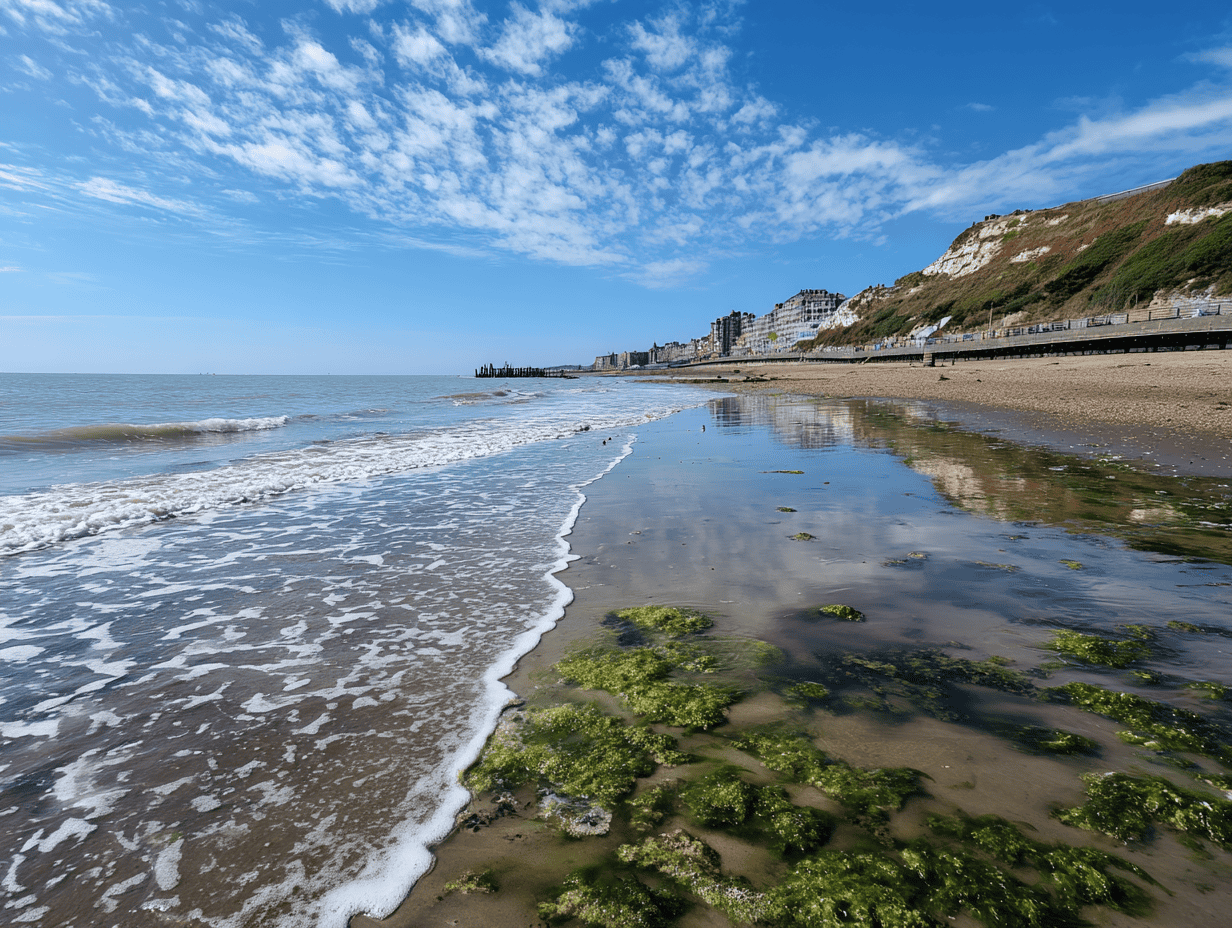
Copt Point is a serious hunter’s destination. Located at the eastern end of Folkestone’s seafront, it sits at the foot of crumbling clay cliffs which have been releasing fossils, glass, and minerals onto the beach for decades. Access is down steep steps from the cliff path above.
Key Tip
At Copt Point, focus on the gravel and shingle trapped between the large cliff-fall boulders. The biggest and thickest pieces are rarely sitting in the open; they’re usually wedged where shingle has banked up against the rocks.
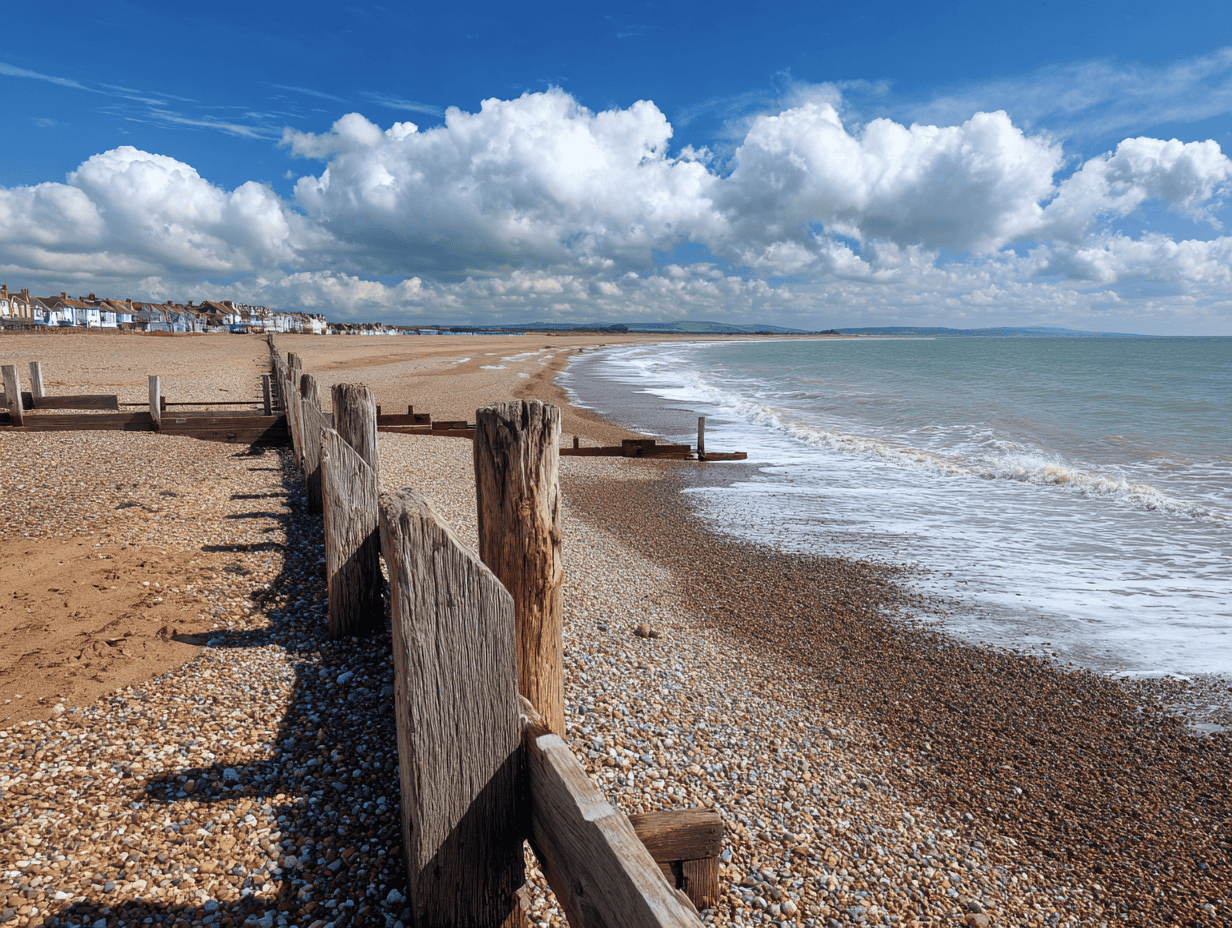
There is a café and golf course up on the cliff, and the beach itself is boulder-strewn at the back, giving way to shingle at the waterline. This is where the largest, thickest glass concentrates, trapped in the gravel between boulders at the base of the cliff. The glass gathers wherever the shingle banks up against larger rocks.
Important safety note: Copt Point can be cut off by the tide. Go as the tide is going out, not coming in. Keep an eye on the time and the water. The escape route involves steep, crumbling clay, manageable but not pleasant. Dogs will want to investigate every rock crevice; keep him close here.
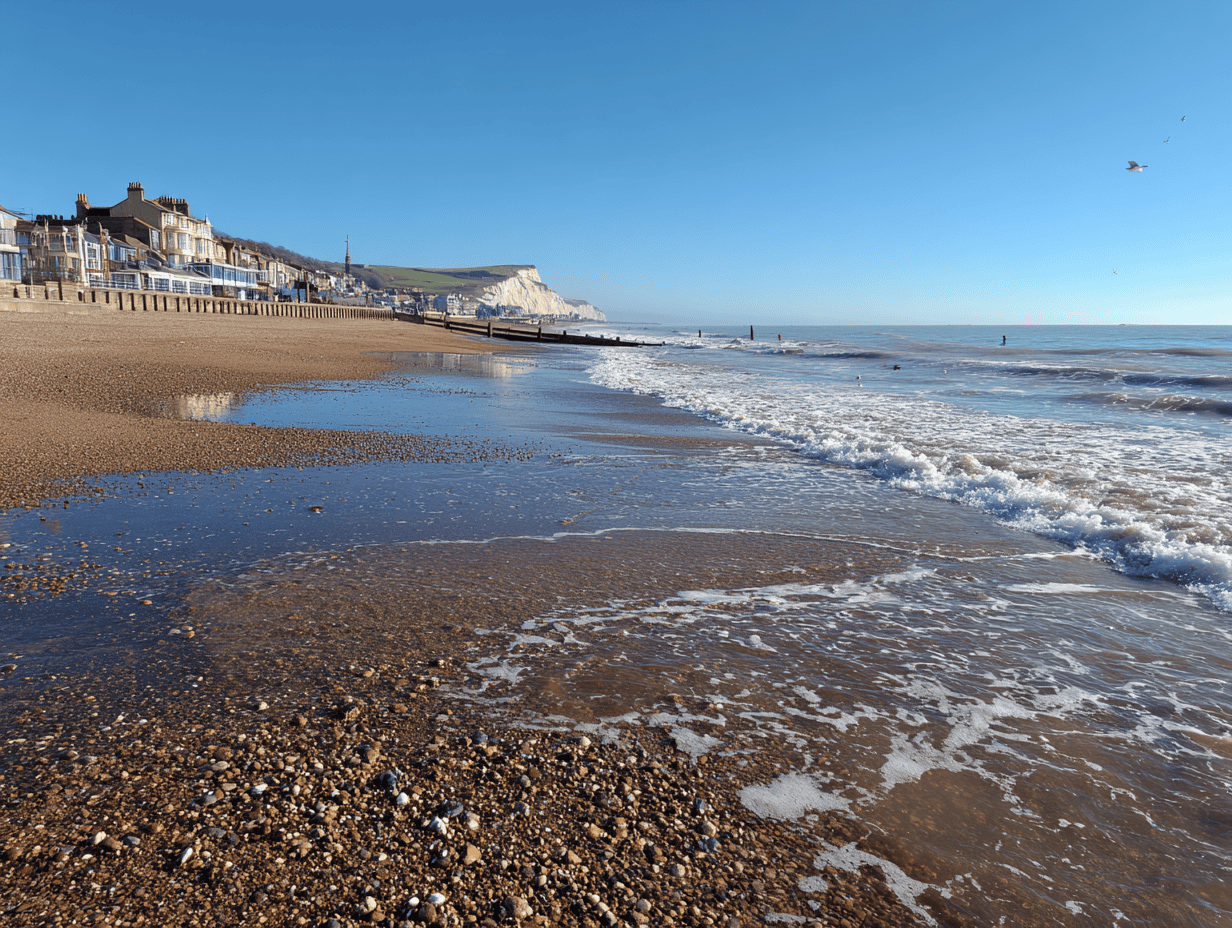
Folkestone Main Beach runs from the harbour westwards towards Sandgate, a long, sloping shingle beach backed by the wide promenade. This is a more relaxed hunt with good finds along the strandline and in the pebble ridges above the waterline. Glass here tends to be slightly smaller and more worn than at Copt Point, but it’s a much easier, dog-friendly (outside the seasonal ban) stretch to cover.
Key Tip:
Ignore the upper promenade area and work the pebble ridges closer to the waterline. The smaller, well-worn pieces tend to collect where the tide repeatedly sorts the shingle
Mermaid Beach is the pebble beach below the Lower Leas Coastal Park, west of the harbour, reached down the Zig Zag Path. It’s easy to get to and often overlooked by hunters heading for Copt Point, so it’s worth a low-tide look. Dogs are banned here from May to September.
Key Tip
Time your visit for low tide and search slowly. Mermaid Beach’s biggest advantage isn’t the terrain, it’s the fact that many visitors walk straight past it.
The Warren is the wildest of the three locations and a proper hidden gem. Sitting a mile east of Copt Point at the base of a dramatic chalk and clay undercliff, it’s a beach that used to have its own Edwardian train station and seafront cafés. Now it’s a remote shingle and sand shore hemmed in by forested cliffs, accessible via a steep path down from the cliff top or by walking east along the shore from Copt Point. Hunters report cobalt blue and other coloured glass finds here, and the beach sees far fewer visitors than the main seafront.
The Warren is also the only part of the Folkestone coast where dogs are welcome year-round, making it the go-to spot for a summer hunt with dogs when the seasonal ban is in force elsewhere. Access to the cliff top parking is off Wear Bay Road; allow time for the descent and ascent, and check the tides here just as carefully as at Copt Point.
Key Tip
Search the shingle banks along the base of the undercliff rather than the open sand. The Warren rewards persistence, and many of the best coloured finds come from areas that receive very little foot traffic.
On any section, the strandline is your first port of call. Work the high-tide mark, then drop down to the waterline on the ebb. Folkestone glass is well-frosted and often chunky. Once your eye is in, it reads clearly against the dark flint shingle
Dog friendly?
Seasonal, but Folkestone is better than it first looks if you’re hunting with a dog, because the ban doesn’t cover the best ground.
From 1 May to 30 September, dogs are banned from Sunny Sands, the sandy beach by the harbour, and from Mermaid Beach below the Lower Leas Coastal Park. Part of Sandgate beach, between Sandgate Castle and the Princes Parade junction, is also covered. Breaches can mean penalties of up to £1,000.
Copt Point and The Warren have no dog restrictions year-round, and the council confirms this. Those are the two best hunting spots here, so a summer hunt with a dog is entirely doable: park at East Cliff, take the cliff path, and work the point and the undercliff. Keep them close on the boulders and away from the crumbling clay.
If you want a walk rather than a hunt, the Lower Leas Coastal Park above the beach is worth knowing, though dogs must be on a lead across more of it since the council’s 2025 dog order. There’s a designated dog-friendly area around the amphitheatre below Leas Cliff Hall.
Looking for dog-friendly spots nearby? Check our Yappy Places listing for Folkestone; the harbour area has plenty of options, and the Creative Quarter cafés are well worth a visit.
Practical information
Parking: The Folkestone Harbour car parks (CT20 1QH) are the closest to the main beach and harbour, with pay-on-exit ANPR parking. For Copt Point, the East Cliff Pavilion car park (CT19 6BL) is the best option. It’s about a 20-minute walk to the point from here, including the cliff path descent. Multiple other council car parks are dotted across town; check the Folkestone & Hythe District Council car park locator for current charges and locations.
Toilets: Public toilets are available at the Harbour Arm and at various points along the seafront. Check the council’s public toilet map before you go, as opening hours vary by season.
Food and drink: The Folkestone Harbour Arm is one of the best seafront food destinations on the south coast: a regenerated Victorian pier with a string of independent food and drink vendors, open most of the year. The Creative Quarter in the Old High Street has independent cafes, and the Lower Leas Coastal Park has a café at the top of the cliff above Copt Point.
Getting there without a car: Folkestone Central station is served by regular trains from London St Pancras (around 55 minutes on Southeastern high-speed services). It’s approximately a 25-minute walk from Folkestone Central to the Harbour Arm, and buses 102 and 103 run from the station to the seafront.
Accessibility: The promenade along the main beach and harbour is wide, smooth, and accessible by wheelchair and pushchair. Copt Point is not accessible due to steep steps and rough terrain, making it unsuitable for anyone with limited mobility. The Harbour Arm has been designed with accessibility in mind and has ramps throughout.
What to bring
- Sturdy footwear – Copt Point is rough, boulder-strewn terrain; wellies or walking boots are better than trainers
- A small bag or container for your finds
- A hand rake or trowel for shifting the shingle around boulders
- Layers- the Channel coast is exposed, and wind can cut even on sunny days
- A tide table or the app is essential at Copt Point, non-negotiable
- A UV torch, if you want to check for uranium glass. Folkestone’s Victorian glassworks history makes it a plausible find here
The history behind the glass
Folkestone’s sea glass story begins with the cliffs. In Victorian times, part of the East Cliff above Copt Point was used as a municipal tip for household items, builders’ rubble, broken glassware and ceramics were tipped over the edge onto the beach below. It was a practice common along the British coastline in the 19th century, and it left a concentrated deposit that the Channel tides have been reworking ever since.
But there’s more to it than the tip. Folkestone also had its own glassworks, and waste glass and production slag from the factory were disposed of in the same way over the cliff and into the sea. The glass at Copt Point doesn’t just come from broken bottles; it comes from an industrial source, giving it that characteristic thickness and variety of form.
Layered on top of that is the harbour history. Folkestone’s harbour has been active since at least Roman times, and fishing boats were working from the Stade below the East Cliff from around 1100 AD. By 1849, it was a major cross-Channel ferry port connecting London to Paris via Boulogne, handling tens of thousands of passengers a year.
During both World Wars, it was a principal embarkation point for troops heading to France over 8.6 million passengers passed through in the First World War alone. A port that busy, active for that long, accumulates glass in the water around it in the way that only sustained human occupation can.
The glass you find at Folkestone could be from a Victorian household tip, a local glassworks, a fishing community, or a century of ferry traffic across the Channel. Each piece has its own story, and the Channel has been tumbling it smooth for longer than anyone knows.
From beach to jewellery
Found something special in the Folkestone shingle? At Mermaid Tears, every piece starts exactly where you’re standing, hand-hunted from UK beaches and handmade into something lasting. Browse the collection →
Disclaimer: Tide times, dog restrictions, parking charges and beach conditions change regularly. Always verify before visiting. The seasonal dog ban dates and specific beach restrictions are reviewed annually by Folkestone & Hythe District Council. Always check their website or local signage for the current year’s rules before you go.
Last updated: September 2026
Dog rules checked: September 2026 – Folkestone & Hythe District Council Dog Control PSPO 2025 (in force to 2028)
Frequently asked questions
Is Folkestone good for sea glass beginners? Yes, though Copt Point requires some tide awareness before you head there. The main beach is easy, accessible, and a good place to start building your eye. Copt Point is where the serious hunters go once they’re comfortable with reading the tides.
What makes Folkestone sea glass different from other south coast beaches? The combination of a Victorian cliff tip, a local glassworks, and over a thousand years of harbour activity gives Folkestone a historical glass legacy that most Channel beaches can’t match. The glass tends to be thick, chunky, and well-frosted; the Channel tidal range does a thorough job.
When is the best time to visit Folkestone for sea glass? Arrive as the tide is ebbing, especially on spring tides around new or full moon. Post-storm visits in winter or early spring are the most productive. Copt Point is the priority at low water; the main beach is huntable across more of the tidal cycle.
Are dogs allowed on Folkestone beach? It depends on which beach. Sunny Sands and Mermaid Beach are closed to dogs from 1 May to 30 September, as part of Sandgate. Copt Point and The Warren have no restrictions at any time of year, which is handy, because they’re the best hunting spots. Outside those months, all the beaches are open to dogs.
Is Copt Point dangerous? It can be, if you ignore the tides. Go as the tide drops, give yourself a clear window, and keep an eye on the water. The route back can be cut off by a rising tide, and the only escape involves steep, unstable clay cliffs. Treated with respect, it’s perfectly manageable; just don’t get complacent.
Can I find fossils at Folkestone as well as sea glass? Yes, Copt Point sits at the base of Cretaceous clay cliffs and is well-known among fossil hunters for ammonites, belemnites, sharks’ teeth, and ray plates. It’s an excellent double-hunt location.
More Beaches
Check out our Full Kent and Sussex Guide or plan your trip with our UK Sea Glass Map.