Dinosaur Coast, Channel Glass and Culver Cliff
Yaverland is a good sea glass hunting beach, especially around the groynes and shingle ridges at the quieter northern end of Sandown Bay. Green, brown, and white are the most common finds, with blue, aqua, amber, and turquoise appearing occasionally, and cobalt blue, black, and lavender among the rarer colours reported. It’s an easy, methodical hunt where working each groyne bay carefully is far more useful than scanning the open sand.
- Rating: Good Beach
- Terrain: Easy
- Level: Intermediate
- Dog friendly: Seasonal (dogs banned on Sandown Bay main beach 1 May to 30 September; Yaverland end all year round)
- Location: Yaverland, Sandown, Isle of Wight
- Sat Nav: PO36 8QB (Yaverland Car Park)
- Common colours: Green, brown, white
- Rare colours: Cobalt Blue, Black, Lavender
Today at Yaverland
Check the latest ShoreSense Score and tide times. Scroll down for the full 7-day forecast
Yaverland Beach sea glass conditions
Yaverland Beach
Isle of Wight
39/100 — Limited, best window 12:41–13:41.
Best window is 12:41–13:41 with spring tides (near full/new moon) and calm sea, so the chance of fresh finds is limited today. Sea is likely calm and picked-over — go early.
Limited — better days ahead here
Ranked #92 in the UK ShoreSense leaderboard today.
| Tide | Time | Height |
|---|---|---|
| Low water | 04:56 | 0.8 m |
| High water | 11:41 | 4.3 m |
| Low water | 17:19 | 0.7 m |
| High water | 23:57 | 4.2 m |
Best For:
- Sea glass hunting
- Sea pottery
- Long beach walks
- Family visits
Why Yaverland -the Isle of Wight’s best-kept glass secret
The Isle of Wight has a reputation as a fossil country. Dinosaur footprints at Compton Bay, ichthyosaur bones eroding from the cliffs, guided prehistoric walks selling out every summer, the island’s Jurassic and Cretaceous credentials are well established.
What’s less talked about, outside the island’s small community of dedicated beachcombers and sea glass jewellers, is that the eastern end of Sandown Bay is also one of the most consistently productive sea glass beaches on the south coast.
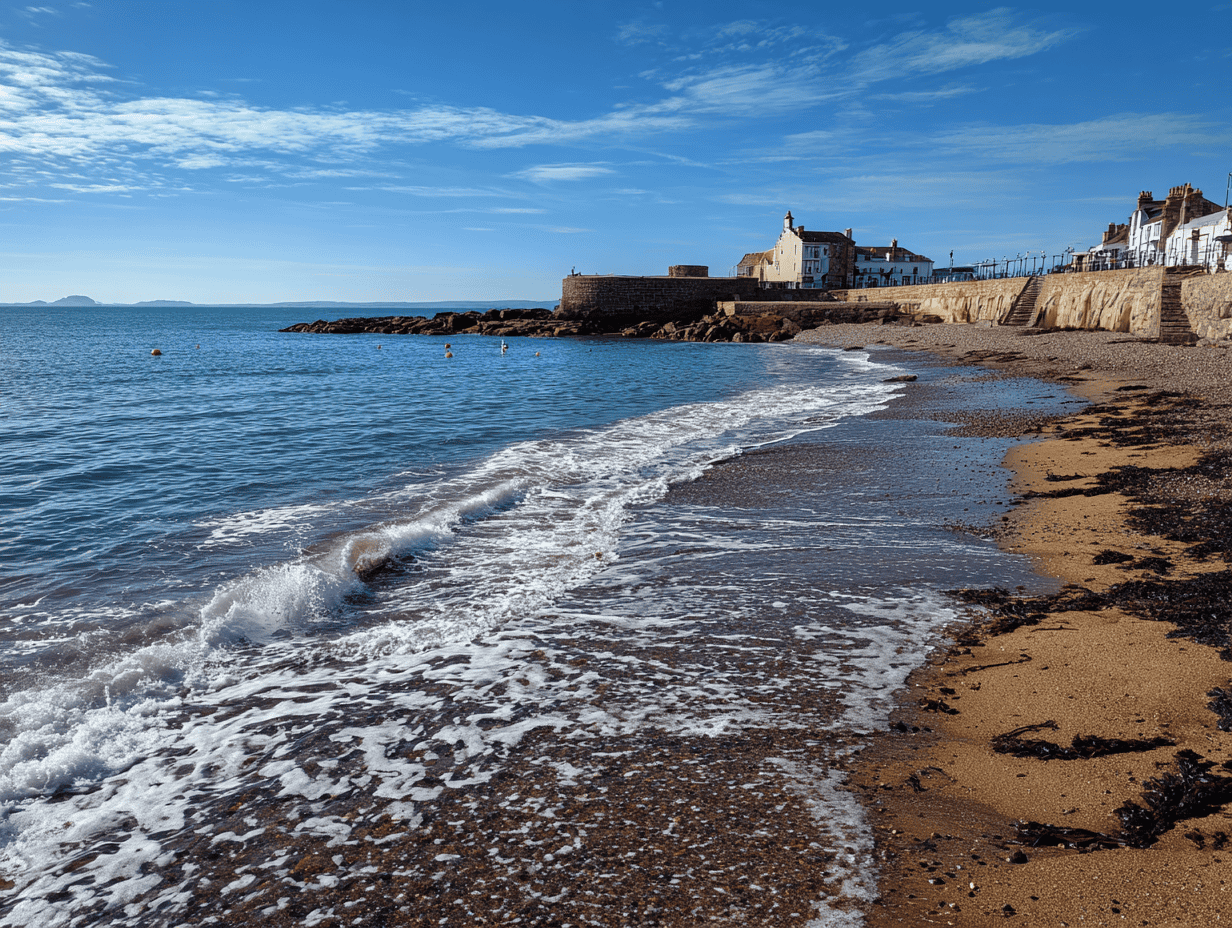
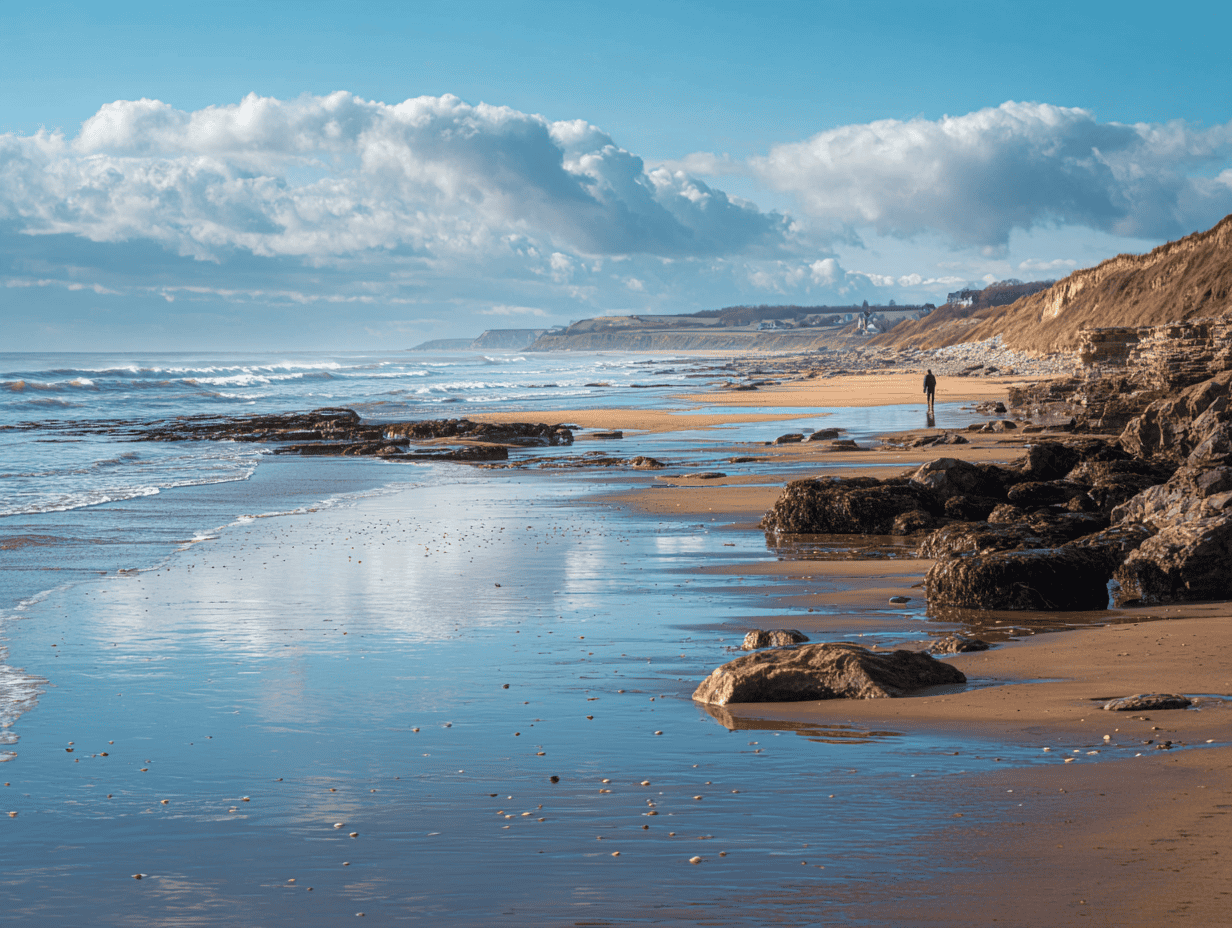
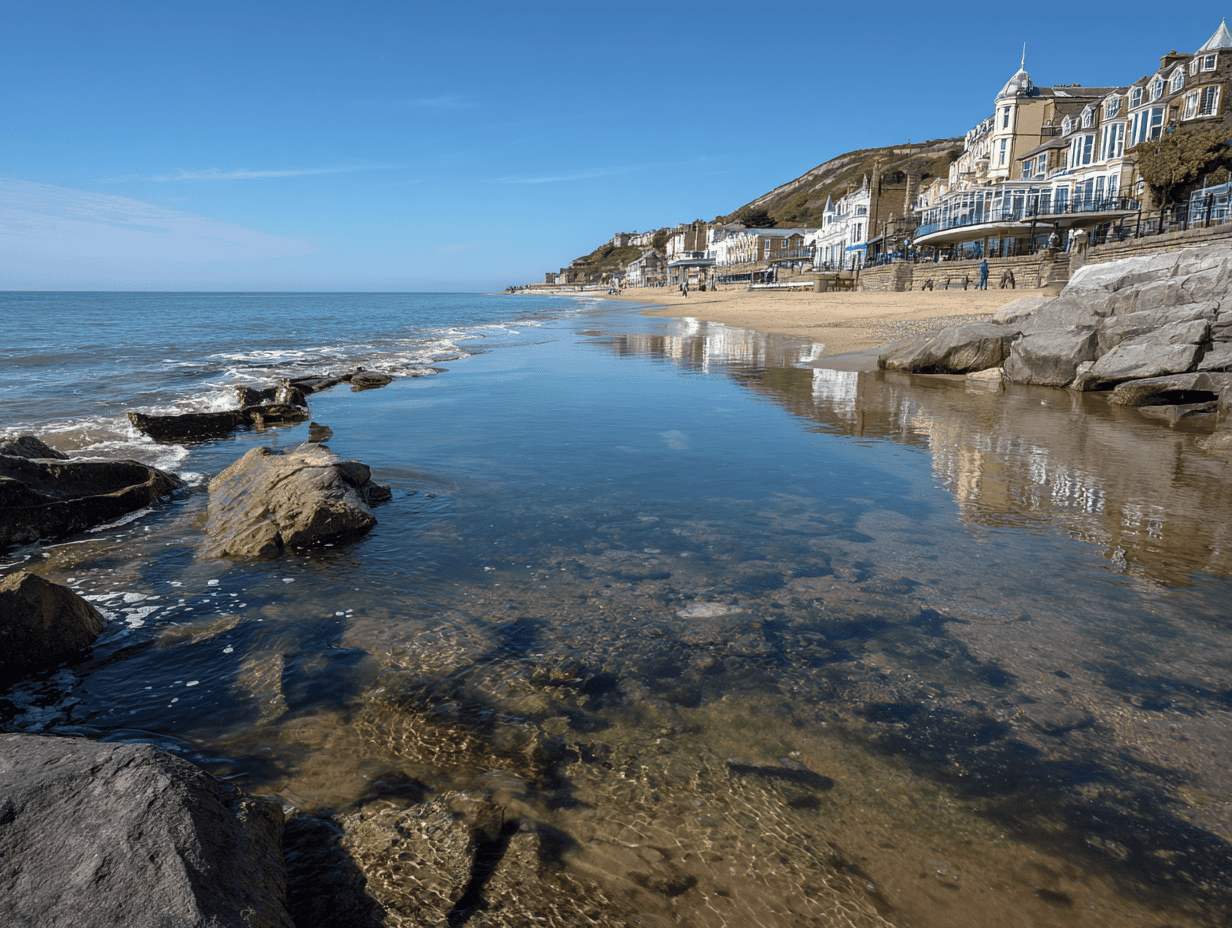
Yaverland sits at the northern end of Sandown Bay, where the long sandy beach meets the base of the orange sandstone cliffs that rise dramatically towards the white chalk of Culver Down. The English Channel shipping lanes run close offshore, one of the busiest stretches of water in the world, and the island’s position means it catches drift from multiple directions.
The tidal range through this section of the Channel is meaningful, doing the tumbling work on glass over decades. The result is a beach that yields white, green, blue and aqua glass with reliable regularity, and where an experienced island jeweller has found red, the rarest colour, on more than one occasion.
This is not a rough-and-ready northern beach. It’s a wide, flat, sandy stretch with easy access, good facilities, a beach café, and dog-friendly territory at the northern end all year round. But look carefully at the pebble sections between the groyne bases and along the strandline, and Yaverland will reward you properly.
What you’ll find here
Colours commonly found: Green, brown, white
Occasional finds: Blue, Aqua, Amber, Turquoise
Rare finds: Cobalt Blue, Black, Lavender
Bonus: Fossils from the sandstone and chalk cliffs (ammonites, belemnites, occasional dinosaur bone fragments), sea pottery, Victorian bottle glass
Find something special? Use our sea glass scanner, GlassLore, to find out rarity, value and history; then you can share to our finds gallery and, more importantly, earn points to climb our hunters leaderboard – are you ready to compete?
When to go
The tide is the critical factor at Yaverland. At high tide, there is very little beach, but at low tide, you have miles of sand and crucially, the pebble and shingle sections where glass concentrates are only accessible at low water. Time your visit around low tide and arrive on an ebbing tide to maximise your hunting window.
Winter and early spring are the most productive seasons. The beach is quiet, Channel storms refresh the strandline regularly, and the glass hasn’t been picked over. Post-storm visits are particularly worthwhile. Spring tides around the new and full moons expose the most foreshore and bring the best material up.
Summer is busier, but early morning before the families arrive is productive, and the northern Yaverland end is always quieter than the main Sandown stretch.
Today’s ShoreSense Score & Best Hunting Window
Yaverland faces east-northeast into Sandown Bay, which opens into the English Channel between Culver Cliff to the north and Dunnose Point to the south. The tidal range here is around 3.5 metres on a spring tide, generous for the south coast, and the twice-daily tidal exchange through this section of the Channel brings fresh material onto the beach with every tide.
As the tide falls, start on the high-tide strandline near the Yaverland car park and work north one groyne bay at a time. Check the shingle piled against each groyne first, then move down through the pebble band as more of the foreshore opens. The northern stretch towards the sandstone cliffs is quieter and generally more varied, but the beach also narrows here, so keep a generous margin before the tide turns.
On bigger spring lows, more of the lower shingle and reef-like sections become accessible. After stronger easterly or north-easterly conditions begin to settle, recheck the strandline and groyne pockets. Use today’s ShoreSense Best Window to choose when to arrive, then follow this strandline → groyne-base → lower-shingle progression once you’re there.
The ShoreSense widget below combines recent marine conditions, tide timing and practical hunting weather to show today’s overall ShoreSense Score, Hunting Potential, Comfort and the best available hunting window for this beach. It uses UKHO tide data alongside current marine and weather inputs to help you judge whether conditions look promising for a hunt.
Yaverland Beach sea glass conditions
Yaverland Beach
Isle of Wight
39/100 — Limited, best window 12:41–13:41.
Best window is 12:41–13:41 with spring tides (near full/new moon) and calm sea, so the chance of fresh finds is limited today. Sea is likely calm and picked-over — go early.
Limited — better days ahead here
Ranked #92 in the UK ShoreSense leaderboard today.
| Tide | Time | Height |
|---|---|---|
| Low water | 04:56 | 0.8 m |
| High water | 11:41 | 4.3 m |
| Low water | 17:19 | 0.7 m |
| High water | 23:57 | 4.2 m |
Where to look on the beach
The Yaverland northern end, from the car park northwards towards the base of the sandstone cliffs, is the primary hunting ground. This section is quieter than the main Sandown beach, sees fewer visitors, and the glass concentrates in the shingle and pebble ridges between the wooden groynes. Work each groyne bay methodically: strandline first, then drop to the pebble band at the base of the groyne, then down to the waterline on the ebb.
Below the sandstone cliffs, as you move north towards Culver, the orange sandstone cliffs begin to close in, and the beach narrows. This section is where the fossil hunters congregate and where older, more varied glass material concentrates. Be aware that cliff face rockfalls do occur, and signage will indicate any current restrictions. Keep an eye on the tide here as the beach narrows significantly at high water.
The strandline, wherever you are on Yaverland, the high-tide strandline is your first port of call. Glass concentrates here with seaweed, shells and flotsam. Scan it carefully before moving down to the waterline.
The glass at Yaverland is predominantly white and green, common colours, but the teal and red finds confirm that rarer material is present. Keep your eye trained on the unusual colours against the sand-and-pebble mix.
Key Tip:
Start at the Yaverland car park and work north towards the sandstone cliffs, searching each groyne bay in order. The glass is most likely to collect in the shingle ridges, pebble bands and strandline pockets between the groynes.
Difficulty Level – Intermediate
- The best hunting is away from the main Sandown beach
- Multiple groyne bays need to be searched methodically
- The beach narrows below the cliffs at higher tides
- Cliff-fall awareness is important near the sandstone sections
- Success depends on reading shingle movement rather than scanning open sand
Hunting Style – The Groyne Bay Hunter
Yaverland rewards hunters who work bay by bay. Start with the high-tide strandline, then search the pebble bands at the base of each groyne before dropping towards the waterline on the ebb. The quieter northern stretch towards Culver is where more varied material is likely to appear.
Beach Personality
Yaverland feels like the wilder edge of Sandown Bay. With sandstone cliffs, fossil hunters, wooden groynes and a quieter sweep of shoreline, it has a more exploratory feel than the busier resort beaches nearby. It is a beach that rewards patience and pattern-spotting, where the best finds are tucked into the shingle between groynes rather than scattered obviously across the sand.
Dog friendly?
The Yaverland end of the beach, to the left (north) of the car park, is dog-friendly all year round with no seasonal restrictions. This is excellent news: it means dogs have access to the best glass-hunting section of the beach every month of the year.
The main Sandown Bay beach to the south has seasonal restrictions from 1 May to 30 September. The Yaverland end is clearly signed; check local signage when you arrive, as the exact boundary can shift. The beach and surrounding area are popular with dog walkers year-round, and your dog will have plenty of company.
Check our Yappy Places listing for Sandown and Yaverland for dog-friendly cafés. The Yaverland Kiosk at the car park is the obvious first stop, and Sandown town, a short walk along the promenade, has a full range of options.
Practical information
Parking: Yaverland Car Park (PO36 8QB) is a large Isle of Wight Council pay-and-display car park right next to the beach, the obvious choice. Toilets powered by solar and wind energy are located at the southern end of the car park. The car park fills on busy summer days, so arrive early.
Toilets: At the car park, check current opening times as seasonal hours apply.
Food and drink: The Yaverland Kiosk at the car park serves ice cream, drinks and the usual beach snacks. For a wider range, Sandown town is a short walk along the promenade with cafés, restaurants and traditional seaside options. The Yaverland Sailing and Boat Club occasionally has facilities open to non-members.
Getting there without a car: Sandown station is served by the Island Line from Ryde Pier Head (connecting with the Wightlink ferry from Portsmouth). It’s about a 35-minute walk from Sandown station to the Yaverland car park, or take Southern Vectis bus routes 8 or 24 to the Meadow Way stop on Yaverland Road.
Accessibility: The car park is flat and well surfaced with good access to the beach via a gentle slope. The beach itself is sandy and flat, one of the most accessible on the island.
The promenade running south towards Sandown is flat and pushchair/wheelchair friendly.
What to bring
- Flat shoes or sandals – the beach is sandy and easy underfoot, though the pebble sections around the groynes need sturdier footwear
- A small bag or tin for glass finds, and a separate container if you plan to collect fossils
- A hand rake for working the shingle between groynes
- Layers – Sandown Bay is sheltered but can be breezy, especially at the northern end near the cliffs
- A tide table or app – essential here; the difference between high and low water is dramatic
- A camera – the view north from Yaverland towards the white chalk of Culver Down is one of the finest on the island
The history behind the glass
Yaverland’s glass story has two threads, one ancient, one modern, and both are worth knowing about.
The ancient thread is the cliffs. The orange sandstone and chalk of Culver Down are Cretaceous formations, laid down when this part of southern England was a warm shallow sea around 100 million years ago. Those cliffs have been releasing their contents onto the beach for centuries: ammonites, belemnites, dinosaur bone fragments, sharks’ teeth and the same erosion that releases the fossil deposits- older material into the shingle system that longshore drift then redistributes along the bay.
The modern thread is the Channel. Sandown Bay faces east into the English Channel, and the shipping lanes running between the Isle of Wight and the French coast are among the busiest in the world. Every vessel that passes this stretch of coast contributes incrementally to the glass in the water, cargo lost overboard, bottles broken on deck, and material discarded over the side across centuries of maritime traffic. The IoW’s position means it catches drift from multiple directions, and the tidal exchange through the eastern Solent is vigorous enough to work that glass properly over time.
Layered on top of that is the island’s own remarkable glass heritage. The Isle of Wight Studio Glass movement, founded by Michael Harris at Alum Bay in 1973, produced some of the most distinctive art glass in Britain for decades, and the island became internationally known for glassmaking. While studio art glass is unlikely to become sea glass, the island’s deep relationship with the medium runs through everything. The teal or red piece you find at Yaverland has its own story, connected to the broader history of an island that has always had glass in its bones.
From beach to jewellery
Found something in the Yaverland shingle? At Mermaid Tears, every piece starts exactly where you’re standing, hand-hunted from UK beaches and handmade into something lasting. Browse the collection.
Disclaimer: Tide times, dog restrictions, parking charges and beach conditions change regularly. Always verify before visiting. The seasonal dog restriction on Sandown Bay beaches is reviewed annually by the Isle of Wight Council. Always check local signage for the current year’s rules. Be aware of cliff instability at the northern end of Yaverland near the sandstone and chalk faces, observe any current closure signage, and do not approach unstable cliff sections.
Last updated: Aug 2026
Frequently asked questions
Is Yaverland a good beach for sea glass beginners? Yes, the terrain is easy, the car park is right next to the beach, and the flat sandy foreshore is straightforward to work. Glass concentrates around the groynes and strandline, which makes it easy to focus your search. A good entry point for South Coast glass hunting.
What makes Yaverland different from the main Sandown beach? Yaverland is the quieter, wilder northern end of Sandown Bay, closer to the sandstone cliffs, less managed, and with fewer people. The glass hunting is better here than on the busy main beach. Think of it as Sandown’s undiscovered end.
Are dogs allowed at Yaverland beach? Yes, all year round at the Yaverland end north of the car park. The seasonal restriction from May to September applies to the main Sandown Bay section south of the car park, not Yaverland itself. Always check local signage as restrictions are reviewed annually.
What is the best time to visit Yaverland for sea glass? Low water on an ebbing spring tide, ideally after a Channel storm. Winter and early spring are the quietest and most productive. Early morning, before other beach users arrive, is ideal year-round.
Can you find fossils at Yaverland as well as sea glass? Yes, Yaverland is one of the Isle of Wight’s designated dinosaur beaches. The sandstone and chalk cliffs to the north release fossil material regularly, particularly after rain and storms. Dinosaur Isle Museum is nearby and offers guided fossil walks.
How do you get to Yaverland without a car? Sandown station on the Island Line connects with the Wightlink ferry from Portsmouth. From the station, it’s about a 35-minute walk or a short bus ride on routes 8 or 24 to Yaverland Road.
More Beaches
Check out our Full Isle of Wight Guide or plan your trip with our UK Sea Glass Map.