Where the Cliffs Give Up Their Secrets
Charmouth is a good sea glass hunting beach, especially on East Beach towards Black Ven, where old cliff-fall boulders, pebble ridges and strandlines can trap glass and pottery linked to the area’s historic clifftop dump. Green, brown and white are the most common finds, with blue, aqua, amber, turquoise, cobalt, black, lavender, pink, orange, yellow, grey and multi-coloured pieces also reported. It’s one of the best UK beaches for combining sea glass with fossil hunting.
- Rating: Good Beach
- Terrain: Easy
- Level: Beginner – Intermediate
- Common colours: Green, brown, white
- Rare colours: Cobalt Blue, Black, Lavender, Pink, Orange, Yellow, Grey, Multi
- Dog friendly: Seasonal – dogs excluded from West Beach 1 May–30 September; East Beach unrestricted all year; leads required in car parks and on footpaths all year
- Location: Charmouth, Dorset
- Sat Nav: DT6 6LR (Foreshore Car Park)
Today at Charmouth Beach
Check for the latest ShoreSense score and tide times. Scroll down for the full 7-day forecast
Charmouth Beach sea glass conditions
Charmouth Beach
Dorset — Building swell
63/100 — Good, best window 10:59–13:59.
Best window is 10:59–13:59 with spring tides (near full/new moon) and building SW swell, so the chance of fresh finds is good today.
Good window at a premier beach
Ranked #44 in the UK ShoreSense leaderboard today.
| Tide | Time | Height |
|---|---|---|
| Low water | 00:08 | 0.4 m |
| High water | 06:56 | 4.3 m |
| Low water | 12:29 | 0.5 m |
| High water | 19:15 | 4.2 m |
Best For:
- Beginners
- Fossil + sea glass combo hunting
- Victorian dump glass
- Dog-friendly beachcombing
- Post-storm searching
- Pebble ridge hunting
- Families
- Long productive walks
Why Charmouth – the Victorian dump that became a glass beach
Charmouth is not famous for sea glass. Ask most people, and they’ll tell you it’s a fossil beach, one of the finest on the Jurassic Coast, the place where Mary Anning worked these same cliffs in the early 1800s before the world knew what a palaeontologist was. And they’re right. But a second story runs alongside the fossil story, one most visitors walk straight past without realising it.
East of the beach, between Charmouth and Lyme Regis, the cliffs at Black Ven and The Spittles have been quietly disgorging their contents into the Channel for over a century. From the Victorian era until the 1970s, the clifftop here served as Lyme Regis’s municipal rubbish dump: a hundred years of broken bottles, ceramic jars, domestic glass, and household waste stacked on the cliff edge as the sea slowly ate its way towards it.
When the 2008 landslide finally brought a substantial section of the cliff down, the beach was littered with Victorian-era finds. The Lyme Regis Museum recorded fragments, including a glass eye and a set of false teeth. The bottles and broken glass went into the sea and started their long transformation.
Come here as a sea glass hunter who knows where to look, and Charmouth is a Good beach with a genuine and specific historical source behind it. Come here not knowing about the dump, and you might work the wrong section all morning, wondering what the fuss is about. The direction matters. Head east.
What you’ll find here
Colours commonly found: Green, brown, white
Occasional finds: Blue, Aqua, Amber, Turquoise
Rare finds: Cobalt Blue, Black, Lavender, Pink, Orange, Yellow, Grey, Multi
Bonus: Sea pottery is common Victorian ceramics from the same clifftop dump, well-tumbled and often attractively marked. Fossils are everywhere on this beach: ammonites, belemnites and gryphaea (devil’s toenails) wash out of the Blue Lias and mudstone regularly. If you’ve got your glass eye in, you’ll find fossils too.
Found something unusual? Try GlassLore, our free sea glass scanner, to explore what it could be and log your find to the gallery and, more importantly, earn points and climb the leaderboard.
When to go
Post-storm is the golden window. Black Ven has the largest mudslides in Europe after sustained southwesterly weather or a wet winter; the cliff face sheds material at a scale that has to be seen to be believed, and the foreshore below it is freshly stocked with whatever was buried in the shingle.
The glass from the Victorian dump has been washing out for decades, and there’s more to come.
Low tide on the ebb is the right time to be on the beach, regardless of conditions. The tidal range here is generous, around 3.5–4 metres on a spring tide, and the retreating water exposes a wide foreshore on the East Beach that’s hidden at high water. The strandline shifts with each tide cycle, so arriving as the tide drops means you’re hunting ground that’s been refreshed since the last visitor was there.
Winter is the prime season overall. The beach is quieter, the dog ban on West Beach lifts in October, the Channel weather is more active, and glass accumulates over the summer months when seas are calmer.
A crisp November morning with your dog ahead of you on the shingle and the Black Ven cliffs looming to the east is exactly when Charmouth is at its best.
Today’s ShoreSense Score & Best Hunting Window
Charmouth sits on the West Dorset coast facing south into Lyme Bay, with a clear Channel fetch from the southwest. The spring tidal range here is around 3.5–4 metres, generous enough to expose a substantial foreshore as the tide drops, and enough tidal energy to sort and shift the shingle over time. The beach is divided into sections by the River Char, where it meets the sea, with distinct characters on either side.
As the tide falls, cross the River Char and head east towards Black Ven. Start on the latest strandline, then work down through the pebble ridges as more of East Beach opens. The old cliff-fall boulders are the key feature here: check the sheltered shingle and crevices around them, where heavier glass and pottery can collect between tides.
Bigger spring lows expose a wider strip of foreshore, but keep well away from the active cliff base at all times. After stronger south-westerly weather begins to settle, the strandline and boulder pockets can be especially interesting. Use today’s ShoreSense Best Window to choose when to arrive, then follow this strandline → pebble-ridge → boulder-pocket progression once you’re there.
The ShoreSense widget below combines recent marine conditions, tide timing and practical hunting weather to show today’s overall ShoreSense Score, Hunting Potential, Comfort and the best available hunting window for Charmouth. It uses UKHO tide data alongside current marine and weather inputs to help you judge whether conditions look promising for a hunt.
Charmouth Beach sea glass conditions
Charmouth Beach
Dorset — Building swell
63/100 — Good, best window 10:59–13:59.
Best window is 10:59–13:59 with spring tides (near full/new moon) and building SW swell, so the chance of fresh finds is good today.
Good window at a premier beach
Ranked #44 in the UK ShoreSense leaderboard today.
| Tide | Time | Height |
|---|---|---|
| Low water | 00:08 | 0.4 m |
| High water | 06:56 | 4.3 m |
| Low water | 12:29 | 0.5 m |
| High water | 19:15 | 4.2 m |
Compare today’s scores on Hot Beaches.
Where to look on the beach
The beach divides naturally into three sections around the River Char and the Heritage Centre:
East Beach -your primary target. Head east from the Heritage Centre, cross the footbridge over the River Char, and work toward the Black Ven cliff fall area. This is where the Victorian dump material concentrates.
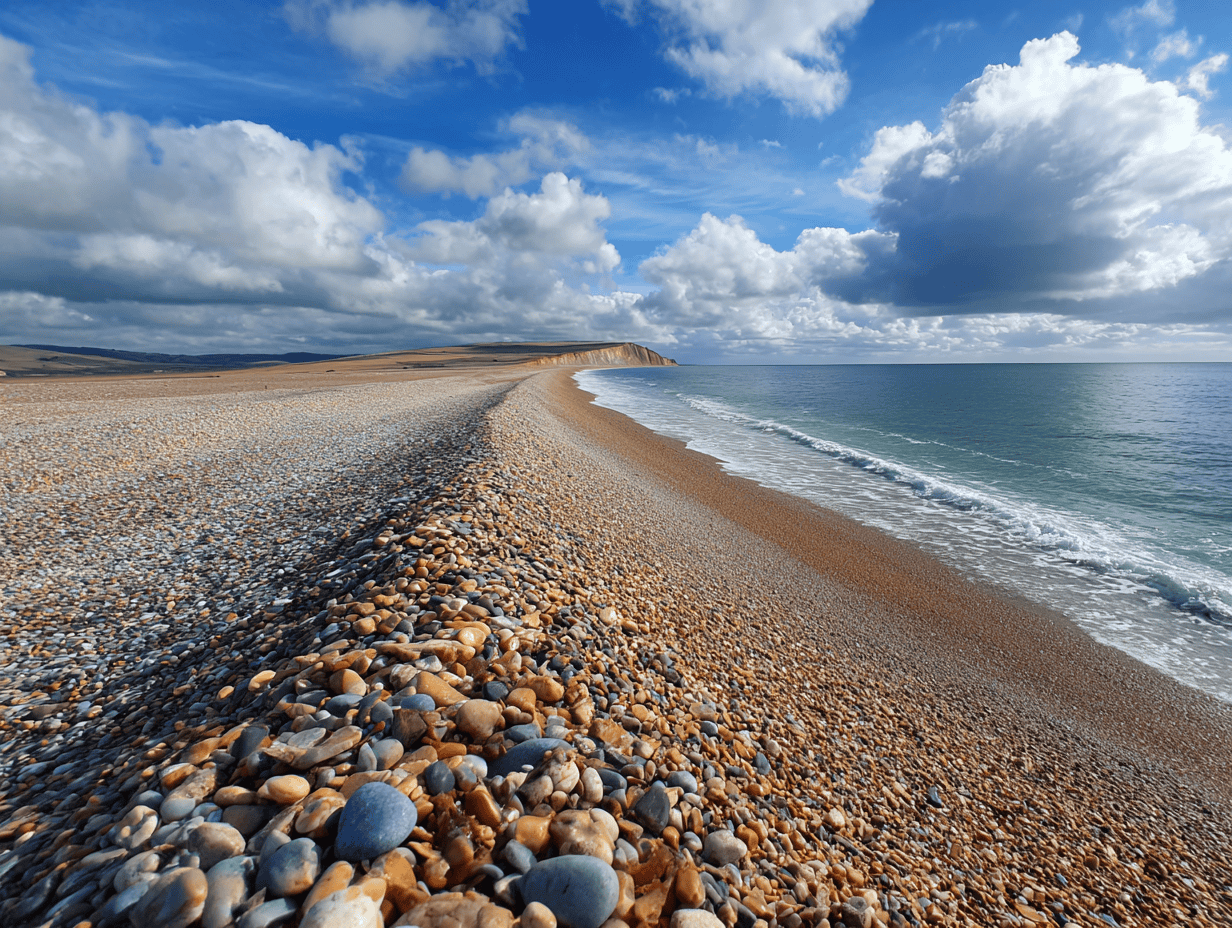
The big boulders from old cliff falls are particularly productive glass catches in the crevices between them and sits waiting. Work the strandline first, then down through the pebble ridges toward the waterline. Dogs are welcome here all year round.
Central area– in front of the Heritage Centre and the beach huts. Mostly families and fossil hunters in season. Worth a quick scan of the strandline but not the main glass section. Dogs are restricted from May to September.
West Beach runs from the River Char west to about the end of the promenade, in front of the Heritage Centre and the beach huts. Most families and fossil hunters end up here in season. The pebbles are smaller here, and the dump material has drifted further from its source, so it’s worth a scan of the strandline after storms, but it isn’t the main event. Dogs are excluded from this section between 1 May and 30 September.
One important note: stay away from the cliff base at all times. Black Ven has the largest mudslides in Europe, and cliff falls are a regular occurrence, not a dramatic exception. The glass comes from the cliffs, but you find it on the foreshore after the sea has brought it to you. You do not need to be anywhere near the cliff face to hunt it. Recent years have seen serious falls. Take the warnings on site seriously.
Key Tip:
At Charmouth, don’t just hunt the open beach. The crevices between old cliff-fall boulders near Black Ven act like natural traps where heavier Victorian glass settles and remains protected between tides.
Difficulty Level
Beginner → Intermediate
Charmouth is approachable but rewards people who understand:
- cliff-fall structure
- material movement
- historical source areas
Hunting Style
“Historical Source Hunting”
Charmouth is a perfect example of knowing where the material originally came from.
That’s what separates random beach walking from targeted sea glass hunting.
Dog-friendly?
Seasonal, and it works out well for hunters. East Beach, east of the River Char and your main hunting ground, has no dog restrictions at any time of year. West Beach, from the river west to level with the end of the promenade, excludes dogs from 1 May to 30 September.
So in summer, cross the footbridge and head east, and you’re on an unrestricted beach with the best glass on it. Out of season, both beaches are open and dogs can be off-lead on either.
One rule catches people out year-round: dogs must be on a lead at all times in the car parks and on the footpaths around the foreshore, including Lower Sea Lane, even in winter. Charmouth Parish Council staff can issue fixed penalty notices, so clip on before you leave the car.
Charmouth village has dog-friendly pubs, The George and The Royal Oak, both a short walk from the beach. Check our Yappy Places listing for Charmouth for more options.
Practical information
Parking: Foreshore Car Park right at the beach (DT6 6LR), pay and display, operated by Charmouth Parish Council. Fills quickly on summer weekends; arrive early or use the overflow car park halfway down Lower Sea Lane. Take change; phone signal can be patchy for app payments.
Toilets: Public toilets at the Foreshore Car Park and at the Heritage Centre. Reliable and well-maintained.
Food and drink: The Beach Café next to the Heritage Centre is the obvious stop, with good views, a standard café menu, and dog-friendly outside seating. The George and The Royal Oak in the village centre are both worth knowing about for a post-hunt lunch.
Getting there without a car: The X53 Jurassic Coaster bus runs along the Dorset coast, connecting Charmouth with Lyme Regis, Bridport, Weymouth and Bournemouth. From London, train to Axminster, then the bus is the practical route. Charmouth is about two miles from Lyme Regis. Don’t be tempted to walk between them along the beach: that route passes directly beneath Black Ven, where the mudslides are, and the tide can cut you off. Use the clifftop coast path instead.
Accessibility: The Foreshore Car Park and the area around the Heritage Centre are accessible. The beach itself is shingle and uneven, not suitable for wheelchairs. The Heritage Centre has ramped access at the rear.
What to bring
- Sturdy shoes or wellies – shingle is uneven underfoot, and the East Beach section is rougher around the cliff fall boulders
- Two bags: one for glass, one for fossils – you will want both
- A hand rake for working pebble ridges
- Layers -Lyme Bay is exposed to southwesterly weather, and the wind off the water can be sharp
- Tide times checked before you leave – the tidal range here is generous, and timing the ebb makes a real difference
- Cash or coins for the car park – signal for apps can be unreliable
The history behind the glass
The story of Charmouth’s glass starts at the clifftop, not the beach.
From the Victorian era until the 1970s, the land east of Charmouth and Lyme Regis was used as the area’s municipal rubbish dump. The clifftop at The Spittles, just east of the town, received over a century of domestic waste: bottles, jars, ceramics, ironwork- anything that needed disposing of- while the sea quietly worked its way inland below it.
The original dump site was probably comfortably inland when it was first established. By the time the council stopped using it in the 1970s, the cliff edge had retreated to within reach of the material, and it was only a matter of time.
The 2008 landslide brought the reckoning. Three-quarters of a million tonnes of debris came down, exposing the dump layers in the cliff face and scattering its contents across the beach. The Lyme Regis Museum documented fragments that had lain buried for generations, including, memorably, a glass eye and a set of false teeth. Most of what came down was less exotic: broken bottles, ceramic shards, domestic glassware. All of it went into the sea.
Below the dump, the cliffs themselves are Jurassic Blue Lias and mudstone laid down 180–200 million years ago in the warm shallow seas that covered this part of England. The same geological process that releases ichthyosaur skeletons and ammonites from the cliff face also releases the Victorian glass above it. Everything erodes in the same direction, toward the water, and the sea sorts it all out.
Black Ven, the great cliff between Charmouth and Lyme Regis, has the largest mudslides in Europe. The reason is geological: porous limestone above, clay below, and water that gets into the limestone but can’t drain through the clay.
After wet winters, the whole face moves. It has been doing so for as long as the sea has been here, and it will keep doing so long after the Victorian bottles are gone. Every storm season adds new material to the foreshore. Every low tide is different from the one before.
From beach to jewellery
Found something in the Charmouth shingle? At Mermaid Tears, every piece starts exactly where you’ve been standing, hand-hunted from UK beaches and handmade into something lasting. Browse the Sea Glass collection.
Disclaimer: Tide times, dog restrictions, parking charges and beach conditions change regularly. Always verify before visiting. The cliffs at Charmouth and Black Ven are actively eroding with regular mudslides; never stand below the cliff face or approach fresh cliff falls. Beach byelaws are updated annually -check with Charmouth Parish Council or Dorset Council for the most current dog restriction rules.
Last updated: Aug 2026
Frequently asked questions
Is Charmouth good for sea glass? Yes, it’s a genuine Good beach with a specific historical source behind the glass. The Victorian clifftop dump east of the beach has been releasing material into the Channel for over a century. Head east from the Heritage Centre toward the Black Ven cliff fall area for the best hunting. If expectations are set correctly, you’ll come home with a decent haul alongside whatever fossils the tide has left out.
Where exactly should I look for sea glass at Charmouth? East of the Heritage Centre, across the footbridge over the River Char, toward the Black Ven cliff fall area. The large boulders from old cliff falls are particularly productive for glass-gathering in their crevices. Work the strandline first, then work down through the pebble ridges as the tide ebbs.
Can I find fossils and sea glass on the same visit? Absolutely, and you should plan for both. The same low tide conditions that expose fresh glass also expose fossil material washed from the Blue Lias cliffs. Ammonites, belemnites and gryphaea are common finds. Bring two bags.
Are dogs allowed at Charmouth beach? East Beach, east of the River Char, is unrestricted all year, and it’s also the best section for glass. West Beach excludes dogs from 1 May to 30 September. Dogs must be on a lead in the car parks and on the footpaths around the beach all year round.
Is it safe to walk near the cliffs at Charmouth? No, stay well away from the cliff base at all times. Black Ven has the largest mudslides in Europe, and falls happen without warning, particularly after wet weather. The glass comes from the cliffs, but the sea brings it to the foreshore. You don’t need to be anywhere near the cliff face to find it.
What is the best time of year to visit Charmouth for sea glass? Winter and early spring. Post-storm visits after southwesterly Channel weather are the most productive, as the cliff face sheds material and the strandline is refreshed. Low tide on the ebb, early morning before the fossil-hunting tours arrive.
More Beaches
Check out the Full Dorset and Hampshire Guide or plan your trip with our UK Sea Glass Map.