Finding red sea glass isn’t just luck. It’s history.
There are finds that make you stop walking. That makes you crouch down slowly, as if moving too fast might make it disappear. That makes you hold your breath a little while you pick it up and turn it over in your fingers to make sure you’re seeing it right. You scream with delight and imagine all the things you can make with it.
Red sea glass is one of those finds,
It’s not just rare in the way that any uncommon thing is rare. It’s rare in a way that experienced hunters, people who’ve been at this for decades, who’ve walked hundreds of beaches and filled dozens of jars, still get genuinely excited about. A piece of genuine red sea glass on a British beach is a real find. Some hunters go years without one.
Here’s everything you need to know about why, and what you can do to improve your chances and of course, where you can find it.
Why is red sea glass so rare?
The rarity of red sea glass comes down to one simple fact: red glass has always been expensive and difficult to make.
Most glass gets its colour from metal oxides added during manufacture. Red glass historically required gold chloride, actual gold, as the colouring agent, or later, selenium and cadmium compounds. Both were costly, and the process was technically demanding. Red glass was never a standard bottle colour. It was never used for everyday packaging.
This means the sources of red glass that ended up in the sea were always limited. The main ones are:
Car tail lights and indicator lenses. From roughly the 1920s onwards, automotive glass produced the majority of red sea glass now washing up on British beaches. Old cars dumped, scrapped or lost near coastal areas contributed glass that’s been tumbling ever since. The thickness of car lens glass is chunkier than bottle glass, meaning red pieces often have a distinctive weight and depth of colour.
Ships’ navigation lights. Red is the colour of the port-side navigation light on a vessel. Ships lost at sea, wrecks along the coast, and discarded equipment over centuries all contributed to navigation glass. This is some of the oldest red sea glass and can be beautifully thick and deeply coloured.
Warning lanterns and industrial glass. Red glass in railway signals, coastal warning lights, and industrial signage found its way into the sea along coastlines with heavy maritime or industrial activity.
Vintage glassware. Red glass bowls, vases, decorative items, these occasionally end up in the sea via household waste routes, though this is a less common source than the above.
The result is that the total amount of red glass that ever reached UK coastlines was a tiny fraction of the green, brown and white that came from mass-produced bottles. What’s there now has been there a while. And it’s been getting picked up for a long time.
What does red sea glass look like?
The colour range is wider than most people expect from the word “red.”
Genuine red sea glass can range from deep ruby or burgundy to bright tomato red, soft coral, and even dark amber-red, depending on the original glass composition and age. Car tail light glass often produces a vivid, slightly orange-toned red. Navigation glass can be a deeper, cooler ruby.
The frosting that characterises all genuine sea glass can make colour identification trickier. A dry piece of red sea glass sometimes looks darker and less obviously red than it does when wet. One of the oldest tricks in sea glass hunting: lick your thumb and wet the piece. The colour immediately becomes more saturated, and the frosting temporarily disappears, giving you a clearer read on what you’ve actually got.
Thickness is a good indicator of origin. Thin, lighter pieces are more likely to come from decorative glassware. Chunky, heavy pieces with good colour depth often come from automotive or navigation sources.
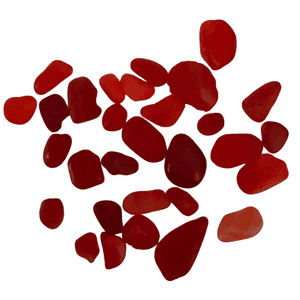
Could it be something else?
Yes, it could, and it is worth checking before you get too excited.
Brick or tile fragment. Red-coloured ceramic and terracotta fragments are common on UK beaches, particularly near industrial coastlines. The giveaway is texture: ceramic has a matte, non-glassy surface, even when tumbled. Glass has a smoothness that ceramic never quite achieves. Hold a suspected piece up to light; glass transmits it, ceramic doesn’t.
Amber glass. Some amber or brown glass can look reddish in certain light. The wet-the-piece test helps here: true red is unmistakable when hydrated.
Plastic. Modern red plastic fragments tumble in the sea and can superficially resemble sea glass. Plastic is noticeably lighter, warmer to the touch, and doesn’t have the same frosting pattern as genuine glass.
If you’ve found a piece and you’re genuinely unsure, GlassLore can help: upload a photo, and the identification tool will give you a read on what you’ve got.
Where to find red sea glass in the UK
Red sea glass can technically turn up on any UK beach, but the odds improve significantly on beaches with the right history behind them.
Check out our map below to see where your best chance to find red. The score on the right is the Seaglass score; it takes current conditions, churn, wind, recent storms and moon phases to give you a score. Check out my interactive map for more colours and scores, or check the top 15 glass beaches right now.
This is a static list. Do you want to know where the best place to find red glass is right now?
Beaches near old shipwreck sites are worth prioritising. Navigation glass from wrecked vessels has been tumbling longer and tends to produce the deepest coloured, most well-frosted pieces. The North Yorkshire coast, the Cornish coastline and the Northumberland shore all have significant wreck histories.
Beaches near former industrial or port areas, anywhere that had maritime activity, scrapping yards, or coastal industry in the early to mid-20th century, are more likely to have automotive glass in the mix.
Storm-disturbed beaches are always worth visiting after significant weather. Storm action turns up red pieces buried under shingle for years and brings them to the surface. Timing a visit in the days after a good storm, on the right beach, at the right tide, is the closest thing there is to a reliable strategy for rare glass.
Low tide, long beaches. More time and more ground covered equals better odds. Check the Sea Glass Score before you go; beaches with high scores after recent storm activity are your best bet for rare finds.
For the best beaches to find rare glass in general, the best UK sea glass beaches guide is the place to start, and the interactive map lets you find beaches by location.
How to spot red sea glass on the beach
This is where experience counts, but a few things can help.
Hunt in good light. Low-angled morning light, particularly after a tide has washed the beach, makes glass colours pop against wet pebbles in a way that flat midday light doesn’t. Experienced hunters often say the hour after high tide in morning light is the sweet spot.
Slow down. Red pieces are small, often no bigger than a thumbnail. On a productive beach, the temptation is to cover ground. Resist it. The hunters who find rare glass spend more time on less ground.
Look where others don’t. The tideline gets the most attention. Rock crevices, the base of cliffs, under overhanging ledges, the edges of pebble ridges- these spots get less traffic and can hold pieces that have been missed.
Trust your peripheral vision. Colour catches the eye before shape does. When something registers as slightly wrong against the grey-brown pebble background, slightly warm, slightly vivid, stop and look properly. Red glass often announces itself this way before you’ve consciously spotted it.
What is red sea glass worth?
Red is one of the most sought-after colours among collectors and jewellery makers, and pieces in good condition, well-frosted, reasonably sized, and good colour command prices that common glass doesn’t come close to.
Small, well-frosted red pieces regularly sell for several pounds each on craft marketplaces. Larger pieces, particularly chunky ones with good depth of colour, can fetch significantly more from the right buyer. If you find multiple pieces on a single hunt, which is unusual but not impossible on the right beach in good conditions, you’ve found something genuinely valuable.
For jewellery use, red sea glass set in silver is striking in a way that almost no other material matches. The frosted surface against metal, the depth of colour, and the knowledge that the piece might be a hundred-year-old navigation light from a ship that no longer exists- that’s a story you can’t buy.
What to do when you find one
First: take a breath. Then take a photo before you pick it up, in context on the beach. You’ll want it later.
Check it carefully. Is the frosting genuine? Are the edges properly rounded? Does the colour hold when wet?
Store it separately from your other finds, loose in a pocket, where it is less likely to chip. A small piece of cloth or a separate zip-lock bag protects it for the journey home.
And then go back to hunting, because where there’s one piece of red glass, the same conditions that put it there might have put more nearby.
Found something and not sure what it is? Try GlassLore, upload a photo for identification. Want to know which beaches are producing rare glass right now? Check the Sea Glass Score.
