The Old Town Shore
Hartlepool Headland is worth hunting for sea glass, especially along North Sands and around Middleton Beach. North Sands is the main target, with a huge low-tide foreshore broken up by old pipes, rubble and industrial remains, while Middleton adds a smaller historic dumping-ground hunt. Green, brown and white are the everyday finds, with amber, blue and aqua appearing occasionally.
Where to hunt: North Sands industrial foreshore → rubble & pipe edges → Middleton Beach → Fish Sands / Block Sands as quick extras
- Rating: Fair Beach
- Terrain: Easy
- Level: Intermediate
- Dog friendly: Seasonal (Fish Sands and Block Sands banned 1 May to 30 September; Hartlepool North Sands dog-friendly all year)
- Location: Hartlepool, County Durham
- Sat Nav: TS24 0JD – Headland / Borough Hall car park
- Common colours: Green, brown, white
- Rare colours: Blue, amber
Today at Hartlepool
Check below for the latest ShoreSense and tide times. Scroll down for your full 7-day forecast
Hartlepool Headland sea glass conditions
Hartlepool Headland
County Durham — Sea settling
61/100 — Good, best window 14:01–15:01.
Best window is 14:01–15:01 with big seas in the last few days, now easing — glass should be washing in and offshore wind, so the chance of fresh finds is good today.
Good window, though this beach is hit-and-miss
Ranked #68 in the UK ShoreSense leaderboard today.
| Tide | Time | Height |
|---|---|---|
| High water | 00:08 | 4.3 m |
| Low water | 06:49 | 1.5 m |
| High water | 13:01 | 4.5 m |
| Low water | 19:04 | 1.8 m |
Best For:
- Low-tide foreshore hunting
- Industrial history
- Sea pottery and industrial finds
- Year-round dog walks on North Sands
- Quiet winter hunts
- Combining with Seaham or Seaton Carew
Why Hartlepool Headland – a medieval shore with industrial bones
Hartlepool Headland is one of those places where the layers of history press close to the surface. The medieval town wall still stands at the Fish Sands. The Heugh Battery Museum sits above the shore where German naval shells landed in 1914, the first attack on British mainland soil in the First World War. And somewhere between the ruins of industry and the North Sea tide, there’s sea glass.
The Headland doesn’t have the concentrated reputation of Seaham, fifteen miles up the coast. But it sits at the heart of the same industrial corridor, a stretch of coastline that spent over a century as one of Britain’s most productive (and polluted) shorelines. Steelworks, chemical plants, a magnesia works at the North Sands, Victorian harbour activity: the waste from all of it has been slowly redistributed by the North Sea.
One sea glass guide explicitly names Hartlepool Beach as a lesser-known gem, citing its proximity to historical glassmaking sites. The ‘Waves’ sculpture at nearby Seaton Carew was made from sea glass collected at Middleton Beach, a Victorian dumping ground right on the Headland’s doorstep.
This is a Fair beach, honest finds rather than spectacular hauls, and most rewarding when approached as part of a day that also takes in the Headland’s extraordinary history. But it’s genuine sea glass territory, the kind of place that rewards a quiet low-tide morning with something worth pocketing.
What you’ll find here
Colours commonly found: Green, brown, white
Occasional finds: Blue, Aqua, Amber, Turquoise
Rare finds: Cobalt Blue, Black, Lavender, Red
Bonus: Interesting industrial rubble and the occasional Victorian fragment from the Middleton dumping ground
Find something special? Use our sea glass scanner, GlassLore, to find out rarity, value and history; then you can share to our finds gallery and, more importantly, earn points to climb our hunters leaderboard – are you ready to compete?
When to go
Low tide is the key, particularly on North Sands, where a vast stretch of sand opens up as the water drops, studded with old pipes from the former magnesia works. Those pipes and the rubble around them are a good sign you’re in the right place. They break up the open sand and give glass something to settle against.
Winter is the best season. North Sea swells do their work on the foreshore, and North Sands, already quiet in summer, is often empty. The ideal Hartlepool hunt is an ebbing spring tide the day after a north-easterly blow.
Fish Sands and Block Sands on the Headland itself are compact and sheltered. They’re fine for a quick look, but less productive than North Sands, and closed to dogs from May to September.
Hunting Style
“Industrial Foreshore Hunting”
- Follow the ebbing tide out across North Sands
- Work the edges of pipes, rubble and old concrete, wherever they break up the open sand
- Check the strandline after swell for lighter pieces
- Finish at Middleton Beach on the harbour side, around low water
- Pace yourself, because the foreshore is huge
This is a beach for covering ground quickly, then slowing right down wherever the old industry interrupts the sand.
Today’s ShoreSense Score & Best Hunting Window
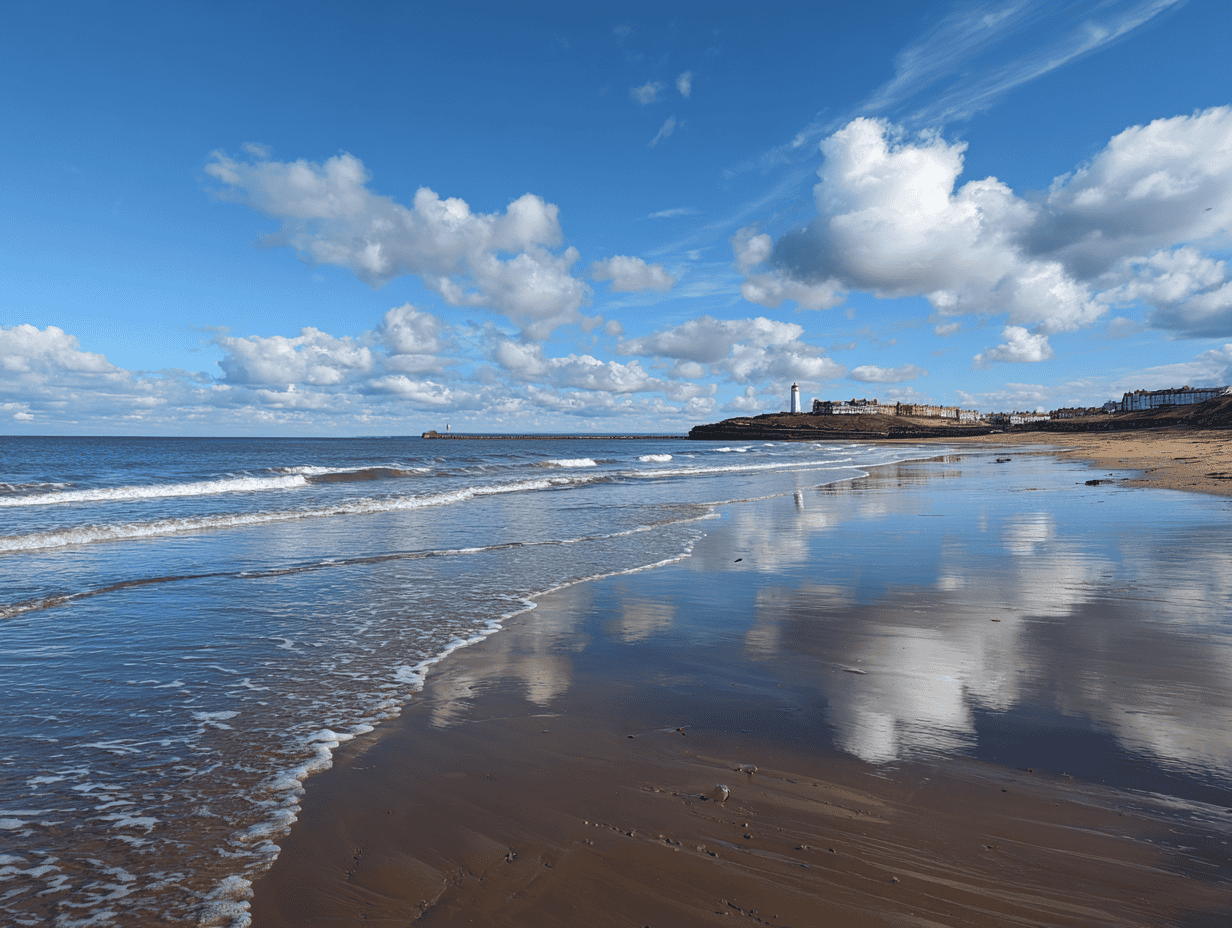
Hartlepool sits on the North Sea coast at the edge of the Tees Bay, with a tidal range of around 4.5 to 5 metres on a spring tide, a generous range that exposes a wide foreshore at low water, particularly along the North Sands stretch.
The ShoreSense widget below combines recent marine conditions, tide timing and practical hunting weather to show today’s overall ShoreSense Score, Hunting Potential, Comfort and the best available hunting window for Hartlepool. It uses UKHO tide data alongside current marine and weather inputs to help you judge whether conditions look promising for a hunt.
Time your visit to arrive as the tide is ebbing and work the foreshore as it drops; the North Sands opens up substantially at low water.
Compare your Beaches on our Hot Beaches page, updated daily with the best beaches for today, the next seven days, as well as the movers and shakers.
Where to look
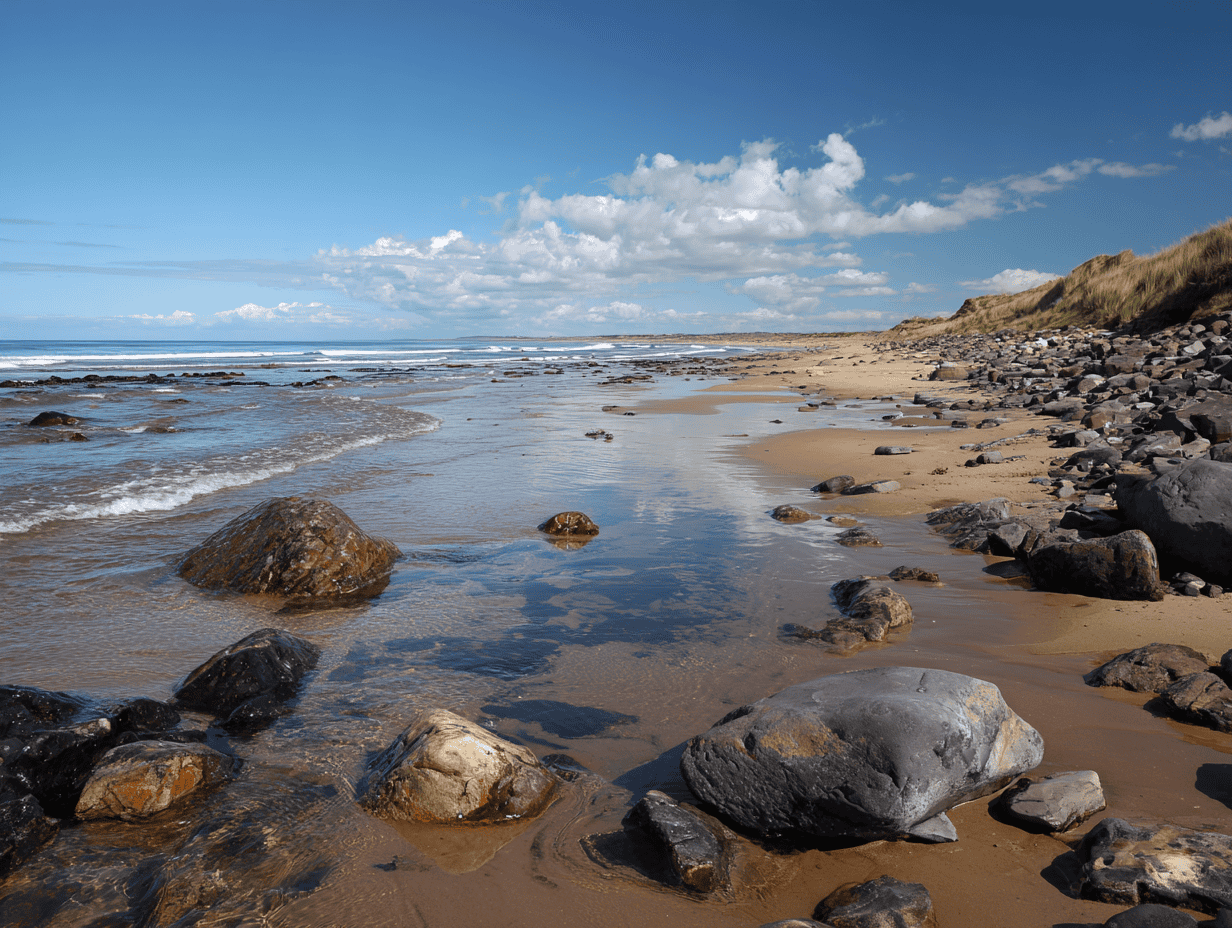
Hartlepool North Sands is the main target. The beach runs north-west from the Headland, past the remains of the old magnesia works and beneath derelict Steetley Pier, towards Hartlepool Golf Club and on to Crimdon. At low tide, a huge foreshore is exposed, broken up by old pipes and rubble. Work those edges rather than the open sand. To get there, park on West View Road, walk through the tunnel under the railway, past the old industrial buildings, and turn right towards the pier. Steetley Pier is derelict and closed off, so admire it from the sand. Dogs are welcome all year.
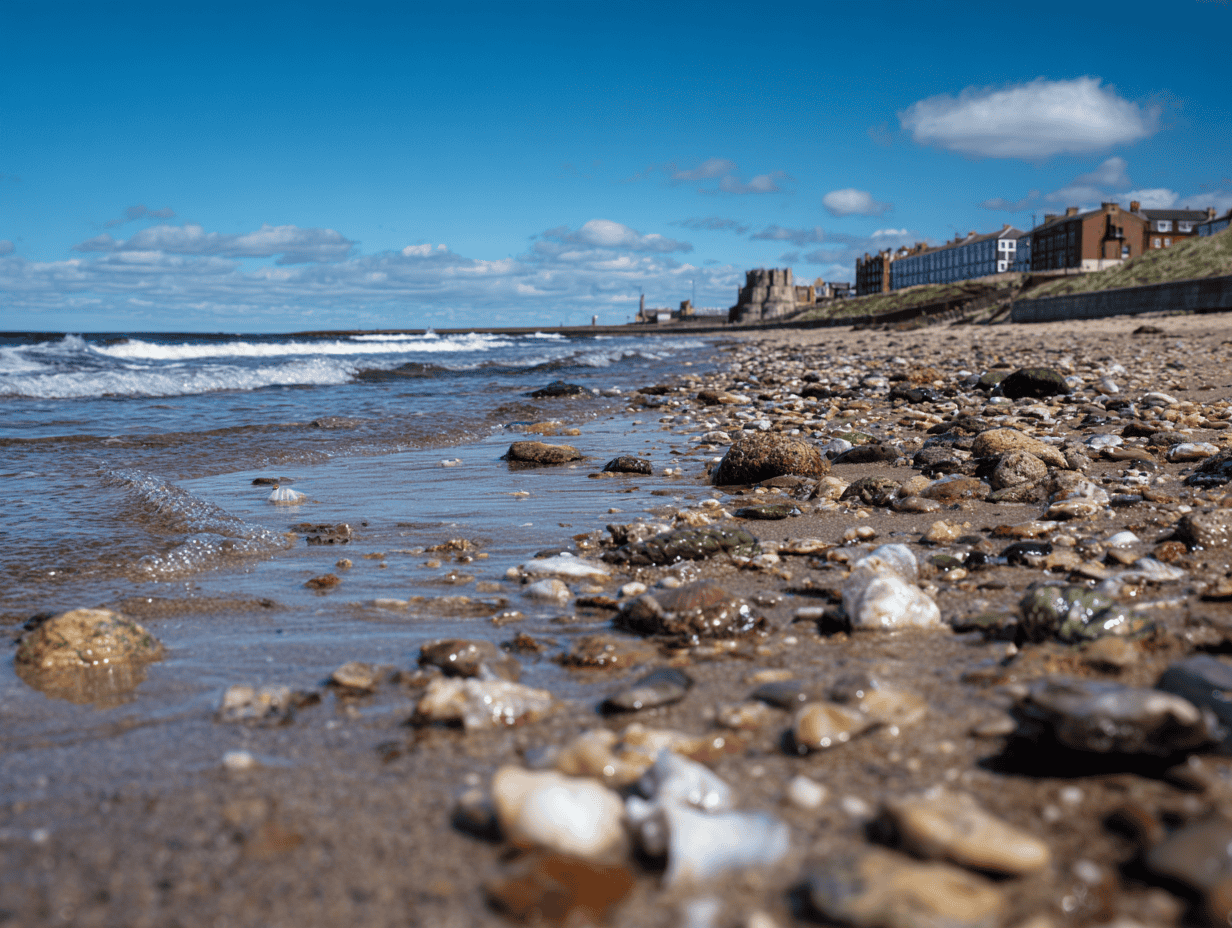
Middleton Beach sits on the harbour side, between the Headland and the marina. This small beach was a Victorian dumping ground and has a documented history of turning up sea glass. It’s where the glass for Seaton Carew’s ‘Waves’ sculpture was collected, so it’s worth including in any Headland visit.
Fish Sands and Block Sands are the two small beaches on the Headland itself. They’re sheltered, with the medieval town wall as a backdrop, but not the most productive for glass, and they’re covered by the summer dog ban.
On North Sands, keep an eye on the tide. The foreshore is flat and wide, and the water comes back across it faster than you’d expect.
Key Tip
Prioritise North Sands and work the foreshore around the old industrial remains at low tide. The combination of former industry, rubble deposits and tidal sorting creates far more productive hunting conditions than the smaller beaches around the Headland.
Difficulty Level – Intermediate
- A vast foreshore can be tiring to cover thoroughly
- Industrial debris and uneven ground require careful footing
- The best hunting areas are exposed around lower tides
- Productive material is often hidden amongst rubble and shingle
- Some sections feel remote despite being close to town
Hunting Style – The Industrial Explorer
Hartlepool rewards hunters who enjoy searching beaches with a story. Work the strandline and shingle pockets around North Sands first, paying particular attention to areas where industrial debris interrupts the natural shoreline. Then explore Middleton Beach, where historic dumping has created one of the area’s most interesting sea glass sources.
Beach Personality
Hartlepool feels unapologetically industrial, and that is exactly what makes it interesting. Harbours, former factories, Victorian dumping grounds and centuries of maritime activity have all left their mark on the coastline. While the Headland’s smaller beaches offer history and atmosphere, North Sands is where the serious hunting begins. It is a beach that rewards curiosity, persistence and an appreciation for the way industry and the sea have shaped the shoreline over generations.
Dog friendly?
Seasonal. Dogs are banned from Fish Sands and Block Sands on the Headland, including the lower promenade and paddling pool, from 1 May to 30 September. Hartlepool Borough Council enforces the ban, and a breach can mean a fixed penalty notice or prosecution.
Hartlepool North Sands has no dog restrictions at any time of year, which is lucky, because it’s also the best hunting ground. If your dog is anything like Trigger, a wide, usually empty beach with pipes to investigate and a mile of sand to run on is about as good as it gets. Keep them clear of the derelict pier.
Heading south to Seaton Carew as well? Its central beach has a summer dog ban too, and it’s where the little tern colony nests from April to August.
Check Yappy Places for dog-friendly stops around Hartlepool after your hunt.
Practical information
Parking: For the Headland beaches, the main free car park is opposite Headland Library and Borough Hall on Middlegate (TS24 0JD), with accessible bays. There is also more limited parking near Heugh Battery. For North Sands, West View Road is the usual access point before walking through the railway tunnel to the beach; for Middleton Beach, marina parking is the more convenient option. Check local restrictions and signage before leaving the car
Toilets: Facilities at the marina and along the Headland.
Food and drink: The Headland has pubs and cafes, and Hartlepool Marina has a good range of eating options. Fish and chips are a strong suit in this part of the world.
Getting there without a car: Hartlepool train station is on the Durham Coast Line with services to Middlesbrough and Sunderland. The Headland is around a 20-minute walk from the station, or a short bus ride.
Accessibility: The North Sands access via the railway tunnel is flat and manageable, though the beach itself involves soft sand before firmer ground is reached at low water. Fish Sands and Block Sands on the Headland are accessible via the promenade.
What to bring
- Sturdy shoes or wellies – the North Sands foreshore can be uneven around the industrial rubble
- A small bag or container for finds
- A tide table – the foreshore only opens up properly at low water
- Layers – Hartlepool Bay is exposed to the north-east
- A dog lead for navigating the Headland section if visiting between May and September
The history behind the glass
Hartlepool’s industrial history is written into the sand. The town began as a medieval port and fishing settlement — the Fish Sands take their name from the fishing community that launched cobles from this shore for centuries. The 14th-century town wall still stands above the beach, a reminder of a time when Hartlepool was a fortified harbour town under threat from Scottish forces.
Then came industry. By the 19th century, Hartlepool was shipbuilding, steel-making, and chemical production at scale. The North Sands were home to the Steetley Magnesia Works, which extracted magnesia from seawater pumped through a pier that still stands now as a surfing landmark. Industrial waste entered the sea as a matter of routine. The Middleton stretch nearby served as a Victorian dumping ground, a fact commemorated in the 2018 ‘Waves’ sculpture at Seaton Carew, which used sea glass collected by local schoolchildren from these very sands.
The Headland also carries the memory of something more dramatic. On 16 December 1914, German warships opened fire on Hartlepool, the first attack on British mainland soil in the First World War. Over 1,100 shells were fired in forty minutes. The Heugh Battery, which still stands above the Fish Sands, fired back. A hundred and thirty people were killed. The Headland you’re walking on has an extraordinary history. The sea glass is one small, frosted piece of it.
From beach to jewellery
Found something on the Hartlepool shore? At Mermaid Tears, every piece starts exactly where you’ve been standing, hand-hunted from UK beaches and handmade into something worth keeping. Browse the collection.
Disclaimer: Tide times, dog restrictions, parking charges and beach conditions change regularly. Always verify before visiting. Beach byelaws are updated annually. Hartlepool Borough Council sets the seasonal dog ban dates and boundaries, so check hartlepool.gov.uk for the most current information.
Last updated: September 2026
Dog rules checked: September 2026 – Hartlepool Borough Council
Frequently asked questions
Is Hartlepool good for sea glass hunting? It’s a fair destination rather than a dedicated hotspot. The most productive stretch is Hartlepool North Sands, which has an industrial history and a foreshore that opens up well at low tide. The Middleton area near the marina has a documented history as a Victorian dumping ground. Combine it with a visit to Seaham, fifteen miles north, for a fuller North East sea glass day.
Where exactly should I look for sea glass at Hartlepool? Hartlepool North Sands is the primary target, accessed via West View Road and the railway tunnel. The Middleton Beach area between the Headland and the marina is also worth checking. Fish Sands and Block Sands on the Headland itself are more compact and less productive.
Are dogs allowed on Hartlepool Headland beaches? Fish Sands and Block Sands on the Headland are subject to a seasonal dog ban from 1 May to 30 September. Hartlepool North Sands is dog-friendly year-round.
What’s the history of the glass at Hartlepool? The area has a long industrial history, steel works, chemical plants, a magnesia works, and Victorian harbour activity, all of which contributed waste to the foreshore. Middleton Beach, close to the Headland, was a known Victorian dumping ground. The ‘Waves’ sculpture at Seaton Carew was made from sea glass collected there.
What else is worth seeing at Hartlepool Headland? The Heugh Battery Museum is the only First World War battlefield site in Britain and is well worth a visit. HMS Trincomalee at the Maritime Experience is one of the oldest warships still afloat. The medieval town wall above Fish Sands is a remarkable survival. It’s a genuinely fascinating place.
Can I combine Hartlepool with Seaham in a day trip? Easily, they’re about fifteen miles apart on the Durham Heritage Coast. Seaham is the priority for volume sea glass; Hartlepool adds history and a different character to the day.
More Beaches
Check out North East Sea Glass Full Guide or our interactive map to find more beaches; you can even filter by colour.