Palmerston Forts, Royal Navy History and Solent Shingle
Fort Gilkicker is worth trying for sea glass. Green, brown and white are the most common finds, with occasional blue and aqua. Search the coarse shingle around the fort and work east towards the old pier around low tide, especially after rougher southwesterly weather.
Best hunting stretch: Fort Gilkicker foreshore → coarse shingle ridges around the point → quieter eastern stretch towards the old pier.
- Rating: Good Beach
- Terrain: Easy
- Level: Beginner
- Dog friendly: Yes, all year round at the Fort Gilkicker end of Stokes Bay (seasonal restrictions apply to the central Stokes Bay beach section only)
- Location: Stokes Bay, Gosport, Hampshire
- Sat Nav: PO12 2DW (Gilkicker Car Park)
- Common colours: Green, brown, white, aqua
- Rare colours: Cobalt Blue, Black, Lavender, Red
Today at Gilkicker Beach
Check for the latest ShoreSense Score and tide times. Scroll down for the full 7-day forecast
Fort Gilkicker sea glass conditions
Fort Gilkicker
Hampshire — Sea settling
83/100 — Excellent, best window 13:30–16:30.
Best window is 13:30–16:30 with big seas in the last few days, now easing — glass should be washing in and spring tides (near full/new moon), so the chance of fresh finds is excellent today. Great combo of sea state and weather — worth the trip.
Strong window at a solid beach
Ranked #20 in the UK ShoreSense leaderboard today.
| Tide | Time | Height |
|---|---|---|
| Low water | 02:36 | 1.4 m |
| High water | 10:03 | 4.4 m |
| Low water | 15:00 | 1.4 m |
| High water | 22:08 | 4.3 m |
Best For:
- Military history enthusiasts
- Harbour and naval history hunting
- Quiet beachcombing
- Older sea glass
- Low-tide shingle hunting
- Intermediate hunters
- Long systematic searches
- Less-crowded beaches
Why Fort Gilkicker – the Solent’s most historically loaded shingle
Most sea glass beaches earn their rating from glass volume or colour variety. Fort Gilkicker earns it from something harder to quantify: the sheer density of history packed into this shingle headland at the eastern end of Stokes Bay.
Stand on the beach below the great curved granite bulk of the fort, and you are standing at the epicentre of over two centuries of Royal Navy activity. Portsmouth Harbour is less than two miles to the east, the home of the British fleet for longer than records exist. The Solent sea forts sit out in the water in front of you, built from stone blocks trimmed and prepared on this very beach in the 1860s. The pier and narrow-gauge railway that served the submarine mine experiments between 1879 and 1912 ran from this foreshore.
During both World Wars, the guns of Fort Gilkicker were manned to defend the western approaches to Portsmouth. The whole stretch of coast is saturated with it.
That sustained military and industrial activity, construction workers, naval personnel, garrison troops, and experiment teams is exactly the kind of human presence that deposits glass in the shingle over generations. Add the Solent’s significant tidal range doing the tumbling work, and you have a beach that consistently produces well-frosted, varied glass to those who take the time to look properly.
This is not a headline-grabbing volume beach. The glass is there, but you need to read the foreshore carefully and work it methodically. What it gives you in return is a find that carries genuine weight, knowing that the green piece in your hand might have been thrown into the Solent by a Victorian engineering crew building the sea forts, or by a sailor heading out of Portsmouth Harbour in the years when the Royal Navy ruled the world’s oceans.
What you’ll find here
Colours commonly found: Green, brown, white
Occasional finds: Blue, Aqua, Amber, Turquoise, sea-worn pottery
Rare finds: Cobalt Blue, Black, Lavender, Red
Bonus: Victorian bottle bases, old pottery sherds, occasional clay pipe stems, interesting pebbles, including flint and chalk from longshore drift
Found something unusual? Try GlassLore, our free sea glass scanner, to explore what it could be and log your find to the gallery and, more importantly, earn points and climb the leaderboard.
When to go
The Solent tidal range is generous, and the beach here faces roughly south-southeast, not the open Channel, but the western Solent, which sees real tidal flow and moderate wave action. Post-storm is the best time, particularly after southwesterly weather pushing up through the western Solent. Winter months are quieter and more productive.
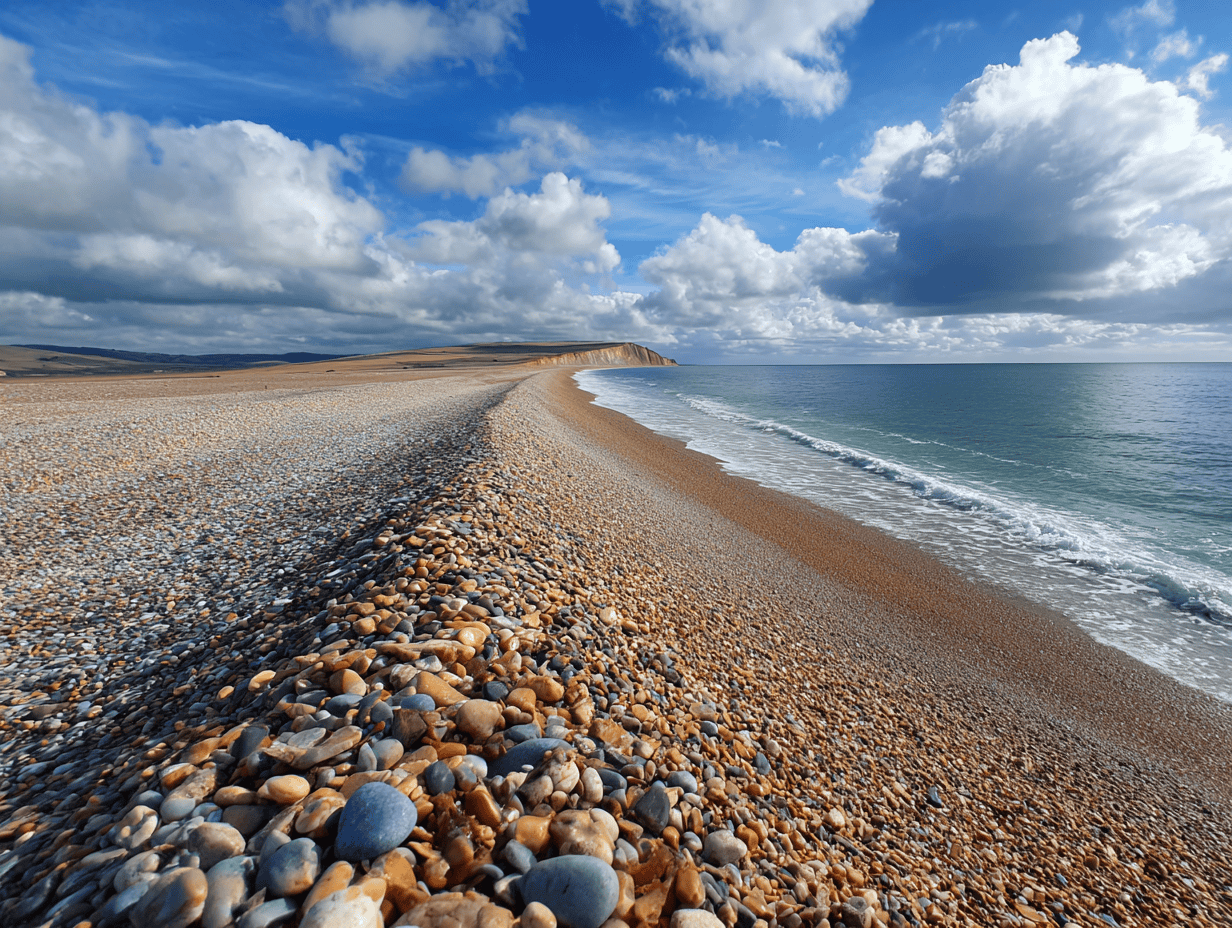
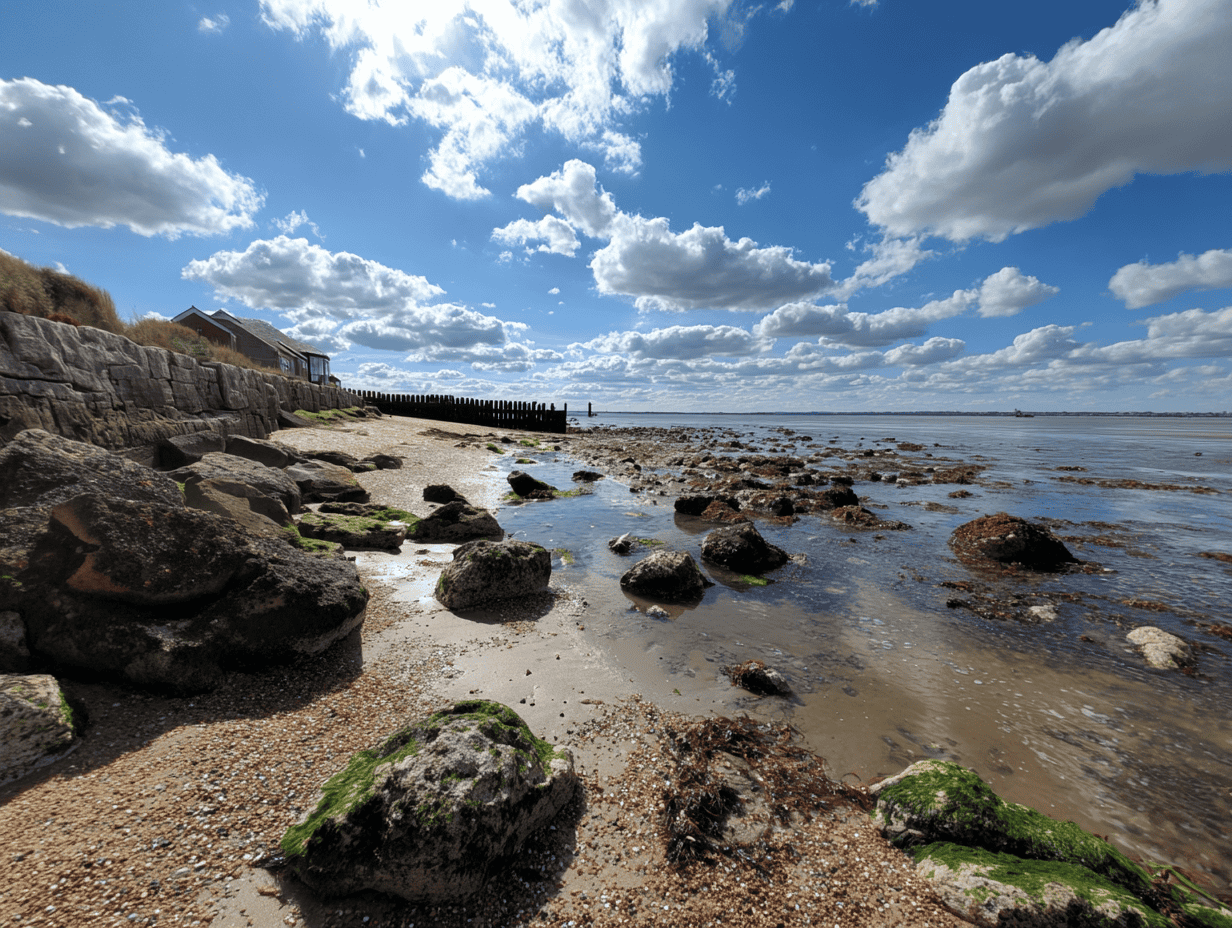
Low water spring tides expose the most foreshore. The beach profile is relatively flat, and the shingle extends well at low water, giving a good area to cover. Arrive on an ebbing tide and work the strandline first, then drop to the waterline. The glass tends to concentrate in shingle ridges and at the base of any rock armour sections.
The fort end of the beach sees very few dedicated sea glass hunters. Most visitors walk no further than the central Stokes Bay section, which means material isn’t being picked over. That quiet factor is worth something.
Today’s ShoreSense Score & Best Hunting Window
Fort Gilkicker sits on the south-facing shore of Stokes Bay, looking out across the western Solent towards Ryde and East Cowes on the Isle of Wight. The tidal range here is around 4 metres on a spring tide, generous for a sheltered strait, and the twice-daily flow through the Solent is vigorous enough to do real work on glass over time. Solent tides also behave unusually, with an extended stand at high water rather than a clean peak, so the falling tide runs quicker than you might expect once it turns.
Start on the shingle directly below Fort Gilkicker and work the coarser pebble ridges and freshly sorted material around the point rather than spending too long on flatter, undisturbed sections. Then continue east along the quieter Stokes Bay shingle, checking any newly exposed bands and strandline pockets, before finishing around the old pier stretch where the beach becomes less heavily used. Use today’s ShoreSense Best Window to choose when to arrive, then follow this Fort Gilkicker → coarse shingle ridges → eastern Stokes Bay → old pier progression once you’re there.
The ShoreSense widget below combines recent marine conditions, tide timing and practical hunting weather to show today’s overall ShoreSense Score, Hunting Potential, Comfort and the best available hunting window for Fort Gilkicker. It uses UKHO tide data alongside current marine and weather inputs to help you judge whether conditions look promising for a hunt.
Fort Gilkicker sea glass conditions
Fort Gilkicker
Hampshire — Sea settling
83/100 — Excellent, best window 13:30–16:30.
Best window is 13:30–16:30 with big seas in the last few days, now easing — glass should be washing in and spring tides (near full/new moon), so the chance of fresh finds is excellent today. Great combo of sea state and weather — worth the trip.
Strong window at a solid beach
Ranked #20 in the UK ShoreSense leaderboard today.
| Tide | Time | Height |
|---|---|---|
| Low water | 02:36 | 1.4 m |
| High water | 10:03 | 4.4 m |
| Low water | 15:00 | 1.4 m |
| High water | 22:08 | 4.3 m |
Where to look on the beach
The Fort Gilkicker foreshore is the primary target -the shingle immediately around and east of the fort itself, where the beach is at its most undisturbed, and the historical activity was most concentrated. The curved granite bulk of the fort sits right at the water’s edge at high tide; at low water, a wide shingle and sand foreshore opens up in front of it.
Work the strandline carefully, then the pebble ridges below it, then drop to the waterline. Glass concentrates wherever shingle has been sorted by wave action. Look for the coarser material; that’s where heavier, older glass accumulates.
The beach east of the fort continues around the headland towards the Angling Club and the old pier area. This stretch is even quieter and sees almost no foot traffic beyond anglers. Worth a slow, systematic walk at low water, the pier area in particular has potential given the naval and engineering activity that centred here.
The western Stokes Bay section -between the fort and the central car park is worth covering on the same visit, noting that the seasonal dog ban applies here from May to September. The glass is less concentrated than at the fort end, but the beach is wider, and you can cover more ground. Work groynes and strandline.
Keep your eye close to the shingle. Solent glass tends to be moderate in size, well-frosted, and blends easily with the grey and brown flint of the beach. The frosted edge catching the light is your tell.
Key Tip
Start at Fort Gilkicker itself and follow the coarsest shingle. The best glass usually sits where wave action has naturally sorted heavier material, especially around the fort foreshore and the quieter stretch leading toward the old pier.
Difficulty Level – Beginner
- Easy access along the foreshore
- Wide shingle beach with straightforward walking
- Productive hunting areas are easy to identify
- Large areas of exposed foreshore at low tide
- Suitable for beginners and experienced hunters alike
Hunting Style – The Historic Foreshore Hunter
Fort Gilkicker rewards hunters who work methodically through the shingle. Start with the strandline, then search the pebble ridges before moving down towards the waterline. The eastern stretch towards the old pier is particularly rewarding for those willing to walk a little further and thoroughly search the quieter sections.
Beach Personality
Fort Gilkicker feels steeped in history. Victorian coastal defences, naval heritage and engineering activity have shaped this shoreline for generations, creating a beach where every tide seems to reveal another fragment of the past. Unlike some of the UK’s more dramatic sea glass locations, the appeal here comes from its quiet atmosphere, expansive foreshore and the sense that history still lingers amongst the shingle.
Dog friendly?
Yes, all year round at the Fort Gilkicker end of Stokes Bay. There are no restrictions on the open area and beach beyond the lifeboat station and towards Gilkicker, which means your dog has the run of the fort end of the beach in every season. This is genuinely one of the better dog-friendly military heritage walks on the south coast. The open grass area around the fort, the coastal path, and the shingle foreshore all make for a varied walk alongside the hunt.
The seasonal ban (1 May to 30 September) covers the central Stokes Bay section from Pebble Beach to the lifeboat station, not the fort end. Keep an eye on signage as the PSPO is reviewed annually. Check our Yappy Places listing for Gosport for dog-friendly cafes and pubs after the hunt.
The Bayside Cabin Café on the western end of the promenade is dog-friendly with outdoor seating.
Practical information
Parking: Gilkicker Car Park (PO12 2DW) is right at the fort end of the beach, the obvious choice, reached by the access road from the Stokes Bay Road/Fort Road roundabout. It’s a long-stay council car park with a 2.2m height barrier. Charges apply every day between 8am and 7pm, currently around £1.80 an hour or £10 for over five hours. Motorcycles are free and Blue Badge holders are exempt. Pay by coin, card or the MiPermit app, location code 708510.
Pebble Beach car park further west is the better-equipped alternative, with public toilets, a splash park, EV charging and motorhome bays outside the height barrier. No overnight sleeping in any Gosport Borough Council car park.
Toilets: Public toilets are available at the east end of Stokes Bay near GAFIRS and the entrance to the Gilkicker car park area. Additional toilets are available further west along the bay.
Food and drink: The Bayside Cabin Café on the western end of the promenade serves breakfast, hot food, snacks and ice cream with outdoor seating. The Diving Museum is nearby and worth combining with your visit. For a wider range of options, Gosport town centre is a short drive.
Getting there without a car: The nearest train station is Fareham. Bus X5 runs from Fareham to Stokes Bay beach. Gosport Ferry connects Gosport to Portsmouth Harbour station from the ferry terminal; Stokes Bay is about 2.5 miles away, manageable by bike or taxi.
Accessibility: Much of Stokes Bay has level surfaced paths, but the Fort Gilkicker hunting area itself is shingle with uneven ground. The beach is therefore not suitable for wheelchairs, and anyone with limited mobility may find the final approach and foreshore difficult.
What to bring
- Comfortable flat shoes or wellies – the shingle is manageable but uneven in places
- A bag or container for finds
- A hand rake or trowel for working shingle ridges
- Layers – the Solent headland is exposed, and the sea wind is consistent
- A tide table or app -timing low water makes a real difference to what foreshore you can access
- A camera – the fort is extraordinary to look at close up, and the Solent views with the sea forts visible offshore are well worth photographing
The history behind the glass
To understand why Fort Gilkicker matters for sea glass, you need to understand what happened at Stokes Bay over two centuries of almost continuous military activity.
It starts with the Palmerston era. In 1860, a Royal Commission concluded that Portsmouth Harbour, home of the Royal Navy, was dangerously exposed to attack from the south. Lord Palmerston’s response was one of the most ambitious fortification programmes Britain had ever undertaken: a ring of land forts behind Portsmouth, and a chain of sea forts built out in the Solent itself to hold the deep-water anchorage at Spithead.
Fort Gilkicker was part of this programme, built between 1863 and 1871 as a semi-circular arc with 22 gun casemates to defend the western approach to Portsmouth Harbour
The sea forts out in the Solent, Spitbank, No Man’s Land, Horse Sand, and St Helens were even more ambitious. The massive stone blocks for their construction were transported by rail from quarries to a preparation yard at Stokes Bay, where they were trimmed to size, marked up, and laid out as they would be in the final construction, before being transported to the site by barge.
For years, Stokes Bay was an active industrial construction site, with hundreds of engineers, stone cutters, labourers and naval personnel working the beach and the water. From 1879 to 1912, the bay was used for experiments with submarine mines, with a narrow gauge railway built from the bay to Fort Blockhouse for these operations, along with a pier.
Then there were the World Wars. Fort Gilkicker was armed and manned in both conflicts to protect the western approach to Portsmouth. The Royal Navy at Portsmouth was the operational hub for much of Britain’s war effort at sea; every ship that put out of Portsmouth Harbour passed Stokes Bay. The shingle below the fort absorbed all of it: construction debris, garrison waste, naval equipment, the casual detritus of tens of thousands of servicemen over decades.
The fort itself fell silent after 1956, used for storage before being sold at auction in 2022 for just under £1.4 million with planning permission for residential conversion. That restoration project is now underway, meaning the extraordinary granite casemates, buried under an earthen bank for over a century, are finally being uncovered. You can watch the work from the beach. It is, by any measure, a remarkable thing to stand in front of.
From beach to jewellery
Found something in the Stokes Bay shingle? At Mermaid Tears, every piece starts exactly where you’re standing: sea glass hand-hunted from UK beaches and handmade into something lasting. Browse the collection.
Disclaimer: Tide times, dog restrictions, parking charges and beach conditions change regularly. Always verify before visiting. The seasonal dog restriction at Stokes Bay is set under the Gosport Public Spaces Protection Order and reviewed annually.
Always check current signage and the Gosport Borough Council website before visiting. The Fort Gilkicker restoration project is ongoing, and access around the fort may be subject to temporary restrictions during construction works.
Last updated: September 2026
Dog rules checked: September 2026 – Gosport Borough Council PSPO (fort end unrestricted; central section Pebble Beach to lifeboat station banned 1 May–30 September)
Frequently asked questions
Is Fort Gilkicker a good beach for sea glass beginners? Yes, the terrain is easy, the parking is right next to the beach, and the shingle foreshore is straightforward to work. Volume is moderate rather than exceptional, but the finds are well-frosted, and the setting is extraordinary. A good choice for a first South Coast hunt.
What is Fort Gilkicker, and can you go inside? Fort Gilkicker is a Grade II listed Victorian Palmerston fort built between 1863 and 1871. It was sold at auction in 2022 and is currently being converted into residential properties. You can walk around the exterior and watch the restoration from the beach, but the interior is not publicly accessible. The uncovered granite casemates are impressive to see up close.
Are dogs allowed at Fort Gilkicker beach? Yes, all year round at the Fort Gilkicker end of Stokes Bay. The seasonal ban from 1 May to 30 September applies only to the central beach section between Pebble Beach and the lifeboat station not the fort end. Always check current signage as the PSPO is updated annually.
Why is there sea glass at Stokes Bay? The combination of centuries of Royal Navy activity at Portsmouth, just over two miles away, the construction of the Solent sea forts using Stokes Bay as a materials preparation yard in the 1860s, submarine mine experiments on the beach from 1879 to 1912, and two World Wars of military garrison activity has left a sustained glass legacy in the shingle. The Solent tidal range does the tumbling work.
What are the sea forts visible from Stokes Bay? The Palmerston sea forts, Spitbank Fort, No Man’s Land Fort, Horse Sand Fort, and St Helens Fort, are visible on a clear day from the Stokes Bay foreshore. All four were built in the Solent in the 1860s and 1870s to protect the Spithead anchorage. Spitbank Fort is now operated as a luxury hotel and spa.
When is the best time to visit for sea glass? Low water on a spring tide, arriving on an ebbing tide, particularly after southwesterly weather. Winter and early spring are the quietest times on the beach. The fort end sees very few dedicated glass hunters, so finds are less picked over than most accessible south coast beaches.
More Beaches
Check out our Full Dorset and Hampshire Beach Guide or plan your trip with our UK Sea Glass Map