History Washed Ashore
Alnmouth is a good sea glass hunting beach, particularly around the rocky northern end, the estuary margins and the strandline after rougher weather. Green, brown and white are the most common finds, with blue, aqua, amber and occasional rarer colours also reported. It’s a reliable rather than prolific beach, but its estuary setting and long maritime history make it a rewarding place to explore.
- Rating: Fair Beach
- Terrain: Easy
- Level: Beginner
- Dog friendly: Yes
- Location: Alnmouth, Northumberland
- Sat Nav: NE66 2RW
- Common colours: Green, brown, white
- Rare colours: Blue, aqua, amber
Today at Alnmouth Beach
Check the latest ShoreSense score and tide times. Scroll down to see the full 7-day forecast.
Alnmouth Beach sea glass conditions
Alnmouth Beach
Northumberland
56/100 — Fair, best window 08:05–11:05.
Best window is 08:05–11:05 with spring tides (near full/new moon) and calm sea, so the chance of fresh finds is fair today. Sea is likely calm and picked-over — go early.
Fair — expectations lower at this beach
Ranked #60 in the UK ShoreSense leaderboard today.
| Tide | Time | Height |
|---|---|---|
| High water | 03:09 | 5.4 m |
| Low water | 09:35 | 0.7 m |
| High water | 15:39 | 5.2 m |
| Low water | 21:51 | 0.9 m |
Best For:
- Sea glass hunting
- Estuary finds
- Historic sea glass
- Storm hunting
- Beginners
- Coastal walks
- WWII history
- Dog walkers
Why Alnmouth is more than just a pretty beach
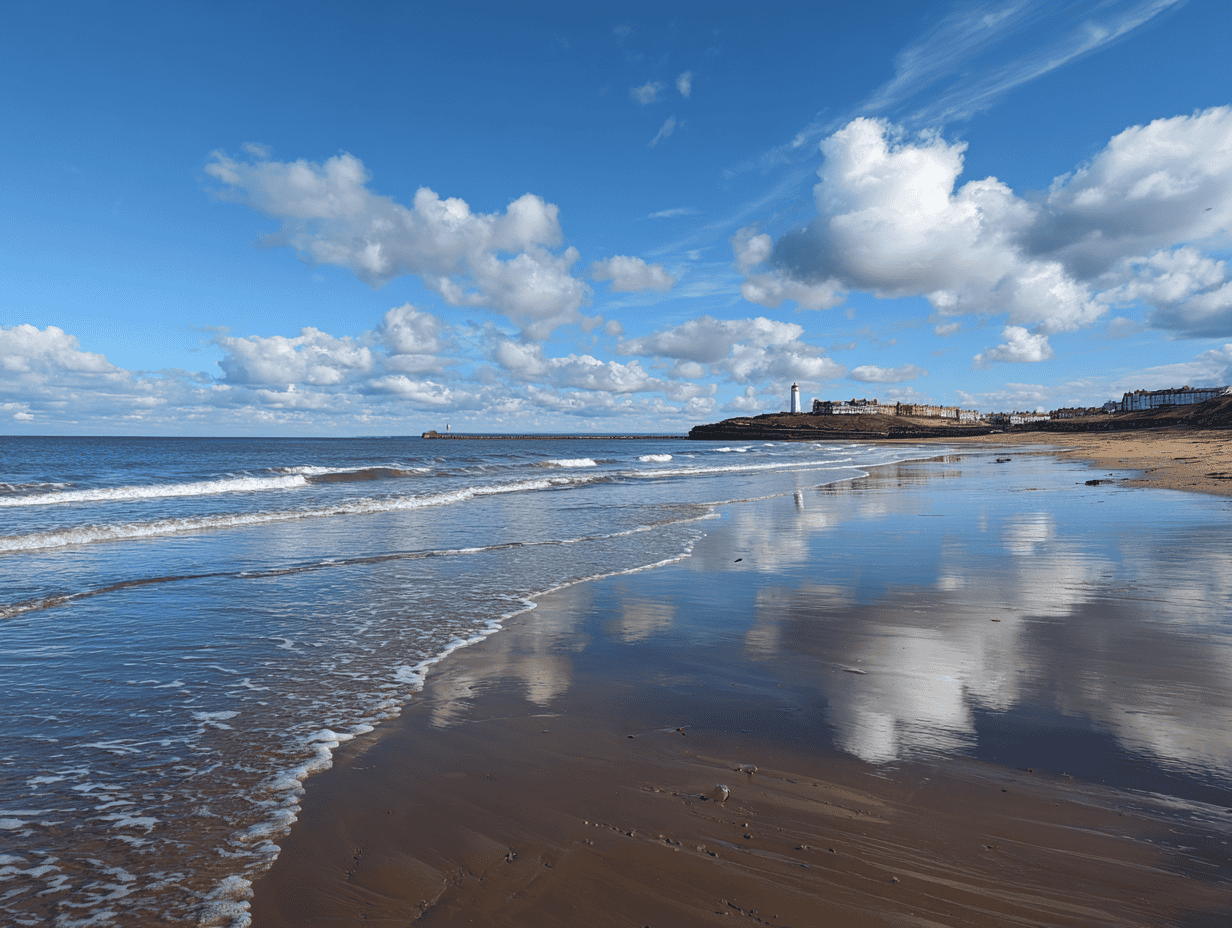
Alnmouth stops people in their tracks. You crest the dune path, and suddenly there it is, a sweeping arc of pale sand, the estuary of the River Aln curving into the bay, pastel-coloured cottages stacking up on the headland behind you, and a sky that seems twice as big as it does anywhere inland. It’s easy to see why Condé Nast Traveller rated it one of the twenty most beautiful villages in the UK. It’s the kind of place people fall for at first sight.
What most visitors don’t know is that they’re walking across the ruins of a significant medieval port. For several centuries, Alnmouth was a serious commercial centre on the north-east coast, exporting grain, coal, wool and timber, importing slate from Scotland and timber from Scandinavia, building ships, running a ropery, and at its peak handling more grain than anywhere north of Newcastle except Berwick-upon-Tweed.
All of that maritime traffic means centuries of glass entering the water along this stretch of coast. The strandline at Alnmouth isn’t just beautiful; it has a story behind every piece.
The port’s end came suddenly and dramatically. On Christmas Day 1806, a violent storm forced the River Aln to change course, cutting off Alnmouth’s natural harbour and making the port effectively unworkable. The last commercial vessel sailed in 1896. After that, the railways did the rest. The town reinvented itself as a Victorian seaside resort. One of the earliest English golf courses was established here in 1869, and it’s been a holiday destination ever since.
For sea glass hunters, Alnmouth is a reliable rather than exceptional beach. The sandy character means glass is spread more thinly than at a concentrated pebble beach like Boulmer, but it is there, and the history behind it stretches back further than almost anywhere else on this coast.
What you’ll find here
Colours commonly found: Green, brown, white
Occasional finds: Blue, aqua, amber, pale purple (sun-purpled glass from pre-WWI bottles)
Rare finds: Red, orange, cobalt blue
Bonus: Victorian pottery shards, old clay pipe fragments, and occasional Roman-era fragments washed down from the Aln
Find something special? Use our sea glass scanner, GlassLore, to find out rarity, value and history; then you can share to our finds gallery and, more importantly, earn points to climb our hunters leaderboard – are you ready to compete?
When to go
The key at Alnmouth is understanding how the beach changes with the tide. At low water, the bay opens up considerably, sandbanks and tidal pools emerge, the estuary shallows, and the rocky sections at the northern and southern ends of the beach become accessible. High tide leaves a narrow strip of sand that’s already been picked over.
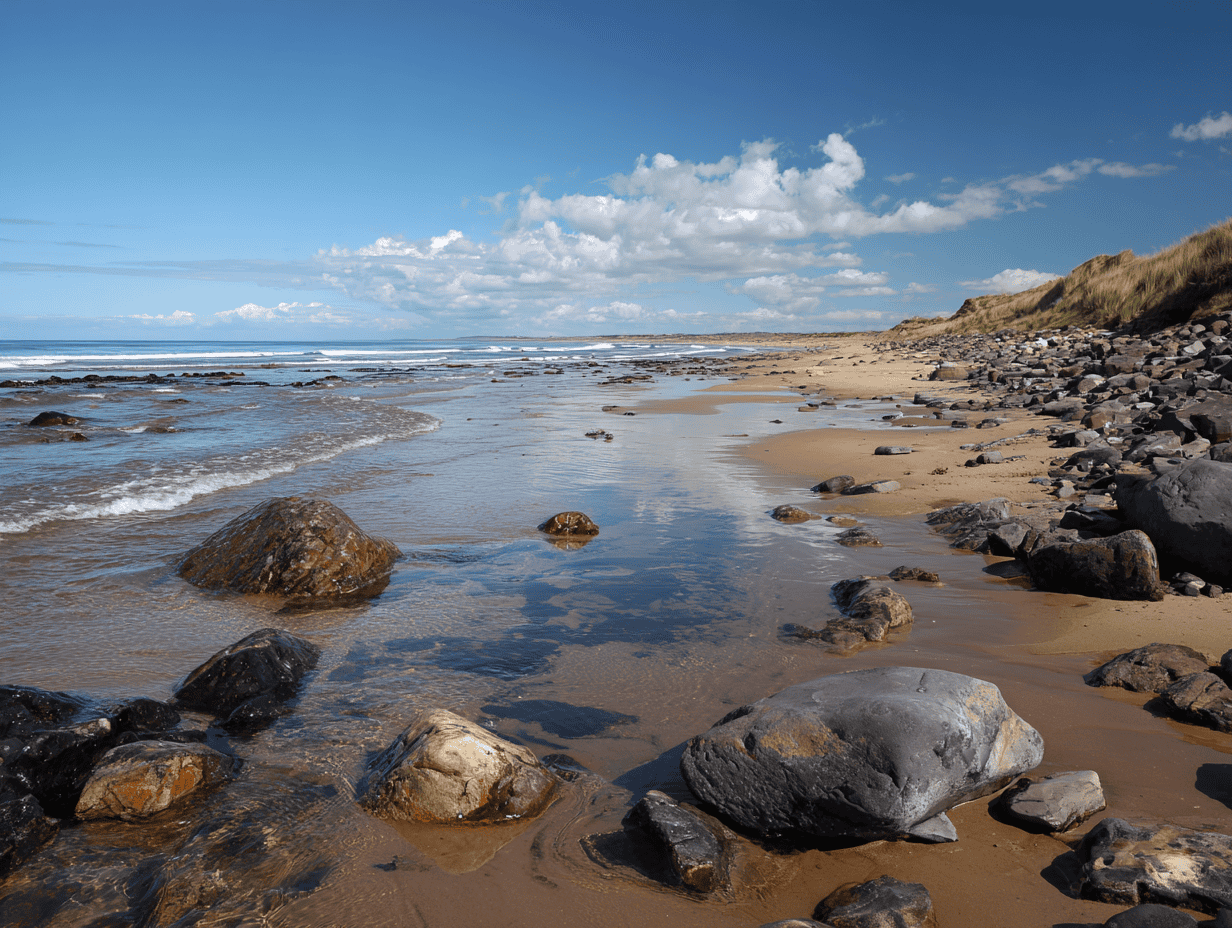
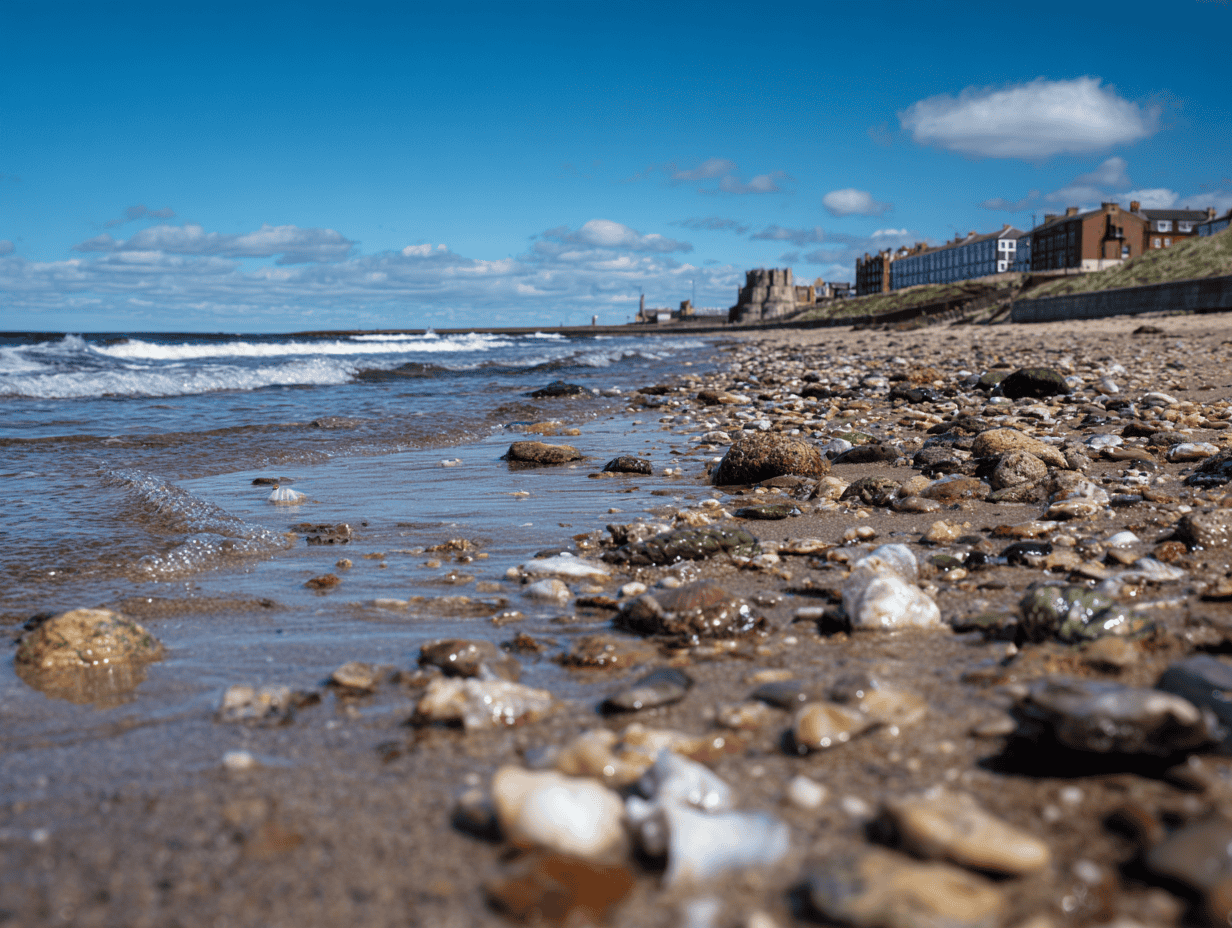
The best sea glass hunting is along the strandline and in the rocky sections north of the main beach (towards Boulmer) and around the estuary mouth. The shingle and pebble concentrations that form between the rocky sections and the open sand are your best spots.
Winter and early spring are best, with fewer visitors, stronger swells, and glass that’s been freshly moved by north-easterly storms. The beach faces east-south-east, catching swell from both north-east and east directions. A proper blow brings fresh material up to the strandline.
Today’s ShoreSense Score & Best Hunting Window
Alnmouth sits at the mouth of the River Aln on the North Sea coast, with a tidal range of around 4.5 metres on a spring tide, a good-sized range that transforms the beach between tides. At low water, the bay opens into a wide expanse with exposed sandbanks and tidal channels, significantly increasing the huntable foreshore.
The ShoreSense widget below combines recent marine conditions, tide timing and practical hunting weather to show today’s overall ShoreSense Score, Hunting Potential, Comfort and the best available hunting window for Alnmouth Sea Glass. It uses UKHO tide data alongside current marine and weather inputs to help you judge whether conditions look promising for a hunt.
Lower tides are especially useful at Alnmouth because they expose more of the estuary margins, rocky sections and pebble concentrations. Check today’s ShoreSense Best Window before travelling, as the most useful period varies with the tide and recent marine conditions.
Compare your Beaches on our Hot Beaches page, updated daily with the best beaches for today, the next seven days, as well as the movers and shakers.
Where to look on the beach
The main strandline: after a storm, a fresh line of debris runs along the beach above the high-tide mark. This is your first stop. Sea glass collects here alongside shells, driftwood and seaweed. Work slowly and look carefully. Green and brown glass blends easily with wet sand.
The rocky sections north of the car park: as you walk north towards Boulmer, the sandy beach gives way to more rocky ground. This is where glass concentrates between tidal cycles. Look along the base of any rocky outcrop and in pebble patches caught between rocks. This section is far less worked than the main beach.
Around the estuary mouth: the meeting of river and sea creates interesting deposition patterns. Glass brought down by the Aln from the old port and town debris has been tumbling here for over a century. Work the pebble margins of the estuary carefully.
The concrete cubes: the WWII anti-tank blocks that line part of the beach act as natural glass traps. Glass washes in behind them and stays put. Check around the base of each block at low tide.
A safety note: Swimming is strongly discouraged near the estuary mouth due to powerful rip tides, and the estuary current can be deceptively fast on a dropping tide. Keep dogs on leads near the water’s edge here.
Key Tip
Don’t stay on the main beach. Head north towards the rockier sections, and check around the WWII anti-tank blocks at low tide. Shifting sand can bury them completely, so if they’ve disappeared, work the rock edges instead.
Difficulty Level- Beginner
- Easy access from the village and beach car park
- Large areas of flat, accessible beach
- Productive hunting areas are straightforward to locate
- Minimal scrambling required for most searches
- Suitable for first-time sea glass hunters and families
Hunting Style- The Estuary Explorer
Alnmouth rewards hunters who search the transition zones. Follow the strandline after storms, investigate the estuary margins and pay particular attention to rocky sections and man-made structures that trap material. The best finds often come from areas where moving water changes direction or loses energy.
Beach Personality
Alnmouth is a beach shaped by movement. The River Aln, North Sea tides, and centuries of maritime history all meet here, creating a constantly changing landscape of sand, pebbles and shifting channels. While the broad beach can appear deceptively simple, experienced hunters know that the estuary margins, rocky northern reaches and wartime relics hide some of the most interesting opportunities. It’s a relaxed and accessible beach that quietly rewards those willing to explore beyond the obvious.
Dog friendly?
Yes -Alnmouth has no seasonal dog restrictions and is dog-friendly all year round. The beach is enormous, there’s room for everyone, and it’s genuinely one of the best dog beaches in Northumberland. You’ll see packs of locals walking their dogs here morning and evening, year-round.
Keep dogs on leads near the estuary section of the beach. The current is strong, and the tidal pull can be dangerous. On the main open sands, dogs can run freely. Parts of the dune path also require dogs to be on leads to protect ground-nesting birds in the dunes. Look for local signage.
For dog-friendly food and drink in Alnmouth, check the Yappy Places listing. The village has several options. Nana Pat’s Café on the main street is known among local dog walkers and puts water bowls out.
Practical information
Parking: The Beach Road car park (NE66 2RW) is run by the Burgage Holders of Alnmouth Common, not the council. It charges a daily fee in season, which in 2026 runs from 21 March into November, and you pay by contactless at the attendant’s hut. Motorhomes must use the designated area only. There’s no overnight parking, and on very busy days the car park closes, with a sign at Hipsburn roundabout. Limited free parking in the village fills quickly in summer.
Toilets: Public toilets are located near Alnmouth Golf Club, a short walk from the beach. No facilities directly on the sand.
Food and drink: Alnmouth village has a good selection of cafes, pubs and restaurants. The Hope & Anchor, the Red Lion, and Nana Pat’s Café are all within easy walking distance of the beach. For a proper sit-down meal, the village punches well above its weight.
Getting there without a car: Alnmouth has a train station (Alnmouth for Alnwick) on the East Coast Main Line, with direct services from Newcastle and connections from London. The beach is about a 15–20 minute walk from the station. The Arriva X18 bus also connects Alnmouth to Alnwick and the wider Northumberland coast.
Accessibility: The car park gives flat, easy access to the dune path and beach. The main sandy beach is accessible to most people. The rocky northern section involves rougher terrain.
What to bring
- Walking shoes or wellies – sandy beach for most of it, but the rocky northern section needs grip
- A small container for finds
- Layers – it’s a wide-open beach, and wind is a constant companion
- Dog lead for the estuary section
- A tide table- the beach changes significantly between tides, and low water is when it’s worth being here
The history behind the glass
Alnmouth has been a place of trade since at least the 12th century, when William de Vesci was granted a charter for a port and market here in 1152. Over the following seven centuries, ships carrying grain, coal, wool, timber and slate moved through this harbour. At the port’s peak in the 18th century, up to eighteen vessels might be seen in the harbour at once, and the town built sixteen granaries to handle the volume of grain moving through.
That traffic brought glass from every corner of the British Isles and beyond, bottles from Dutch gin, rum from the Caribbean trade, wine from France and Portugal, and Scandinavian imports. Every ship that entered or left this harbour contributed something to the seabed, and the North Sea has been sorting through it ever since.
Then, on Christmas Day 1806, the storm changed everything. A violent gale forced the River Aln to cut a new channel through the Church Hill sandbank, rerouting the estuary and effectively silting up the harbour over the following decades. The old church of St Waleric, which had stood on Church Hill since the Norman period, was cut off and eventually collapsed. All that remains is a wooden cross on the headland, marking where it stood.
The last commercial vessel, the timber brigantine Joanna, sailed from Alnmouth in 1896. After that, the port was gone. But the centuries of glass it accumulated still come ashore on this beach, and the World War II anti-tank blocks now act as permanent collection points for anything the tide brings in.
From beach to jewellery
Love what you find at Alnmouth? At Mermaid Tears, every piece of jewellery starts exactly where you’re standing, hand-hunted from UK beaches and handmade from seaglass into something you’ll keep forever. Browse the collection.
Disclaimer: Tide times, dog restrictions, parking charges and beach conditions change regularly. Always verify before visiting. Beach car park operating dates and charges are updated seasonally by the Burgage Holders of Alnmouth Common. Beach byelaws are updated annually; check with the local council or beach authority for the most current rules.
Last updated: Aug 2026
Frequently asked questions
Is Alnmouth good for sea glass beginners? Yes – it’s an easy beach to navigate, and the finds are accessible without specialist knowledge. Start at the strandline after a storm, then work north towards the rocky sections at low tide. Keep expectations realistic: Alnmouth is a good beach, not a carpet-of-glass beach.
What’s the best part of Alnmouth Beach for sea glass? The rocky northern section heading towards Boulmer, and the strandline after a north-easterly storm. The concrete WWII anti-tank blocks are also useful for glass traps. Check around their bases at low tide.
Is Alnmouth Beach dog-friendly? Yes, all year round. No seasonal restrictions. Keep dogs on leads near the estuary mouth due to strong currents.
Can I get the train to Alnmouth? Yes, Alnmouth for Alnwick station is on the East Coast Main Line, with services from Newcastle, Morpeth and connections from London. The beach is about 15–20 minutes’ walk.
Is swimming safe at Alnmouth? The main beach is generally safe for paddling, but swimming near the estuary mouth is actively discouraged due to dangerous rip tides and tidal currents. Follow local signage.
What’s the history of the glass at Alnmouth? Centuries of maritime trade through Alnmouth’s medieval port is the main source of bottles, jars and cargo glass from ships trading from the 12th century onwards. The town’s dramatic 1806 storm, which ended its life as a working port, sealed that history in place. The glass has been tumbling ever since.
A note on other Northumberland beaches: If you’re making a trip to Boulmer or Alnmouth and want to extend the hunt, the coves between Boulmer and Craster, including Howick Sears and Sugar Sands, are reported to hold glass among the rocky outcrops and are worth a walk if you’re already on the coast path. Beadnell and Embleton are primarily sandy tourist beaches with limited sea glass potential; I’d skip those as dedicated hunts.
More North East Beaches
Check out our full North East Sea Glass Guide or our interactive map to find more beaches; you can even filter by colour.