Northumberland’s Hidden Gem
Boulmer is one of Northumberland’s stronger sea glass hunting beaches, especially for experienced hunters who time a visit around lower tides. The reef edges, rock pools, and pebble ridges can produce well-frosted green, brown, and white glass, with blue, aqua, turquoise, cobalt, black, and pink among the rarer finds reported here.
- Rating: Top Beach
- Terrain: Tricky
- Level: Intermediate- Advanced
- Dog friendly: Yes
- Location: Boulmer, Northumberland
- Sat Nav: NE66 3BS
- Common colours: Green, brown, white
- Rare colours: Turquoise, Cobalt Blue, Black, Pink
Today at Boulmer Beach
Check for the latest ShoreSense score and tide times. Scroll down for the full 7-day forecast
Boulmer Beach sea glass conditions
Boulmer Beach
Northumberland
44/100 — Limited, best window 09:04–12:04.
Best window is 09:04–12:04 with spring tides (near full/new moon) and calm sea, so the chance of fresh finds is limited today. Sea is likely calm and picked-over — go early.
Quiet today, but a top beach when seas stir
Ranked #63 in the UK ShoreSense leaderboard today.
| Tide | Time | Height |
|---|---|---|
| High water | 04:03 | 5.4 m |
| Low water | 10:34 | 0.5 m |
| High water | 16:32 | 5.1 m |
| Low water | 22:38 | 1.0 m |
Best For
- Experienced sea glass hunters
- Spring low tide hunting
- Storm-chasing beachcombers
- Reef and rock pool exploring
- Winter hunting
- Older frosted glass
- Repeat visits after weather changes
Why Boulmer is Northumberland’s best-kept secret
People ask me which Northumberland beach to go to for sea glass. I tell them Boulmer every time, and they always come back with a haul.
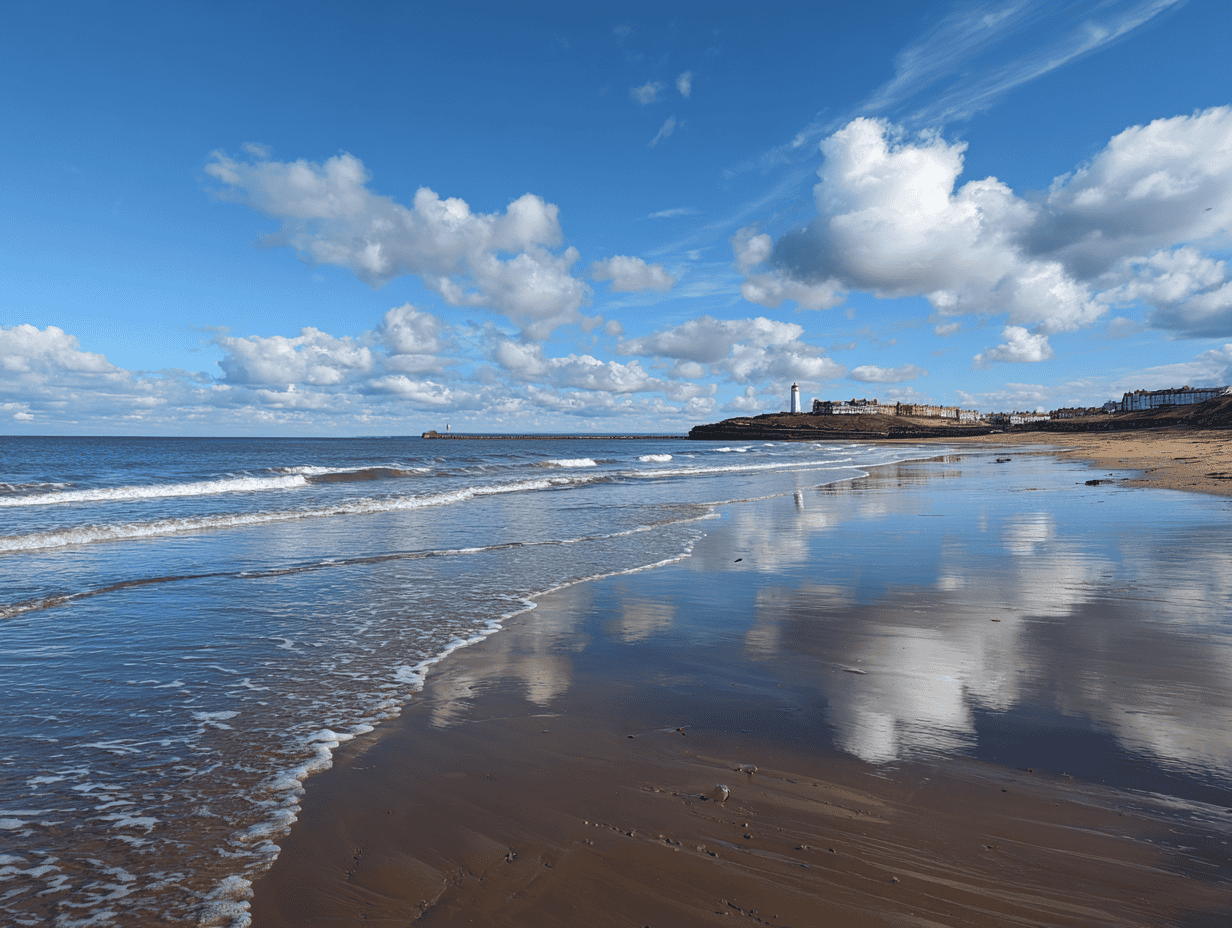
Boulmer, pronounced “Boomer,” in case the locals look at you sideways, is one of the last true fishing villages on the Northumberland coast. Forget the wide tourist-friendly sandy beaches that stretch from here to Bamburgh.
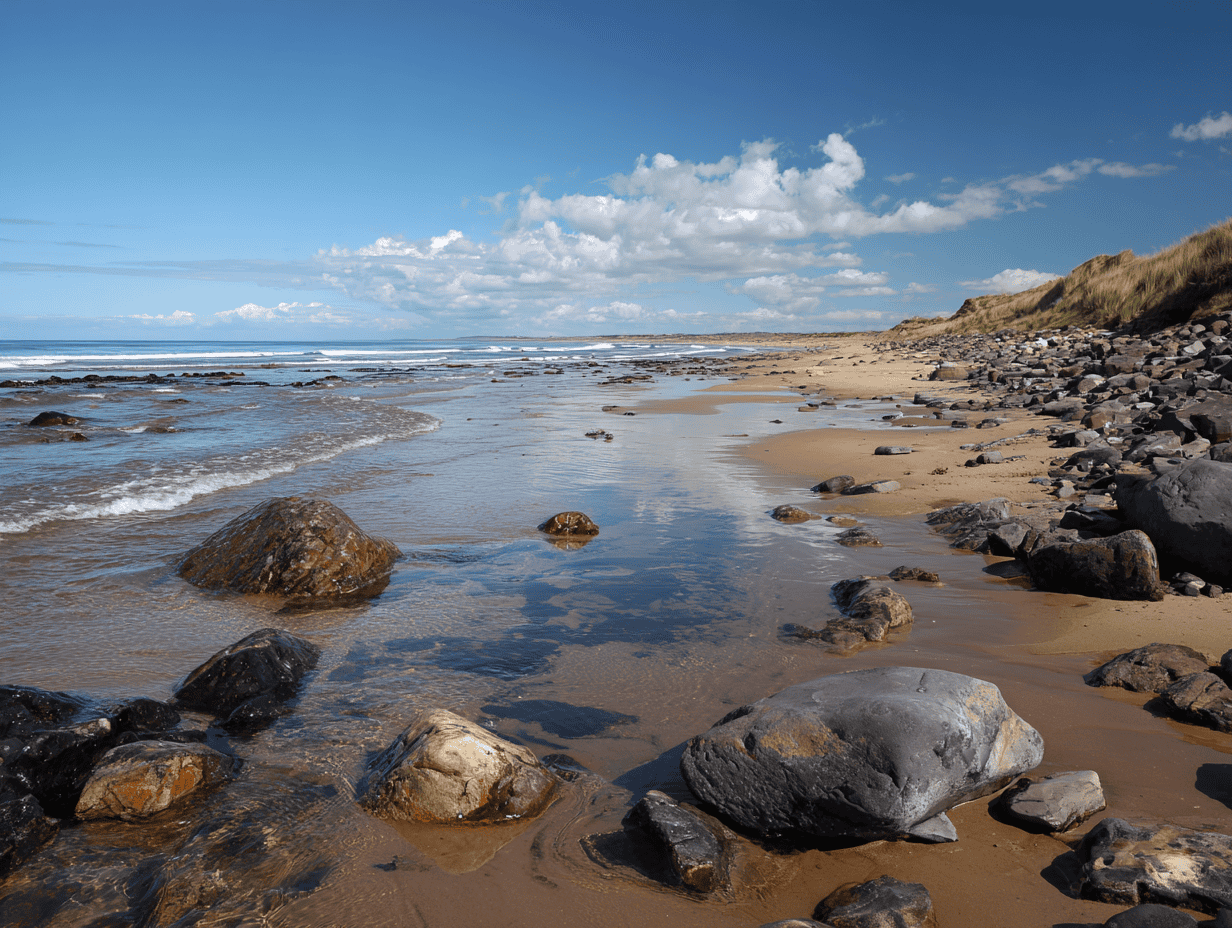
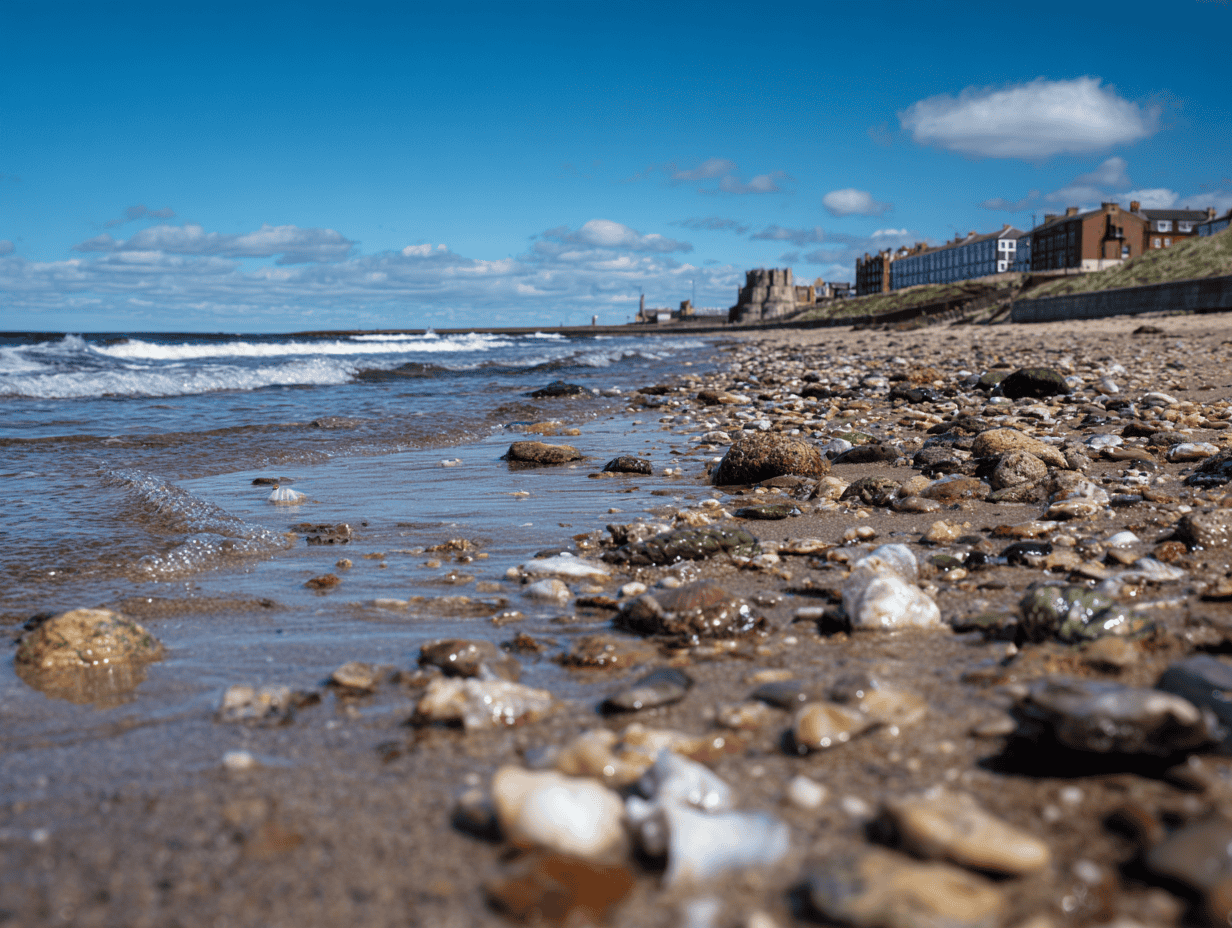
Boulmer is different. It sits in a natural gap in the sandstone reef, a bowl-shaped haven where the North Sea funnels in and deposits whatever it’s been carrying. The beach is a mixture of sand, pebbles, and exposed rock, with pools and reef edges at low tide- everything a sea glass hunter wants to see.
This isn’t a beach that gets cleaned up and smoothed over for summer visitors. The seaweed, the rocks, the barnacled ledges it all looks a bit chaotic compared to the polished holiday beaches nearby.
That chaos is exactly what you’re looking for. Glass hides in the crevices, collects behind reef edges, and turns up in the pebble ridges that form between the tide lines. You don’t come to Boulmer for a sunbathe. You come here because you’ve heard things wash up here that don’t wash up anywhere else on this coast.
The village is compact: a row of fishermen’s cottages, the Fishing Boat Inn, and a car park. Blue fishing cobles are still hauled up the beach by tractor, just as they have been for a hundred years. If you arrive early in the morning when the cobles are going out, you’ll feel like you’ve stepped back in time.
And you’ll probably have the beach to yourself.
What you’ll find here
Colours commonly found: Green, brown, white
Occasional finds: Blue, Aqua, Amber
Rare finds: Turquoise, Cobalt Blue, Black, Pink
Bonus: Pottery shards, old clay pipe fragments, smooth pebbles, occasional driftwood
Find something special? Use our sea glass scanner, GlassLore, to find out rarity, value and history; then you can share to our finds gallery and, more importantly, earn points to climb our hunters leaderboard – are you ready to compete?
When to go
Boulmer is a tide-sensitive beach. The rocks and reef platforms only emerge properly on a low spring tide. Those are the days when the beach transforms into something genuinely exciting.
The difference between a neap low and a spring low here is significant: the reef sections that are usually underwater come out, and with them comes glass that hasn’t seen daylight in weeks.
Winter is the right season. September through March brings north-easterly storms that churn glass off the seabed and pile it against the reef edges. The beach after a blow is a different proposition entirely from a calm summer day. Summer is fine, but the beach has usually been well-worked by other hunters by then.
Aim for the hour either side of low water. Get there before high tide starts to flood back. The rock pools and reef edges are your targets. Run your eye along the base of any exposed sandstone ledge, and you’re likely to spot something.
Hunting Style
“Condition-Based Reef Hunting”
- Plan around the tide first, the weather second and the beach third
- Aim for the hour either side of a low spring tide
- Go in the day or two after a north-easterly blow
- Work the reef edges, rock pool margins and pebble ridges, not the open sand
- Keep an eye on the water, because productive ground vanishes fast when the tide turns
This isn’t a pop-down-for-20-minutes beach. The hunters who do best here watch the tide charts and the wind before they set off.
Difficulty Level
Intermediate → Advanced
Not because it’s dangerous in normal conditions, but because:
- timing is everything here
- productive areas vanish at higher tides
- reef terrain is uneven/slippery
- success depends heavily on weather + tide knowledge
This is a beach where:
the conditions matter as much as the location.
Today’s ShoreSense Score & Best Hunting Window
Boulmer sits on the North Sea, directly exposed to the north-east, with a tidal range of around 4.5 metres on a spring tide, which is a generous range that exposes a substantial reef and foreshore as the water drops. The difference between a spring low and a neap low here is immediately visible: at spring tides, wide platforms of wave-cut sandstone come clear of the water, revealing the crevices and channels where glass collects.
The ShoreSense widget below combines recent marine conditions, tide timing and practical hunting weather to show today’s overall ShoreSense Score, Hunting Potential, Comfort and the best available hunting window for Boulmer Beach. It uses UKHO tide data alongside current marine and weather inputs to help you judge whether conditions look promising for a hunt.
Lower spring tides are particularly useful at Boulmer because they expose much more of the reef and rocky foreshore. Check today’s ShoreSense Best Window before travelling, as the most promising period will vary with the day’s tide and recent marine conditions.
Compare your Beaches on our Hot Beaches page, updated daily with the best beaches for today, the next seven days, as well as the movers and shakers.
Where to look on the beach
Boulmer Haven is the main focal point of the natural gap in the reef where the fishing cobles are launched. The beach spreads north and south from here.
North of the haven, the rocks begin to take over from sand, and the reef becomes more pronounced. Walk this section at low tide and look along the base of any exposed rock ledges. Glass gets caught in narrow channels between rocks and behind small ridges of pebble that build up during storms. This is where your better pieces are most likely to be.
South of the haven towards Seaton Point: a longer stretch of mixed sand and pebble. Check the strandline carefully after a storm; glass travels this way from southward drift. Pebble banks that form after rough weather are worth turning over by hand.
The pools: at spring low tide, rock pools form across the reef. Don’t just look in the water; look at the rocky margins of each pool. Pebble-sized glass pieces collect where the pool edge meets loose stone.
Key Tip
At Boulmer, don’t judge the beach on a single visit. The difference between a calm summer neap tide and a winter spring low after a north-easterly storm is massive, the reef platforms completely change what’s accessible and where glass settles.
A note on safety: the rocks at Boulmer are covered in weed and slippery at every state of the tide. Wear boots with grip, because flat shoes and trainers are a genuine hazard here. The reef can also cut you off if you wander too far out and the tide turns quickly. Know where low water is before you go, watch the tide, and don’t take risks chasing a find on a falling ledge.
Dog friendly?
Yes. Boulmer is dog-friendly all year round, with no seasonal restrictions, which is exactly why local dog walkers love it. If your dog is anything like Trigger, the rock pools, the seaweed and the general chaos of a working beach will keep them thoroughly entertained.
Keep dogs under close control on the rocky sections. The weed-covered reef is slippery for four paws and two feet alike. On the sandy sections north and south of the village, dogs can run freely.
For dog-friendly places to eat and drink nearby, check the Yappy Places listing for Boulmer and Alnmouth. The Fishing Boat Inn itself is your best bet in the village.
Practical information
Parking: The Beach View car park in Boulmer (NE66 3BS) has recently been taken over by Northumberland County Council, and charging has been introduced in line with other coastal sites in the region. Charges are pay-and-display; verify current rates before you go, as these are newly implemented. Some roadside parking remains available in the village, though double yellow lines restrict the most convenient spots.
Toilets: Public toilets are available in the village, a short walk from the beach.
Food and drink: The Fishing Boat Inn is the only option in Boulmer itself, a well-regarded pub with sea views from the terrace, local crab and lobster when available, and a warm welcome. For more choice, Alnmouth (3 miles south) has several cafes and pubs.
Getting there without a car: Boulmer is genuinely difficult to reach without a car. A limited bus service (Arriva X18/418) connects Boulmer to Alnwick and the surrounding villages, but services are infrequent. Check Traveline Northeast before visiting.
Accessibility: The car park gives reasonable flat access to the immediate beach area. The rocky sections north and south of the haven involve uneven terrain and are not accessible for wheelchairs or those with limited mobility.
What to bring
- Sturdy wellies or walking boots with grip – non-negotiable on this beach
- A hand rake or small trowel for working pebble ridges
- A small container or zip-lock bags for your finds
- Layers – Boulmer is exposed, and the wind off the North Sea bites even in summer
- A tide table checked in advance (not just a quick glance at the clock)
- Dog towel if your dog’s coming – those rock pools are irresistible
The history behind the glass
Boulmer’s glass comes from centuries of maritime life on one of Northumberland’s most active stretches of coast. This was never a pleasure beach; it was a working village, a fishing station, and for a significant period of its history, the smuggling capital of Northumberland.
In the 18th and 19th centuries, contraband goods from the Netherlands, France, and Scotland – gin, spirits, salt, and tobacco were landed at Boulmer under cover of darkness, with the Fishing Boat Inn serving as the headquarters of the operation.
Ships arriving and departing in those conditions didn’t worry much about what went overboard. Combined with the everyday debris of a working fishing community – bottles, jars, glass floats, ship’s lanterns- centuries of material have entered the water off this coast.
The name Boulmer itself carries echoes of that maritime past. Place-name scholars usually trace the name to Old English for “bulls’ pool”, though you’ll also hear a more romantic French origin, “boule de mer”, or sea bowl. Whatever the truth, the bowl-shaped haven has been catching things from the sea for a very long time.
RAF Boulmer was established here during the Second World War, and the base remains active today. That wartime presence brought another wave of material to this stretch of coast. Some of the older, thicker pieces you find here have that dark olive patina of pre-war glass- keep an eye out for those.
From beach to jewellery
Found something special at Boulmer? At Mermaid Tears, every piece starts exactly where you’re standing, hand-hunted from UK beaches and handmade into something you’ll keep forever. Browse the collection.
Disclaimer: Tide times, dog restrictions, parking charges and beach conditions change regularly. Always verify before visiting. Parking charges at Boulmer have recently changed after management transferred to Northumberland County Council. Beach byelaws are updated annually- check with the local council or beach authority for the most current rules.
Last updated: Sept 2026
Frequently asked questions
Is Boulmer good for sea glass beginners? It can be, but it isn’t the easiest place to start. The glass concentrates in the rocky sections at low spring tide; the weed-covered reef is slippery, and a calm August afternoon won’t give you what a January morning after a storm will. For a first hunt, Alnmouth, three miles south, is gentler underfoot.
How do you pronounce Boulmer? “Boomer.” Locals will know you’re new if you say it any other way.
Is Boulmer Beach dog-friendly? Yes, all year round. No seasonal restrictions apply.
What’s the best time to visit Boulmer for sea glass? Autumn through winter, on a low spring tide, ideally in the day or two after a north-easterly storm. Arrive 90 minutes before low water. Morning visits mean less competition.
Why is there no harbour at Boulmer? Boulmer is unusual among fishing villages in having no formal harbour. Boats are simply launched off the beach and hauled back up by tractor. The natural gap in the reef provides some shelter, but there’s nothing man-made. This is part of what keeps it so raw and unchanged compared to other coastal villages.
Can I find rare glass at Boulmer? Black (pirate) glass from old rum and spirit bottles turns up here more than at most beaches, a legacy of the smuggling trade. Red is rare but possible. Cobalt blue is the find that will make your day.
More North East Beaches
Check out our Full North East Guide or our interactive map to find more beaches; you can even filter by colour.