The UK’s Best Glass Beach
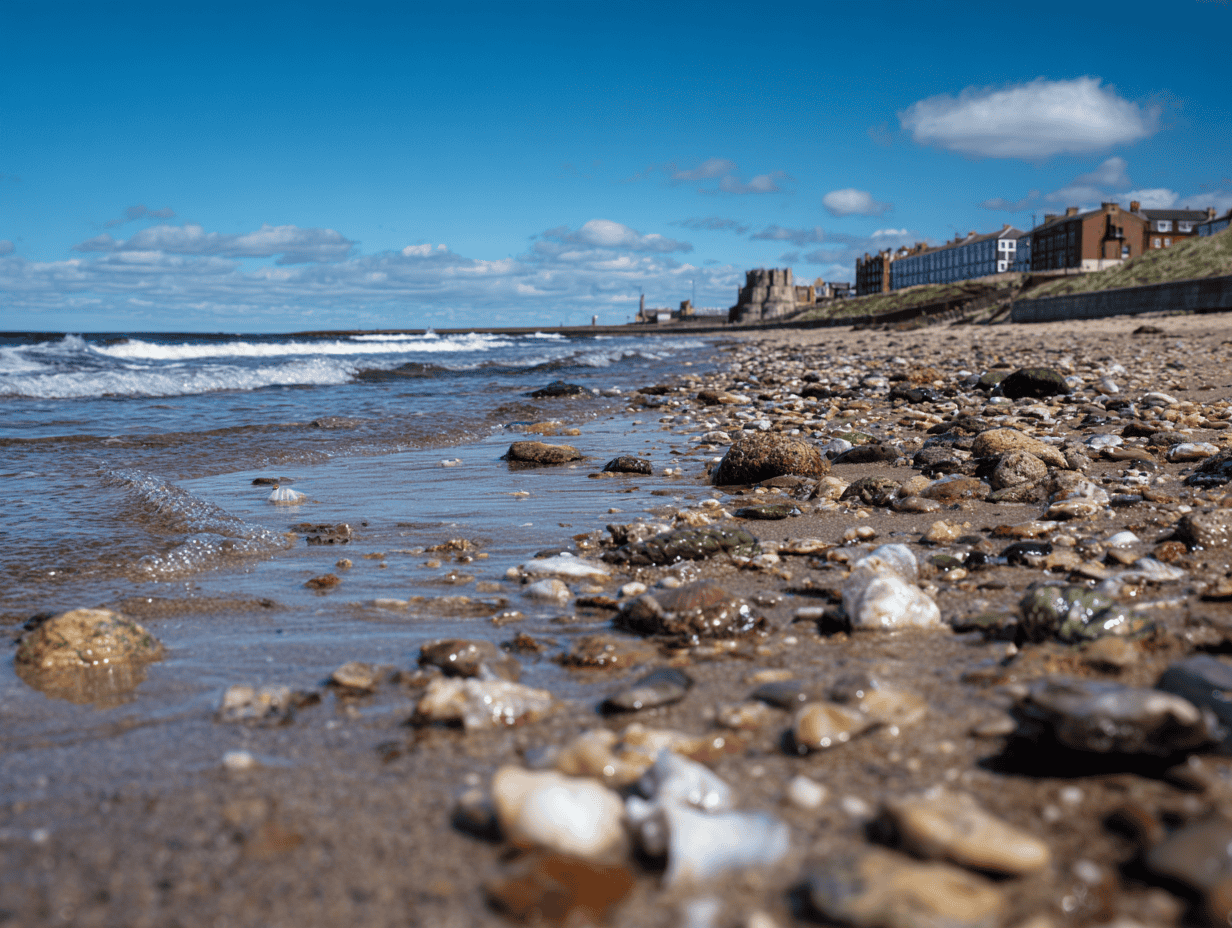
Seaham is one of the UK’s most famous sea glass hunting beaches and a must-visit for collectors, especially along the shingle, pebble banks and rocky pockets around the town’s exposed coastline. White, green and brown are common, but Seaham is best known for unusually colourful and multi-coloured pieces, including aqua, cobalt, turquoise, amber, lavender, red, pink and rarer patterned glass. If you only visit one north-east beach specifically for sea glass, Seaham is the obvious place to start.
- Rating: Top Beach
- Terrain: Easy (Seaham Hall Beach) · Tricky (Blast Beach)
- Level: Beginner – Intermediate
- Dog friendly: Yes- dogs welcome all year round at both beaches
- Location: Seaham, County Durham, North East England
- Sat Nav: SR7 7AF (Seaham Hall Beach) · SR7 7WE (Vane Tempest) · SR7 7TT (Nose’s Point / Blast Beach)
- Common colours: Green, brown, white
- Rare colours: Cobalt Blue, Black, Lavender, Red, Yellow, Orange, Grey, Pink, multi-coloured end-of-day
Seaham Beach Today
Check the Shoresense Score and tide times below. Scroll down for our full 7-day forecast; see our full data widget below.
Seaham Beach sea glass conditions
Seaham Beach
County Durham — Sea settling
62/100 — Good, best window 06:30–09:30.
Best window is 06:30–09:30 with spring tides (near full/new moon) and calm sea, so the chance of fresh finds is good today. Sea is likely calm and picked-over — go early.
Good window at a premier beach
Ranked #54 in the UK ShoreSense leaderboard today.
| Tide | Time | Height |
|---|---|---|
| High water | 01:26 | 4.8 m |
| Low water | 08:00 | 0.9 m |
| High water | 14:04 | 4.9 m |
| Low water | 20:14 | 1.2 m |

Why Seaham is in a league of its own
There are good sea glass beaches in the UK. And then there’s Seaham.
Seaham is internationally recognised as one of the world’s best-known sea glass hunting beaches. Unlike most UK beaches, its reputation is closely tied to a documented glassmaking industry that operated here during the nineteenth and early twentieth centuries. The Londonderry Bottleworks discarded large quantities of waste glass into the coastal environment, helping create the extraordinary variety of colours and multi-coloured pieces collectors still travel to Seaham to find today.
In the late 19th and early 20th century, the Londonderry Bottleworks, once one of the largest glass factories in Britain, operated along this stretch of coast, discarding waste glass directly into the sea, including beautiful end-of-day glass: multicoloured offcuts and overflows from artisan batches. The result is a beach unlike anywhere else in the world. Over 150 years of North Sea tides have tumbled those millions of fragments into the frosted jewels collectors come here to find.
This guide covers two beaches: Seaham Hall Beach to the north of the harbour, the main glass beach, easy to access, reliably productive, and Blast Beach to the south at Nose’s Point, a wilder, more rugged stretch for those willing to earn their finds. They’re two very different experiences, and both are worth knowing about.
What you’ll find here
Colours commonly found: Green, brown, white
Occasional finds: Blue, Aqua, Amber, Turquoise
Rare finds: Cobalt Blue, Black, Lavender, Red, Yellow, Orange, Grey, Pink. Seaham specials: Multi-coloured end-of-day pieces- swirling, layered glass formed when workers swept the last remnants of coloured glass together at the end of each production shift.
These are unique to Seaham and a small number of similar industrial sites worldwide. Sea glass marbles also turn up occasionally.
Find something special? Use our sea glass scanner, GlassLore, to find out rarity, value and history; then you can share to our finds gallery and, more importantly, earn points to climb our hunters leaderboard – are you ready to compete?
When to go
Timing is everything at Seaham.
Arrive as the tide is ebbing- going out. Heavy swells churn up glass from the seabed that hasn’t seen the surface in years, and the day after a North Sea storm is as good as it gets anywhere in the UK. Winter is the prime season: the beach is quieter, storms are more frequent, and glass accumulates over the summer months before the winter tides begin returning it.
Around new and full moon, the tidal range is at its greatest, exposing more of the beach and bringing in material from further offshore. Spring tides at Seaham run to around 4.5 metres on a good day. These are your best days. Arrive early; Seaham attracts serious enthusiasts from across the country, and the strandline gets worked quickly once word spreads about post-storm conditions.
Overcast days are better than bright sunshine for spotting glass. When the sun is high, everything glitters, and the frosted texture of sea glass becomes harder to distinguish from wet pebbles. A grey day with good light and a low tide is the ideal combination.
Today’s ShoreSense Score & Best Hunting Window
Seaham sits on the Durham Heritage Coast facing east into the North Sea, with a tidal range of around 4–4.5 metres on a spring tide, generous exposure that reveals a substantial strip of new foreshore at low water. The tidal pattern is semi-diurnal, with the range varying considerably through the spring-neap cycle.
The ShoreSense widget below combines recent marine conditions, tide timing and practical hunting weather to show today’s overall ShoreSense Score, Hunting Potential, Comfort and the best available hunting window for Seaham. ShoreSense doesn’t predict whether glass will definitely be present; it helps you judge whether current conditions look more or less promising for a hunt.
Seaham rewards a falling tide because more of the pebble and shingle bands open as the water retreats. Start high on the strandline, then work down through coarser pebble concentrations and rocky pockets as more foreshore becomes accessible.
Bigger spring lows expose additional hunting ground, while stronger North Sea conditions can substantially rearrange the beach before settling. Use today’s ShoreSense Best Window to choose when to arrive, then follow the changing shingle and pebble concentrations rather than relying on a fixed storm-or-low-tide formula.
Seaham Hall Beach:
Strandline → mixed pebble banks → rock-pool edges → lower shingle on bigger tides
Compare your Beaches on our Hot Beaches page, updated daily with the best beaches for today, the next seven days, as well as the movers and shakers.
Stop 1 – Seaham Hall Beach (North Beach)
Best For:
- Sea glass hunting
- Beginners
- Sea pottery
- Long beach walks
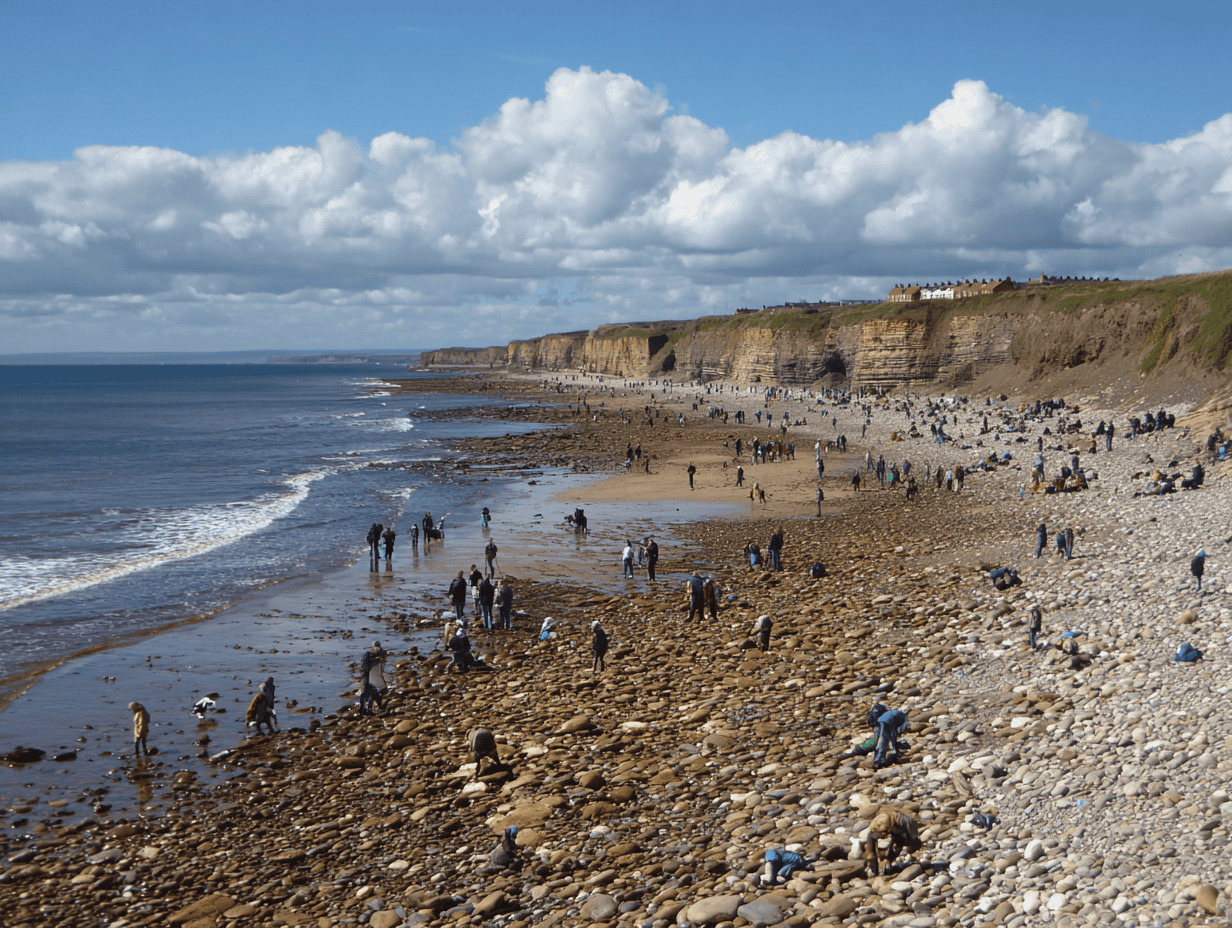
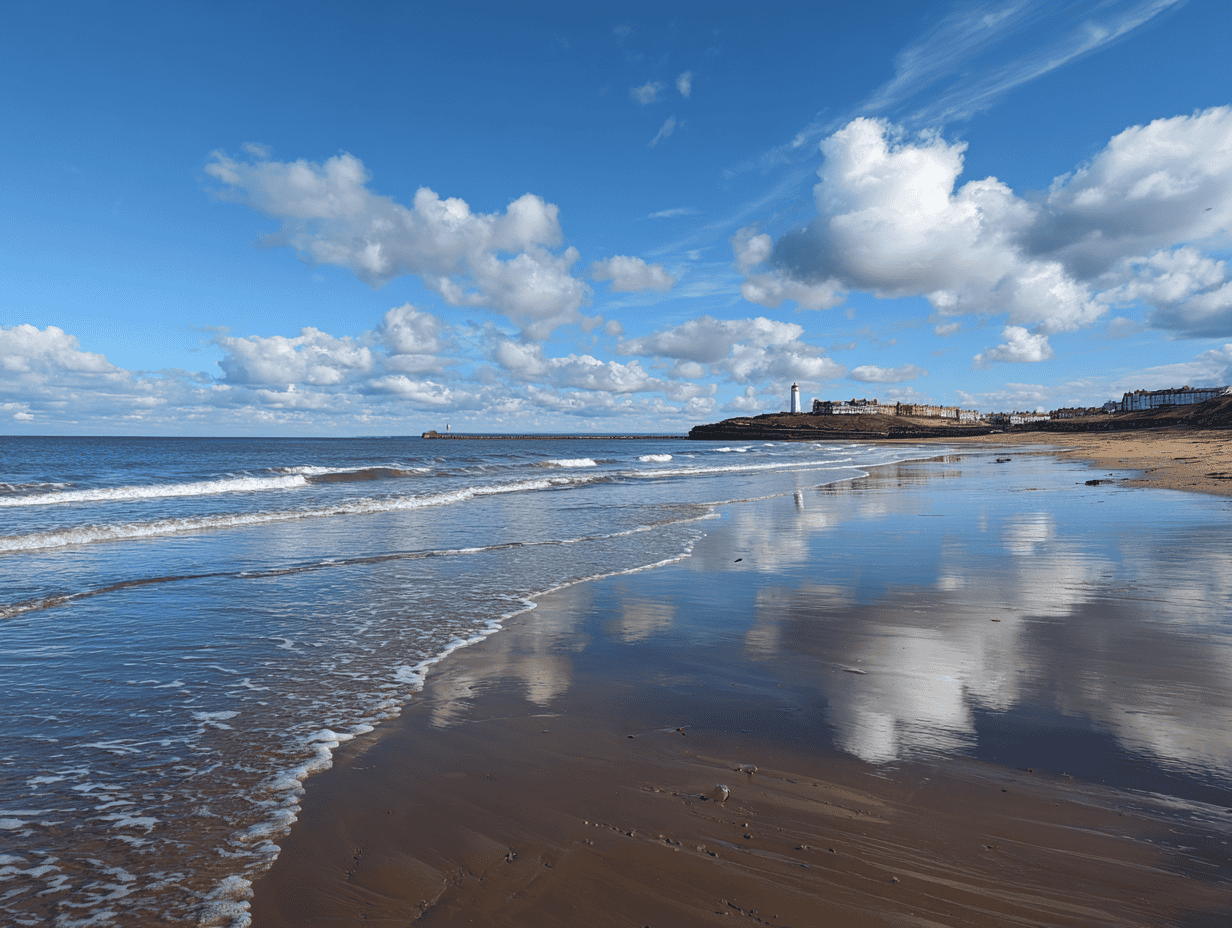
Seaham Hall Beach is the main event, the stretch of shore north of Seaham Harbour, where the majority of glass is found and where most hunters start and often finish their day. It lies below the headland where Seaham Hall Hotel stands, running for roughly a mile of mixed sand and pebble beach backed by low cliffs.
Where to look: Work the high-tide strandline first; this is where glass accumulates after storms and big tides, mixed in with pebbles, shells and coal fragments. Then move to the waterline as the tide ebbs, where freshly uncovered material is still wet and easier to spot. Clusters of pebbles trapped against rocks or the base of the cliff are always worth picking through. Crouch down and get your eye level close to the surface. Sea glass blends in with stones until you train your eye to recognise the frosted edges and smoother shapes.
Look carefully in rock pools at the lowest tides. Glass often gets trapped in pools and can sit undisturbed for weeks between spring tide exposures.
Access: The beach is accessed via a long staircase from the Seaham Hall Beach car park. This is not suitable for wheelchairs or buggies. The Vane Tempest car park end has easier, ramped access to the southern end of the beach.
Terrain: Easy- mixed pebble and sand beach, flat foreshore, no scrambling required.
Key Tip:
Start at the northern end of Seaham Hall Beach and work the high-tide strandline first before following the falling tide towards the waterline. Don’t rush. Seaham rewards slow, methodical searching, and many of the best finds are hiding in plain sight amongst the pebbles.
Difficulty Level – Beginner
- One of the most productive sea glass beaches in the UK
- Large hunting area with plenty of space to spread out
- Easy walking across a mix of sand and pebbles
- No scrambling or specialist equipment required
- Suitable for first-time hunters and families
Hunting Style – The Treasure Hunter
Seaham Hall Beach rewards patient hunters who are willing to slow down and scan carefully. Work the strandline after storms, check pebble concentrations around rocks and don’t ignore the waterline as the tide retreats. The beach produces finds throughout its length, making it ideal for a steady, methodical search rather than focusing on a single hotspot.
Beach Personality
This is the beach that put Seaham on the sea glass map. Generations of glassmaking history, combined with decades of wave action, have created one of Britain’s most famous hunting grounds. Despite its reputation, the beach rarely feels exhausted. Every visit carries the possibility of finding something unusual, whether that’s a beautifully frosted bottle fragment, a piece of pottery, or one of the rare coloured treasures that keep collectors coming back year after year.
Stop 2 – Blast Beach (Nose’s Point)
Best For:
- Sea glass hunting
- Storm hunting
- Sea pottery
- Sunderland history
Blast Beach is Seaham’s wilder sibling and a completely different experience. South of Seaham Harbour at Nose’s Point, this is where the former Dawdon Colliery once tipped industrial waste directly over the cliffs. The beach sits on the site of the former Dawdon Colliery, is more rugged and atmospheric, and produces glass finds too, especially after storms.
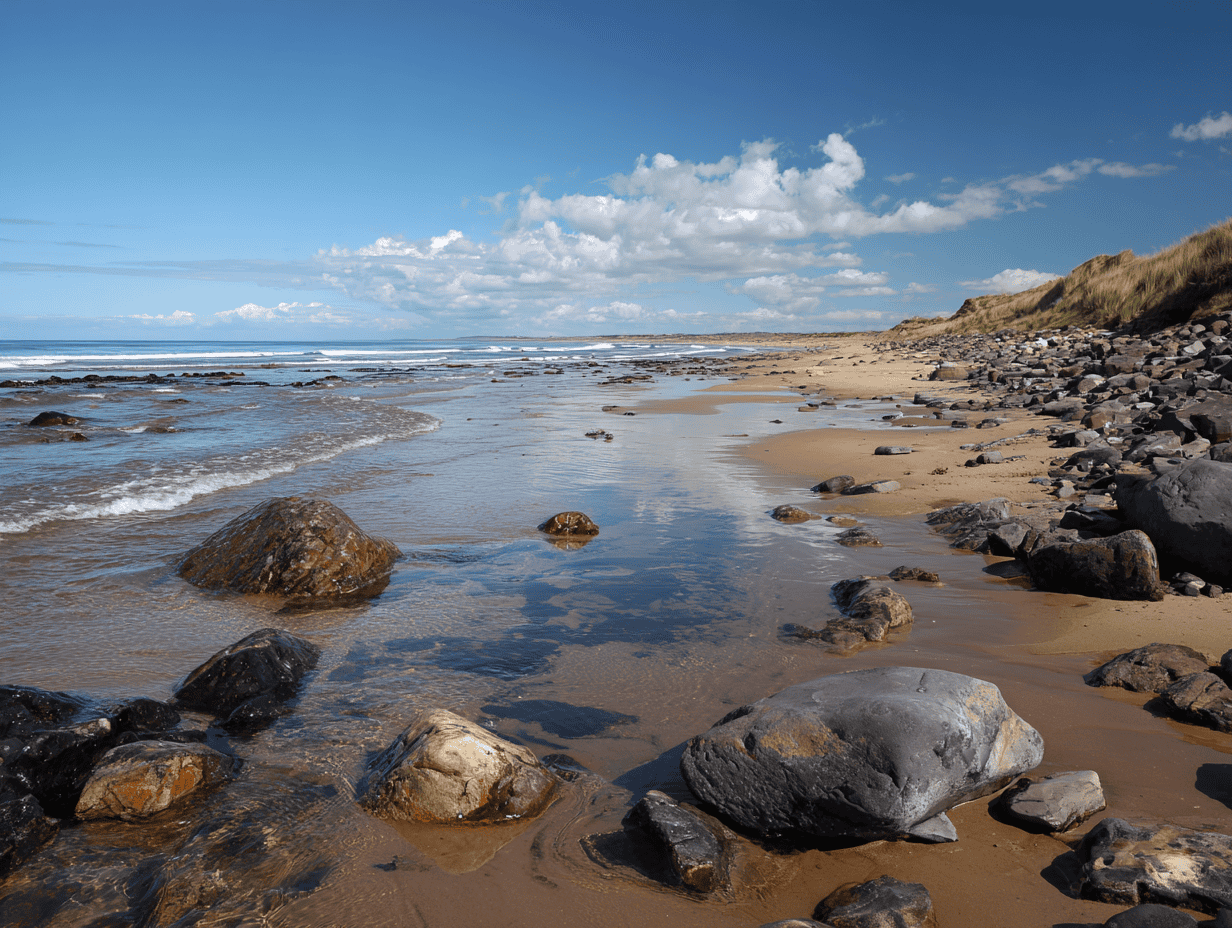
The beach features magnesian limestone rocks and boulders, iron oxide red mineral pools, sea glass, pottery shards, bricks and other industrial remnants. It has a genuinely alien quality: rust-coloured sand, dramatic limestone cliffs, rock caves at low tide, and a landscape that looks like nowhere else in England.
Blast Beach played the alien prison planet Fiorina 161 in David Fincher’s Alien 3 (1992). Ripley crash-lands there in the opening scenes, and it was the film’s only location shoot. Everything else was built at Pinewood to look like Dawdon. On a grey winter morning with the North Sea running, you’ll understand why they chose it.
For sea glass, focus on the pebble concentrations around the base of the cliffs and in the channels between limestone outcrops. Post-storm conditions here can be exceptional; the sheltered bay aspect means material gets deposited and stays put rather than being moved along the beach.
Blast Beach:
Upper shingle → limestone pockets → rock channels → rougher lower ground as the tide falls
Key Tip:
Focus on the pebble pockets trapped between the limestone outcrops and around the base of the cliffs. Blast Beach often produces its best finds after strong easterly winds and winter storms when fresh material is uncovered.
Difficulty Level – Intermediate
- Uneven limestone terrain requires more careful footing
- Productive areas can be spread out across the beach
- Some hunting is best undertaken around lower tides
- Boulder fields and rock platforms can be slippery when wet
- More physically demanding than Seaham Hall Beach
Hunting Style – The Storm Chaser
Blast Beach rewards explorers who enjoy covering ground and investigating every pebble pocket, rock channel and sheltered corner. Rather than searching a single strandline, hunters should work methodically around the limestone features where glass and pottery become trapped between storms.
Beach Personality
Wild, dramatic and unlike almost anywhere else on the British coastline, Blast Beach feels more like an industrial archaeological site than a traditional seaside destination. Rust-coloured mineral deposits, towering limestone cliffs and remnants of the area’s mining past create a landscape with real character. For sea glass hunters, it offers a more rugged and adventurous experience than Seaham’s main beach, with the added thrill of never quite knowing what the next storm might reveal.
Access: The way down to the beach is steep, with steps available if you walk further along the clifftop, but these are still quite steep. Not suitable for wheelchairs, buggies or anyone with limited mobility. Allowing time to get down and back up is part of the commitment. Dogs on leads are advisable on the descent, given the steep cliff path.
Parking: Noses Point car park (SR7 7TT), 75 spaces. Pay and display from 8am to 6pm daily: £1.10 up to an hour, £2.20 for one to two hours, £3.30 for over two hours.
Terrain: Tricky steep cliff descent, uneven rocky foreshore, boulders to navigate at low tide. Rewarding but demanding.
Important: There are no public toilets at Blast Beach; the nearest are approximately 1km away in Seaham town centre. Check the tide before descending; the bay can cut off at higher tides.
Dog friendly?
Yes. Dogs are welcome on Seaham Hall Beach and Blast Beach all year round, with no seasonal restrictions. In 2023 Durham County Council proposed a summer daytime ban on the small Slope beach by the marina, but dropped it after low support in the consultation and a 1,240-name petition against it. Seaham’s main beaches were never part of that proposal.
Durham’s dog control order still applies: pick up after your dog, and put them on a lead if a council officer or police officer asks you to. Keep dogs on a lead for the steep path down to Blast Beach too.
Seaham is a properly dog-welcoming town. You’ll see plenty of other dogs on the beach, and the promenade and harbour have several dog-friendly cafés and pubs.
For dog-friendly café and pub recommendations in Seaham, check our Yappy Places listing for the town.
Practical information
Parking: Five council car parks line the seafront, all pay and display from 8am to 6pm daily: £1.10 up to an hour, £2.20 for one to two hours, £3.30 for over two hours. Parking is free at all of them between 6pm and 8am, Blue Badge holders get a 30-minute grace period at the end of a paid session, and you can pay by cash, card or PayByPhone.
Seaham Hall Beach (SR7 7AF): 145 spaces, for the main glass beach. PayByPhone code 809324.
Vane Tempest (SR7 7WE): 133 spaces, with ramped access to the southern end of Seaham Hall Beach. PayByPhone code 809327.
Noses Point (SR7 7TT): 75 spaces, for Blast Beach. PayByPhone code 809335.
For free parking, Terrace Green (Tommy’s, SR7 7EU) has 23 free bays alongside its paid ones, and there are free car parks at Green Street (51 spaces, SR7 7ET), South Railway Street (25 spaces, SR7 7ES) and Marlbrough (24 spaces, SR7 7SA), all a short walk from the seafront.
Free parking is available at several locations, including South Railway Street (25 spaces), Green Street (51 spaces) and Marlbrough (24 spaces)- all a short walk from the seafront. Parking is free at all sites between 6pm and 8am. Note: tariff increases are planned from June 2026 -check the Durham County Council website for current charges before visiting.
Toilets: Free public toilets at Seaham Harbour and along the promenade. No toilets at Blast Beach.
Food and drink: The promenade at Seaham has a good selection of independent cafés, ice cream parlours and fish and chip shops. There is a café at the Seaham Hall Beach car park (North Beach Coffee Bar). The harbour area has additional options.
Getting there without a car: Seaham has a railway station served by the Durham Coast Line running between Newcastle and Middlesbrough. The beach is around a 25-minute walk from the station. The station is unstaffed but has step-free access to both platforms and a self-service ticket machine.
Accessibility: The promenade alongside part of the beach is accessible. Seaham Hall Beach is accessed via a long staircase from the car park, not suitable for wheelchairs or buggies. The Vane Tempest car park end has ramped access to the beach. Blast Beach is not accessible for wheelchair users.
What to bring
- Wellies or sturdy walking shoes – the beach is pebbly, and the Blast Beach descent requires grip
- A small container or zip-lock bag for your finds -one per stop if you’re doing both beaches
- A hand rake or garden trowel for turning pebbles at the strandline
- Layers – the North East coast is exposed, and the weather changes fast, even in summer
- A fully charged phone for tide times and photos – check before you leave for Blast Beach in particular
The history behind the glass
Seaham was the location of the largest glass bottle works in Britain, founded by John Candlish in 1853 under the patronage of the 4th Marquess of Londonderry, which operated until 1921. During nearly seventy years of production, waste glass was dumped directly into the sea – millions of bottles, jars, marbles and offcuts, along with the extraordinary end-of-day pieces formed when workers combined the last remnants of coloured glass at the close of each production shift.
That’s nearly seventy years of industrial waste, tumbled by North Sea tides into the extraordinary beach it is today. Every piece you find is a fragment of Victorian industry transformed by time and tide. The multi-coloured end-of-day glass is unique to Seaham and a handful of similar sites worldwide. If you find a swirling, layered piece with two or more distinct colours running through it, that’s a genuine Seaham special, irreplaceable and found nowhere else on earth.
Blast Beach has its own darker history. The former Dawdon Colliery tipped waste over the clifftops here for decades, and the site was once one of the most polluted beaches in Europe. A major restoration project transformed it over the last twenty years into the striking, otherworldly landscape it is today, an SSSI for both geology and rare wildflowers. The industrial remnants in the pebbles at Blast Beach- the pottery, the bricks, the glass- are what’s left of that history after the North Sea has had its way with them.
From beach to jewellery
Seaham is where sea glass hunting in the UK begins and ends. At Mermaid Tears, every piece of jewellery starts exactly where you’re standing. Seaglass is hand-hunted from UK beaches and handmade into something you’ll keep forever. The collection includes pieces made from Seaham glass in colours that simply don’t exist anywhere else. Browse the collection at mermaidtears.co.uk.
Disclaimer: Tide times, dog restrictions, parking charges and beach conditions change regularly. Always verify before visiting. Durham County Council parking tariffs are subject to change; check durham.gov.uk for current charges. Blast Beach access via the cliff path should not be attempted in poor weather or at high tide. Beach byelaws are updated annually – check with Durham County Council for the most current rules.
Last Dog rules checked: September 2026 — Durham County Council
Updated: Sept 2026
Frequently asked questions
Is Seaham Beach the best sea glass beach in the UK? Yes – it’s consistently rated as one of the finest sea glass beaches in the world. The volume and variety of glass, and the unique end-of-day multi-coloured pieces found nowhere else, put it in a category of its own.
What time is best to visit Seaham for sea glass? Arrive as the tide is going out, ideally after a storm or during a spring tide around full or new moon. Early morning, before other hunters arrive, gives you the best chance at undisturbed strandline material. Overcast days are easier for spotting glass than bright sunshine.
Is Seaham Beach dog-friendly? Yes. Dogs are welcome at both Seaham Hall Beach and Blast Beach all year round. A 2023 proposal for a summer ban only ever covered the small Slope Beach by the marina, and it was dropped.
How much does parking cost at Seaham? The seafront car parks charge £1.10 up to an hour, £2.20 for one to two hours and £3.30 for over two hours, 8am to 6pm daily, and they’re free overnight. There are also free car parks in the town centre, a short walk from the beach.
What is Blast Beach, and is it worth visiting? Blast Beach is south of Seaham Harbour at Nose’s Point -a dramatically different and more rugged beach with a striking industrial landscape. The access is steep, and the terrain is difficult, but it produces glass finds, particularly after storms, and the scenery is unlike anything else on the Durham coast. Worth it for experienced hunters who want something different.
How rare is the multi-coloured glass at Seaham? Very. End-of-day glass is unique to Seaham and a handful of similar industrial beach sites worldwide. If you find a swirling multi-coloured piece with distinct colour layers running through it, that’s a genuine Seaham treasure that can’t be replicated anywhere else.
More Beaches
Check out our full Northumberland and Durham Guide or our interactive map to find more beaches; you can even filter by colour.