Southern Exposure on the Island’s Sunniest Shore
Ventnor is a fair but rewarding sea glass hunting beach, especially around the rocky margins at either end of the bay and the shingle beside Ventnor Haven. Green, brown and white are the most common finds, with blue, aqua and amber appearing occasionally and turquoise, cobalt blue, black, lavender and red among the rarer colours reported. The glass here tends to be small and scattered rather than plentiful, so Ventnor rewards slow scanning of the red shingle, strandline and rock crevices rather than covering lots of open beach.
- Rating: Fair Beach
- Terrain: Easy
- Level: Intermediate
- Dog friendly: Seasonal (dogs banned May–September)
- Location: Ventnor, Isle of Wight
- Sat Nav: PO38 1JX
- Common colours: Green, brown, white
- Rare colours: Cobalt Blue, Black, Lavender, Red
Today at Ventnor Beach
Check for the latest ShoreSense score and tide times. Scroll down for your 7-day forecast.
Ventnor Beach sea glass conditions
Ventnor Beach
Isle of Wight
43/100 — Limited, best window 16:04–19:04.
Best window is 16:04–19:04 with spring tides (near full/new moon) and calm sea, so the chance of fresh finds is limited today.
Limited — a modest beach on a quiet day
Ranked #74 in the UK ShoreSense leaderboard today.
| Tide | Time | Height |
|---|---|---|
| Low water | 05:14 | 0.9 m |
| High water | 12:18 | 4.0 m |
| Low water | 17:34 | 1.0 m |
Best For:
- Sea glass hunting
- Harbour finds
- Sea pottery
- Long beach walks
Why Ventnor – the southernmost beach on the island, and the most Channel-exposed
Ventnor is not a glass beach in the way that Yaverland is a glass beach. There’s no Victorian industry at the cliff base, no harbour history concentrating decades of breakage into one small foreshore, no reason to expect the volume you’d find a few miles east.
What it has instead is something the other IoW beaches don’t: full, open, south-facing exposure to the English Channel, a long fishing history operating directly from a beach haven, and a Victorian resort past dense enough that a century and a half of ordinary human occupation has been going into the sea here in one form or another ever since.
Come here as a sea glass hunter and set your expectations correctly. The glass at Ventnor is real, multiple IoW hunters name it specifically, and trip reports describe small, well-frosted pieces scattered through the fine red shingle, but it is scattered rather than plentiful, and small rather than chunky. The Channel tumbles thoroughly. What it produces is quality rather than volume.
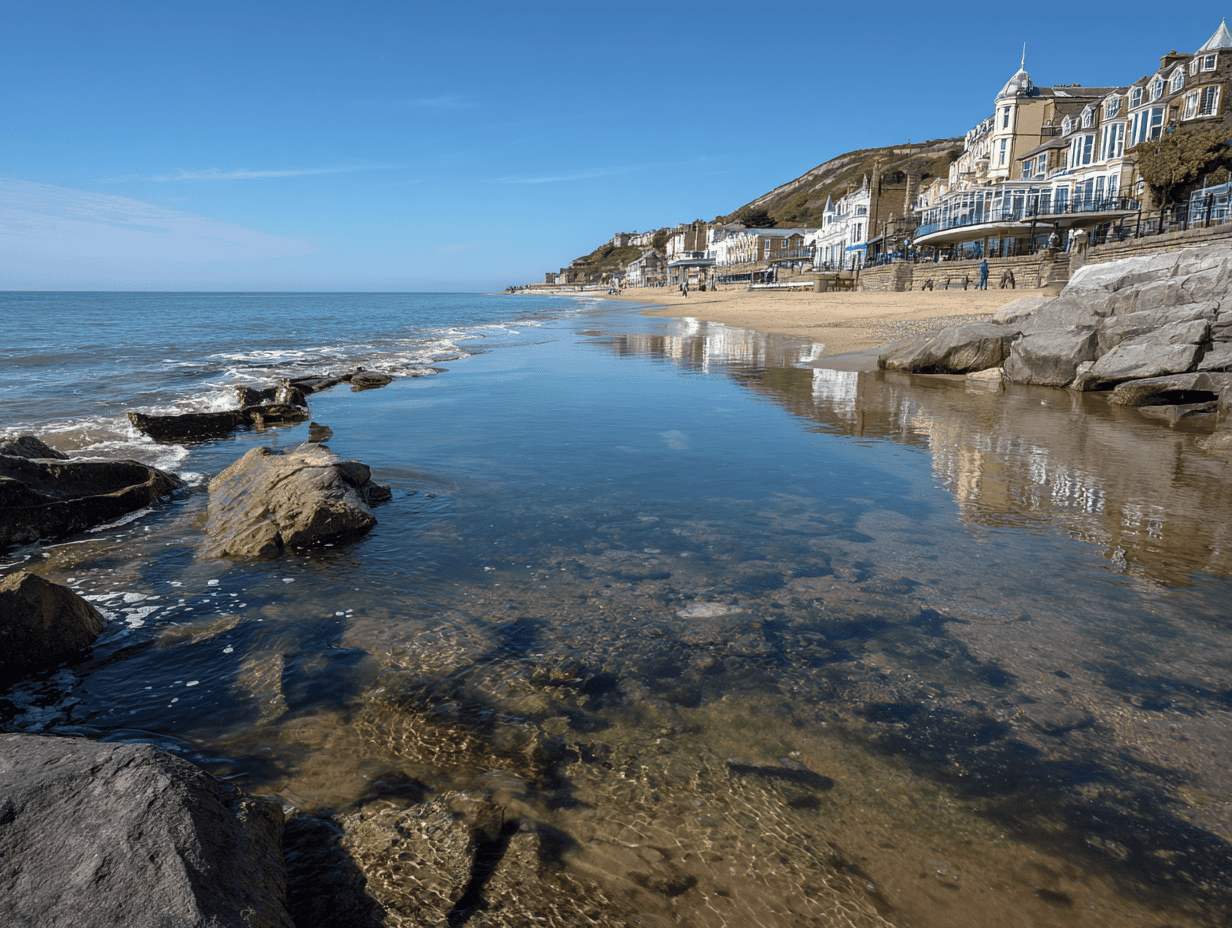
Come here as someone who wants a beautiful, atmospheric beach in the off-season, and Ventnor delivers with very little competition. The esplanade, the red shingle, the Spyglass Inn at the western end of the bay, the Victorian town stacked up the hillside behind you, the fishermen coming and going at the Haven with their day’s crab and lobster it’s one of the more distinctive beaches on the south coast.
The glass is a reason to look carefully at the strandline while you’re here. It’s not a reason to make a dedicated trip from the mainland.
Out of season, with the dog ban lifted and the tourist trade gone, Ventnor is genuinely special. That’s when to come.
What you’ll find here
Colours commonly found: Green, brown, white
Occasional finds: Blue, Aqua, Amber, Turquoise
Rare finds: Cobalt Blue, Black, Lavender, Red
Bonus: The fine red shingle itself is distinctive. The Greensand geology of the southern IoW gives the beach its unusual colour, and the small, well-frosted pieces of glass here tend to be nicely shaped for jewellery use, even if they’re modest in size
Find something special? Use our sea glass scanner, GlassLore, to find out rarity, value and history; then you can share to our finds gallery and, more importantly, earn points to climb our hunters leaderboard – are you ready to compete?
When to go
October to April is the honest answer for any serious hunting. The beach is at its busiest from May through September, and with the dog ban in place for those exact months, you’re unlikely to be visiting then anyway.
Low tide is important: the bay narrows significantly at high water, leaving only a thin strip of shingle above the waterline. A spring tide around new or full moon exposes the most foreshore and brings the freshest glass up from the lower beach.
Post-storm is the best timing of all. The Channel can build proper south-westerly swell even into this sheltered bay, and the days after rough weather consistently refresh the strandline. An early morning visit in November after a week of southerly wind is as good as Ventnor gets for glass hunting, the beach quiet, the light low and clear, the red shingle turned over and waiting.
Today’s ShoreSense Score & Best Hunting Window
Ventnor sits on the south coast of the Isle of Wight, facing directly onto the English Channel, just east of St Catherine’s Point, the island’s southernmost tip. The tidal range here is around 3–4 metres on a spring tide, considerably more generous than the Solent beaches on the north of the island, and enough to significantly alter the character of the beach as the tide drops.
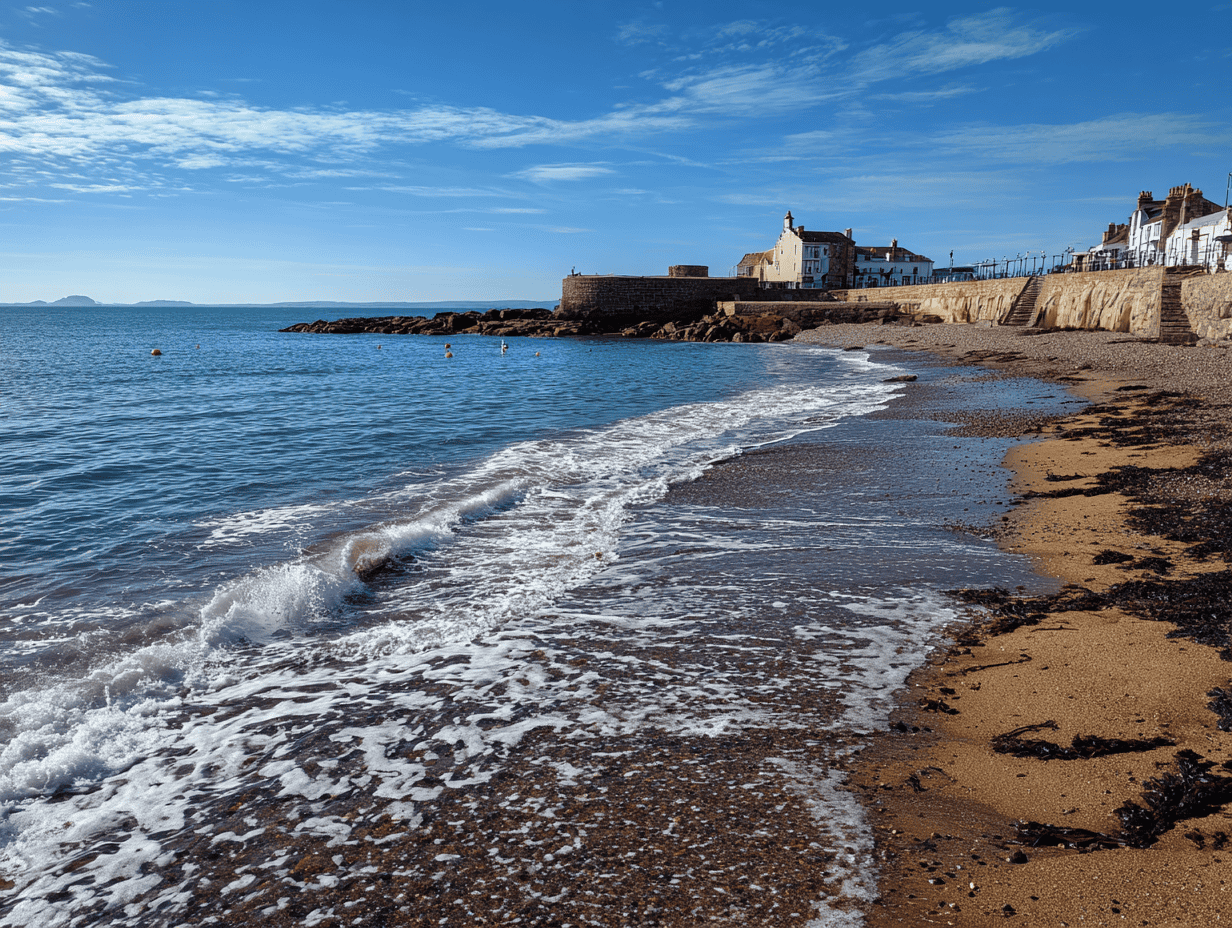
As the tide falls, start on the strandline and work slowly through the red-tinged shingle, where Ventnor’s small frosted pieces can be surprisingly easy to miss. As more foreshore opens, move onto the rocky margins at either end of the bay and check the shingle and crevices trapped between the rocks. The Haven end is the main area I’d prioritise, particularly around the entrance and rocky edges.
On very low spring tides, additional ledges and lower foreshore at the base of the bay become accessible and are worth a careful scan. After stronger southerly or south-westerly conditions begin to settle, recheck the strandline and rocky pockets. Use today’s ShoreSense Best Window to choose when to arrive, then follow this strandline → rocky-margin → Haven → lower-ledge progression once you’re there.
The ShoreSense widget below combines recent marine conditions, tide timing and practical hunting weather to show today’s overall ShoreSense Score, Hunting Potential, Comfort and the best available hunting window for this beach. It uses UKHO tide data alongside current marine and weather inputs to help you judge whether conditions look promising for a hunt.
Ventnor Beach sea glass conditions
Ventnor Beach
Isle of Wight
43/100 — Limited, best window 16:04–19:04.
Best window is 16:04–19:04 with spring tides (near full/new moon) and calm sea, so the chance of fresh finds is limited today.
Limited — a modest beach on a quiet day
Ranked #74 in the UK ShoreSense leaderboard today.
| Tide | Time | Height |
|---|---|---|
| Low water | 05:14 | 0.9 m |
| High water | 12:18 | 4.0 m |
| Low water | 17:34 | 1.0 m |
Where to look on the beach
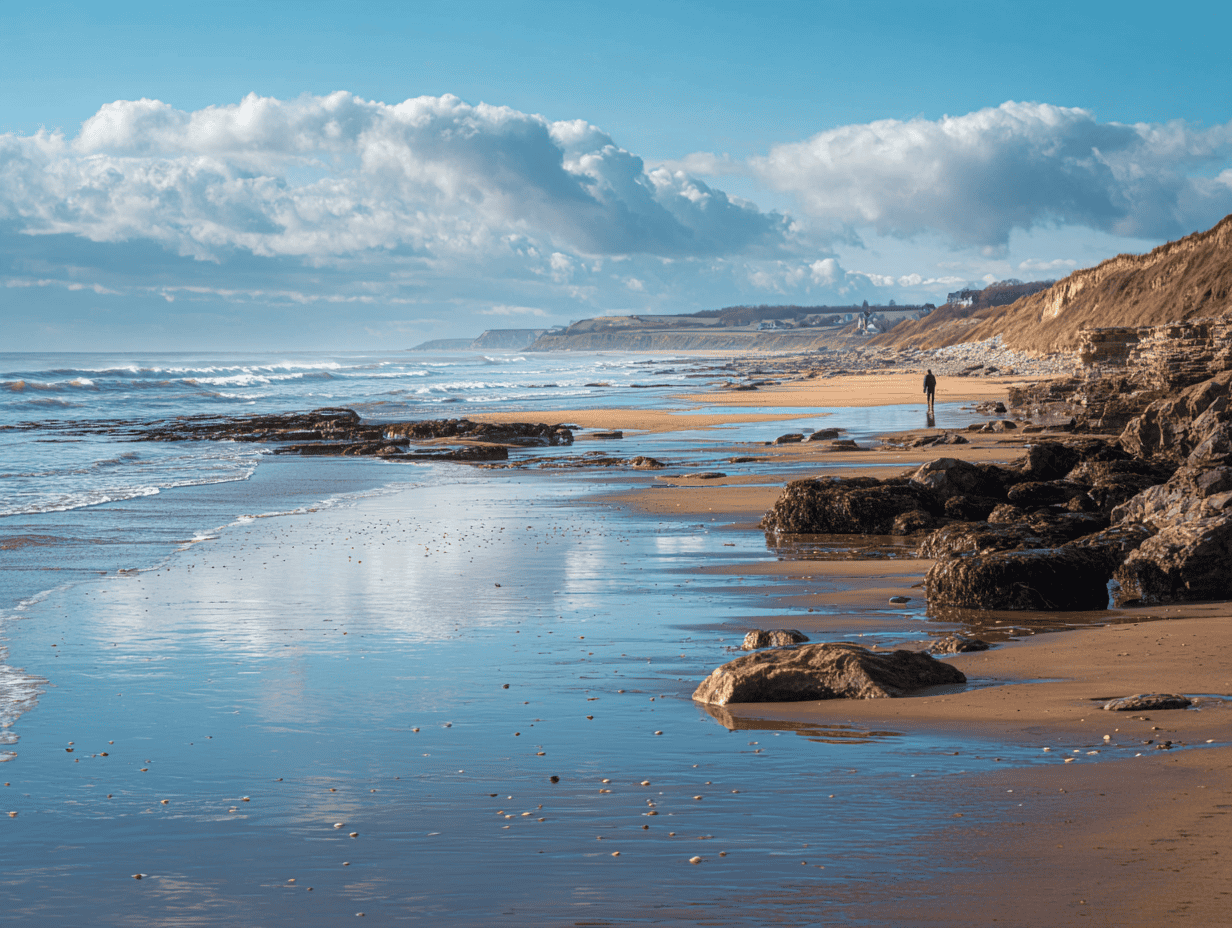
The beach runs in a broad arc from Ventnor Haven and the Cascade at the eastern end to the Spyglass Inn at the west. Start at the strandline, the band of seaweed, shells and debris that marks the high water line and work slowly along it. The glass here is small and blends readily into the red-tinged shingle; crouch down and get your eye level close to the pebbles.
The rocky outcrops at either end of the bay concentrate glass in the crevices between rocks at low water and are worth checking carefully. The centre of the beach is cleaner and sandier; the fishermen reportedly cleared a channel of rocks here years ago for swimming, and it tends to produce less glass than the edges.
At very low spring tides, the rocks and ledges at the bay’s base reveal extra foreshore that’s rarely accessible. Target these sessions if you want the best chance. The Haven end is particularly worth working: the fishermen’s activity in and out of the harbour over many decades has put material into this part of the bay, and the rocks around the entrance trap and hold small pieces well.
Key Tip:
Focus on the rocky margins at either end of the bay rather than the central beach. The Haven end is particularly productive, with decades of harbour activity and natural rock traps helping glass accumulate amongst the shingle.
Difficulty Level – Intermediate
- The best hunting areas are exposed only at lower tides
- Glass can be difficult to spot amongst the red-tinged shingle
- Rocky sections require careful footing
- Spring tides reveal additional hunting ground
- Success comes from searching collection points rather than an open beach
Hunting Style – The Pebble Scanner
Ventnor rewards hunters who slow down and search carefully. Work the strandline first, then focus on the rocky edges of the bay where glass becomes trapped between the rocks and shingle. Many of the best finds are small and well-hidden, making patience and attention to detail essential.
Beach Personality
Ventnor feels distinctly different from many British sea glass beaches. Sheltered beneath dramatic cliffs and backed by the town’s Victorian character, the bay has a relaxed, almost Mediterranean atmosphere on a sunny day. The glass is rarely abundant, but the combination of harbour history, rocky foreshore and beautiful coastal scenery makes every hunt feel like a rewarding exploration of one of the Isle of Wight’s most characterful seaside towns.
Dog friendly?
Dogs are banned from Ventnor beach between May and September. Outside those months, they’re welcome, and off-season Ventnor is exactly the kind of place worth bringing a dog. The coastal path east towards Bonchurch is a lovely extension after the hunt, about a mile and a half of cliff path with Channel views, passing through the hamlet of Bonchurch with its mill pond and ancient church.
The path west towards Steephill Cove is another option, passing one of the IoW’s most charming small coves. Check our Yappy Places listing for Ventnor for dog-friendly cafés and pubs in the area.
Practical information
Parking: Pay and display car parks at both ends of the bay, near the Cascade at the eastern end and near the Spyglass Inn at the west. Metered parking also available on the seafront road. Check current charges and hours before visiting.
Toilets: Public toilets on the seafront, though condition has been noted as variable – check on arrival.
Food and drink: Good choice along the esplanade, year-round cafés, the Spyglass Inn with its nautical interior and sea-facing terrace, and Ventnor Haven Fishery at the Cascade end, selling fresh-landed crab and lobster from the Blake family’s day boats. One of the better places on the IoW to eat after a beach morning.
Getting there without a car: Southern Vectis buses serve Ventnor from Newport and Ryde. The town is steeply built into the hillside the beach is at the bottom, which the buses reach via the Cascade road.
Accessibility: The seafront esplanade is accessible. Access from the town involves steep roads and the Cascade descent. The beach itself is level enough once you’re on it.
What to bring
- Comfortable shoes – Ventnor’s approach is steep; the shingle beach itself is manageable but uneven underfoot
- A small container for finds- the pieces here are small and worth keeping separate
- Tide times checked in advance – the beach narrows considerably at high water
- Layers – the south-facing aspect is genuinely warm in good weather, but the Channel wind can be sharp when it turns
- A coffee budget – the Spyglass Inn and the Haven Fishery are both worth a stop
The history behind the glass
Before the Victorians arrived, Ventnor was a small fishing hamlet, almost nothing, squeezed between the larger parishes of Godshill and Newchurch on a steep cliff face that looked out across the Channel.
The fishermen had been working these waters for generations, running day boats out of the Haven, landing crab and lobster on the shingle. That fishing history is still alive at Ventnor Haven Fishery today, where the Blake family continue the same trade from the same small harbour.
What transformed the place was medicine, or at least the Victorian belief in it. In the 1840s, Dr Arthur Clarke published a report claiming that Ventnor’s south-facing microclimate and Channel air had near-miraculous properties for treating tuberculosis. The consumptive classes began arriving in numbers.
Hotels were built into the steep hillside. Sanatoriums followed. When the Isle of Wight Railway reached Ventnor in 1866, tunnelling through St Boniface Down to deliver passengers directly to the resort, the trains ran so full of invalid passengers that one service became known as the Invalid Express, reportedly completing the journey from Ryde in just over twenty minutes to rush its consumptive passengers to their cure.
Karl Marx came to take the air. Charles Dickens lived nearby. The town described itself, without apparent embarrassment, as the English Mediterranean and Mayfair by the Sea.
All of that Victorian and Edwardian occupation of the hotels, the sanatoriums, the boarding houses, the fishing harbour, the ordinary domestic life of a busy resort town has been going into the Channel one way or another for the best part of two centuries. The Botanic Garden now occupies the site of the old TB hospital; most visitors don’t know they’re walking on the remains of a Victorian sanatorium while they admire the subtropical plants.
The glass on the strandline is the material residue of all of it, tumbled and frosted by the Channel until it’s ready to be found.
From beach to jewellery
Found something in the Ventnor shingle? At Mermaid Tears, every piece starts exactly where you’ve been standing, Seaglass hand-hunted from UK beaches and handmade into something lasting. Browse the collection →
Disclaimer: Tide times, dog restrictions, parking charges and beach conditions change regularly. Always verify before visiting. Beach byelaws are updated annually. Check with the local council or beach authority for the most current rules.
Last updated: Aug 2026
Frequently asked questions
Is Ventnor Beach worth visiting just for sea glass? Honestly, it’s better framed as a beach that offers sea glass as a bonus alongside everything else: the esplanade, the food, the off-season atmosphere, and the coastal walks. The glass is real but modest in volume. Set expectations correctly, and it’s a very good outing; come expecting Yaverland quantities, and you’ll be disappointed.
When is the best time to visit Ventnor for sea glass? October to April, at low tide, ideally within a few days of a south-westerly storm. The Channel action refreshes the strandline, the dog ban is lifted, and you’ll have the beach largely to yourself.
Are dogs allowed at Ventnor Beach? Dogs are banned from May to September. They’re welcome outside those months, and the coastal paths east to Bonchurch and west to Steephill Cove are excellent dog walks year-round.
Why is Ventnor beach red? The shingle contains Greensand from the distinctive geology of the southern Isle of Wight, the same formation that runs through the cliffs between St Catherine’s Point and Ventnor, and gives the beach its unusual reddish colour.
What’s the connection between Ventnor and tuberculosis? In the Victorian era, Ventnor was celebrated as a health resort specifically for TB patients, with several sanatoriums established to take advantage of the town’s sheltered south-facing microclimate. Ventnor Botanic Garden now stands on the site of one of the largest. The Invalid Express train ran from Ryde to rush patients to treatment.
What should I do after beachcombing at Ventnor? The Spyglass Inn at the western end of the bay has a great terrace. Ventnor Haven Fishery sells fresh-landed crab and lobster. The town above is worth exploring, with independent shops, good cafés, and the Botanic Garden a short walk from the seafront.
More Beaches
Check out our Full Isle of Wight Guide or plan your trip with our UK Sea Glass Map.