Where the Normans Landed and the Smugglers Ran
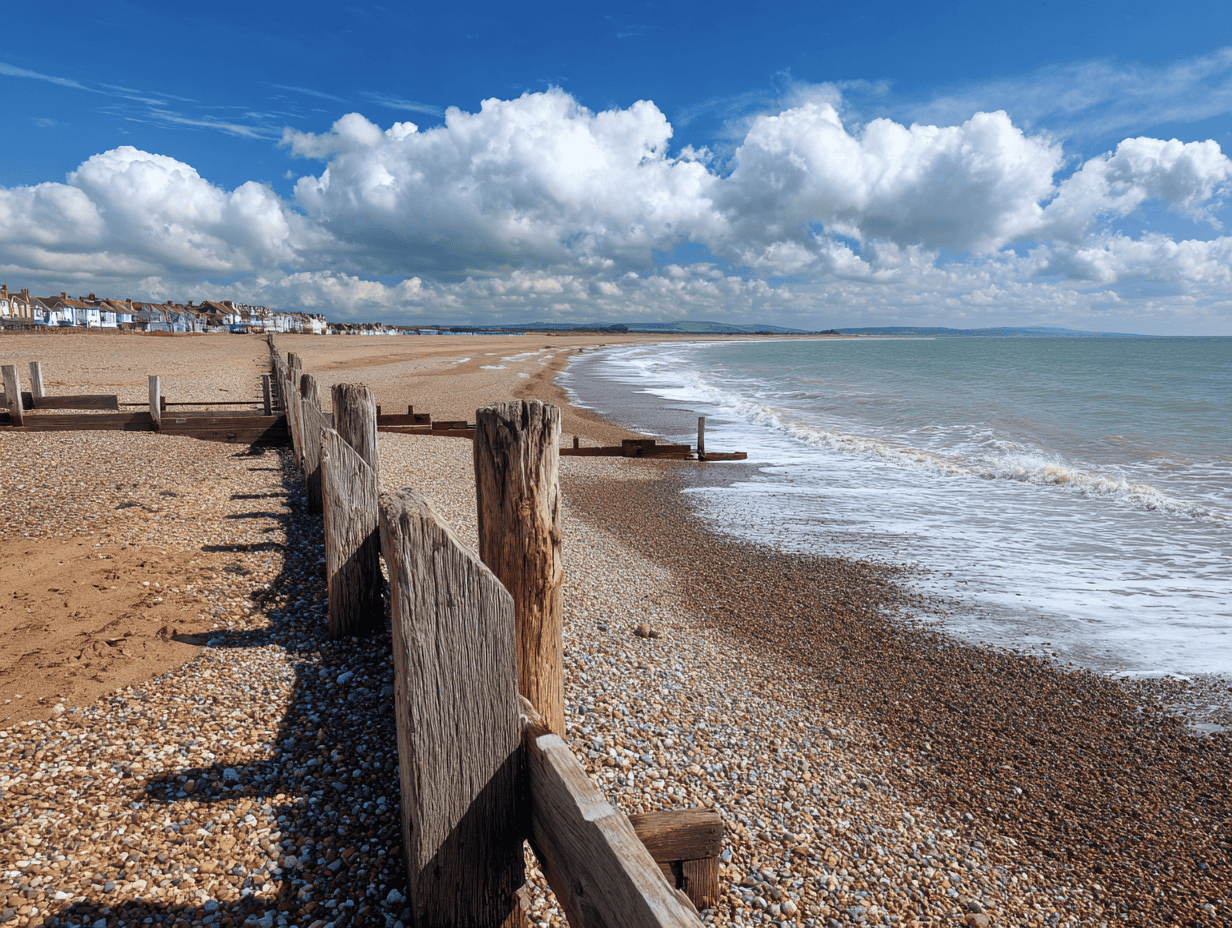
Pevensey Bay is a fair but worthwhile sea glass hunting beach, with the best starting point around Sea Road where the groynes and coarse shingle create easy-to-read hunting zones. Work the upper strandline first, then move through the coarser shingle ridges and deeper pebble pockets between the groynes as the tide falls. Green, brown and white are the most common finds, with blue, aqua, amber and turquoise appearing occasionally and cobalt blue, black and lavender among the rarer colours reported. The real appeal is the combination of straightforward hunting terrain, Norman invasion history, smuggling and the surviving Martello towers along the bay.
Where to hunt: Sea Road access → upper strandline → coarse shingle between groynes → deeper pebble pockets → quieter sections east or west of the village
- Rating: Fair Beach
- Terrain: Easy
- Level: Intermediate
- Dog friendly: Yes, all year round, no restrictions
- Location: Pevensey Bay, East Sussex
- Sat Nav: BN24 6EH (Sea Road car park)
- Common colours: Green, brown, white
- Rare colours: Cobalt Blue, Black, Lavender
Today at Pevensey Beach
Check today’s conditions below or scroll down for the 7-day forecast
Pevensey Bay sea glass conditions
Pevensey Bay
East Sussex
55/100 — Fair, best window 12:58–13:58.
Best window is 12:58–13:58 with calm sea, so the chance of fresh finds is fair today.
Fair — expectations lower at this beach
Ranked #65 in the UK ShoreSense leaderboard today.
| Tide | Time | Height |
|---|---|---|
| Low water | 06:21 | 0.9 m |
| High water | 11:58 | 7.6 m |
| Low water | 18:44 | 0.8 m |
Best For:
- Sea glass hunting
- Beginners
- Shingle beach searching
- Long beach walks
- Groyne hunting
- Historic finds
- Dog walkers
- Year-round hunting
Why Pevensey Bay – history in every pebble
Pevensey Bay won’t fill your bag the way Seaham will, and it won’t dazzle you with the volume of a top-rated beach. But come here with the right expectations: a quiet, largely undisturbed shingle shore with a history that runs back through a thousand years of landings, battles, fishing, and smuggling and it more than earns its place on the map.
This is the beach where William the Conqueror stepped ashore in October 1066, beginning the Norman conquest of England. It’s the beach where the smuggling gangs of the Alfriston area ran their French brandy in the dead of night while Riding Officers tried to intercept them. It’s where the last great pitched battle between naval forces and smugglers in the region took place in 1833. And it’s where generations of Sussex fishing families have worked the same shingle shore, leaving behind the incidental debris of a working coastal life.
None of that writes itself into a high-volume sea glass beach. But it writes itself into a beach with a genuine story and for a fair amount of glass, well-frosted by Channel swells, found in relative peace with a history worth knowing about. That’s not nothing.
What you’ll find here
Colours commonly found: Green, brown, white
Occasional finds: Blue, Aqua, Amber, Turquoise
Rare finds: Cobalt Blue, Black, Lavender
Bonus: Old pottery sherds, occasional Victorian bottle glass, sea pottery fragments
Find something special? Use our sea glass scanner, GlassLore, to find out rarity, value and history; then you can share to our finds gallery and, more importantly, earn points to climb our hunters leaderboard – are you ready to compete?
When to go
Post-storm is the best time at Pevensey Bay. The beach receives longshore drift material from the west shingle and debris transported along the Channel coast, and after sustained south-westerly swells, fresh material concentrates along the strandline. Winter and early spring are quieter and more productive than summer.
The beach is shallow-shelving with a generous sand and shingle foreshore at low water, so timing your visit around low tide gives you the most beach to work. Spring tides expose the most foreshore and are worth planning around. The beach is wide and flat, which makes for easy walking; you can cover a lot of ground in a session here.
Today’s ShoreSense Score & Best Hunting Window
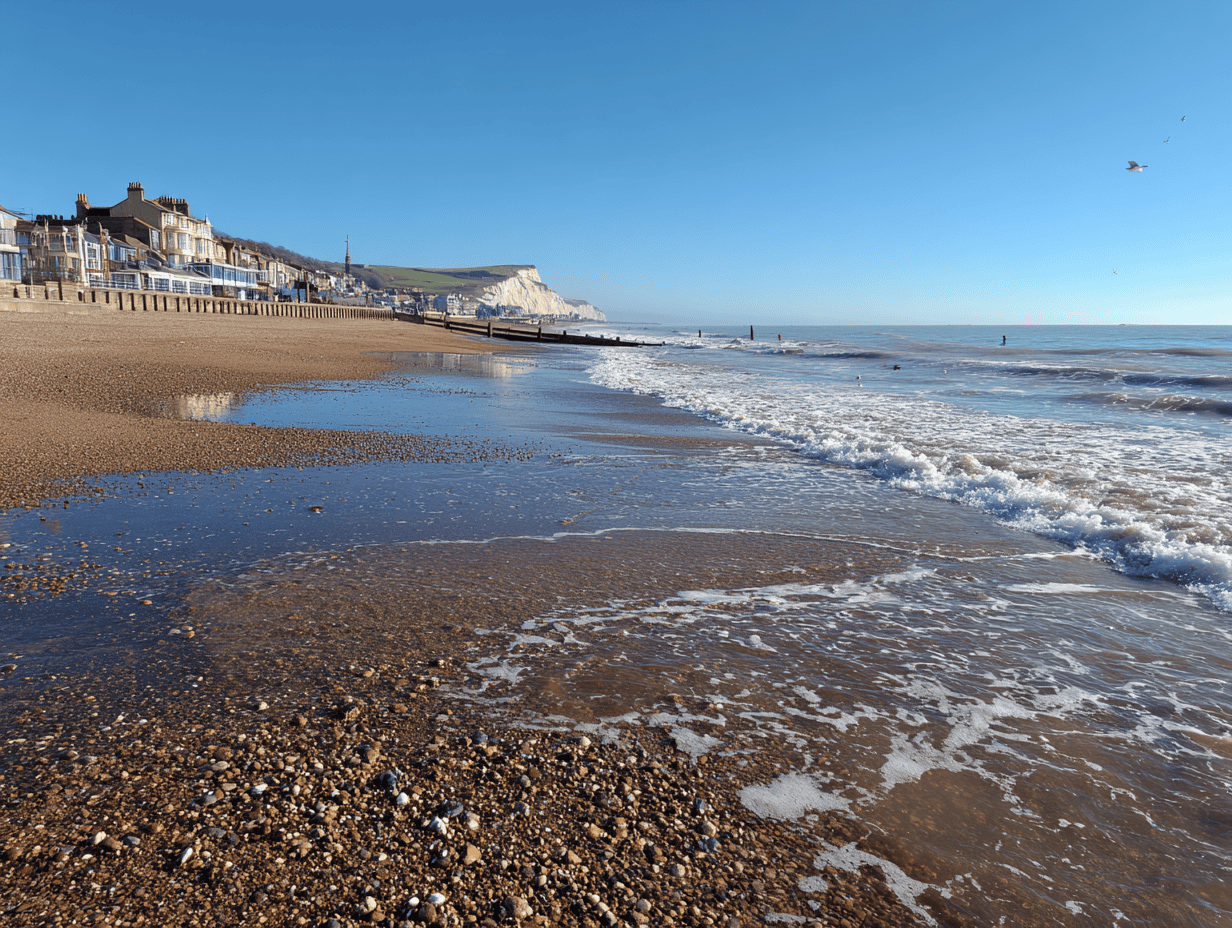
Pevensey Bay faces south across the English Channel on an open, uninterrupted stretch of coast, with a tidal range of around 6 metres on a spring tide. The beach is notably flat and shallow-shelving at low water; a wide expanse of sand and shingle is revealed, giving hunters a generous foreshore to work.
Start around Sea Road and work the upper strandline before moving down into the coarser shingle ridges between the groynes. As more foreshore opens, work each groyne bay methodically and check the deeper pebble pockets where heavier material can collect.
If you have time, continue east or west beyond the main village access and look for newly sorted bands rather than simply following the lowest point of the tide. After stronger south-westerly conditions begin to settle, recheck the strandline and any reshaped groyne pockets.
Use today’s ShoreSense Best Window to choose when to arrive, then follow this Sea Road → strandline → groyne ridges → lower pebble pockets progression once you’re there.
The ShoreSense widget below combines recent marine conditions, tide timing and practical hunting weather to show today’s overall ShoreSense Score, Hunting Potential, Comfort and the best available hunting window for this beach. It uses UKHO tide data alongside current marine and weather inputs to help you judge whether conditions look promising for a hunt.
Pevensey Bay sea glass conditions
Pevensey Bay
East Sussex
55/100 — Fair, best window 12:58–13:58.
Best window is 12:58–13:58 with calm sea, so the chance of fresh finds is fair today.
Fair — expectations lower at this beach
Ranked #65 in the UK ShoreSense leaderboard today.
| Tide | Time | Height |
|---|---|---|
| Low water | 06:21 | 0.9 m |
| High water | 11:58 | 7.6 m |
| Low water | 18:44 | 0.8 m |
Compare your Beaches on our Hot Beaches page, updated daily with the best beaches for today, the next seven days, as well as the movers and shakers.
Where to look on the beach
Pevensey Bay beach stretches for several miles along this low-lying section of the Sussex coast, from Sovereign Harbour to the east towards Normans Bay and beyond. The most productive section for glass hunting is the stretch immediately around the Sea Road car park and village. This is where historical activity was most concentrated, with the old fishing village at its heart.
Work the strandline first, the high-tide mark where debris accumulates. Then drop down to the waterline on the ebb and look in the coarser shingle ridges between the groynes, where glass gets trapped and held. The beach is wide enough that sections east and west of the main village access point see fewer people and can yield undisturbed material.
Be aware that the beach profile changes with shingle replenishment works; fresh aggregate is brought in by vessel and periodically redistributed by bulldozer, temporarily burying older glass. Visits after a period of natural wave action that redistributes this material are best.
Key Tip
Focus your efforts around the Sea Road area and search the coarser shingle ridges between the groynes as the tide falls. If shingle replenishment has recently taken place, consider returning after a few weeks of natural wave action, when older material is more likely to have been uncovered again.
Difficulty Level- Beginner
- Easy access from multiple points along the beach
- Wide, open shoreline with straightforward terrain
- Productive hunting areas are easy to identify around groynes and shingle ridges
- No scrambling or specialist equipment required
- Suitable for first-time sea glass hunters and families
Hunting Style- The Groyne Hopper
Pevensey Bay rewards a methodical approach. Move from groyne to groyne, searching the shingle ridges and waterline between each one. The sea naturally sorts and traps material in these sections, making them the most productive areas to investigate.
Beach Personality
Pevensey Bay is the kind of beach that quietly rewards persistence. It doesn’t have dramatic cliffs, caves or hidden coves competing for your attention. Instead, it offers miles of shingle shoreline where the sea has sorted and redistributed material for generations. The historic fishing village at its centre gives the beach a sense of connection to the past, while the ever-changing shingle banks ensure that no two visits are exactly alike.
Dog friendly?
Dogs are welcome on Pevensey Bay beach year-round, with no seasonal beach exclusion currently in place. Keep dogs under proper control, clear up after them and follow any local signs or temporary restrictions.
Check our Yappy Places listing for Pevensey Bay for dog-friendly options. The Aqua Bar on the beach is dog-friendly and has a garden.
Practical information
Parking: Sea Road car park (BN24 6EJ) sits right next to the beach, run by Wealden District Council with around 115 spaces: 90 pay and display bays, 15 one-hour short stay bays, 6 disabled short stay bays and 4 EV charging bays. Tarmac surface, with toilets, accessible toilets and a café on site. £5 up to four hours, £6.50 all day, charged 1 March to 30 September and free through the winter. Note the 2-metre height restriction, and that charges apply to all users including Blue Badge holders. The beach road gets busy on summer weekends, so arrive early.
Toilets: Public toilets are available at Sea Road Car Park and are currently open from 8am–6pm daily. Facilities include an accessible toilet, baby-changing and a Changing Places toilet.
Food and drink: The Aqua Bar is on the beach and serves food and drink year-round. A small selection of local pubs and cafes is within easy reach of the beach. Pevensey village itself (about a mile inland) has a pub and further amenities.
Getting there without a car: Pevensey Bay has its own railway station on Wallsend Road, BN24 6AA, served by Southern. From the station, it is a straightforward walk through the village to the Sea Road beach access. Pevensey & Westham is a separate station farther inland and is more useful for Pevensey Castle than for the main beach hunt.
Accessibility: Sea Road Car Park is tarmac and has disabled parking directly beside the beach, with accessible and Changing Places toilet facilities on site. The sea-glass hunting area itself is loose shingle and is not wheelchair- or pushchair-friendly, although the lack of cliffs, steps or steep access makes Pevensey easier to reach than many other Sussex shingle beaches.
What to bring
- Flat shoes or wellies – the shingle is manageable but not smooth
- A bag or tin for finds
- A hand rake for working the groyne bases
- Layers -the beach is very exposed with no cliff shelter
- A tide table timing low water makes a meaningful difference here
The history behind the glass
In Roman times, what is now Pevensey Bay was a tidal lagoon a broad shallow bay reaching far inland. The Romans built a fort on the peninsula, Anderitum, one of the Saxon Shore Forts constructed to defend the province from raids. The sea washed three sides of it. By the medieval period, the bay had silted and the shingle built up, but the coastline remained deeply significant.
On 28 September 1066, William, Duke of Normandy, landed at Pevensey with an invasion fleet of around 700 ships. He established temporary defences inside the Roman fort before moving east towards Hastings, beginning the campaign that ended at the Battle of Hastings on 14 October.
For the next few centuries, Pevensey was a significant enough port to be included in the liberty of the Cinque Ports, the medieval confederation of Channel towns, obliged to provide ships and men for the Crown. But the harbour silted up, the sea retreated, and Pevensey the port became Pevensey the village, stranded a mile inland from the shingle shore that now bears its name.
What followed was a quieter but no less vivid chapter: smuggling. Pevensey Bay was a favoured quiet landing beach where the smugglers of the Alfriston area ran their contraband French brandy ashore, carrying it inland through a chain of receiving cottages towards London. The last great battle between naval personnel and smugglers in the region took place at Pevensey Bay in 1833, by which point the trade was finally in decline, brought low by lower taxes and an increasingly organised Coast Blockade force stationed in Martello towers along this very shore. 18th Century.
Those Martello towers, squat circular fortifications built between 1805 and 1810 as defences against Napoleonic invasion, still stand on this stretch of coast. You can see them from the beach. And the glass in the shingle is part of all of it: centuries of coastal activity on a shore that history kept returning to.
From beach to jewellery
Found something in the Pevensey shingle? At Mermaid Tears, every piece starts exactly where you’re standing, hand-hunted from UK beaches and handmade into something lasting. Browse the collection.
Disclaimer: Tide times, dog restrictions, parking charges and beach conditions change regularly. Always verify before visiting. Shingle replenishment works at Pevensey Bay are carried out periodically and can temporarily affect beach access. Check foreshore conditions before you go.
Last updated: September 2026
Dog rules checked: September 2026 – Wealden District Council (no seasonal restrictions)
Frequently asked questions
Is Pevensey Bay worth visiting just for sea glass? Honestly, not as a destination hunt on its own; its volume is modest. But combined with the extraordinary history, a dog-friendly all-year beach, free winter parking, and easy access, it’s a very pleasant fair-weather or off-season outing. Pair it with Hastings for a stronger day out.
When is the best time to go to Pevensey Bay for sea glass? Post-storm, at low water, in winter or early spring. The flat foreshore opens up well on a spring low tide, and the beach sees very few hunters; anything that’s been churned up will still be there when you arrive.
Are dogs allowed at Pevensey Bay beach? Yes, all year round with no seasonal restrictions, one of the few East Sussex beaches with a completely open policy.
What is the Norman landing site at Pevensey Bay? William the Conqueror landed at Pevensey Bay on 28 September 1066 with his Norman army before the Battle of Hastings. The nearby Pevensey Castle was built within the walls of the original Roman fort, and both are well worth visiting alongside a beach trip.
Is the beach flat enough to walk easily? It’s relatively flat and easy compared to many shingle beaches, no cliffs, no steep access, and the groyne system helps keep the profile manageable. The shingle itself isn’t smooth, but the terrain is straightforward.
What are the Martello towers near Pevensey Bay? The squat circular brick towers visible along this stretch of coast were built between 1805 and 1810 as part of England’s defences against a potential Napoleonic invasion. They housed small garrisons and were later repurposed as Coast Guard stations during the smuggling era.
More Beaches
Check out our Kent and Sussex Beach Sea Glass or plan your trip with our UK Sea Glass Map.