Rare Colours in the East Neuk
Crail is a good sea glass hunting beach, especially for patient hunters searching the rocky lower shore around Roome Bay. Most finds are small, well-frosted pieces in green, white and brown, with blue, aqua, amber, turquoise, cobalt, black and lavender also reported. Crail is particularly interesting for micro sea glass and rarer colours, but it rewards slow, careful searching rather than covering lots of ground quickly.
- Rating: Good Beach
- Terrain: Tricky- rocky foreshore with boulders, uneven shingle, slippery rock pools at low tide
- Level: Intermediate
- Dog friendly: Yes- dogs welcome all year round, no seasonal restrictions
- Common colours: Green, white, brown
- Rare colours: Cobalt Blue, Black, Lavender
- Location: Crail, East Neuk of Fife, Scotland
- Sat Nav: KY10 3TT (Roome Bay Crescent -park on the street above the beach)
Today at Crail Beach
Check for the latest ShoreSense score and tide times. Scroll down for the full 7-day Forecast
Crail sea glass conditions
Crail
Fife
54/100 — Fair, best window 07:04–10:04.
Best window is 07:04–10:04 with spring tides (near full/new moon) and offshore wind, so the chance of fresh finds is fair today. Sea is likely calm and picked-over — go early.
Fair — a decent beach in the right window
Ranked #66 in the UK ShoreSense leaderboard today.
| Tide | Time | Height |
|---|---|---|
| High water | 02:20 | 5.5 m |
| Low water | 08:34 | 0.7 m |
| High water | 14:47 | 5.4 m |
| Low water | 20:48 | 0.8 m |
Best For
- Micro sea glass hunting
- Turquoise finds
- Patient hunters
- Texture-based scanning
- Rocky shoreline searching
- Quiet low-tide hunting
- East coast Scotland trips
- Experienced beachcombers
Why Crail
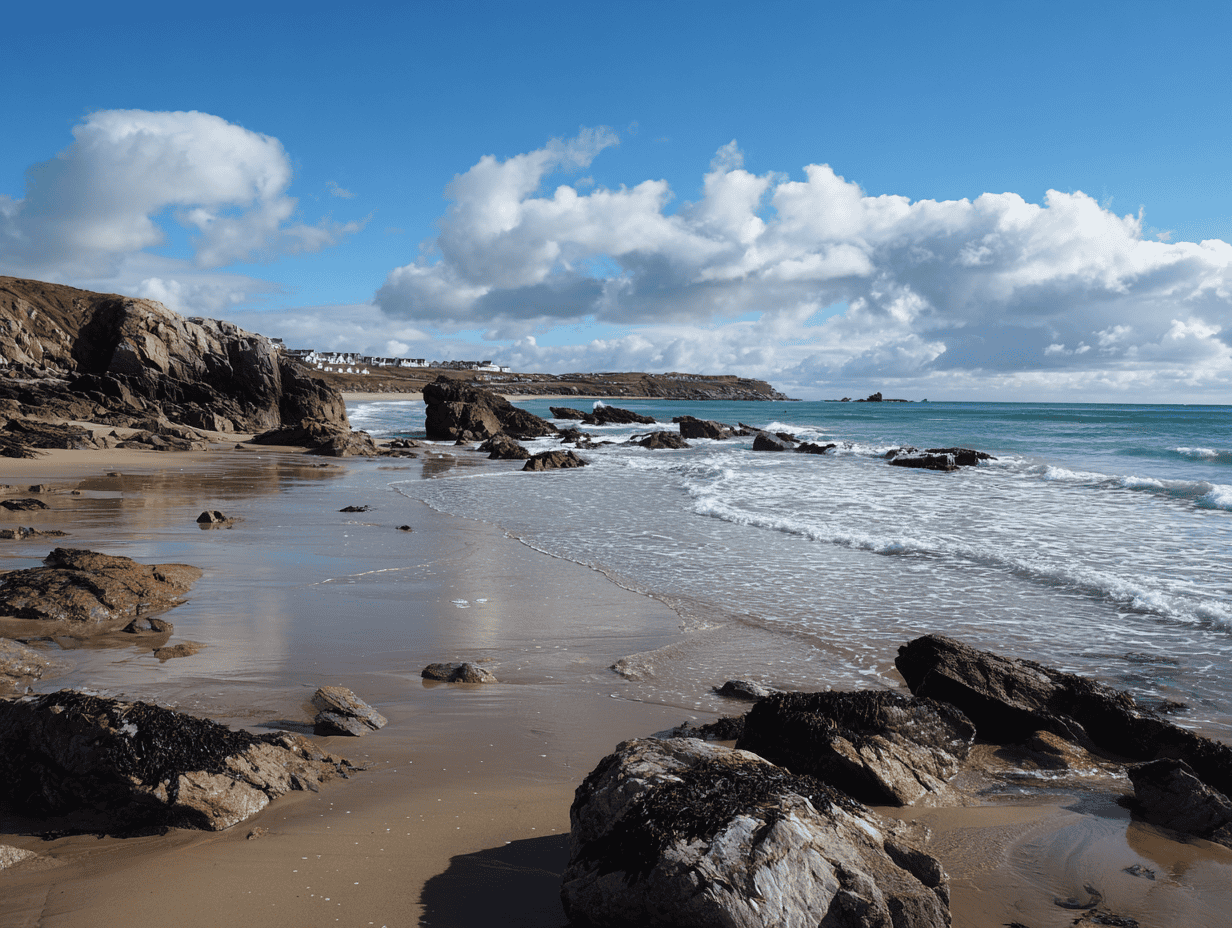
Crail is not a beach that announces itself. You park on a quiet residential street, walk down through a sloping grass park past an old disused paddling pool, and there it is, a curving bay of sand, shingle and rockpools with soft sedimentary cliffs behind and the Isle of May sitting out in the Firth of Forth. It’s the kind of place you’d drive straight past without knowing what was there.
Which is exactly why it’s worth knowing about.
The glass at Crail is micro-small, jewellery-grade pieces rather than the satisfying chunks you’ll find at Seaham, but the quality is exceptional, and the colours are genuinely rare. Hunters who know this stretch of the East Neuk specifically seek out Crail for turquoise, a colour that barely appears on most UK beaches.
What comes in here reflects centuries of Fife’s industrial glass trade, tumbled smooth by North Sea tides, and the near-total absence of other hunters means what’s there is waiting for you.
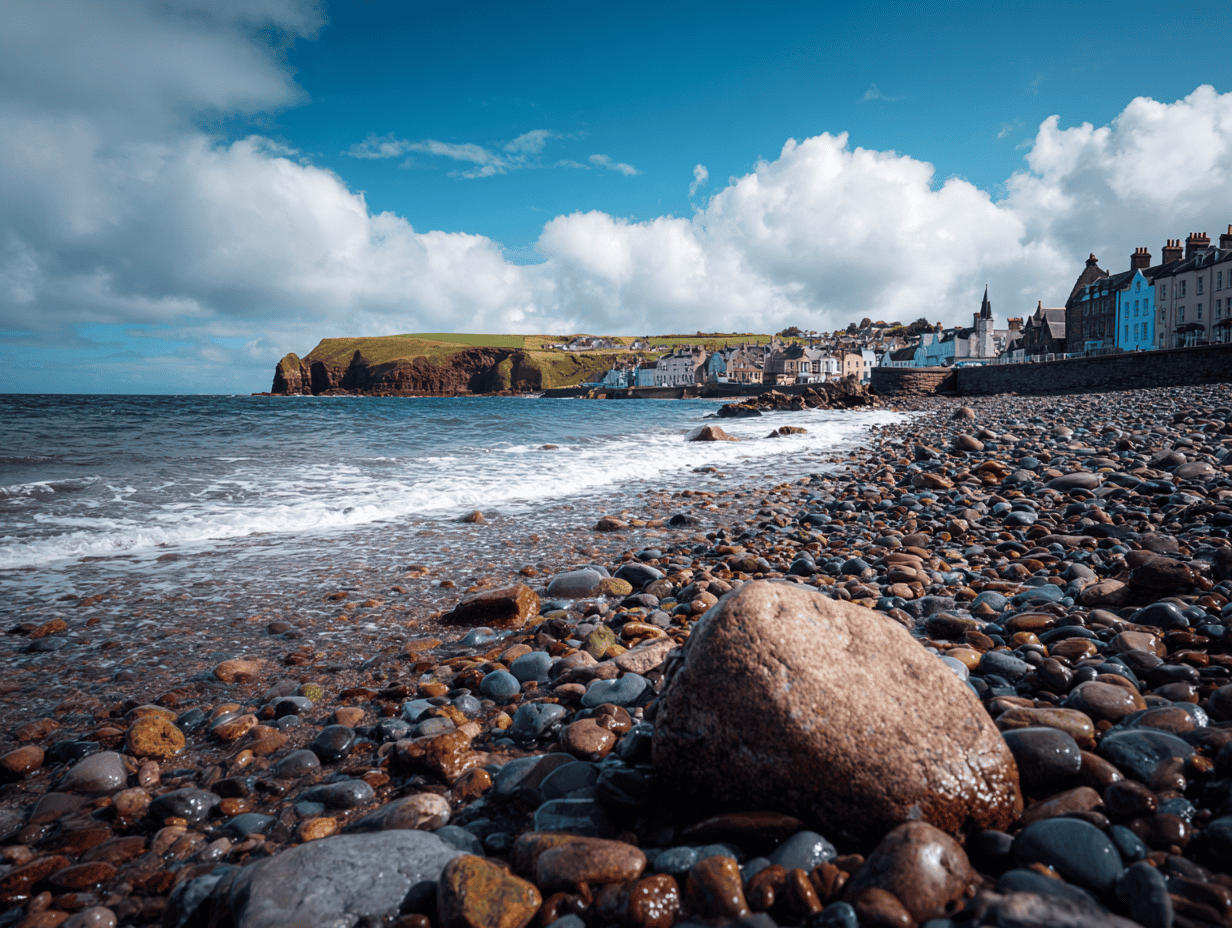
Crail itself is extraordinary. It holds the title of one of Scotland’s oldest Royal Burghs, with a harbour described as the most photographed in Scotland, honey-coloured stone, lobster pots, a few small fishing boats, and Dutch-influenced architecture with pantiled rooftops. The Fife Coastal Path runs right through it.
After the hunt, there is fresh lobster cooked to order at the harbour, good fish and chips, and a tearoom carved into the clifftop with one of the finest views you’ll get from a table anywhere in Scotland. You come for the glass, and you stay for everything else.
What you’ll find here
The glass at Crail runs small, but well-frosted, consistent tumbling from the North Sea produces pieces in excellent condition. Colours here trace back to Fife’s Victorian glass manufacturing trade and centuries of maritime activity, which means the range is more varied than beaches with a single industrial source.
Colours commonly found: Green, white, brown
Occasional finds: Blue, Aqua, Amber, Turquoise
Rare finds: Cobalt Blue, Black, Lavender – True turquoise is genuinely rare anywhere in the UK and specifically associated with this stretch of the East Neuk coast
Bonus: Sea pottery fragments, old stoneware, and occasional pieces with partial embossing from Victorian-era bottles
Found something unusual? Try GlassLore, our free sea glass scanner, to explore what it could be and log your find to the gallery and, more importantly, earn points and climb the leaderboard.
When to go
Crail faces south into the Firth of Forth, which gives it a different character from the fully North Sea-exposed east coast beaches. It’s more sheltered than Stonehaven or the Aberdeenshire coast, which means it doesn’t generate the same volume of raw finds after Atlantic storms, but the tidal action in the Forth is consistent and the rocky lower beach traps glass effectively year-round.
Don’t assume dead low water is best here. One Fife sea glass maker recommends mid tide for the whole of the Fife coast, and it suits Crail’s micro glass: pieces sit along the waterline and around the rock edges rather than spreading across the open foreshore. Arrive as the tide falls through mid-tide and work down with it. On spring tides, the lower rocks open up further, but on neaps they stay largely covered.
After autumn and winter, North Sea swells that push up the Forth, the beach replenishes well. Summer is quieter in terms of finds, but Crail is so uncommonly hunted that even in the middle of August, there’s a reasonable chance nothing has been picked over recently. Come early, regardless.
Today’s ShoreSense Score & Best Hunting Window
Crail’s Roome Bay faces south into the Firth of Forth, with a tidal range of around 4–5 metres on a spring tide, enough to expose the rocky reef sections and boulder areas where glass concentrates most reliably. The tidal pattern is semi-diurnal, and the variation between spring and neap tides is significant. Here, on a neap tide, the rocks stay largely covered, making spring lows the priority windows.
The ShoreSense widget below combines recent marine conditions, tide timing and practical hunting weather to show today’s overall ShoreSense Score, Hunting Potential, Comfort and the best available hunting window for Crail Beach. It uses UKHO tide data alongside current marine and weather inputs to help you judge whether conditions look promising for a hunt.
Start around the harbour-side shingle and work the higher pebble pockets first. As the tide falls, move onto the lower rocky foreshore and check the small gravel-filled depressions, rock edges and wet pebble bands where tiny pieces are easier to spot. Crail can be one of those beaches where mid-tide still gives you plenty of useful ground, so don’t assume dead low is automatically best.
Use today’s ShoreSense Best Window to choose when to arrive, then follow this harbour-shingle → rock-pocket → lower-foreshore progression once you’re there.
Crail sea glass conditions
Crail
Fife
54/100 — Fair, best window 07:04–10:04.
Best window is 07:04–10:04 with spring tides (near full/new moon) and offshore wind, so the chance of fresh finds is fair today. Sea is likely calm and picked-over — go early.
Fair — a decent beach in the right window
Ranked #66 in the UK ShoreSense leaderboard today.
| Tide | Time | Height |
|---|---|---|
| High water | 02:20 | 5.5 m |
| Low water | 08:34 | 0.7 m |
| High water | 14:47 | 5.4 m |
| Low water | 20:48 | 0.8 m |
Where to look on the beach
Roome Bay divides naturally into two sections, separated by the old harbour.
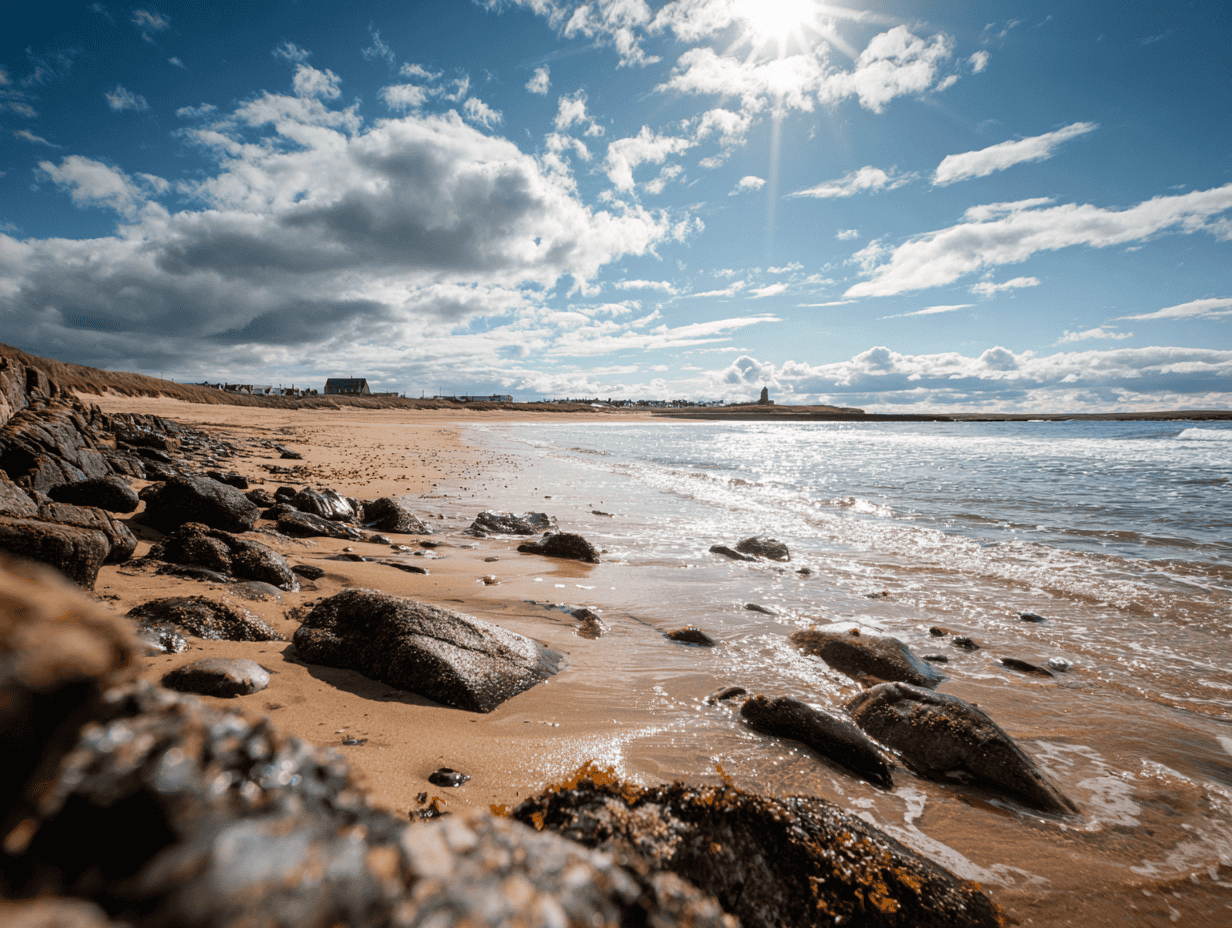
There is a small beach to the west of the harbour, worth a quick look but not where you’ll spend most of your time. The main hunting ground is the stretch to the east of the village, where the beach transitions from sandy upper sections to rocky lower ground with genuine shingle ridges and outcrops.
Work the waterline and the areas immediately around and between the rocks. This beach produces micro-sized pieces, so slow down and look carefully: crouch low, angle your eye across the surface, and look for the frosted sheen rather than trying to pick out colour directly. On dark, wet rock, green and brown glass is easy to miss; hold any candidate piece up to the sky and check for the light passing through.
Key Tip:
At Roome Bay, stop searching for obvious colour and start searching for texture. Most pieces here are small, pale and heavily frosted, blending almost perfectly into the dark, wet rock and shingle. Crouch low, scan slowly, and hold suspected pieces up to the light to reveal hidden greens and turquoise tones.
A note on the terrain: the lower rocky section is uneven and can be slippery when wet. Take your time, wear boots with grip, and keep your dog on a lead around the rock pools. The footing is tricky for dogs, too.
Difficulty Level – Intermediate
- Productive areas are concentrated around rocks and shingle ridges.
- The best finds are often small and easy to overlook.
- Careful searching is more important than covering ground quickly.
- Some uneven terrain around the rocky lower shore.
- Tide awareness helps reveal the most productive areas.
Hunting Style – The Micro Hunter
Roome Bay rewards hunters who slow down. Work the waterline, shingle ridges and gaps between the rocks, paying attention to texture and frosted surfaces rather than colour alone. Many of the best pieces are small enough to disappear among the pebbles until the light catches them just right.
Dog friendly?
Yes. Roome Bay has no seasonal dog restrictions, and Fife simply asks dog owners to follow the Scottish Outdoor Access Code and keep dogs under control. The wide grassy park above the beach is good for a run before you head down. The beach itself is different: the lower shore is boulders and slippery rock pools, so keep your dog on a lead there. The footing is as tricky for them as it is for you.
The Fife Coastal Path connects Crail to Anstruther to the west and Kingsbarns to the east, both easy walks with a dog, and worth combining with a beach visit if you have the time and the legs.
Check the Yappy Places listing for the East Neuk for the best dog-friendly spots to eat and drink. The Golf Hotel public bar welcomes dogs, and outdoor tables around the harbour are generally fine too.
Practical information
Parking: There is no dedicated car park at Roome Bay. Park on Roome Bay Crescent (KY10 3TT) or the surrounding residential streets above the beach. It’s free, but spaces are limited, and on busy summer weekends you may need to park in the town centre and walk down, about ten minutes on foot. Be considerate of residents.
Toilets: Public toilets are located by the beach at Roome Bay. Opening hours can vary seasonally; check the Fife Coast & Countryside website for current times before you rely on them.
Food and drink: Crail punches well above its weight. The Reilly Shellfish shack at the harbour is a summer institution, fresh lobster and crab cooked to order at a picnic bench on the quayside; check their social media for opening days before making a special trip. Crail Fish Bar & Café (open Wednesday to Sunday from 4 pm) is one of the best chippies on the Fife coast and regularly beats the more famous Anstruther fish bar in visitor reviews.
The Crail Harbour Gallery & Tearoom is open from 10 am and serves soup, scones and cake with one of the most remarkable views from any tearoom table in Scotland. The Golf Hotel has a dog-friendly public bar open all day. The Shoregate, listed in the Michelin Guide 2026, is the choice for a proper dinner; book ahead.
Getting there without a car: The Stagecoach 95 bus runs approximately hourly between St Andrews and Crail, connecting to the wider network. From Edinburgh, take a train or bus to St Andrews and change to the 95; total journey time is around two hours.
From Leuchars station (on the Edinburgh–Dundee mainline), take a bus or taxi to St Andrews and change to the 95. A dedicated community resource at 95crailbus.eastne.uk has detailed connection guidance from Edinburgh, Glasgow and Dundee.
Accessibility: The grassed area above the beach is flat and accessible, and a slipway provides access to the beach from Roome Bay Crescent. The sandy upper beach is manageable; the rocky lower section, where most glass is found, is uneven and not suitable for wheelchairs or mobility aids.
What to bring
- Sturdy waterproof boots with grip – essential on the rocky lower beach sections
- A small container for your finds – Crail glass runs micro-sized, so a pot rather than a bag works better
- A hand lens or phone macro lens – useful for spotting well-frosted micro pieces at this beach
- Layers and a windproof – even in summer, the Forth can be sharp
- Tide times and the knowledge that mid tide, not low tide, is your best window here
- A lead for your dog on the rocks
The history behind the glass
Crail is one of the oldest continuously inhabited settlements in Scotland. By the 800s, it was already a thriving town; by 1178, King William the Lion had made it a Royal Burgh, conferring trading rights that placed it among the kingdom’s most important merchant towns. For centuries, it conducted trade with the Low Countries, Holland, Belgium, and the Netherlands, and Dutch influence is still visible today in the pantiled rooftops, the design of the Tolbooth, and a harbour partly built by Dutch craftsmen. The church bell was cast in Mechelen in 1520. The harbour bell was cast in Holland, too.
All of that trade meant glass. Bottles, storage vessels, maritime equipment, the produce of Fife’s own Victorian glass manufacturing industry, centuries of commercial and working harbour activity, put material into this bay in quantities that are still being returned by the tide today.
Fife’s glass factories operated along the coast throughout the 19th century, and the pottery industry left stoneware fragments alongside the glass. What you find at Roome Bay is the accumulated deposit of a trading nation, tumbled smooth by North Sea tides over hundreds of years.
The rarity of the turquoise glass specifically is likely connected to particular batches from Fife’s glassworks, colours produced in small quantities for specialist uses, discarded with the rest, and now surfacing piece by piece on a beach that barely anyone is hunting.
From beach to jewellery
Love what you find at Crail? At Mermaid Tears, every piece of jewellery starts exactly where you’re standing, sea glass hand-hunted from UK beaches and handmade into something you’ll keep forever. Browse the collection.
Disclaimer: Tide times, dog rules, parking availability and beach conditions change regularly. Always verify before visiting. The rocky foreshore at Crail is slippery, so appropriate footwear is essential.
Last updated: September 2026
Dog rules checked: September 2026 – Fife Council (no restrictions; Scottish Outdoor Access Code applies)
Frequently asked questions
Is Crail a good beach for sea glass hunting? Yes – Crail is one of the better sea glass beaches on the Scottish east coast, particularly for rare colours. The glass runs small but is well-frosted and jewellery-grade. It’s best at mid-tide and rewards patience and a slow, careful eye.
What rare colours can you find at Crail? True turquoise is the standout find specifically associated with this stretch of the East Neuk coast, a colour that rarely appears on UK beaches. Blue, aqua, and pale sea-green pieces also turn up occasionally alongside the more common greens and whites.
Where exactly should I look for sea glass at Crail? Focus on the rocky lower section of the beach to the east of the harbour, working around the outcrops and along the waterline. Arrive at mid-tide rather than low water for the most productive window. Crouch low and look for the frosted surface rather than trying to spot colour directly.
Is Roome Bay dog-friendly? Yes- there are no seasonal dog restrictions at Roome Bay. Dogs are welcome year-round on the full beach.
Can I combine Crail with other sea glass beaches in Fife? Absolutely. The East Neuk coast is one of the best sea glass areas in Scotland. Anstruther is just four miles west along the coastal road, and the Fife Coastal Path connects the villages. Elie, Pittenweem and St Monans are all within easy reach for a day of hopping between beaches and harbours.
How do I get to Crail without a car? The Stagecoach 95 bus connects Crail with St Andrews approximately hourly. From Edinburgh, take a train or bus to St Andrews and change to the 95. The community-run resource at 95crailbus.eastne.uk has detailed connection advice from most major Scottish cities.
More Scottish Beaches
Check out our Full East Scotland Guide or plan your trip with our interactive map.