Treasure Hunting on the Jurassic Coast
Lyme Regis is a fair but fascinating sea glass hunting destination, with Monmouth Beach the main target and Church Cliff and East Cliff good alternatives around lower water. Green, white, and brown are the most common finds, with blue, aqua, amber, and turquoise appearing occasionally, and cobalt blue, black, lavender, and red among the rarer colours reported. The real appeal is the combination of sea glass, fossils, rock pools and one of the clearest documented historic dump stories on the south coast.
Where to hunt: Monmouth Beach pebble ridges → Cobb-side shingle → Church Cliff rock pools → East Cliff / dump-exposed foreshore
- Rating: Fair Beach
- Terrain: Easy
- Level: Intermediate
- Dog friendly: Seasonal – dogs banned from Front Beach 1 May to 30 September; dogs welcome all year on Monmouth Beach, Church Cliff Beach and East Cliff Beach; leads required on promenade, harbour and sea walls at all times
- Location: Lyme Regis, Dorset
- Sat Nav: DT7 3LE — Monmouth Beach / Cabanya Car Park
- Common colours: Green, white, brown
- Rare colours: Cobalt Blue, Black, Lavender, Red
Today at Lyme Regis beach
Check below for the latest ShoreSense score and tide times. Scroll down for the full 7-day forecast
Lyme Regis sea glass conditions
Lyme Regis
Dorset
61/100 — Good, best window 09:03–12:03.
Best window is 09:03–12:03 with spring tides (near full/new moon), so the chance of fresh finds is good today.
Good window, though this beach is hit-and-miss
Ranked #61 in the UK ShoreSense leaderboard today.
| Tide | Time | Height |
|---|---|---|
| High water | 05:09 | 3.6 m |
| Low water | 10:33 | 1.2 m |
| High water | 17:21 | 3.7 m |
| Low water | 22:54 | 0.8 m |
Best For:
- Sea glass hunting
- Fossil hunting
- Rock pool searching
- Historic finds
- Dog walkers
- Jurassic Coast exploration
- Low-tide adventures
- Full-day beachcombing
Why Lyme Regis is worth including – just not the main event
Let’s be honest from the start: if you’re making a dedicated sea glass trip and you have a choice between Lyme Regis and Seaham, pick Seaham. Lyme Regis is a Fair Beach. You will find glass here, but the volume is modest, and the conditions need to be right. Come with realistic expectations, and you won’t be disappointed. Come expecting a haul, and you will be.
That said, Lyme Regis earns its place on this site for two reasons. First, the glass that does turn up here has genuine provenance. A Victorian rubbish dump on the clifftop above the east beach has been releasing its contents onto the foreshore through landslips for over a century, and the fragments that have been tumbling in Lyme Bay for that long have a quality to them. Second, Lyme Regis is one of the most enjoyable places to spend a day on the south coast. The Cobb, the fossil beaches, the crooked streets, the seafood- if you’re hunting glass and not finding much, the consolation prizes are excellent.
From Victorian times until the 1960s, the town rubbish dump sat on top of the cliffs above the east beach, and landslips and coastal erosion have brought debris from the tip down onto the beach ever since. A major landslip in 2008 revealed many unusual items and fragments, including a glass eye, a set of false teeth, and many different types of bottles. People continue to find interesting material where the cliff meets the beach, and finds have continued into the 2020s, including a Nazi long service police medal in 2020.
The Cobb, the medieval harbour wall, adds a second layer of sources: centuries of maritime activity, fishing boats, supply vessels, and all the glass they carried. Together, they make Lyme Regis a genuinely interesting beachcombing destination, even if it will never match the industrial beaches further north.
What you’ll find here
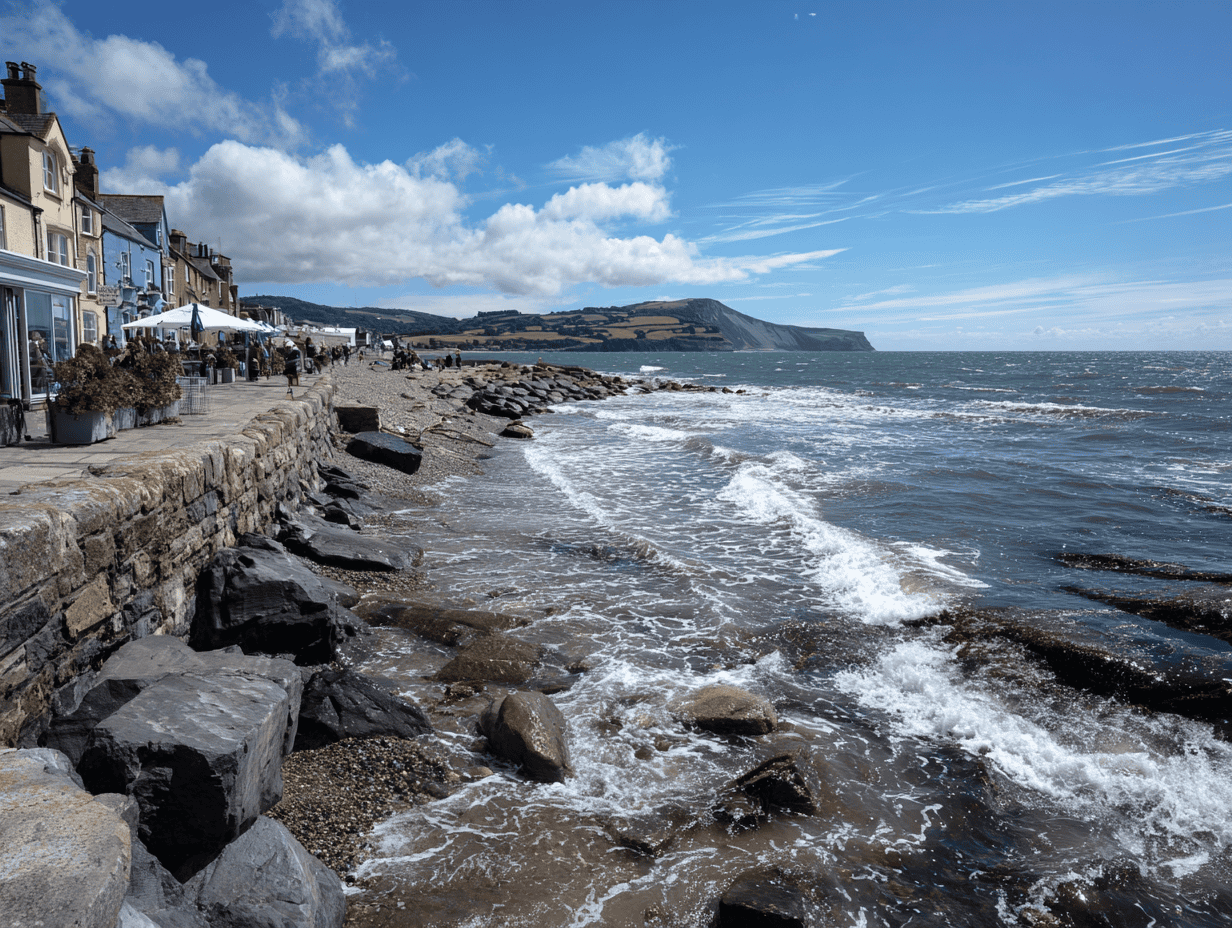
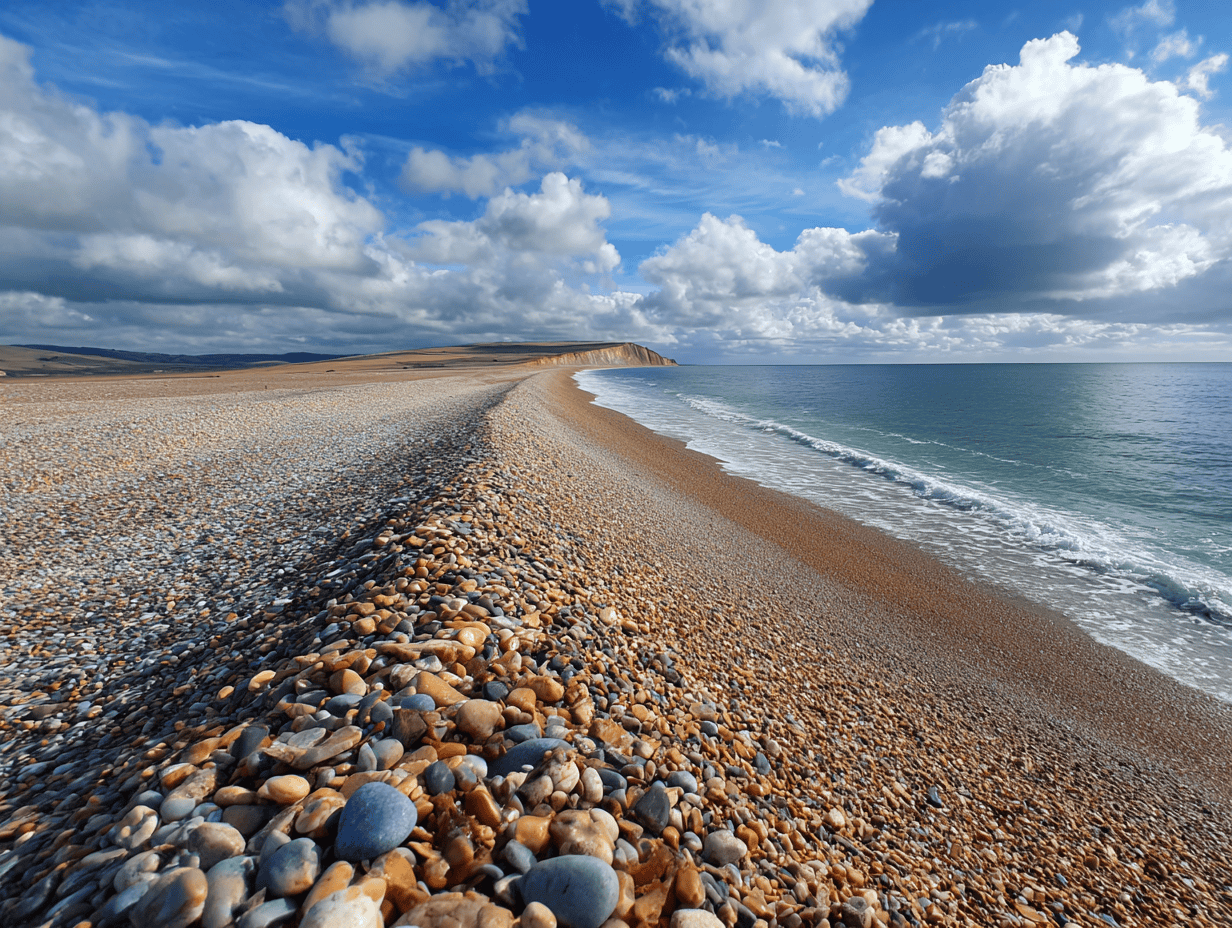
Lyme Regis has multiple beaches, and the sea glass picture varies from section to section. Monmouth Beach, the mile-long pebble stretch beyond the famous Cobb harbour wall, is the best bet for sea glass hunters. The pebbles here have been churning glass for centuries of maritime history.
East Cliff Beach and Church Cliff Beach are quieter alternatives east of the town, with rock pools and pebble sections that reward a careful search.
Colours commonly found: Green, white, brown
Occasional finds: Blue, Aqua, Amber, Turquoise
Rare finds: Cobalt Blue, Black, Lavender, Red
Bonus: Complete or near-complete Victorian bottle fragments, embossed glass with legible text, and the occasional pottery shard from the dump material. Emerald green, white and brown are the most common colours; red and yellow are some of the rarest, said to come from lanterns of wrecked ships.
Fossils –ammonites, belemnites and the occasional ichthyosaur fragment are found on the same beaches and make any low-tide visit here a double hunt
Found something unusual? Try GlassLore, our free sea glass scanner, to explore what it could be and log your find to the gallery and, more importantly, earn points and climb the leaderboard.
When to go
Lyme Bay faces southeast into the English Channel, which means it responds to easterly and southeasterly swells rather than the Atlantic westerlies that drive the north coast beaches. After a Channel blow from the southeast, Church Cliff and East Cliff beaches are at their best; storm energy turns over the foreshore and brings fresh material down from the eroding cliffs above.
The tidal range at Lyme Regis runs to around 3–4 metres on a spring tide, moderate compared to the north coast, but enough to expose a useful strip of new foreshore at low water. Low tide is essential here: the rock ledges and pebble sections that hold glass are only accessible when the water is well out.
Visit Church Cliff Beach at low tide for the best sea glass hunting. Autumn and winter are quieter; the dog restriction on Front Beach lifts, and the Channel weather is more likely to have been working the foreshore since your last visit
Today’s ShoreSense Score & Best Hunting Window
Lyme Regis sits on Lyme Bay facing southeast into the English Channel, with a tidal range of around 3–4 metres on a spring tide, modest by UK standards but enough to uncover the rock ledges and pebble beds where glass concentrates. The tidal pattern is semi-diurnal with two highs and two lows per day.
Start on Monmouth Beach and work the upper pebble ridges and shingle around the Cobb end rather than the open lower beach. Then move east to Church Cliff as more rock pools and ledges are exposed, before checking the quieter East Cliff foreshore where historic tip material has been revealed by landslips. Use today’s ShoreSense Best Window to choose when to arrive, then follow this Monmouth → Cobb → Church Cliff → East Cliff progression once you’re there.
The ShoreSense widget below combines recent marine conditions, tide timing and practical hunting weather to show today’s overall ShoreSense Score, Hunting Potential, Comfort and the best available hunting window for Lyme Regis. It uses UKHO tide data alongside current marine and weather inputs to help you judge whether conditions look promising for a hunt.
Lyme Regis sea glass conditions
Lyme Regis
Dorset
61/100 — Good, best window 09:03–12:03.
Best window is 09:03–12:03 with spring tides (near full/new moon), so the chance of fresh finds is good today.
Good window, though this beach is hit-and-miss
Ranked #61 in the UK ShoreSense leaderboard today.
| Tide | Time | Height |
|---|---|---|
| High water | 05:09 | 3.6 m |
| Low water | 10:33 | 1.2 m |
| High water | 17:21 | 3.7 m |
| Low water | 22:54 | 0.8 m |
Compare today’s scores on Hot Beaches.
Where to look on the beach
Monmouth Beach: your main target. A mile-long pebble beach adjacent to the Cobb wall, steeped in history, both modern and prehistoric. Dogs allowed off lead all year. Work the high tide strandline and look in the pebble ridges. At the far end, at low tide, you’ll reach the famous Ammonite Pavement -worth seeing even if you find nothing else.
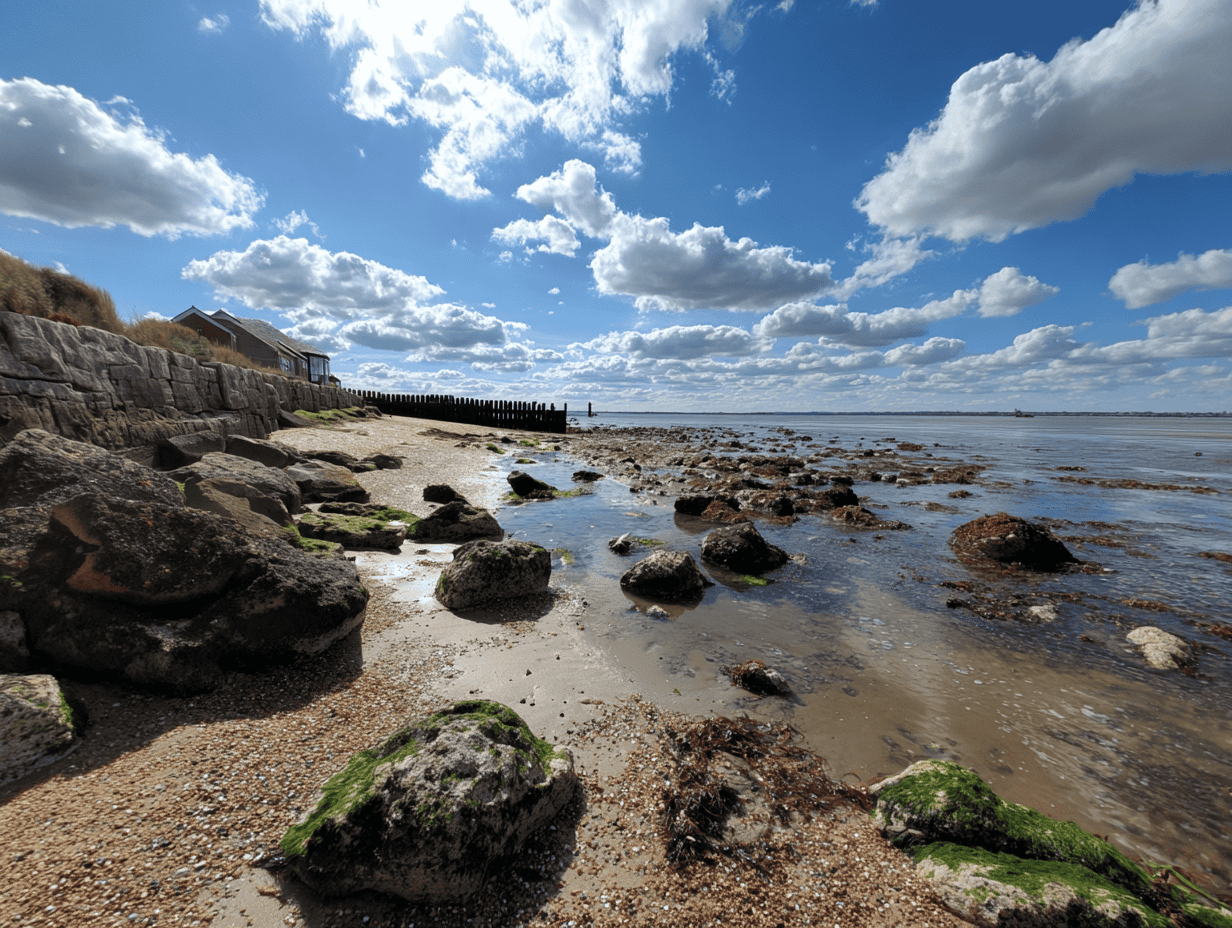
Church Cliff Beach: A small pebble and sand beach with an extensive rock ledge and hundreds of rock pools exposed at low tide. Rock pools trap glass beautifully. Crouch down and look carefully into the crevices.
East Cliff Beach (Back Beach): quieter than the main beaches, dog-friendly all year, with panoramic views of the Jurassic Coast toward Golden Cap. Less visited, which means less competition.
One important note: some beaches here are cut off at high tide. Always check tide times before setting out, particularly on Monmouth Beach. The Cobb provides a useful reference point if the sea is lapping close to the wall.
Cliff safety: Stay away from the base of the cliffs at all times, as active mudslides and instability make the cliffs dangerous. The Jurassic Coast is actively eroding, which puts fossils and glass on the beach, but it also makes the cliff bases genuinely dangerous.
Difficulty Level: Intermediate
- Some of the best hunting areas are only accessible at low tide
- Certain sections can be cut off by the incoming tide
- Large pebble beaches can be tiring to walk across
- Rock ledges and pools require careful footing
- Checking tide times before your visit is essential
Hunting Style: The Tide Tracker
Timing is everything at Lyme Regis. Work the strandline along Monmouth Beach, explore the rock pools at Church Cliff as the tide drops, and take advantage of the extra ground revealed around the famous Ammonite Pavement. The best finds often appear in areas only exposed for a few hours each tide cycle.
Dog friendly?
Mostly yes, but it depends on which beach and what time of year.
Dogs are allowed off lead all year round on East Cliff Beach, Church Cliff Beach and Monmouth Beach. Dogs are only allowed at Front Beach from 1 October to 30 April.
So, for sea glass hunting purposes, you’re fine. Monmouth and East Cliff are your targets, and both welcome dogs year-round. Lyme Regis is an exceptionally dog-friendly town, with numerous cafes, pubs, and restaurants welcoming four-legged visitors.
Looking for dog-friendly stops nearby? Check our Yappy Places listing for Lyme Regis →
Practical information
Parking: For Monmouth Beach, the main hunting ground, Monmouth Beach Car Park (DT7 3LE) is right there, run by the town council at £1.90 an hour, 8am to 9pm April to October and 8am to 6pm in winter. No motorhomes or vehicles over 4.8m.
For the eastern beaches, Charmouth Road (DT7 3DR) is the closest to Church Cliff and East Cliff, and it’s the cheaper of the two Dorset Council long-stay car parks: £1.50 for an hour, £2.30 for two, £5.30 for four and £9 for ten, with free public toilets and EV charging.
Holmbush (DT7 3HX, 363 spaces) is on the western side. Summer, April to October: £3.20 for an hour, £4.80 for two, £7.90 for four, £15.80 for ten. Winter, November to March: £1.70 for an hour, £2.50 for two, £5.60 for four, £9.50 for ten. Both are free between 6pm and 8am, and both are a ten-minute downhill walk to the seafront, which means a ten-minute uphill walk back.
A seasonal park and ride runs from a separate site on Charmouth Road (DT7 3FG), operated by First, with buses every 15 minutes or so between 10am and 7pm. In 2026 it runs daily through late May half-term, weekends in June and July, and daily from 23 July to 31 August. Adult single £2, return £3.50, and dogs are allowed on the bus. Concessionary passes aren’t accepted.
Toilets: Lyme Regis has excellent public facilities, with toilets at Monmouth Beach, Marine Parade, Holmbush, Charmouth Road and several town-centre locations. Marine Parade includes a 24-hour RADAR-key accessible toilet, baby changing, a foot wash, and a water refill point.
Food and drink: Lyme Regis is excellent for food. The Town Mill Bakery is a local favourite, and there are numerous cafés, pubs and fish and chip shops along Marine Parade and around the Cobb. The Cobb Arms is dog-friendly and is located directly by the harbour.
Getting there without a car: Lyme Regis lost its branch line in 1965. The nearest station is Axminster, approximately 5 miles away, served by trains from London Waterloo and Exeter. First Bus service X51 runs between Axminster station and Lyme Regis. The journey from Axminster takes around 20 minutes.
Accessibility: Lyme Regis is one of the more accessible Jurassic Coast towns. Marine Parade is flat and step-free, and seasonal beach matting is available at Front Beach and Monmouth Beach. Beach wheelchairs can also be hired free of charge. The actual sea-glass hunting ground at Church Cliff and East Cliff is much rougher, with rock ledges, pebbles and uneven access.
What to bring
- Sturdy footwear – pebbles and rock pools require solid shoes
- Two bags – one for sea glass, one for fossil finds
- A hand lens or loupe, if you’re serious about fossils
- Layers – the Dorset coast is exposed even in summer
- Tide times checked before you leave – some beaches cut off at high tide
- The rock ledges at Church Cliff are only accessible for a limited window around low water
The history behind the glass
The Cobb at Lyme Regis is a 13th-century harbour wall that stretches into Lyme Bay. For seven hundred years, it has sheltered fishing boats, trading vessels, Royal Navy ships and passenger packets from the Channel weather. All of that maritime activity generated glass medicine bottles, spirit flasks, beer bottles, and preserving jars that ended up in the harbour waters and bay. The Cobb is the oldest source layer for Lyme Regis sea glass.
But the Victorian rubbish dump is what makes Lyme Regis genuinely distinctive. From Victorian times until the 1960s, the town rubbish dump sat on top of the cliffs above the east beach.
A Victorian rubbish dump is nothing like a modern landfill. It was a heterogeneous mix of domestic waste, medicine bottles, ink bottles, food containers, pottery, and the kind of everyday Victorian glass that is now collectable and rare. Victorian rubbish dumps are nothing like ours, and those jars and bottles have now become collectables; the broken bits get turned into sea glass.
The dump was revealed dramatically by the landslip in 2008, which brought down material that had been buried for over a century. Finds included a glass eye, a set of false teeth and many different types of bottles. Coastal erosion continues to release material gradually, and every significant cliff fall adds new finds to the foreshore below. The glass you find at East Cliff Beach was once someone’s medicine cabinet, their pantry shelves, their kitchen waste, the daily detritus of a Victorian seaside town, returned by the Channel after a hundred and fifty years.
Mary Anning, the 19th-century fossil hunter who discovered the first ichthyosaur and plesiosaur skeletons on these same beaches, would have walked past that dump every day on her way to the cliffs. Her bronze statue stands near Church Cliff Beach, with Tray the dog at her side. The tradition of beachcombing at Lyme runs longer and deeper than most people realise.
From beach to jewellery
Found something beautiful on the Jurassic Coast? At Mermaid Tears, every piece of jewellery starts on a beach just like this one, hand-hunted and handmade into something you’ll keep forever. Browse the collection.
Disclaimer: Tide times, dog restrictions, parking charges and beach conditions change regularly. Always verify before visiting. The cliffs at Lyme Regis are actively eroding with live mudslides; never stand below the cliff face or attempt to climb the slippages. Cliff conditions can change rapidly after rain. Some beach sections are cut off at high tide, so always check tide times before setting out.
Last updated: September 2026
Dog rules checked: September 2026 – Dorset Council and Lyme Regis Town Council (Front Beach banned 1 May–30 September; Monmouth, Church Cliff and East Cliff unrestricted)
Frequently asked questions
Is Lyme Regis good for sea glass hunting? It’s a fair beach rather than a top-rated one; you won’t find the volumes of Seaham or even Porthleven. But combine it with fossil hunting and a visit to the town, and it’s one of the best day trips on the south coast.
Which beach in Lyme Regis is best for sea glass? Monmouth Beach, the long pebble stretch beyond the Cobb. East Cliff Beach is a quieter alternative with good rock pools.
Is Lyme Regis dog-friendly? Very. Monmouth, East Cliff and Church Cliff beaches are all dog-friendly year-round. The town itself is extremely welcoming to dogs, with numerous cafes and pubs.
What is the best time to visit Lyme Regis for sea glass? Low tide after a winter storm is ideal. A falling tide is always the most productive time to follow the water out. Avoid summer weekends when the main beach is very crowded.
Can I also fossil hunt at Lyme Regis? Absolutely, and you should. The same conditions that bring sea glass to the beach bring fossils, too. Ammonites, belemnites and devil’s toenails are common finds. The Lyme Regis Museum runs guided fossil walks year-round if you want expert guidance.
Is it safe to hunt near the cliffs at Lyme Regis? No, stay well away from the cliff base at all times. The cliffs are actively eroding with mudslides. Hunt the tide line, not the cliffs.
More Beaches
Check out our Full Dorset and Hampshire Guide or plan your trip with our interactive Sea Glass Map.