Suffolk’s Wild Shingle Secret
Walberswick is a good sea glass hunting beach, especially along the shingle ridge south of the River Blyth. Start around the river-mouth gravel and upper wrack line, then work the hollows between larger pebbles and the shingle-to-sand transition as you move south towards Dunwich. Green, brown and white are the most common finds, with blue, aqua, amber and turquoise appearing occasionally and cobalt blue, black and lavender among the rarer colours reported. The real appeal is the combination of shingle, a long fishing and harbour history and a quieter, more natural stretch of Suffolk coast.
Where to hunt: River Blyth mouth → upper wrack line → shingle hollows → shingle-to-sand transition → south towards Dunwich
- Rating: Good Beach
- Terrain: Easy
- Level: Beginner
- Dog friendly: Yes, dogs are welcome all year round
- Location: Walberswick, Suffolk
- Sat Nav: IP18 6TN (Cliff Fields car park) or IP18 6NB (Ferry Road / Harbour car park)
- Common colours: Green, brown, white
- Rare colours: Cobalt Blue, Black, Lavender
Today at Walberswick Beach
Check out Today’s ShoreSense Score; scroll down for a full 7-day forecast.
Best For:
- Sea glass hunting
- Long beach walks
- Harbour finds
- Storm hunting
Why Walberswick- the quieter side of the river
Cross the Bailey Bridge from Southwold Harbour and the atmosphere shifts immediately. The beach huts change from pastel to black. The pier disappears. The ice cream vans and promenade cafés are gone. What’s left is shingle, dunes, open sky, and the North Sea, doing what it’s done here for centuries, rearranging the coast.
Walberswick sits directly across the River Blyth from Southwold, just five minutes by the seasonal foot ferry or fifteen on foot via the harbour bridge. It’s vaguely known as the quieter alternative. What that description misses is why it’s better for sea glass hunting: almost completely shingle, facing due east into the unbroken North Sea, wild and windswept and notably less harvested than its famous neighbour across the water.
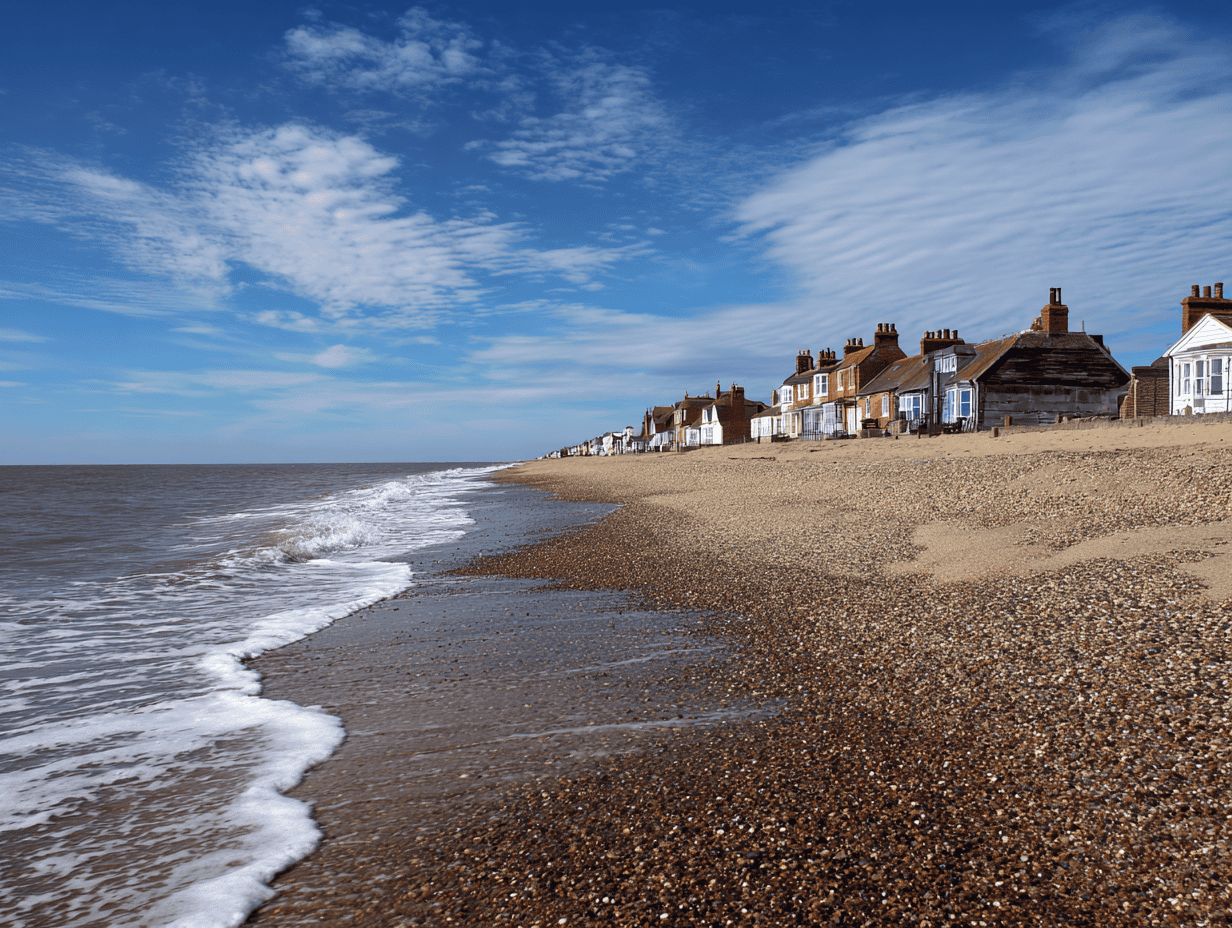
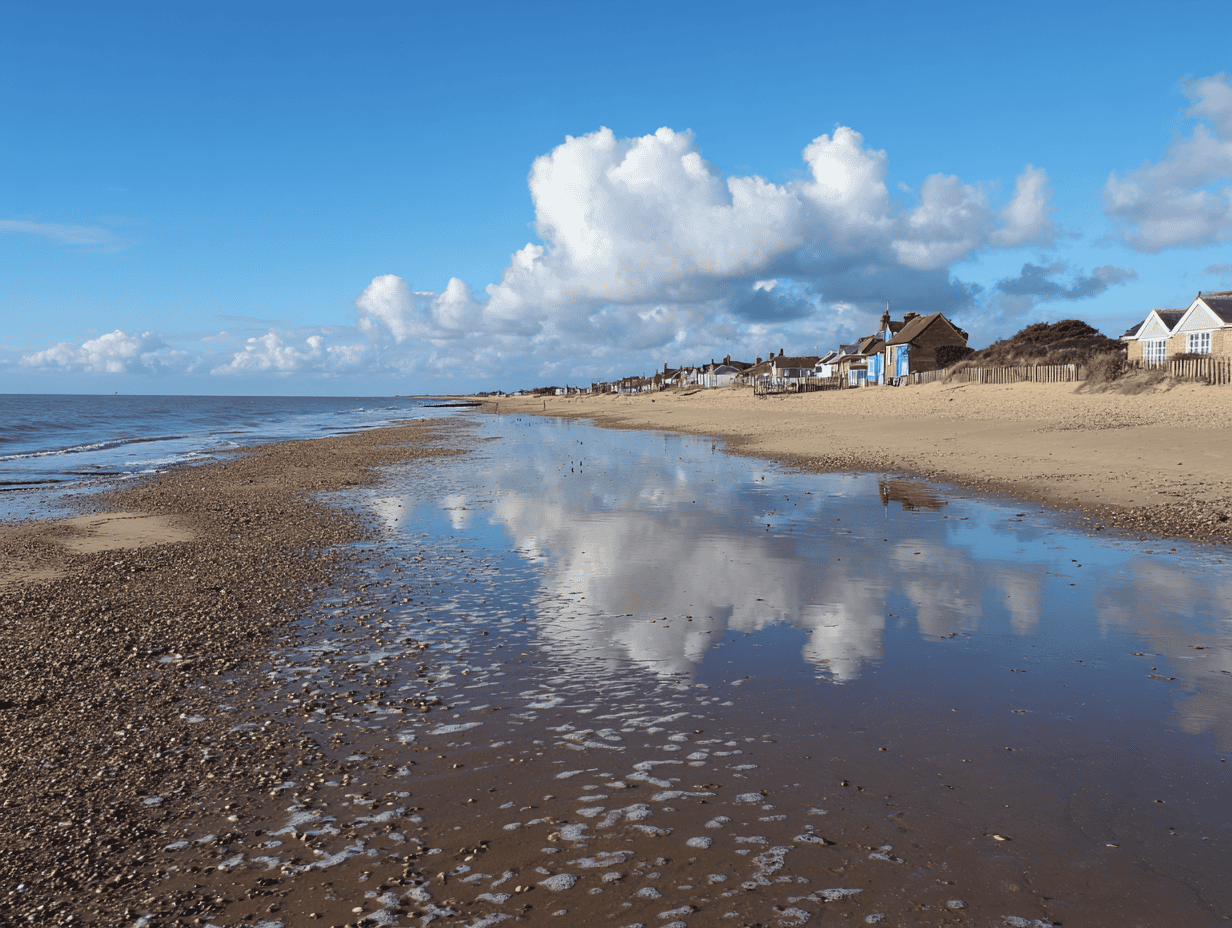
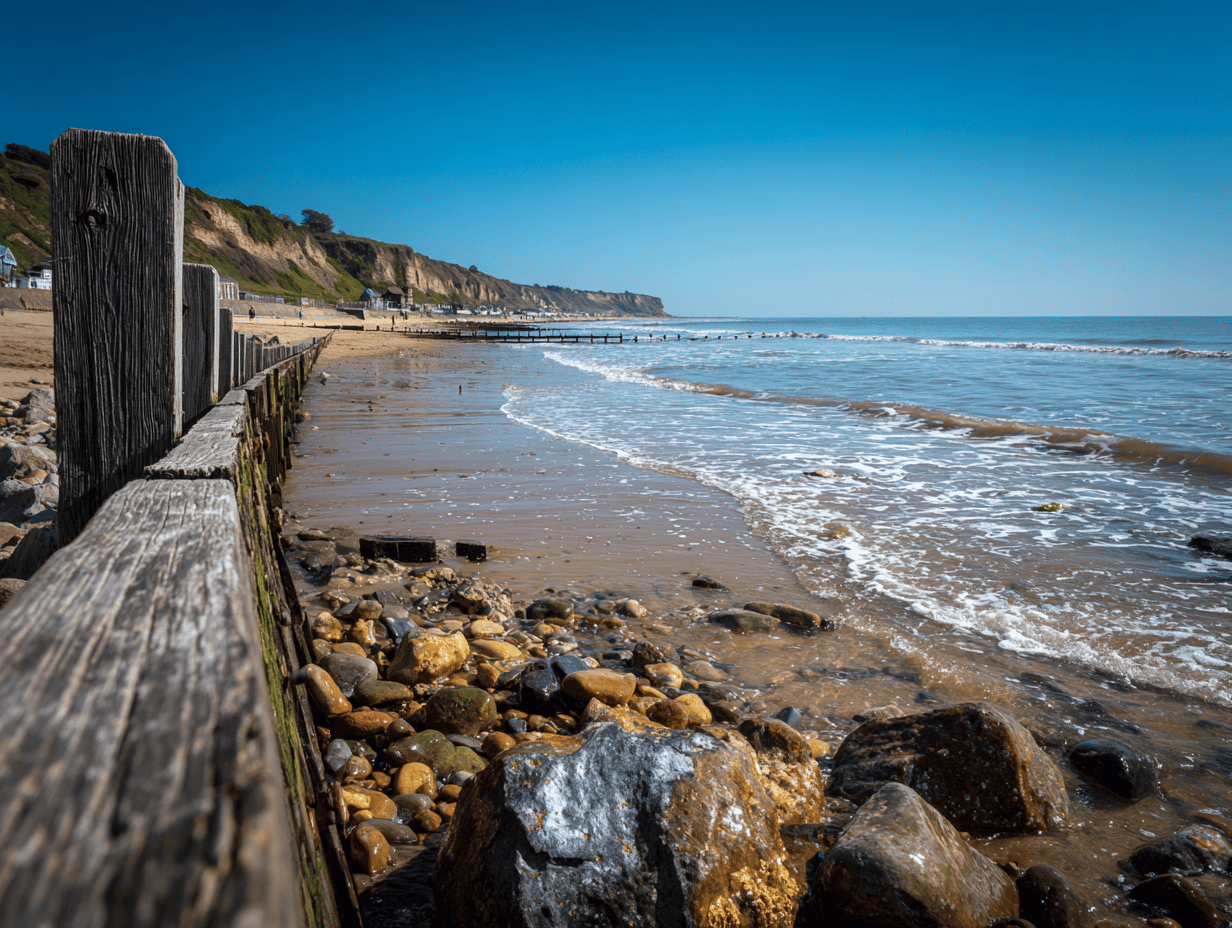
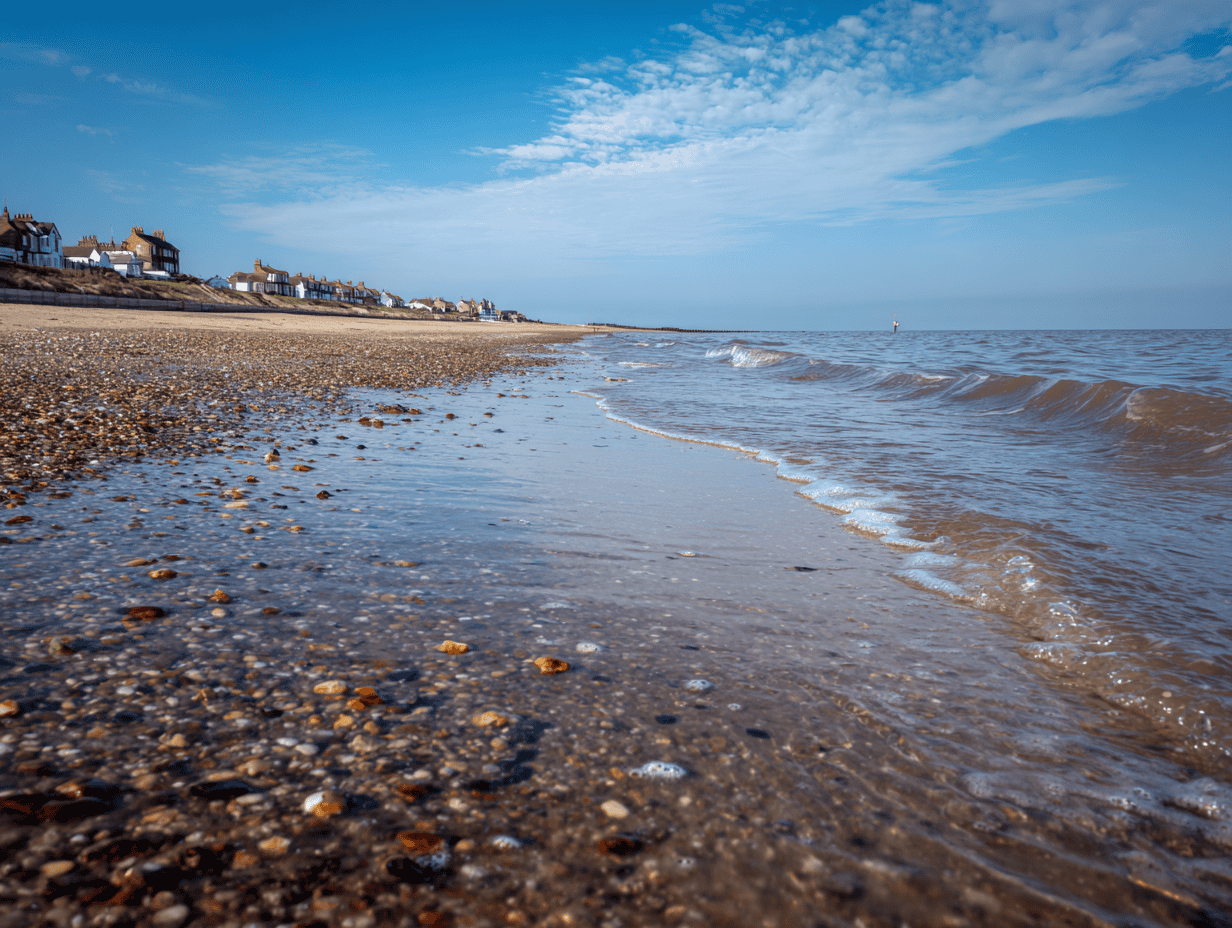
The shingle at Walberswick is the real thing. Pebbles that rattle and shift with the tide, pockets that trap glass and hold it, ridges that accumulate material after storms. The beach runs south from the river mouth towards Dunwich with almost no facilities, no promenade, no management, just the foreshore, the dunes behind it, and whatever the sea decides to leave.
A local beachcombing guide notes sea glass and pottery as standard finds on this stretch. The Suffolk shingle expert Kate Osborne of Beach Bonkers, who has run guided beachcombing sessions specifically on Suffolk’s shingle beaches for years, confirms the coast between Walberswick and Dunwich as one of her core hunting grounds.
This isn’t a flashy beach. It doesn’t need to be.
What you’ll find here
Colours commonly found: Green, brown, white/clear
Occasional finds: Blue, Aqua, Amber, Turquoise
Rare finds: Cobalt Blue, Black, Lavender
Bonus: Sea pottery, stoneware and earthenware fragments from Walberswick’s long fishing and harbour history; Victorian bottle glass; Codd marble necks from old soda bottles
Found something unusual? Try GlassLore, our free sea glass scanner, to explore what it could be and log your find to the gallery and, more importantly, earn points and climb the leaderboard.
When to go
The same principles that apply anywhere on the Suffolk coast: low tide, ebbing water, preferably after a storm. The spring tidal range at Walberswick is around 2.3 metres, modest but enough to expose the lower shingle and sand at low water. That’s your window.
Winter is the productive season. The beach gets quiet from October onwards, storm activity picks up, and glass that’s been sitting offshore gets driven onto the foreshore by north-easterly swells. The stretch south towards Dunwich is particularly good after a blow; fewer people walk that far, and the beach resets with each significant tide.
Come in summer, and you’ll find it busier than you expect at the Walberswick end, particularly on weekends, but push half a mile south along the beach, and you’ll have the shingle to yourself.
Today’s ShoreSense Score & Best Hunting Window
Walberswick sits just south of the River Blyth on the Suffolk coast, facing due east into the North Sea with a spring tidal range of around 2.3 metres. The tidal range is modest, but the shingle foreshore at Walberswick is fully exposed at low water, and the beach remains accessible on both the ebb and the flood in a way that sandier beaches aren’t.
Start near the River Blyth mouth and check the gravelly margins and shingle immediately south of the channel. Then work the upper wrack line and the hollows between larger pebbles before moving gradually down through the band where shingle gives way to wet sand.
As more foreshore opens, continue south along the shingle ridge towards Dunwich, checking freshly sorted pockets rather than simply following the lowest point of the tide. After stronger north-easterly weather begins to settle, recheck the wrack line and any newly rearranged pebble bands.
Use today’s ShoreSense Best Window to choose when to arrive, then follow this river mouth → wrack line → shingle hollows → transition zone → southward progression once you’re there.
The ShoreSense widget below combines recent marine conditions, tide timing and practical hunting weather to show today’s overall ShoreSense Score, Hunting Potential, Comfort and the best available hunting window for this beach. It uses UKHO tide data alongside current marine and weather inputs to help you judge whether conditions look promising for a hunt.
Compare today’s scores on Hot Beaches.
Where to look on the beach
From either car park, walk through the dunes to the beach and turn south. The shingle ridge that runs parallel to the sea is your main hunting ground. Glass collects in the hollows between larger pebbles, along the upper wrack line where the most recent high tide dropped its load, and in the band where shingle transitions to sand as you move towards the waterline.
The river mouth at the northern end of the beach is worth special attention. Material from upstream and from the harbour accumulates here on both sides of the channel, and the current movement deposits glass in the gravel banks. At very low spring tides, a bar is sometimes partially exposed. Check it if you’re here at the right time.
Work south steadily. The further you go from the village, the less-hunted the beach. The half-mile towards Dunwich Heath is where the beach gets genuinely wild, backed by marshland, no paths off, just the shingle and the sky. Glass has been building up here undisturbed, and that shows in the finds.
Don’t rush. Get your eye level down. Walberswick glass is well frosted; the shingle does its job, but it hides well among similarly sized smooth pebbles. Move slowly, look for that slight translucency and the frosted edge catching the light.
Key Tip:
Turn south from the dune access and keep walking. The shingle ridge is the main hunting ground, but the quieter stretch towards Dunwich Heath is where less-picked-over glass has had time to build up.
Difficulty Level – Beginner
- Easy access from nearby car parks
- Straightforward shingle walking with no scrambling
- Productive areas are easy to understand once you reach the beach
- Large search area gives hunters plenty of room
- Suitable for beginners who are happy to cover some distance
Hunting Style – The Shingle Wanderer
Walberswick rewards slow, steady searching along the shingle ridge. Work the upper wrack line first, then check the hollows between larger pebbles and the band where shingle gives way to sand. The river mouth is worth careful attention at low tide, especially around gravel banks and any exposed bar.
Beach Personality
Walberswick feels quietly wild. Behind you are dunes, marshland and the village; ahead is a long sweep of shingle running towards Dunwich Heath. This is not a flashy, obvious treasure beach. It is a patient hunter’s shoreline, where well-frosted glass sits low amongst the pebbles and the best finds often come after you’ve walked a little further than everyone else.
Dog friendly?
Dogs are welcome on Walberswick beach year-round, with no seasonal beach exclusion currently listed by East Suffolk Council. However, the beach, dunes, and marshes sit beside sensitive wildlife habitat, so keep dogs under close control and follow any temporary or site-specific signs.
For dog-friendly pubs after the hunt, The Anchor Inn in Walberswick village is the obvious choice, a proper gastro pub with a good reputation and a welcome for dogs. Check our Yappy Places listing for Walberswick for current recommendations.
Practical information
Parking: Two car parks, both run by Walberswick Car Park Limited rather than the council, on Walberswick Common Lands Charity land — every payment supports the charity. Cliff Field (IP18 6TY) is closest to the beach, reached via a narrow single-track bridge and open to cars only; nothing larger can get across. Ferry Road (IP18 6TJ) takes bigger vehicles and campervans, and is a slightly longer walk to the beach, but it floods in bad weather and on high tides.
Payment is by the RingGo app only no machines and no cash- so download it before you travel. Charges apply 9am to 6pm, year-round, and overnight parking is strictly prohibited at both. Surfaces and access are uneven at both car parks.
Toilets: Public toilets are available in Walberswick village, a short walk from the beach. Check local opening arrangements, particularly outside the main visitor season.
Food and drink: Walberswick village has cafés, the Anchor Inn (gastro pub, dog friendly), a village shop, and a gift shop. In season, there’s usually an ice cream van at the Cliff Fields car park. The foot ferry across to Southwold runs in summer and costs a pound; the harbour and fish shacks on the Southwold side are a short walk from the ferry landing.
Getting there without a car: Halesworth station on the East Suffolk Line (Ipswich–Lowestoft) is the closest railway station, around 8 miles away. A bus service runs between Halesworth and Southwold; from Southwold, you can walk across the Bailey Bridge or take the summer foot ferry to reach Walberswick. Manageable with planning.
Accessibility: Walberswick village is relatively flat, but access to the hunting beach involves sandy or uneven paths through the dunes, followed by loose shingle underfoot. The sea-glass hunting area is therefore not wheelchair-friendly and may be difficult for anyone with limited mobility.
What to bring
- Sturdy shoes – the shingle is rough, shifting and uneven
- A hand rake or trowel for working the upper ridge
- A zip-lock bag or small container for your finds
- Layers – Walberswick faces due east, and the wind here is serious
- Enough food and water to go further than you planned- the beach south towards Dunwich is worth exploring
- A tide table – the modest tidal range means timing your visit to low water matters more than on bigger-range beaches
The history behind the glass
Walberswick’s relationship with its neighbour, Southwold, has never been simple.
For centuries, the two communities faced each other across the River Blyth and competed for control of it. In the medieval period, Walberswick was the more powerful port; ships from Southwold had to pay tolls to Walberswick to reach the sea via the shared river mouth. When the river shifted, and Walberswick’s harbour silted up, Southwold gained the upper hand.
The rivalry played out in trading disputes, harbour fees, legal arguments and occasional outright hostility for generations. Both towns were fishing communities, both worked the North Sea for herring, and both left glass in the water across centuries of harbour activity.
Walberswick was a significant medieval fishing village in its own right, exporting fish, importing coal and grain, sending its boats out into the same North Sea herring grounds that made towns like Lowestoft and Yarmouth wealthy. The village contracted sharply from the 17th century onwards as the harbour silted and trade moved elsewhere, leaving it a quiet backwater that partly explains why it retains so much of its old character today.
The reduction in commercial activity didn’t clean up the glass already in the water; it just stopped adding to it at the same rate.
What has added to it continuously is the erosion to the north. The Covehithe cliffs are losing ground at 4.5 metres a year, the fastest rate in Britain. That material moves south on the longshore current, and Walberswick is directly in its path.
Glass doesn’t travel alone: everything the cliff releases- pottery, brick, ironwork, and glass from a dozen different eras- gets carried along this coast and deposited on the shingle beaches where the current slows. Walberswick catches what Covehithe releases.
WWII left its own mark, too. This stretch of the Suffolk coast was heavily defended against invasion with pillboxes, anti-tank obstacles, barbed wire, and military camps. Some of that material, and the general detritus of wartime activity across the estuary, has been working its way through the coastal system ever since.
The rusted remnants of anti-tank obstacles are still visible on the beach and in the dunes; the glass that accompanied military life here is less visible but still arriving with the tides.
From beach to jewellery
Suffolk shingle makes excellent sea glass. The constant pebble-on-pebble tumbling produces pieces with a deep, even frost that catches light beautifully. At Mermaid Tears, every piece of seaglass jewellery starts exactly where you’re standing: hand-hunted from UK beaches and handmade into something you’ll keep. Browse the collection.
Disclaimer: Tide times, dog restrictions, parking charges and beach conditions change regularly. Always verify before visiting. Beach byelaws are updated annually. Check with East Suffolk Council for the most current rules. The narrow bridge to Cliff Fields car park is not suitable for vehicles over a certain width; use Ferry Road car park if in doubt.
Last updated: September 2026
Dog rules checked: September 2026 – East Suffolk Council (no restrictions at Walberswick)
Frequently asked questions
Is Walberswick good for sea glass hunting? Yes, it’s the better of the two Southwold-area beaches for hunting. The beach is predominantly shingle rather than sand, faces due east into the North Sea, and is less managed and less frequently hunted than the Southwold pier beach. Volume won’t rival the dedicated industrial glass beaches of the north-east, but this is a reliable Good beach with solid historical backing.
Is Walberswick beach dog friendly? Yes, year-round with no seasonal restrictions, which gives it a practical edge over Southwold, where the main beach bans dogs from April to September.
Where should I look for sea glass at Walberswick? Work south from the river mouth along the shingle ridge. Focus on the upper wrack line, the hollows between larger cobbles, and the shingle-to-sand transition zone at the waterline. The further south towards Dunwich you walk, the less-hunted the beach gets.
When is the best time to visit Walberswick for sea glass? Winter and early spring after North Sea storms. Low tide on an ebbing spring tide is the ideal combination. The stretch south of the village is most productive in the quiet months when foot traffic drops off.
Can I walk from Southwold to Walberswick? Yes, cross the Bailey Bridge from Southwold Harbour on foot (around a 15-minute walk from the pier). In summer, a seasonal foot ferry also runs from the harbour for £1 per person. By car, the route goes inland via Blythburgh on the A12, about 15 miles.
Why is there sea glass at Walberswick? Walberswick has centuries of fishing, harbour and trading history around the River Blyth, while its exposed shingle shoreline is continually reworked by North Sea conditions.
More Beaches
Check out our Full East Anglia Guide or plan your trip with our UK Sea Glass Map.