Mammoths, Chalk Reefs and Hidden Treasure
West Runton is a fair but fascinating sea glass hunting beach, especially around the chalk reef platforms and shingle pockets west of the slipway. Green, brown and white are the most common finds, with blue, aqua, amber and turquoise appearing occasionally and cobalt blue, black and lavender among the rarer colours reported. It’s a slower, more technical hunt than a sandy beach, but the combination of sea glass, fossils and rock pools makes it one of Norfolk’s most interesting beachcombing spots.
Where to hunt: High-tide shingle west of the slipway → chalk reef crevices → rock-pool edges → mid-tide shingle pockets
- Rating: Fair Beach
- Terrain: Tricky
- Level: Intermediate
- Dog friendly: Seasonal (dogs restricted east of slipway 1 May–30 September)
- Location: West Runton, Norfolk
- Sat Nav: NR27 9QP (Seaview Car Park, Water Lane)
- Common colours: Green, brown, white
- Rare colours: Cobalt Blue, Black, Lavender
Today at West Runton
Here’s the ShoreSense score and tide times. Scroll down for the 7-day forecast.
West Runton sea glass conditions
West Runton
Norfolk
47/100 — Fair, best window 13:14–16:14.
Best window is 13:14–16:14 with spring tides (near full/new moon) and calm sea, so the chance of fresh finds is fair today.
Fair — expectations lower at this beach
Ranked #51 in the UK ShoreSense leaderboard today.
| Tide | Time | Height |
|---|---|---|
| Low water | 01:57 | 1.0 m |
| High water | 07:25 | 5.4 m |
| Low water | 14:44 | 0.5 m |
| High water | 20:00 | 4.9 m |
Best For:
- Sea glass hunting
- Sea pottery
- Rock pools
- Family visits
Why West Runton is worth knowing about
West Runton sits between Sheringham and Cromer on the North Norfolk coast, and most people drive straight through it on the way to one or the other. That’s their loss.
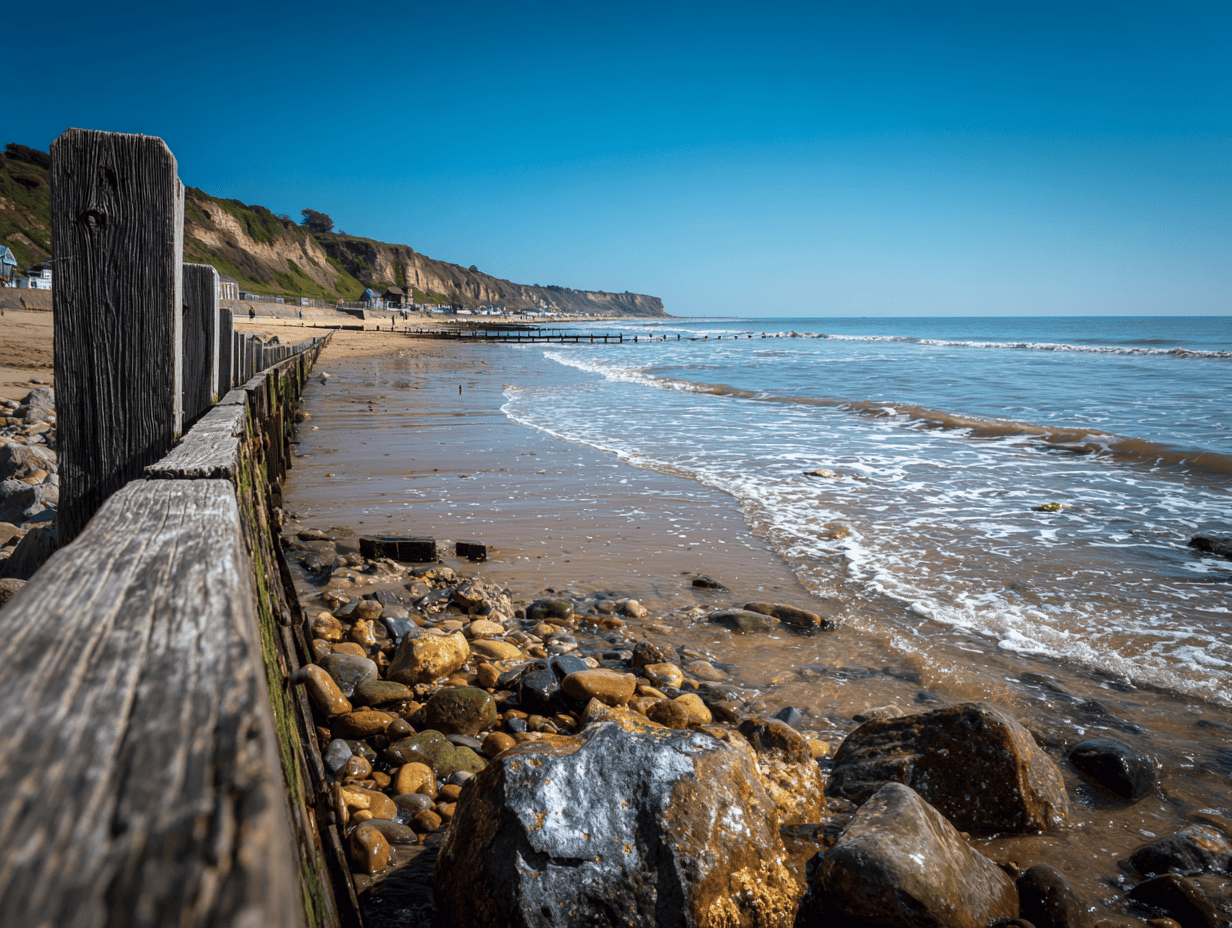
This is a beach with more going on beneath the surface, literally, than almost anywhere else in England. The chalk reef just offshore is the longest in Europe. The cliffs contain one of the most complete mammoth skeletons ever found anywhere in the world. At low tide, the foreshore exposes rock pools formed from chalk laid down 90 million years ago. And somewhere in amongst all of that ancient geology, if you look in the right places at the right time, there’s sea glass.
West Runton is a Fair beach; honest expectations matter here. You won’t come away with a haul like Seaham. The terrain is mixed, and the glass is scattered rather than concentrated. But the beaches that reward patient, methodical hunters over casual walkers tend to be the ones that give up something interesting when they do deliver.
West Runton is that kind of beach. It also happens to be one of the most extraordinary places on the Norfolk coast for anyone who likes the idea of finding something genuinely old and genuinely unexpected, which is exactly the kind of hunter who tends to find the best glass, too.
Dogs will be very happy here, particularly in the rock pool section, where there is an apparently inexhaustible supply of things to sniff.
What you’ll find here
Colours commonly found: Green, brown, white
Occasional finds: Blue, Aqua, Amber, Turquoise
Rare finds: Cobalt Blue, Black, Lavender
Bonus: Ammonite and echinoid fossils in the chalk foreshore, belemnites, occasional mammoth bone fragments from the cliff base, Victorian pottery shards
Found something unusual? Try GlassLore, our free sea glass scanner, to explore what it could be and log your find to the gallery and, more importantly, earn points and climb the leaderboard.
When to go
Start on the high-tide shingle west of the slipway, then move onto the chalk reef platforms as the tide falls. Work the crevices between the chalk outcrops and the small shingle pockets around rock-pool edges, then give the mid-tide foreshore a slower pass on the way back.
Bigger spring lows expose far more of the reef, but the section farther west can cut off on the flood, so keep a generous safety margin. Use today’s ShoreSense Best Window to choose when to arrive, then follow this shingle → reef-crevice → rock-pool-edge progression once you’re there.
After a North Sea storm with easterly winds, it is your best opportunity. The chalk reef and the foreshore shingle trap material effectively, and glass churned from deeper water is pushed into the pools and onto the beach. Winter visits, from October through February, combine the best storm frequency with the quietest beach conditions.
One practical note: the section of chalk reef and foreshore beyond the headland to the west can cut you off on a rising tide. Always check times before you venture away from the main beach area.
Key Tip
Time your visit for a low tide and head straight to the chalk reef platforms west of the slipway. The reef crevices trap glass far more effectively than the open beach and should be your priority hunting ground.
Difficulty Level – Intermediate
- The best hunting areas are only accessible at lower tides
- Productive glass is often hidden amongst chalk outcrops
- Careful footing is required on slippery reef platforms
- Tide timing significantly affects the available hunting ground
- Success comes from slow, methodical searching rather than covering distance
Hunting Style – The Reef Explorer
West Runton rewards hunters who enjoy searching every crack, crevice and rock pool edge. Start with the high-tide shingle line after storms, then move onto the exposed chalk reef and work it systematically. The best finds are often sitting in pockets that many visitors walk straight past.
Beach Personality
West Runton feels like a beach built for careful explorers. The famous chalk reef, fossil-rich cliffs and wide North Sea horizon create a shoreline that constantly rewards curiosity. It isn’t a place where glass lies scattered across the surface waiting to be picked up. Instead, it invites hunters to slow down, study the terrain and uncover treasures hidden amongst one of England’s most fascinating coastal landscapes.
Today’s ShoreSense Score & Best Hunting Window
West Runton sits on the North Sea coast of Norfolk between Sheringham and Cromer, with a spring tidal range of around 4.8 metres, a range that makes a real practical difference to how much foreshore is available to hunt. At high water, the beach is predominantly shingle and cobbles at the base of the cliffs; at a big spring low, the chalk reef platforms extend well out from the shoreline, and the rock pool zone opens up considerably.
As the tide falls, start on the high-tide shingle line west of the slipway, then move onto the chalk reef platforms as they emerge. Work the crevices between chalk outcrops, the shingle pockets around rock-pool edges and the debris lines where reef meets sand.
On bigger spring lows, much more of the lower reef opens up and gives you extra ground to search, but don’t push too far west unless you have a generous safety margin before the tide turns because that section can cut you off on the flood. The mid-tide foreshore between the slipway and the reef is also worth a slower pass on the way in or out. Use today’s ShoreSense Best Window to choose when to arrive, then follow this shingle → reef-crevice → rock-pool-edge progression once you’re there.
The ShoreSense widget below combines recent marine conditions, tide timing and practical hunting weather to show today’s overall ShoreSense Score, Hunting Potential, Comfort and the best available hunting window for West Runton. It uses UKHO tide data alongside current marine and weather inputs to help you judge whether conditions look promising for a hunt.
West Runton sea glass conditions
West Runton
Norfolk
47/100 — Fair, best window 13:14–16:14.
Best window is 13:14–16:14 with spring tides (near full/new moon) and calm sea, so the chance of fresh finds is fair today.
Fair — expectations lower at this beach
Ranked #51 in the UK ShoreSense leaderboard today.
| Tide | Time | Height |
|---|---|---|
| Low water | 01:57 | 1.0 m |
| High water | 07:25 | 5.4 m |
| Low water | 14:44 | 0.5 m |
| High water | 20:00 | 4.9 m |
Compare today’s scores on Hot Beaches
Where to look on the beach
Access is straightforward. The Seaview Car Park on Water Lane sits right at the top of the beach ramp, and the slipway takes you directly onto the foreshore. No steep steps, no long walk. The Seaview Beach Café is right there on the way down, which is convenient before and after.
The rock pool zone is the primary hunting area. At low tide, the chalk reef platforms emerge to the west of the main beach access point and extend along the foreshore. Work the crevices between chalk outcrops carefully; glass gets wedged in and sits there between tides. Get down to eye level. Pieces that look like pale pebbles from standing height reveal themselves as frosted glass when you look closely.
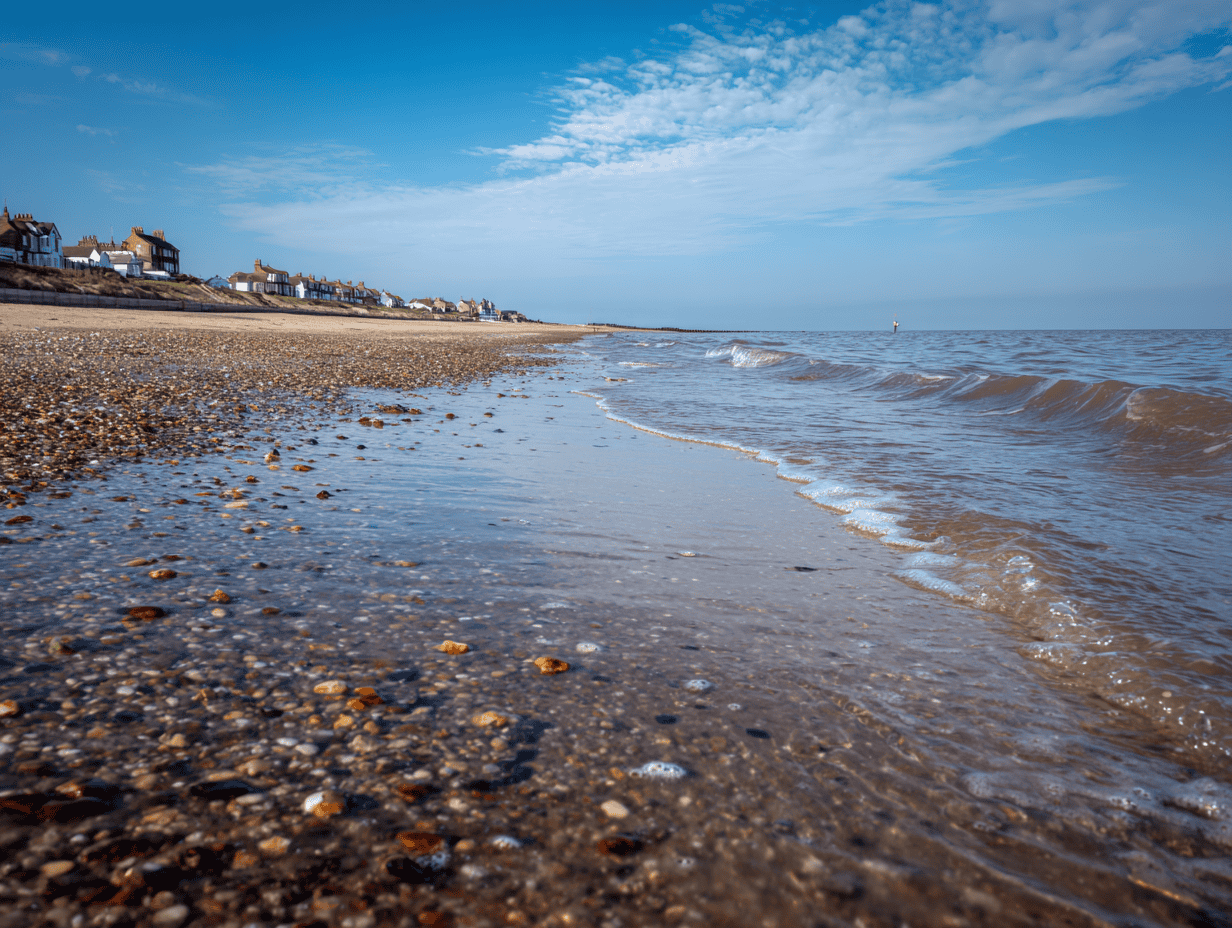
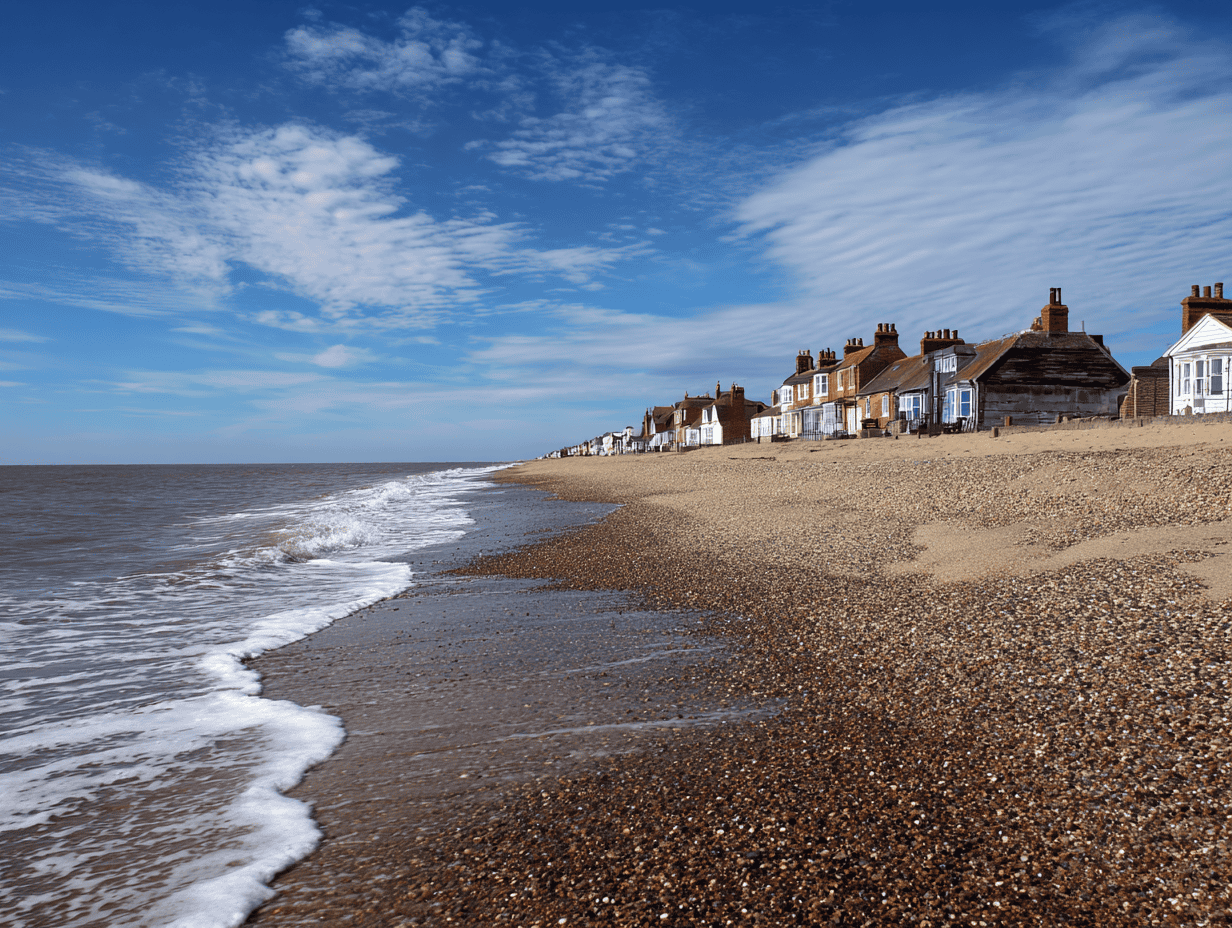
The shingle zone at the high-tide line is worth checking systematically before you head down to the reef. Lighter pieces that have been carried up by storm surges accumulate in the wrack line along with shells, seaweed and debris. After a blow, work along this line first.
The foreshore between the slipway and the reef at mid-tide is worth a slower pass. Glass that hasn’t quite made it to the reef section sometimes sits in the shingle patches here.
A word on the cliffs: West Runton is an SSSI specifically because of its geological importance. Do not dig into the cliff bases or remove material directly from the cliff face; it’s illegal, and the cliffs are actively eroding and unstable. Collect from the beach and foreshore only, where material has already fallen naturally. Stay well clear of the cliff faces themselves.
Dog friendly?
Seasonal, and it works out well for hunters. From 1 May to 30 September, dogs aren’t allowed on the section of beach east of the slipway, and must be on a lead on the promenade. The restricted zone is narrow by Norfolk standards, so you don’t have to walk far to get clear of it, and the reef and rock pool section to the west, which is your best hunting ground, stays open throughout. The Seaview Beach Café publishes a map of the zone, and the car park hut, café and lifeguard station will all point you to the boundary. Registered assistance dogs are exempt from the restriction.
Check our Yappy Places listings for the West Runton and Sheringham area. The Seaview Beach Café, right at the top of the slipway, is dog-friendly and opens seasonally from March to October.
Practical information
Parking: Seaview Car Park on Water Lane (NR27 9QP) sits directly above the beach access. The 2026 daily tariff is £4.80 for cars and vans, with payment accepted by cash, contactless, mobile wallet, telephone or JustPark. Overnight parking is not permitted and the gates are locked each evening, so check the current opening times before a late hunt. Note that the 2.2m height barrier is not suitable for taller vehicles. Limited roadside parking is available in the village as an alternative.
Toilets: Public toilets are available on Water Lane by the beach access. Opening hours vary seasonally. There is no accessible toilet here.
Food and drink: Seaview Beach Café is right at the top of the slipway, with good sandwiches, toasties, coffee, cold drinks and ice cream, open March to October. Rocky Bottoms seafood restaurant is a short walk up on the clifftop with excellent views and good food. The Village Inn in West Runton village is dog-friendly.
Getting there without a car: West Runton has its own railway station on the Bittern Line (Sheringham to Norwich via Cromer), with the beach a very short walk from the platform, one of the most convenient beach-by-train options on the Norfolk coast. The Coasthopper bus also connects West Runton to Sheringham, Cromer and Wells-next-the-Sea.
Accessibility: Beach access is via a concrete slipway from Water Lane, which is easier than steps, but the beach itself is shingle, cobbles and uneven rock-pool terrain. The chalk reef is slippery and unsuitable for wheelchairs or anyone unsteady on uneven ground.
What to bring
- Sturdy shoes or boots with grip – wet chalk and cobbles are slippery underfoot
- A container for finds – glass in a shingle beach pocket gets scratched and mixed with pebbles
- A hand lens or good phone camera – the fossils here are small and detailed
- Tide times checked and noted – the reef section can cut you off to the west on a rising tide
- Cash for the car park – card not accepted
- Layers and a windproof -the North Norfolk coast is exposed, and the foreshore particularly so
The history behind the glass
To understand the glass at West Runton, you need to start with the community that put it there, and that community has been here for a very long time.
Evidence of Roman habitation was found on Beeston Regis Heath just south of the village in 1859: a complete set of quern-stones for grinding grain, and circular pits dug to extract iron ore, thought to date from prehistoric times. By the 11th century, the village appears in the Domesday Book as Rugutune.
By the Victorian era, it was a working fishing and farming settlement: the 1871 census records 40 fishermen working from this stretch of coast alongside 45 agricultural labourers and 17 farmers. Those fishing families, crabs, lobsters, herring, and cod generated generations of domestic glass. Bottles, medicine vessels, jars, household items: the accumulated debris of working coastal life, finding its way into the sea as it always has.
The railway arrived in 1902, bringing visitors and expanding the community. The old Pavilion in the village hosted touring acts and dances for decades, a concert venue on a chalk cliff above the North Sea, now demolished, its only lasting memorial a blue plaque on the Village Inn wall recording that the Sex Pistols played here. Which is not a sentence you expect to write about West Runton, Norfolk.
But the real story of this beach is older than all of that. Far older.
On the night of 13 December 1990, a storm hit the Norfolk coast. The following morning, local residents Margaret and Harold Hems were walking on the beach when they noticed a large bone protruding from the cliff face. They contacted Norfolk Museums Service, who identified it as the pelvic bone of a steppe mammoth.
Further storms the following year exposed more material. An exploratory excavation in 1992 was followed by a full three-month excavation in 1995, which unearthed 85% of a complete skeleton, the most complete steppe mammoth skeleton ever found in Britain, and one of the most significant in the world.
The animal was a male who had died approximately 700,000 years ago, at around 42 years old. He would have stood four metres at the shoulder and weighed roughly ten tonnes, twice the weight of an African elephant. A damaged femur suggests he may have been disabled and unable to rise after slipping in the river mud, where he died. Scars on his bones indicate hyenas fed on the carcass afterwards. Had the 1990 storm not exposed him when it did, the sea would have destroyed the remains within a decade.
The West Runton Mammoth is in controlled storage at Gressenhall Museum, with displays at Cromer Museum and Norwich Castle. A cast of his tibia sits in the Seaview Beach Café at the bottom of the slipway; you walk past it on the way to the beach. The cliff layer that contained him, the West Runton Freshwater Bed, remains above the beach. Storms continue to expose new material from it regularly.
The glass you’re hunting on this foreshore is recent by comparison, decades old at most, centuries at most. But you’re hunting it on a beach where the cliffs contain 700,000-year-old mammoth bones and the chalk reef beneath your feet formed 90 million years ago. West Runton has a way of putting things in perspective.
From beach to jewellery
Find something beautiful at West Runton? At Mermaid Tears, every piece starts exactly where you’re standing, hand-hunted from UK beaches and handmade into jewellery you’ll keep forever. Browse the collection.
Disclaimer: Tide times, dog restrictions, parking charges and beach conditions change regularly. Always verify before visiting. Beach byelaws are updated annually. Check with the local council or beach authority for the most current rules. West Runton beach and cliffs are an SSSI. Do not dig into or remove material directly from the cliff face.
Last updated: September 2026
Dog rules checked: September 2026 -North Norfolk District Council and Seaview Beach Café
Frequently asked questions
Is West Runton good for sea glass hunting? It’s an honest Fair beach with occasional finds rather than reliable hauls. The rock pool and chalk reef section at low tide is the most productive area, particularly after storms. It rewards patient, methodical hunters rather than a quick scan. The fossil hunting alongside it makes it one of the most rewarding multi-hunt beaches on the Norfolk coast.
When is the best time to visit West Runton for sea glass? Low tide on a spring tide, ideally after a North Sea storm with easterly winds. The two hours either side of low water is your productive window, particularly on the reef section. Winter visits offer the highest storm frequency and the quietest beach.
Are dogs allowed at West Runton? Seasonally, dogs are restricted from the zone east of the slipway between 1 May and 30 September. The reef and rock pool section to the west is accessible with dogs during the restricted period. The full beach is open from October to April with no restrictions.
Can I collect fossils at West Runton? You can collect loose material from the beach and foreshore. The cliffs and cliff base are an SSSI. It is illegal to dig into them or remove material directly. Fossils that have naturally fallen onto the beach are generally fine to take in small quantities for personal use. Do not hammer the chalk reef.
What is the West Runton Mammoth? The most complete steppe mammoth skeleton ever found in Britain was discovered in 1990 after a storm exposed a large bone in the cliff face. The animal died approximately 700,000 years ago. The skeleton is in storage at Gressenhall Museum, with displays at Cromer Museum and Norwich Castle. A cast of the tibia is at the Seaview Beach Café at the top of the beach slipway.
How do I get to West Runton without a car? West Runton has its own railway station on the Bittern Line (Sheringham to Norwich via Cromer), with the beach a very short walk from the platform. The Coasthopper bus also serves the village and connects to Sheringham, Cromer and Wells-next-the-Sea.
More Beaches
Check out the Full East Anglia Beaches Guide or plan your trip with our UK Sea Glass Map.