The Durham Coast’s Quieter Shore
Crimdon Dene can be worth hunting for sea glass, particularly around the pebble patches, rock pools and dene mouth at the northern end of the beach. Green, white and brown are the most common finds, with blue, aqua, cobalt, black, lavender and occasional red also reported. It is a quieter, fair rather than prolific hunting beach, but the northern end gives you the best chance of finding well-tumbled pieces.
- Rating: Fair Beach
- Terrain: Easy
- Level: Beginner – Intermediate
- Dog friendly: Yes- dogs welcome all year round, no seasonal restrictions
- Location: Crimdon, County Durham, North East England
- Sat Nav: TS27 4DW
- Common colours: Green, white, brown
- Rare colours: Cobalt Blue, Black, Lavender, Red
Today at Crimdon Dene Beach
Check below for the latest ShoreSense Score and tide times. Scroll down for the full 7-day guide
Crimdon Dene sea glass conditions
Crimdon Dene
County Durham
54/100 — Fair, best window 08:30–11:30.
Best window is 08:30–11:30 with spring tides (near full/new moon) and calm sea, so the chance of fresh finds is fair today. Sea is likely calm and picked-over — go early.
Fair — expectations lower at this beach
Ranked #69 in the UK ShoreSense leaderboard today.
| Tide | Time | Height |
|---|---|---|
| High water | 03:31 | 5.5 m |
| Low water | 10:00 | 0.6 m |
| High water | 16:02 | 5.4 m |
| Low water | 22:18 | 0.7 m |
Best For:
- Beginners
- River-mouth hunting
- Rock pool searching
- Strandline scanning
- Post-storm hunting
- Families
- Easy low-tide walks
- North Sea beachcombing
Why Crimdon deserves a look – with honest expectations
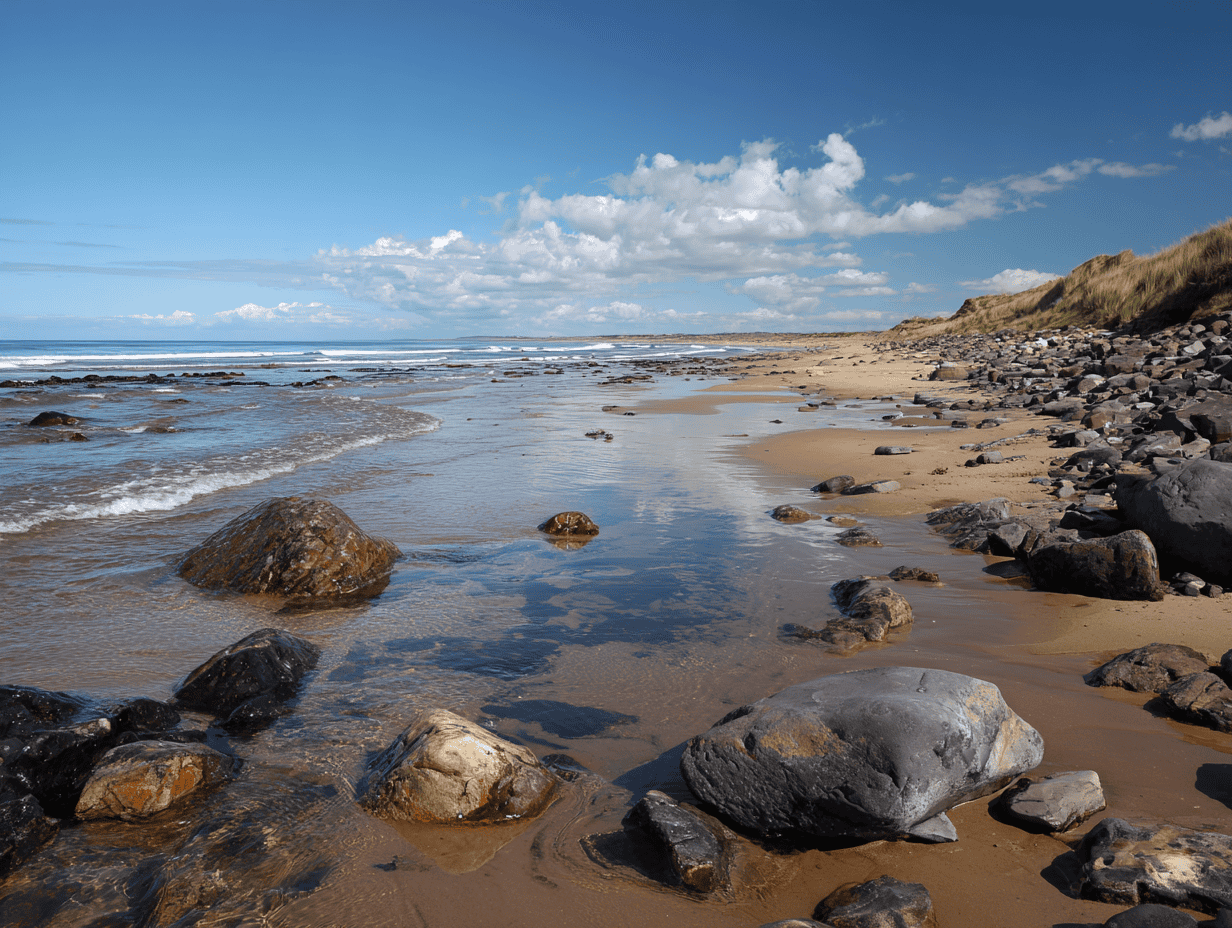
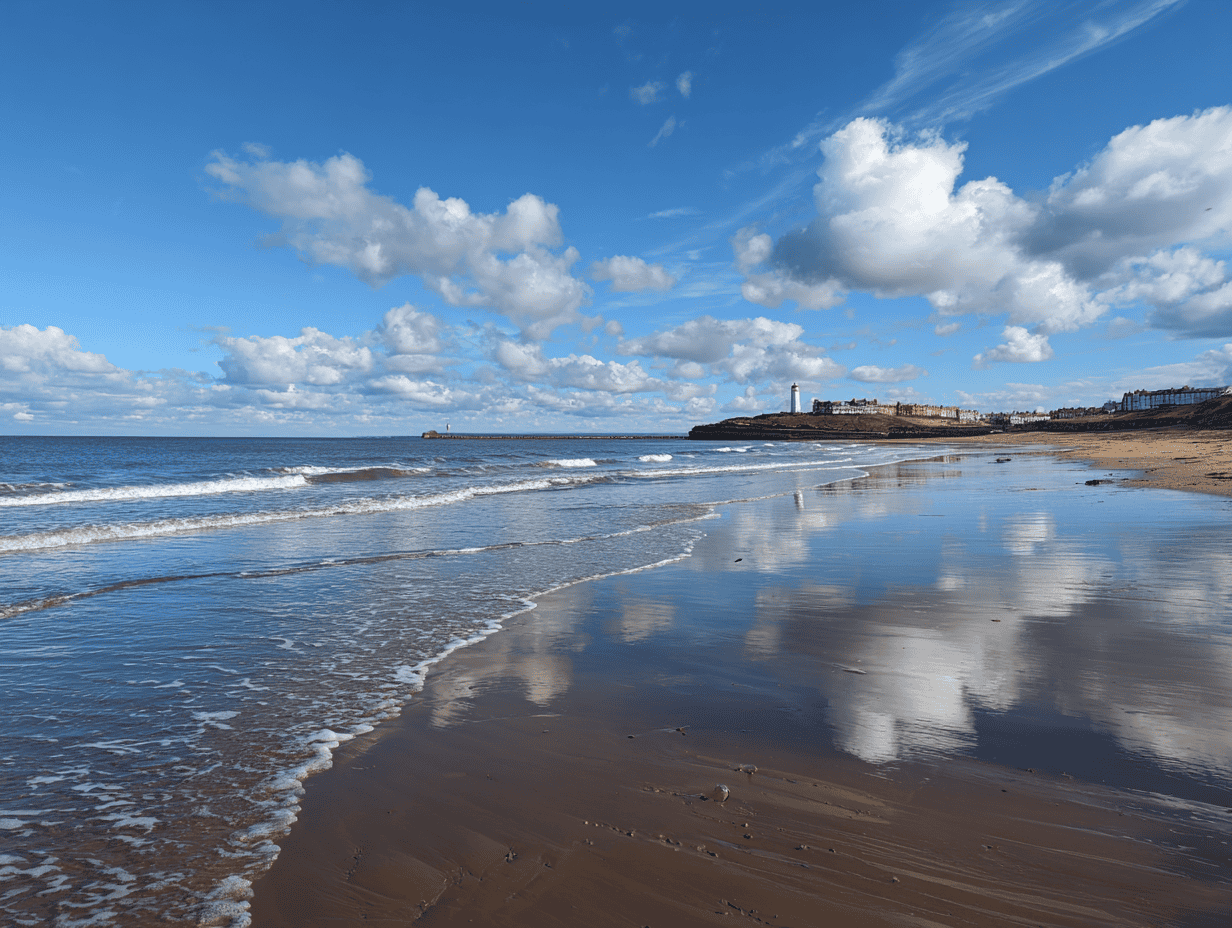
Crimdon Dene sits at the southern end of the Durham Heritage Coast, eleven miles from Seaham and a world away from the crowds that gather there. It’s a long stretch of sandy beach with patches of pebbles and rock pools towards the northern end, backed by the Durham Coast’s only sand dunes and the limestone gorge of Crimdon Dene nature reserve behind.
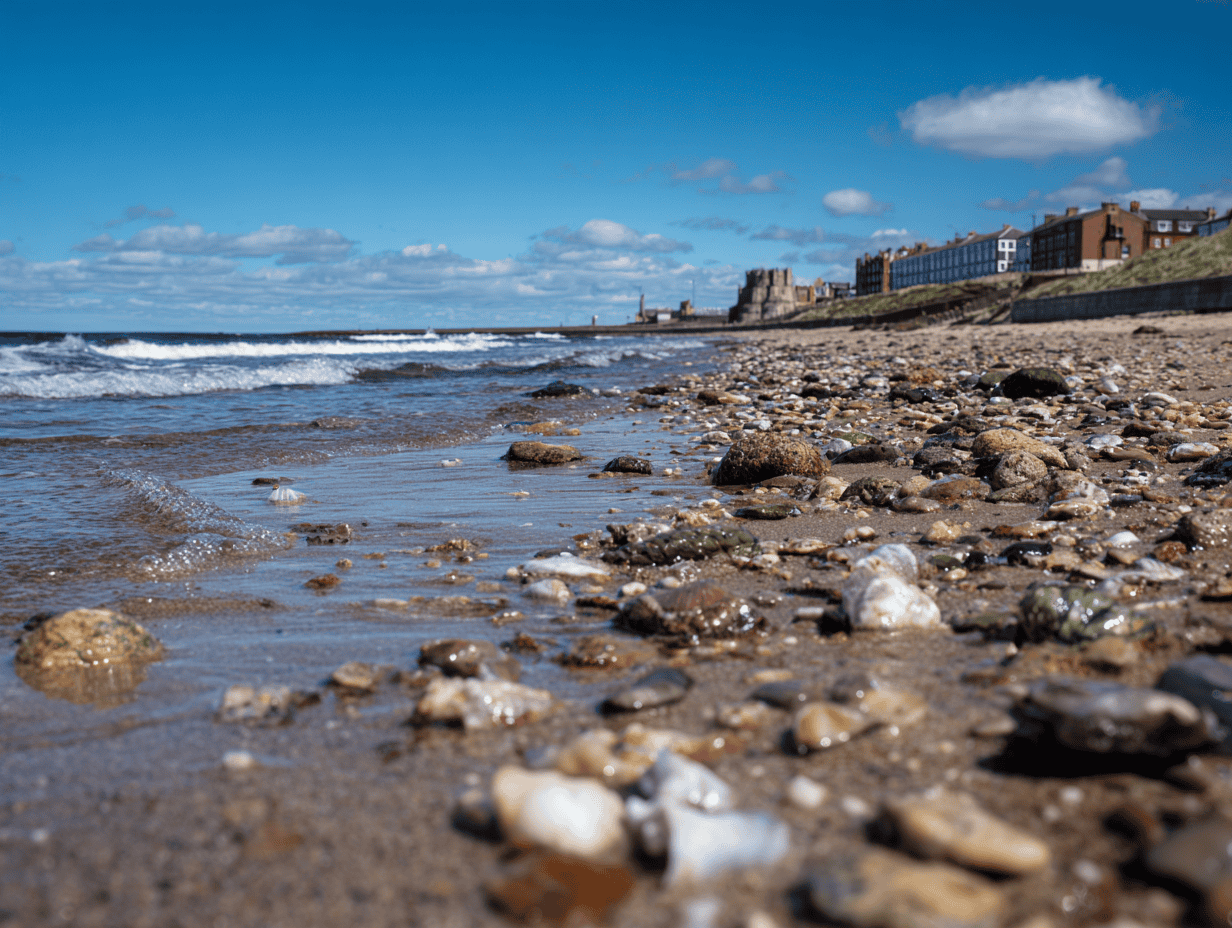
This is a Fair Beach. The glass is here: Crimdon sits on the same Durham Heritage Coast as Seaham, receives material from the same North Sea, and has its own modest industrial history to draw on. But the dominant terrain is sandy, which means glass gets buried rather than concentrated on the surface. Finds tend to turn up in the pebble and rock pool sections at the northern end of the beach, around the dene mouth, and along the strandline after significant North Sea swell.
A typical visit produces a handful of pieces rather than a haul.
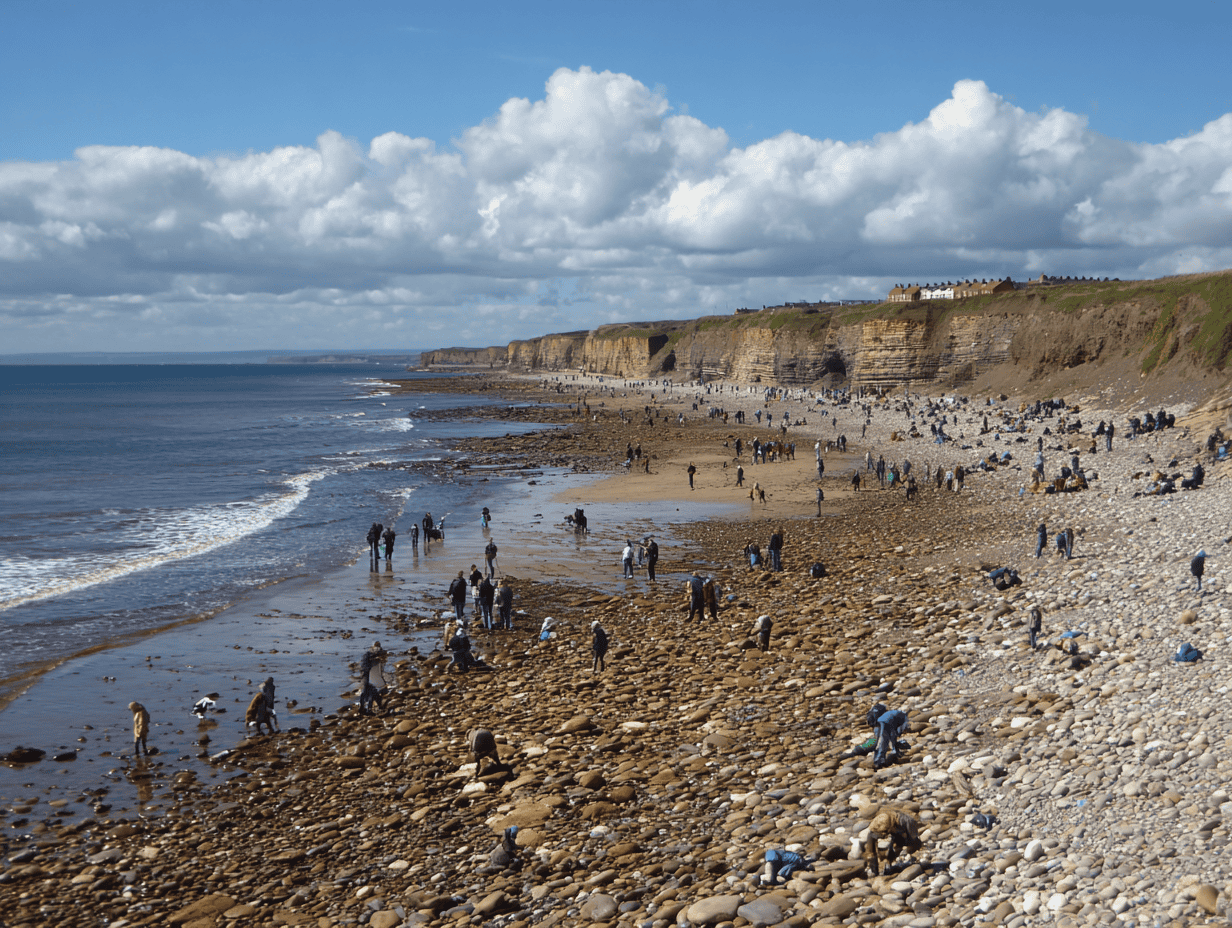
What Crimdon offers that Seaham can’t is space and quiet. Back in the 1950s, Crimdon was one of the most popular spots on the coast with day-trippers from the working towns inland. Since then, things have become a lot quieter. That quietness is the point. If Seaham is busy, if you want somewhere to walk your dog along a long stretch of Durham coast without another sea glass hunter in sight, Crimdon is the answer.
Combine it with Seaham or Hartlepool on a longer Durham day, and you won’t be disappointed.
What you’ll find here
Colours commonly found: Green, white, brown
Occasional finds: Blue, Aqua, Amber, Turquoise
Rare finds: Cobalt Blue, Black, Lavender, Red
Bonus: Rock pools at the northern end of the beach alongside the dene mouth occasionally produce older, better-tumbled pieces. The pebble patches in the same area are the most consistent section for glass on an otherwise sandy beach.
Find something special? Use our sea glass scanner, GlassLore, to find out rarity, value and history; then you can share to our finds gallery and, more importantly, earn points to climb our hunters leaderboard – are you ready to compete?
When to go
Crimdon faces east into the North Sea – the same aspect as Seaham and the rest of the Durham coast. Easterly and northeasterly swells push directly onto the beach, and post-storm conditions are your best opportunity. The longshore drift runs north to south along this coast, which means material produced further north at Seaham and the industrial beaches around Sunderland gradually works its way south.
The rock pool sections at the northern end are only accessible at lower tides. A spring low tide after a North Sea blow is the ideal scenario – it exposes the maximum amount of pebble, empties the rock pools, and freshens the strandline.
One important timing note: Crimdon Beach is a very important breeding ground for the Little Tern. These birds arrive every year in May from West Africa, and volunteer wardens monitor the site and erect temporary fencing to protect the eggs and chicks from predators.
The fencing affects sections of the beach from May onward. Respect the marked areas and give the wardens space to do their work.
Autumn and winter can be especially interesting because stronger North Sea conditions are more common and the beach is generally quieter.
Today’s ShoreSense Score & Best Hunting Window
Crimdon Dene faces east into the North Sea on the southern Durham Heritage Coast, with a tidal range of around 4–4.5 metres on a spring tide, generous exposure that reveals the rock pool and pebble sections at the northern end of the beach at low water. The tidal pattern is semi-diurnal with two highs and two lows per day.
The ShoreSense widget below combines recent marine conditions, tide timing and practical hunting weather to show today’s overall ShoreSense Score, Hunting Potential, Comfort and the best available hunting window for Crimdon Dene. It uses UKHO tide data alongside current marine and weather inputs to help you judge whether conditions look promising for a hunt.
Aim to arrive on an ebbing tide and head straight for the northern end of the beach where the pebble sections and dene mouth give the best conditions for glass to concentrate.
Compare your Beaches on our Hot Beaches page, updated daily with the best beaches for today, the next seven days, as well as the movers and shakers.
Where to look on the beach
The beach is around a mile long with soft, fine sand for most of its length. The pebble patches and rock pools are concentrated towards the northern end, near the dene mouth where Crimdon Beck meets the sea.
Start at the northern end; the dene mouth area is where the river mouth concentrates material, the rock pools trap glass between tides, and the pebble patches give glass somewhere to sit on the surface rather than burying in sand. Work the strandline carefully in both directions from here.
The southern section of the beach is predominantly sand and less productive for glass, but worth a scan along the high-tide line after any significant North Sea swell when material gets deposited in the wrack.
Key Tip:
At Crimdon Dene, don’t spread yourself across the whole beach. Focus on the northern end near Crimdon Beck, where pebble patches, rock pools and the river mouth combine to trap glass that would otherwise disappear into the sand.
The main steps and ramps down to the beach can be difficult for pushchairs and wheelchairs, and the bottom stairs are sometimes covered in sand. Factor this in if visiting with mobility equipment.
Difficulty Level
Beginner → Intermediate
Mostly approachable because:
- wide open beach
- easy scanning terrain
- clear productive zones
- gentle learning curve
The more advanced side comes from:
- reading river-mouth deposits
- checking rocky northern sections properly
- timing visits after swell
Hunting Style
“River-Mouth Hunting”
Meaning:
- focus on substrate changes
- check pebble interruptions
- work strandlines after storms
- prioritise dene outflow zones
Dog friendly?
Yes. Dogs are welcome on Crimdon beach all year round, with no seasonal ban. A long stretch of sand backed by grassy dunes gives them plenty of room to roam, which makes this one of the easiest dog beaches on the Durham coast. If your dog is anything like Trigger, the rock pools and the beck mouth at the northern end will be the highlight of the day.
If you’re carrying on to Seaton Carew between May and September, bear in mind that its central beach has a seasonal dog ban. It’s also where the little terns that used to nest at Crimdon now raise their chicks.
For dog-friendly café and pub recommendations near Crimdon, check our Yappy Places listings for the Hartlepool area.
Practical information
Parking: Crimdon Dene Coastal car park (sat nav TS27 4BL) is pay and display from 8am to 6pm every day: £1.10 up to an hour, £2.20 for one to two hours, £3.30 for over two hours. It’s free between 6pm and 8am. You can pay by cash, card or PayByPhone (location code 809337), and Blue Badge holders get a 30-minute grace period at the end of a paid session. For free parking, Blackhall Rocks Picnic Area car park (TS27 4AT) is a short drive north.
Toilets: The nearest toilets are located near the entrance to the car park and in the holiday park.
Food and drink: Dunes Café is situated next to the car park. An ice cream van occasionally parks up in the car park in summer. The Parkdean holiday park has a bar and restaurant. Hartlepool, three miles south, has a full range of town centre options.
Getting there without a car: Buses between Hartlepool and Peterlee run along the A1086 coast road past Crimdon. Check Traveline for current services, and take care crossing the A1086, which is a fast road. Hartlepool station on the Durham Coast Line is the nearest rail link.
Accessibility: The main steps and ramps down to the beach can be difficult for pushchairs, wheelchairs and people with mobility problems. The beach itself is flat and sandy once accessed.
What to bring
- Flat comfortable footwear – this is an easy, flat beach but the rock pool sections at the northern end can be slippery
- A small container for finds – quality over quantity at Crimdon
- Layers – the Durham coast is exposed, and the North Sea wind is relentless even in summer
- A tide table – the rock pool sections are the most productive and most accessible around low water
- Patience – this is a methodical hunt on a predominantly sandy beach, not a Seaham-style haul
The history behind the glass
Crimdon sits at the southern end of the Durham Heritage Coast – the same eleven miles of coast that includes Seaham, Blast Beach, Easington and Blackhall Rocks. Coal had by far the biggest impact on this entire coastline. Its rise and domination of Durham’s coast began in the 1830s, with the earliest collieries at Murton, Easington and Seaham opening in the 19th century. Vane Tempest, Dawdon, Horden and Blackhall collieries followed in the 20th century, with spoil heaps spilling onto the beaches for decades.
The former mining villages of Blackhall Colliery and Blackhall Rocks, immediately north of Crimdon, were built to serve Blackhall Colliery, opened in 1909 and operating until closure in April 1981. A working colliery generates glass from the domestic waste of mining communities, from the provisioning of industrial sites, from the accumulated everyday life of thousands of workers and their families living within sight of the sea. That glass has been entering the North Sea along this coast for over a hundred years, and the tidal drift carries it south towards Crimdon.
The beach itself has its own unexpected history. With the onset of local collieries being sunk along the Durham coast in the early 1900s, miners and their families came from all over Britain to seek work in the new pits. An entrepreneur named Mr Lowes built huts, a shop, tennis courts and an aerial ropeway to transport people across the dene to the beach.
From the 1920s, Crimdon became a popular summer holiday resort for miners and their families. During the 1960s, Butlins took an interest in buying the holiday park, but the sale was declined as Butlins intended to charge people to use the beach. Crimdon Park’s popularity declined from the 1970s with the advent of cheap foreign package holidays.
The glass from those decades of mining community holidays- bottles brought to the beach, waste disposed of along the dene- the accumulated domestic output of a resort that was once one of the busiest on the Durham coast, is part of what the North Sea returns to this beach today. It’s a quieter story than Seaham’s Victorian bottleworks, but it’s a real one.
From beach to jewellery
The Durham Heritage Coast produces glass with a tumbling quality that reflects a century of North Sea tides working the same stretch of coastline. At Mermaid Tears, every piece of jewellery starts exactly where you’ve been standing, hand-hunted from UK beaches and made into something lasting. Browse the collection.
Disclaimer: Tide times, parking charges and beach conditions change regularly. Always verify before visiting. A new Durham County Council parking order came into effect in February 2025 – check durham.gov.uk for current charges before visiting. Little Tern nesting fencing is in place from May onwards. Respect all marked areas and follow warden guidance. Information on this page is provided in good faith.
Last updated: Sept 2026
Frequently asked questions
Is Crimdon Dene good for sea glass? It’s a Fair Beach – you will find glass, but the predominantly sandy terrain means it’s not as consistently productive as the rocky and pebbly Durham coast beaches to the north. The pebble and rock pool sections at the northern end near the dene mouth are the most reliable area. Combine with Seaham for a fuller Durham coast day.
When is the best time to visit Crimdon for sea glass? Autumn and winter on an ebbing spring tide, after easterly or northeasterly North Sea swell. The rock pool sections at the northern end are the priority; arrive at low water and work them carefully before the tide turns.
Are dogs allowed at Crimdon Beach? Yes. Dogs are welcome year-round, with no seasonal restrictions.
What happened to the little terns at Crimdon? For years Crimdon was home to one of the North East’s best-known little tern colonies. In 2019 the birds moved a few miles south to Seaton Carew, where they now nest each summer behind a protective fence. One tern first ringed at Crimdon in 2001 was still turning up at Seaton Carew in 2024, 23 years later.
How do I get to Crimdon without a car? Crimdon has no direct rail or bus connection to the beach. The nearest rail station is Hartlepool on the Durham Coast Line, served by trains from Newcastle and Middlesbrough. A taxi or local bus north on the A1086 from Hartlepool is the most practical car-free option.
Is Crimdon worth combining with Seaham? Yes, they’re eleven miles apart on the same Heritage Coast, and a day combining both gives you the best of the Durham coast. Hunt Seaham at low tide for the main haul, then drive south to Crimdon for a quieter end-of-day walk along the dunes. The contrast between the two beaches is striking.
More Beaches
Check out our North East Full Guide or our interactive map to find more beaches; you can even filter by colour.