Where the Cliffs Give Up Their Secrets
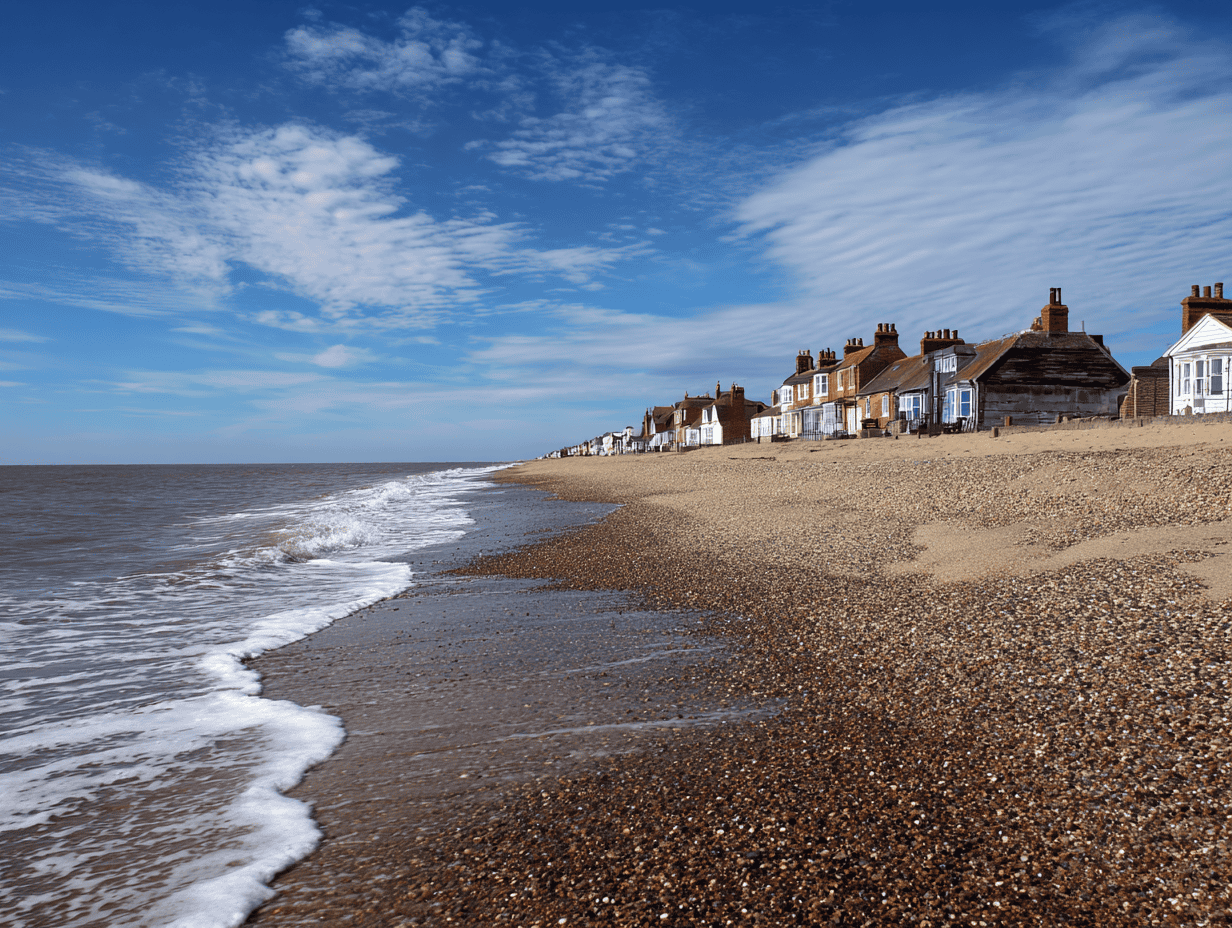
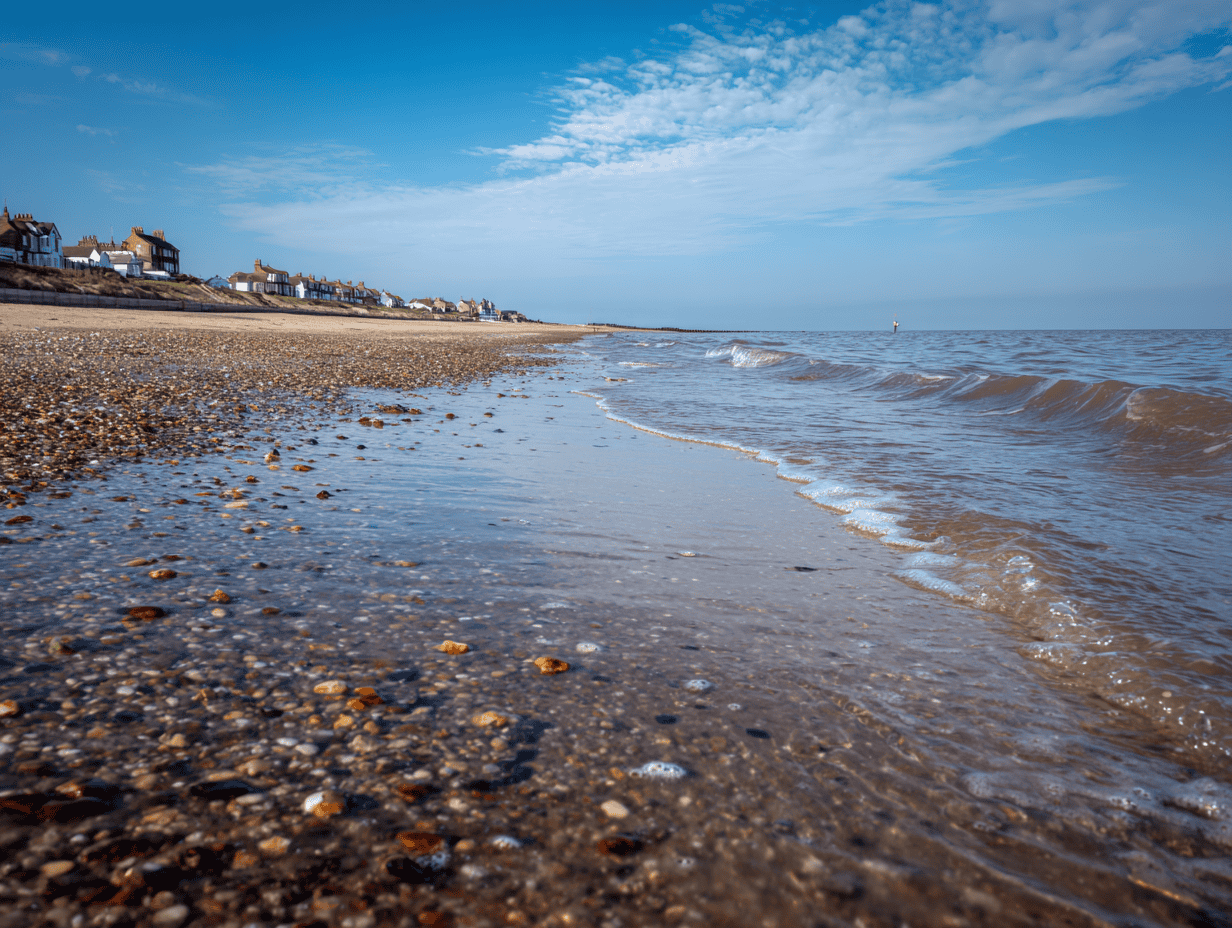
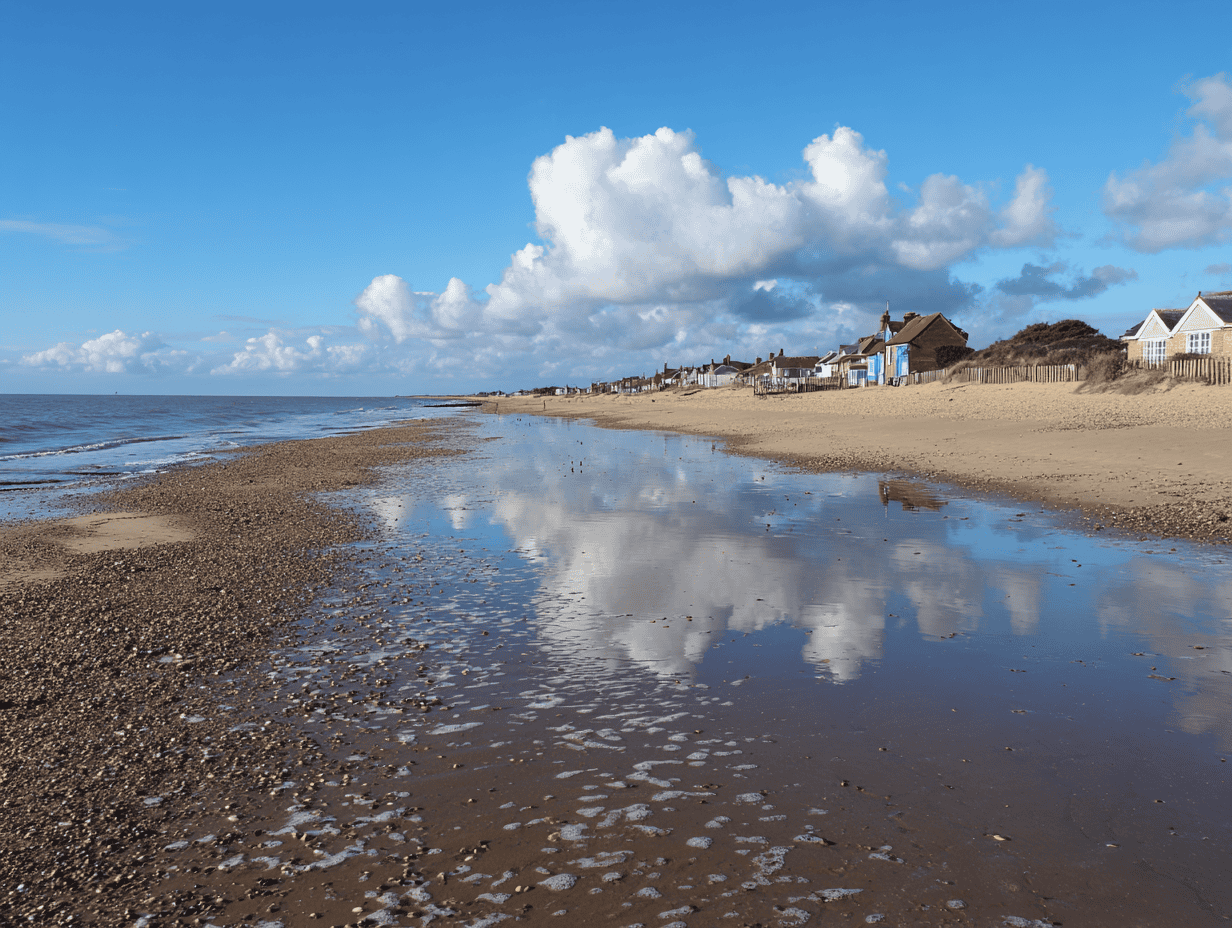
Walton-on-the-Naze is a good sea glass hunting beach, with the strongest stretch north of the Naze Tower towards Pennyhole Bay. Work the strandline, darker pebble ridges and denser shingle pockets as the tide falls, especially after stronger north-easterly weather has reworked the foreshore. White, green and brown are the most common finds, with blue, aqua, amber and turquoise appearing occasionally and cobalt blue, black, lavender and red among the rarer colours reported. The real appeal is the combination of sea glass, fossils, exposed geology and one of Essex’s most dramatic eroding coastlines.
Where to hunt: Naze Tower access → strandline and dark pebble ridges → mixed shingle north of the steps → Pennyhole Bay on a safe lower tide
- Rating: Good Beach
- Terrain: Tricky
- Level: Advanced
- Dog friendly: Seasonal (dogs banned from Pier to end of The Parade opposite Suffolk Street, and from Percival Road to Naze Park Road, 1 May–30 September; Naze Tower beach remains dog friendly all year)
- Location: Walton-on-the-Naze, Essex
- Sat Nav: CO14 8LJ (Naze Tower car park)
- Common colours: White, green, brown
- Rare colours: Cobalt Blue, Black, Lavender, Red
Today at Walton-on-the-Naze Beach
Check below for the latest ShoreSense score and tide times. Scroll down for the full 7-day forecast.
Walton-on-the-Naze sea glass conditions
Walton-on-the-Naze
Essex
57/100 — Fair, best window 14:41–17:41.
Best window is 14:41–17:41 with spring tides (near full/new moon) and calm sea, so the chance of fresh finds is fair today. Sea is likely calm and picked-over — go early.
Fair — a decent beach in the right window
Ranked #82 in the UK ShoreSense leaderboard today.
| Tide | Time | Height |
|---|---|---|
| Low water | 03:49 | 1.0 m |
| High water | 09:57 | 4.0 m |
| Low water | 16:11 | 0.6 m |
| High water | 22:24 | 4.1 m |
Best For:
- Sea glass hunting
- Sea pottery
- Long beach walks
- Fossil hunting
Why Walton-on-the-Naze is Essex’s best-kept secret
Most people write off Essex for sea glass. Flat estuaries, sheltered water, mudflats- it’s not the coastline you’d picture for a serious hunt. And for the most part, they’re right. But they haven’t been to The Naze.
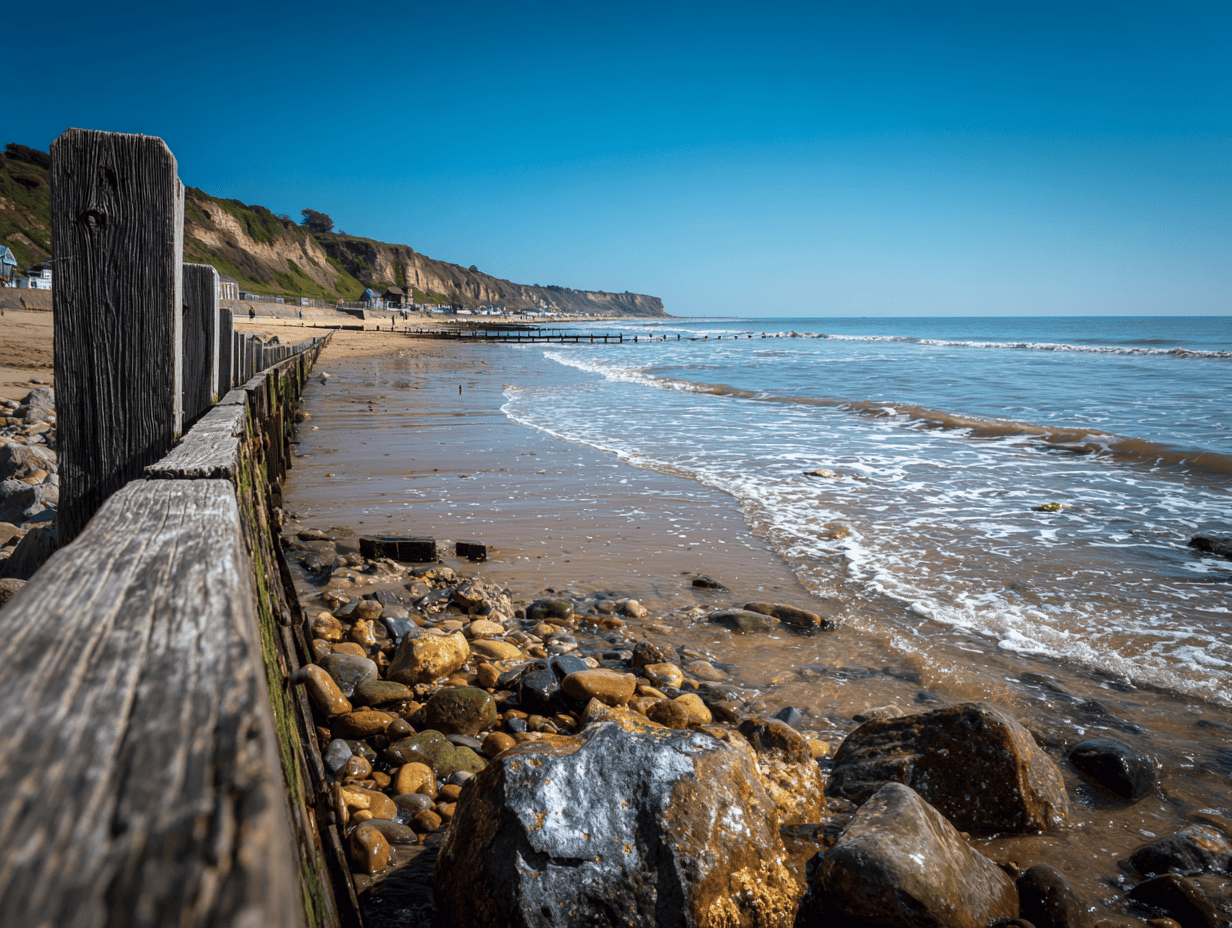
The Naze is a different proposition entirely. This exposed headland north of Walton town is being eroded by the North Sea at up to 1-2 metres a year. The cliffs, a remarkable stack of 54-million-year-old London Clay topped by Red Crag sands, are in constant collapse, and everything that was ever buried in them is now on the beach. Victorian rubbish. Edwardian bottles. Early 20th-century glass. It’s all coming out, season by season, storm by storm, and the open sea that faces this headland has enough energy to tumble it properly.
The result is a beach that genuinely surprises people. This is not Seaham volume; don’t come expecting to fill a bag in an afternoon, but on a good low tide after a winter storm, The Naze produces well-frosted, well-shaped glass in a range of colours. The history underfoot is extraordinary, the setting is dramatic, and on a weekday in autumn, you’ll have the foreshore almost entirely to yourself. For a hunter based in London or the Home Counties, it’s one of the most accessible serious glass beaches in the country.
What you’ll find here
Colours commonly found: White, green, brown
Occasional finds: Blue, Aqua, Amber, Turquoise
Rare finds: Cobalt Blue, Black, Lavender, Red
Bonus: Fossil shark teeth, pyritised wood and ancient shells eroding from the same cliffs as the glass. The Naze is one of the finest fossil sites in Britain, so bring two bags. Sea pottery also turns up regularly.
Find something special? Use our sea glass scanner, GlassLore, to find out rarity, value and history; then you can share to our finds gallery and, more importantly, earn points to climb our hunters leaderboard – are you ready to compete?
When to go
Winter and early spring are the best seasons. The cliff erosion accelerates in cold, wet weather, fresh material falls onto the beach after every significant storm, and the foreshore is far quieter than in summer. A north-easterly blow is your best friend here; it drives energy directly onto the beach and churns up glass that’s been sitting under the pebbles since the last big tide.
The beach at The Naze is strongly tide-dependent. At high tide, there is very little beach at all; the water comes right up to the cliff base, and the foreshore all but disappears. You need low tide, and ideally, you want to arrive as the tide is ebbing, so you have a couple of hours of falling water to work. Don’t get caught out by the incoming tide; it moves faster than it looks, and the cliff base is not a safe place to be scrambling when the water is rising.
Spring tides expose significantly more foreshore and are worth prioritising if you can time your visit around the new or full moon.
Today’s ShoreSense Score & Best Hunting Window
The Naze sits on the open North Sea coast of Essex, facing east-northeast into the prevailing swell with a spring tidal range of around 4.3 metres, generous enough to expose a substantial stretch of foreshore when the tide drops away from the cliff base.
Start from the Naze Tower access and work the strandline and denser pebble bands immediately north of the steps. As more foreshore opens, continue north through the mixed shingle and cobbles, concentrating on darker, freshly sorted pebble ridges rather than the broad open foreshore.
On a lower tide, extend the hunt towards Pennyhole Bay, but only if you have plenty of time before the flood because the usable beach narrows significantly as the water returns. After stronger north-easterly weather begins to settle, recheck the newly worked strandline and pebble pockets.
Use today’s ShoreSense Best Window to choose when to arrive, then follow this Naze Tower → strandline → dark pebble ridges → Pennyhole Bay progression once you’re there.
The ShoreSense widget below combines recent marine conditions, tide timing and practical hunting weather to show today’s overall ShoreSense Score, Hunting Potential, Comfort and the best available hunting window for Walton-on-the-Naze Beach. It uses UKHO tide data alongside current marine and weather inputs to help you judge whether conditions look promising for a hunt.
Walton-on-the-Naze sea glass conditions
Walton-on-the-Naze
Essex
57/100 — Fair, best window 14:41–17:41.
Best window is 14:41–17:41 with spring tides (near full/new moon) and calm sea, so the chance of fresh finds is fair today. Sea is likely calm and picked-over — go early.
Fair — a decent beach in the right window
Ranked #82 in the UK ShoreSense leaderboard today.
| Tide | Time | Height |
|---|---|---|
| Low water | 03:49 | 1.0 m |
| High water | 09:57 | 4.0 m |
| Low water | 16:11 | 0.6 m |
| High water | 22:24 | 4.1 m |
Compare your Beaches on our Hot Beaches page, updated daily with the best beaches for today, the next seven days, as well as the movers and shakers.
Where to look on the beach
Access the Naze beach via the concrete steps from the Naze Tower car park. From the bottom of the steps, head north along the foreshore. This is the most productive stretch, away from the town beach and the day-tripper crowds.
The freshest material falls below the cliff base. After a storm or a period of frost, scan the debris at the foot of the cliffs carefully; glass, fossils, pottery and all manner of Victorian-era fragments come out together. The cliff is unstable and actively eroding, so don’t stand directly beneath it or linger in one spot for long. Work the foreshore rather than the cliff edge.
The strandline and pebble ridges are where glass accumulates between tides. Look for the bands of darker, denser pebbles among the mixed shingle glass, which tends to settle in the same zones as heavier stones.
Pennyhole Bay, reached by continuing north along the foreshore, is quieter and less visited. It’s worth the walk on a low spring tide when more of the beach is accessible, but check the tide state before you head that way; getting cut off here is a real risk.
The terrain is mixed shingle, cobble and exposed clay nodules, uneven underfoot and slippery when wet. Sturdy waterproof footwear is essential.
Key Tip:
Head north from the Naze Tower access and focus on the pebble ridges and strandline rather than the open foreshore. The quieter stretches towards Pennyhole Bay receive far less foot traffic and often produce the best finds.
Difficulty Level – Advanced
- Uneven shingle, cobbles and exposed clay underfoot
- Active cliff erosion requires constant awareness
- Productive areas are best explored around lower tides
- Risk of becoming cut off towards Pennyhole Bay on a rising tide
- Sturdy footwear and tide planning are essential
Hunting Style – The Foreshore Explorer
The Naze rewards hunters who enjoy searching slowly along a constantly changing coastline. Work the strandline first, then inspect the denser pebble bands where glass naturally settles. Continue north towards Pennyhole Bay, checking every promising shingle pocket and storm deposit along the way.
Beach Personality
The Naze feels raw, wild and constantly in motion. Towering eroding cliffs, exposed clay, shifting shingle, and a coastline that changes with every storm create one of the most fascinating hunting environments in Essex. It is a beach where geology, history and sea glass hunting overlap, and where every visit feels slightly different from the last.
Dog friendly?
The Naze beach used for sea glass hunting is dog-friendly year-round. Walton’s seasonal dog bans run from 1 May to 30 September on the busier town-beach sections between the pier and Suffolk Street and between Percival Road and Naze Park Road. Dogs must be kept under proper control on unrestricted beaches and on a lead on adjacent promenades and cliff paths. Check the signs when moving between the town beach and The Naze.
Your dog finds the clay nodules particularly entertaining. Less so the fossils, which he regards as suspicious.
Looking for somewhere dog-friendly to eat after the hunt? Check the Yappy Places listing for Walton-on-the-Naze for the best options nearby.
Practical information
Parking: Naze Car Park (Old Hall Lane, CO14 8LJ) is the one to use, right by the Naze Tower with steps down to the beach. £2 for an hour, £3 for two, £5 for four and £7 all day, paid by card, Apple Pay, Google Pay, phone or MiPermit (location 706004). Blue Badge holders park free for three hours. It’s a grass surface, so it can be soft in winter, and the gates are locked at 9pm from April to September and 6pm from October to March — worth noting if you’re working a late ebb on a short winter day.
In town, Church Road (CO14 8DJ, 113 spaces, 5 disabled bays) and Station Yard (CO14 8DH) are both open year-round at around £3 for two hours and £7 all day. Coronation car park (CO14 8PZ) is closed from 31 October to 1 March, so don’t rely on it in winter. There’s also free street parking along Prince’s Esplanade and Cliff Parade.
Toilets: Toilets are available at the Naze Nature Discovery Centre beside the car park, including an accessible toilet and baby-changing facilities. There is also a café and visitor centre on site.
Food and drink: Café at the top of the Naze cliff by the tower and car park. Plenty of cafés, fish and chip shops and pubs in Walton town, a short walk south along the seafront.
Getting there without a car: Walton-on-the-Naze has a Greater Anglia railway station, but the sea-glass hunting area at The Naze is around an hour’s walk north of the station. Local buses and taxis are available if you do not want to walk the full distance.
Accessibility: The Naze Nature Discovery Centre and its facilities are accessible, with disabled parking and an accessible toilet. The sea-glass hunting beach is not wheelchair- or buggy-friendly: access to the foreshore involves steps, and the beach itself is uneven shingle, clay and cobbles that can become slippery when wet.
What to bring
- Sturdy waterproof boots -the clay foreshore is slippery and uneven
- Two bags – one for glass, one for fossils, because you will find both
- A small hand rake for working pebble ridges
- Layers and a windproof jacket – the headland is completely exposed
- A fully charged phone for tide times – the incoming tide here is not to be underestimated
- The tide widget loaded before you leave the car park
The history behind the glass
The glass at The Naze doesn’t come from a single industrial source, the way Seaham’s does. It comes from the slow, relentless accumulation of a Victorian and Edwardian seaside town, bottles thrown over the cliff edge, rubbish tipped onto the headland, the casual disposal habits of a century of visitors and residents, all of it now being liberated by one of the fastest-eroding coastlines in England.
What makes Walton’s story particularly poignant is the scale of what the sea has already taken. The medieval village of Walton, the original settlement, is now nine miles offshore. Its church held its last service on 22nd July 1798, and the waves claimed it that same month. The Naze Tower, built in 1720 as a navigation landmark for ships approaching Harwich, was constructed well over a quarter of a mile inland. It now stands just fifty metres from the cliff edge.
The WWII pillboxes that once guarded this stretch of coast against invasion have fallen from the clifftop onto the beach below, visible on the foreshore as concrete relics half-buried in shingle. They vividly illustrate how fast this coastline is moving. Every storm takes a little more. And everything that falls becomes part of the foreshore, waiting for the tide to tumble it into something worth picking up.
From beach to jewellery
Found something special at The Naze? At Mermaid Tears, every piece starts exactly where you’ve been standing, hand-hunted from UK beaches and handmade into something you’ll keep forever. Browse the collection →
Disclaimer: Tide times, dog restrictions, parking charges and beach conditions change regularly. Always verify before visiting. The Naze cliffs are actively eroding and unstable; never stand directly beneath the cliff face. Beach byelaws are updated annually – check with Tendring District Council for the most current rules.
Last updated: September 2026
Dog rules checked: September 2026 – Tendring District Council (Naze Tower beach unrestricted; town beach zones banned 1 May–30 September)
Frequently asked questions
Is Walton-on-the-Naze good for sea glass hunting? The Naze section north of the Naze Tower is the one to visit. The actively eroding cliffs deposit glass, pottery and fossils onto the foreshore year-round, making it the most productive stretch of the Essex coast for beachcombing.
When is the best time to visit Walton-on-the-Naze for sea glass? Low tide in winter or early spring, ideally after a storm. The beach almost disappears at high tide, so timing your visit around low water is essential. Spring tides expose the most foreshore.
Are dogs allowed at Walton-on-the-Naze beach? The Naze Tower beach is dog-friendly all year. The town beach has seasonal restrictions from 1 May to 30 September. Signage on the beach makes the zones clear.
Is the Naze beach safe? The foreshore is safe to walk at low tide, but the cliffs are unstable; don’t stand beneath them. The incoming tide moves quickly, so always check tide times before heading north along the beach towards Pennyhole Bay.
Can I find fossils as well as sea glass at Walton-on-the-Naze? Yes- The Naze is one of the finest fossil sites in Britain. Shark teeth, pyritised wood and ancient shells erode from the same cliffs as the glass. Bring two bags.
How do I get to The Naze beach at Walton-on-the-Naze? Use the Naze Tower car park (CO14 8LJ) and take the concrete steps down to the beach. Head north from the steps for the best hunting.
More Beaches
Check out our Full East Anglia Guide or plan your trip with our UK Sea Glass Map.